


Nineteenth Century Collector Cabinet
A nineteenth century collector cabinet organises natural specimens and miniatures in compact drawers, offering practical storage for small treasures.
Nineteenth Century Collector Cabinet
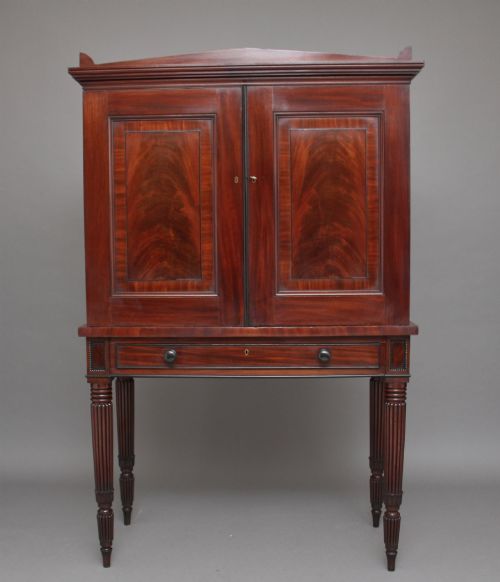
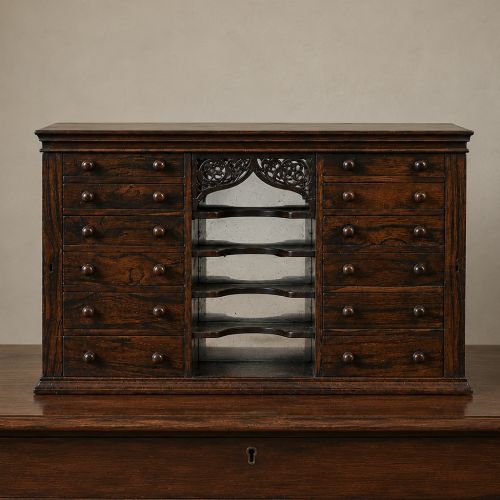
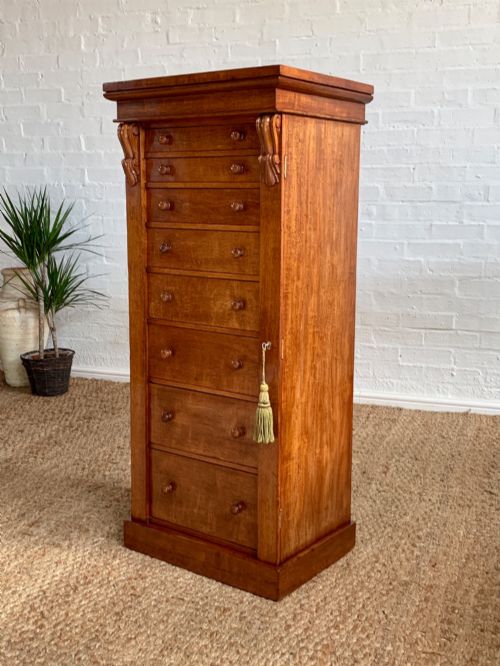
A nineteenth century collector cabinet groups multiple small drawers designed specifically for housing natural history specimens, coins, or curiosities within a single compact structure. Buyers seeking these pieces encounter various timber forms, including Wellington chests, miniature chests of drawers, and table-top units originating from the Victorian and Regency periods.
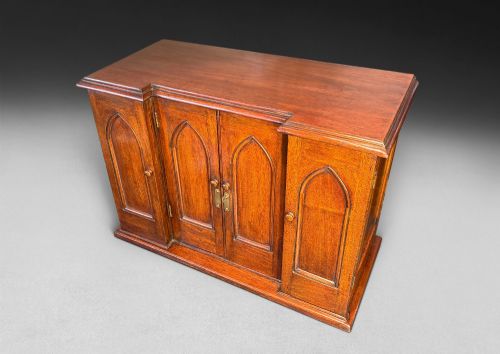
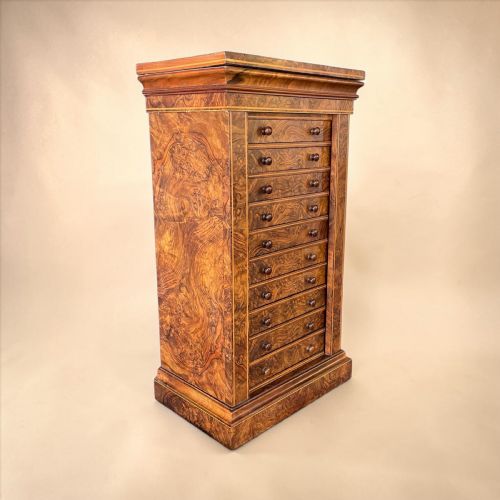
The selection ranges from tall locking Wellington chests with numerous graduated drawers to smaller table-top cabinets constructed in oak, mahogany, and burr walnut. Regional variations span English designs alongside French and Anglo-Indian colonial examples, reflecting diverse nineteenth-century storage needs.
Materials and construction methods
Cabinet makers utilised dense hardwoods such as mahogany, oak, and walnut, often applying burr walnut or birds-eye maple veneers to primary display surfaces. Drawer interiors commonly utilise softer timbers to house delicate specimens safely.
Structural integrity relied on precise dovetail joinery for the multiple internal drawers, paired with locking stiles on Wellington-style pieces to secure the entire bank. Brass handles, glazed panel doors, and turned wooden knobs complete the functional hardware.
One recorded cabinet preserves forty custom drawers to satisfy a dedicated Victorian naturalist's obsession with classification.
Judging quality and craftsmanship
Quality rests upon the density and figuring of the timber veneers, the tightness of the drawer dovetails, and the survival of original locking mechanisms and hardware. Superior examples maintain smooth-running drawers despite seasonal wood movement.
Meticulous internal lining, intact original glass panels, and documented provenance elevate specific pieces above standard utility cabinets from the same era.
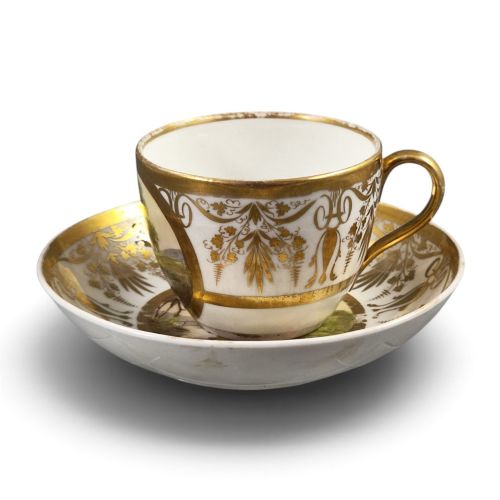
KPM Berlin·Charles William Schofield
The Nineteenth Century Collector Cabinet Glossary
- Wellington chest
- A tall, narrow chest of drawers secured by a hinged locking stile that fastens over one side of the drawer stack. This locking mechanism originally protected valuable papers or specimens.
- Collector cabinet
- A specialised case containing numerous shallow drawers designed to hold natural history specimens, shells, coins, or small artefacts.
- Burr walnut
- A decorative timber veneer taken from the wart-like growths on walnut trees, prized for its swirling, highly figured grain pattern. Cabinet makers used this timber on prominent surfaces of nineteenth-century luxury furniture.
- Gothic Revival
- An architectural and decorative style drawing inspiration from medieval design forms, visible in pointed arches and heavy timber detailing. Pieces from this movement often utilise solid oak.
Nineteenth Century Collector Cabinet: Frequently Asked Questions
What were nineteenth century collector cabinets used for?
These cabinets stored classification drawers for natural history specimens, insects, minerals, fossils, or small antiquities collected by enthusiasts.
The shallow internal compartments kept delicate items organised and protected from dust and light exposure.
Where should I place a collector cabinet at home?
Table-top models sit comfortably on sturdy sideboards or desks, while larger floor-standing Wellington chests function well as standalone display pieces.
Keep them away from direct sunlight and strong heat sources to protect the polished wood surfaces.
How do I identify the wood types used?
Mahogany and oak provide dense, sturdy frames, while burr walnut and birds-eye maple offer highly decorative figured surfaces.
Closer inspection of the grain reveals whether the timber is solid or applied as a decorative veneer.