


Nineteenth Century Ceramic Platter
Nineteenth century ceramic platter examples bring bold pattern and table utility to rooms, spanning earthenware, ironstone and porcelain.
Nineteenth Century Ceramic Platter
A nineteenth century ceramic platter encompasses serving platters, decorative chargers, dinnerware and display plates produced across the Georgian, Regency and Victorian eras. These items served functional dining roles and decorative display functions in domestic interiors.
Buyers encounter serving pieces from Staffordshire potteries, Mason's, Spode and Davenport, alongside continental factories like Royal Vienna and French porcelain studios. Forms range from large country house platters to oval dessert dishes and decorative wall plaques.
How they were made
Potters shaped earthenware, ironstone and porcelain bodies by hand or using moulds before applying initial cobalt blue underglazes or polychrome enamel pigments. Ironstone provided a dense, durable body suitable for heavy domestic service, whilst porcelain allowed finer, more delicate walled vessels.
Firing took place in traditional kilns, after which artisans frequently applied clear lead or tin glazes to seal the ceramic body and enhance surface lustre. Gold leaf accents, hand-painted pictorial scenes and transfer-printed topographical views were often added during secondary firing stages.
The listings feature nineteenth century ceramic platter items in earthenware, ironstone and porcelain, spanning English, French, Italian and Japanese origins.
What varies in quality
The sophistication of the painting or transfer print dictates much of the visual merit, distinguishing mass production from meticulous hand-applied brushwork or detailed istoriato narrative scenes. Crispness in the cobalt blue transfer lines and precision in enamel registration reflect the skill of the decorator and the standing of the pottery.
The stability of the ceramic body and the preservation of surface glaze, enamel colours and gold leaf accents define the condition of each piece. Superior examples retain original kiln brilliance without heavy fading, while substantial ironstone platters demonstrate resilience through centuries of use.
John Davenport of Longport·William Yale·George Jones·Thomas Lakin·John Rogers and Son
The Nineteenth Century Ceramic Platter Glossary
- Ironstone
- A durable type of heavy earthenware patented in the nineteenth century to rival imported Chinese porcelain. It offered high resistance to chipping and served as a sturdy base for transfer-printed dinnerware.
- Imari
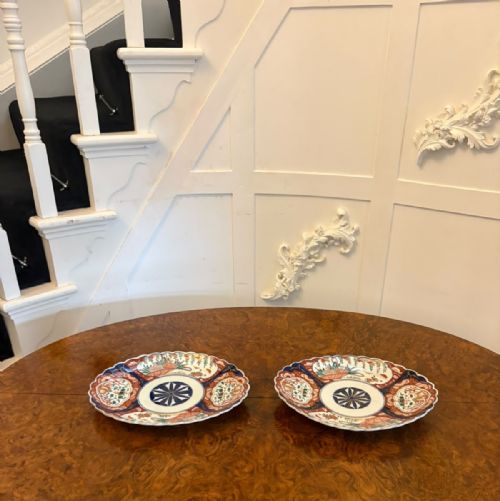
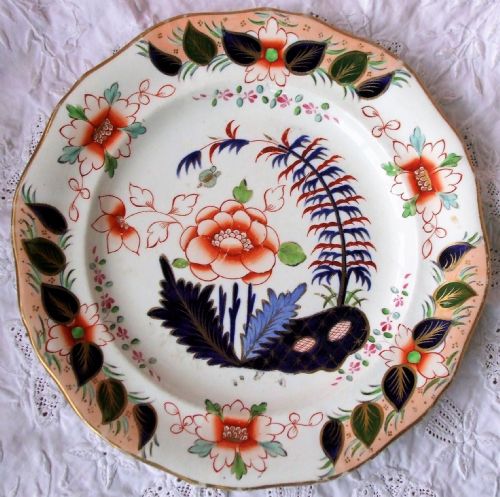
- A style of Japanese export porcelain characterised by a palette of underglaze blue, iron red and gold. European factories frequently copied these distinct radial patterns during the nineteenth century.
- Transfer printing
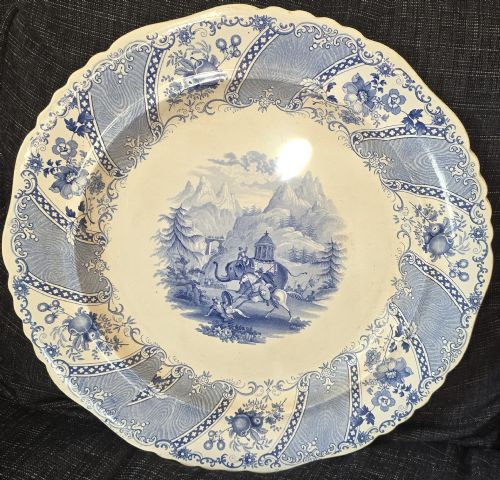
- A mechanical decoration technique where an engraved copper plate applied ink onto tissue paper, which was then transferred onto the ceramic biscuit before glazing. This method allowed intricate blue and white patterns to be produced consistently.
- Maiolica
- Tin-glazed earthenware produced in Italy, often featuring brightly coloured historical or mythological narratives known as istoriato scenes. Nineteenth-century revivals recreated these Renaissance techniques on large decorative chargers.
- Creamware
- A refined light-coloured earthenware developed in England during the eighteenth century and continued into the nineteenth century. Its warm pale yellow tone provided a smooth ground for botanical painting and transfer printing.
Nineteenth Century Ceramic Platter: Frequently Asked Questions
How were nineteenth century ceramic platters used?
These large vessels served joints of meat, fish and communal dishes at formal dining tables across country houses and urban homes. Many larger chargers and decorated plates also hung on walls or stood on sideboards purely for decorative display.
As dining habits evolved, many of these durable ironstone and earthenware pieces transitioned from active kitchen utility to collector cabinet displays and interior wall decoration.
Can I use antique platters for serving food?
Most nineteenth century ceramic platters remain structurally sound for serving dry foods, though historic glazes and enamel pigments require careful hand washing rather than machine cleaning.
Earthenware and ironstone bodies absorb moisture over long periods if left soaking, so gentle cleaning preserves both the ceramic body and the historic glaze integrity.
How do I tell English ironstone from porcelain?
Ironstone provides a heavier, opaque body with a dense white or slightly greyish tone designed for robust daily dining service. Porcelain offers a more delicate, translucent material that rings when tapped gently.
Porcelain pieces often show finer detail in hand-painted enamel work, whereas ironstone frequently displays crisp blue and white transfer-printed patterns.
What does Imari mean on a nineteenth century plate?
Imari denotes Japanese export porcelain decorated in rich cobalt blue, rust red and gold leaf, named after the port from which the wares shipped. European potteries adopted these striking colour combinations during the nineteenth century.
Authentic Japanese pieces from the Edo and Meiji periods appear alongside English interpretations that mirror the same vibrant aesthetic.
How do I identify a transfer-printed nineteenth century dish?
Transfer printing reveals fine, uniform dot patterns or continuous engraved lines under close inspection, distinguishing mechanical prints from freehand brushwork. Common subjects include classical ruins, pastoral landscapes and botanical arrangements.
Makers often stamped factory marks or pattern names into the base beneath the glaze, helping date the piece to specific periods.