
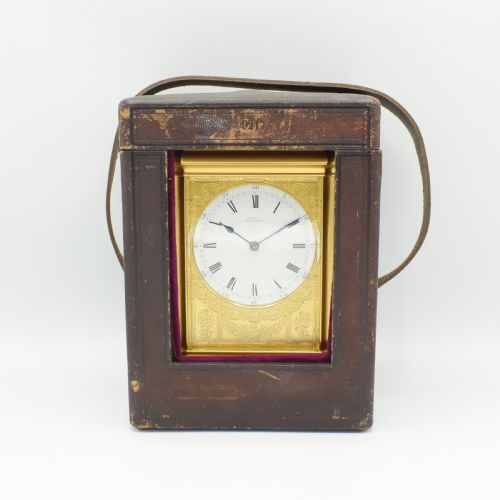


Nineteenth Century Carriage Clock
A nineteenth century carriage clock brings portable precision into a room, combining heavy brass framing with bevelled glass panels designed for travel.
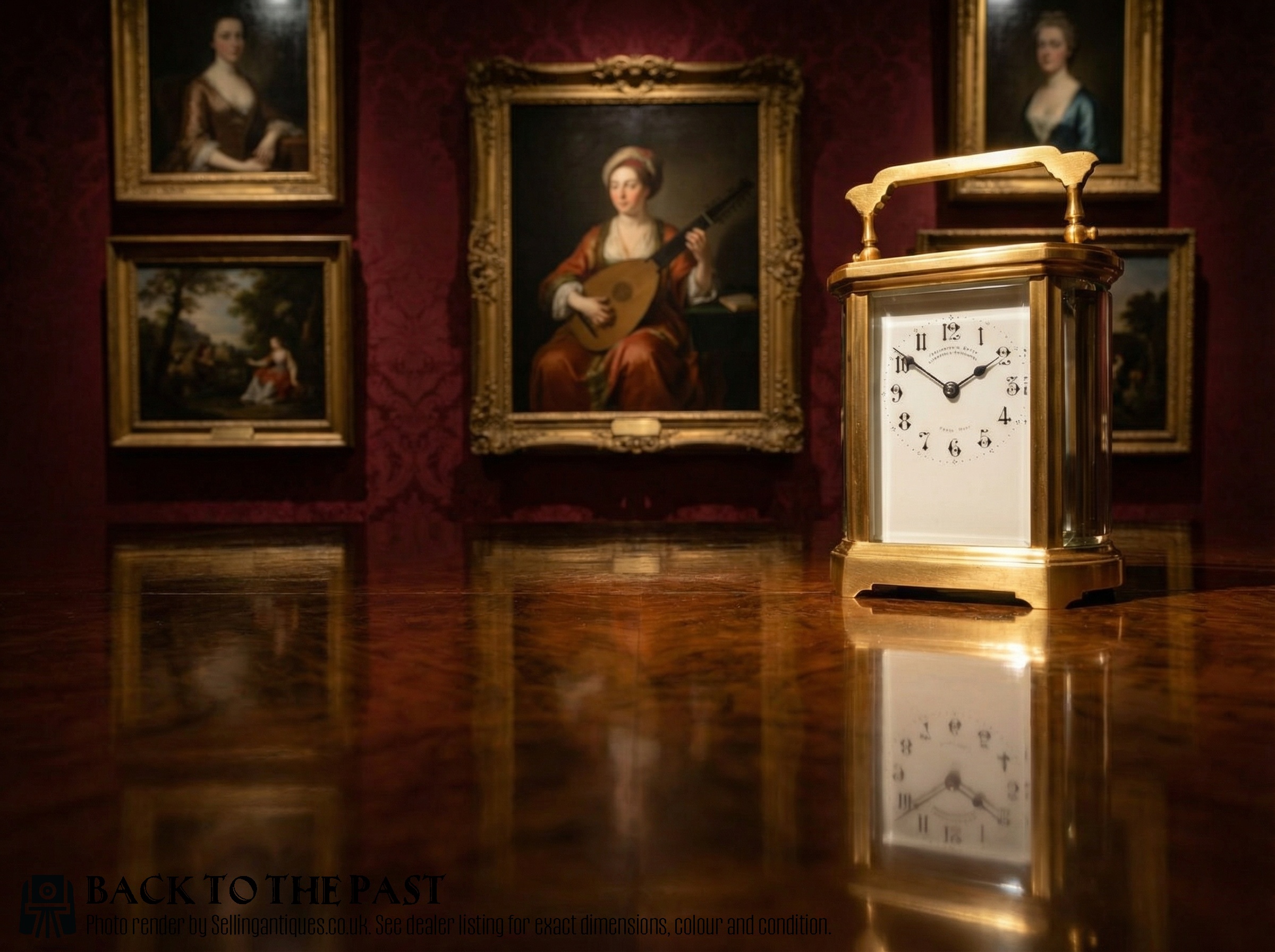
Nineteenth Century Carriage Clock
A nineteenth century carriage clock presents a rectangular brass case housing a spring-driven movement, typically fitted with a carrying handle on top and four glass sides that reveal the internal ticking mechanics. The objects appearing here span the Victorian era, French Neoclassical aesthetics, and Grand Regency influences, often categorised simply as carriage clocks, desk clocks, or occasionally large mantel clocks.
The version most commonly met on this page is the French brass carriage clock, dating largely from the 1870s to the 1900s. These pieces often arrive with repeating mechanisms, striking trains, alarms, or elaborate enamel dials, housed within distinct architectural cases such as the corniche or gorge style.
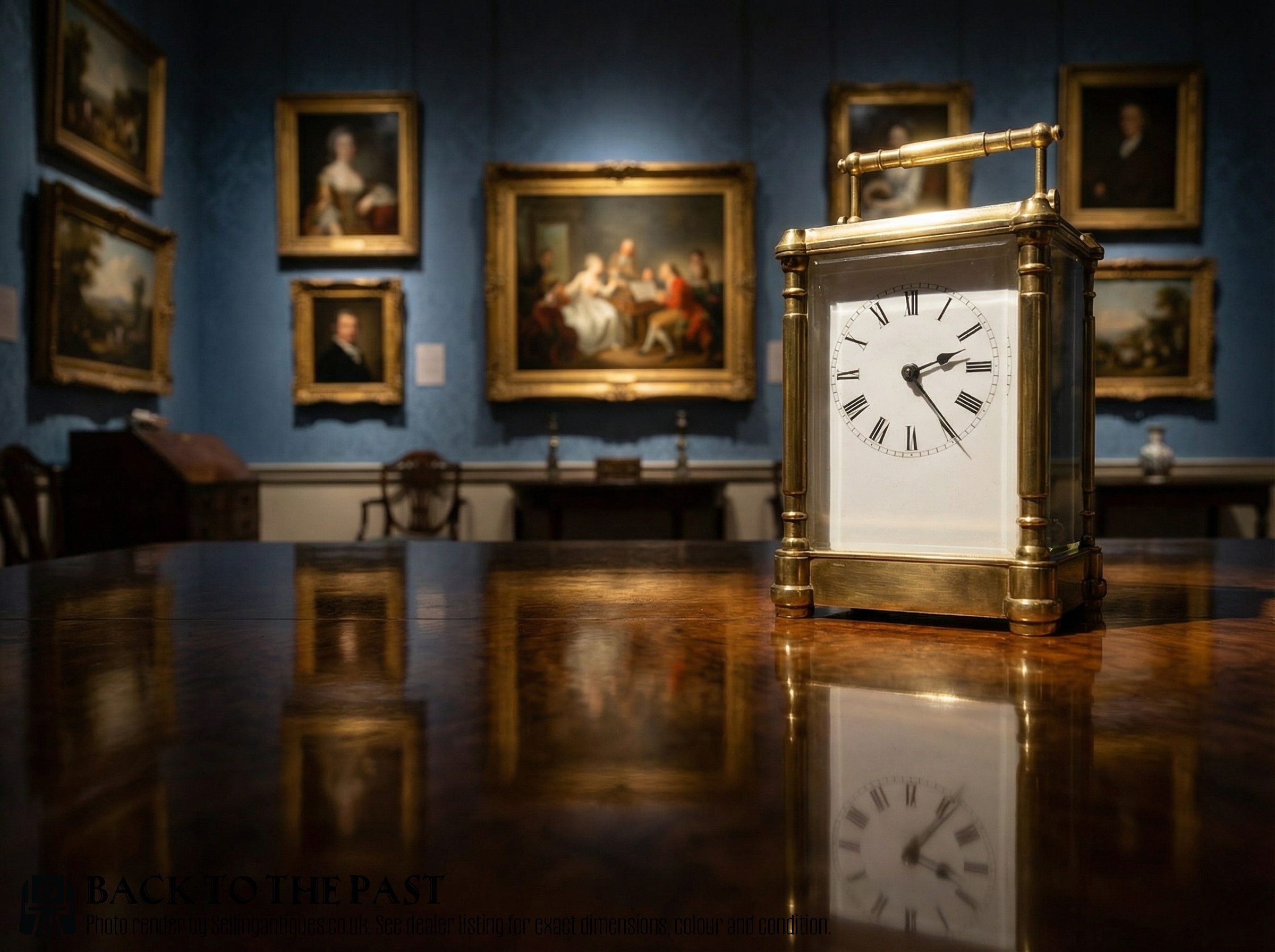
Materials and Construction
The structural framework relies heavily on brass, gilt brass, and gilt bronze, cast and polished to form the sturdy skeletal cases that hold the mechanism. Steel components govern the internal gear trains and escapements, while glass and enamel provide the transparent side panels and dial faces.
Makers integrated leather for original travel cases, protecting the gilded metalwork during movement. The assembly demands precise engineering, particularly for platform escapements and complex striking or repeating complications.
Nineteenth Century Carriage Clock Retail Price Guide 2026
Typical asking prices for nineteenth century carriage clock among the pieces listed under this phrase on Sellingantiques today, from the lower quarter to the upper quarter. They describe what is for sale here now, not the wider market.
Listings span the nineteenth century into the early twentieth century, featuring brass, gilt bronze, enamel, and leather within Victorian and French styles.
Distinctions in Quality
The grade of a nineteenth century carriage clock depends on the complexity of its movement and the execution of its case work, ranging from standard timepieces to grand sonnerie and repeating mechanisms. Finer examples display meticulous hand-engraving across the brass frame and sophisticated platform escapements.
The quality of the dial - whether white enamel or decorated with painted masks - and the presence of original signed maker details or specialised leather outer cases elevate certain pieces far above standard production.

C. Detouche Paris·Antoine Redier of Paris·Gontard & Bolviller Paris·Arnold and Frodsham·SAMUEL MARTI·Drocourt·Henri Jacot·Delépine-Barrois·Richard & Co Paris·Penlington & Batty
The Nineteenth Century Carriage Clock Glossary
- Platform escapement
- The tiny horizontal assembly containing the balance wheel and hairspring, placed visibly at the top of the movement. This innovation allowed portable clocks to keep time accurately while being moved.
- Repeating mechanism
- A complication that sounds the hours and quarters when a button on the case is pressed. This allowed owners to check the time in total darkness.
- Corniche case
- A classic rectangular brass case design featuring simple rounded or moulded pillars at the corners. It represents one of the most widespread architectural styles for French carriage clocks.
- Grand sonnerie
- A striking movement that chimes the hours and the preceding hours on the quarters automatically. It is a highly complex feature found in superior nineteenth century clocks.
Nineteenth Century Carriage Clock: Frequently Asked Questions
What is a nineteenth century carriage clock?
A nineteenth century carriage clock is a portable mechanical timekeeper housed in a brass and glass case, originally designed for officers and travellers to carry on journeys.
These pieces use spring-driven movements rather than pendulums, allowing them to maintain accuracy while resting on a desk, mantle, or travelling coach.
How do repeating carriage clocks work?
Repeating carriage clocks contain an extra train of gears connected to a button on the top of the case. When pressed, the mechanism sounds the last hour and the quarters on internal gongs.
This function was essential during the nineteenth century before the widespread availability of reliable night lighting in bedrooms.
How do I care for my clock?
Living with a nineteenth century carriage clock requires winding the mainspring regularly using the correct key, avoiding over-winding, and keeping the piece away from direct sunlight and damp environments.
Professional servicing every few years ensures the delicate steel pivots and brass gears continue to run smoothly without excessive wear.
How do I tell different case styles apart?
Case styles are defined by their architectural framing, such as the simple pillared corniche case or the stepped, recessed moulding of a gorge case. Other variations include giant formats, subminiature sizes, and oval glass configurations.
Examining the shape of the handle, the corner pillars, and the engraving density helps distinguish standard production models from maker-signed specialty pieces.