

Nine Drawer Writing Desk
A nine drawer writing desk gives you serious workspace with built-in storage, pairing a leather or wood surface with banks of drawers.
Nine Drawer Writing Desk
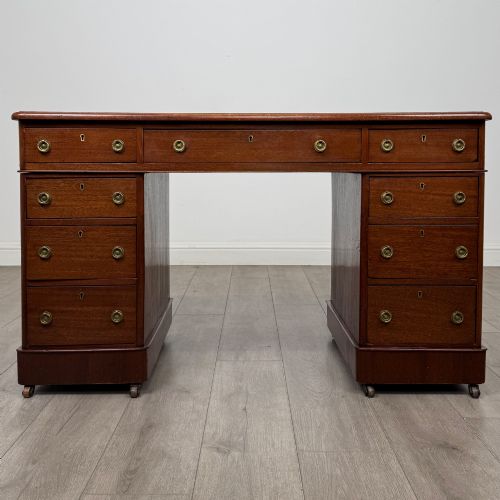
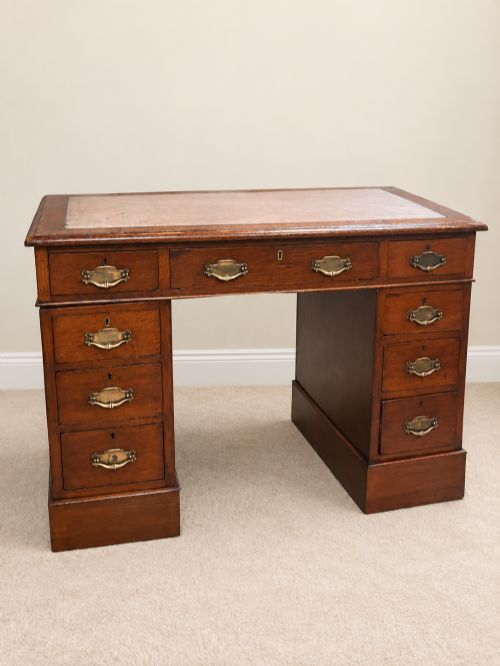
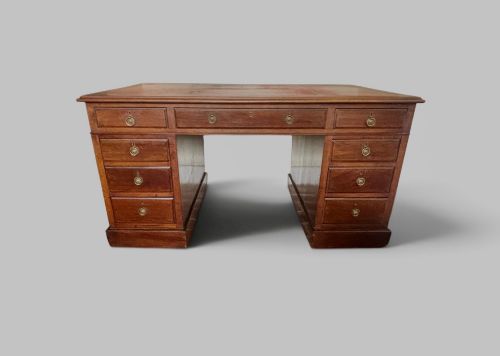
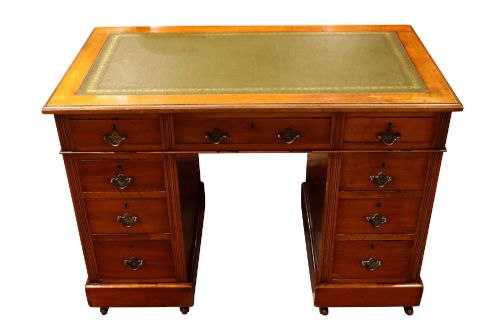
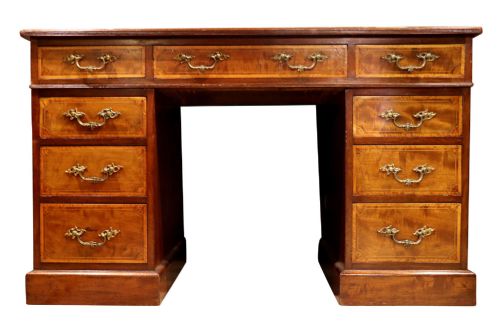
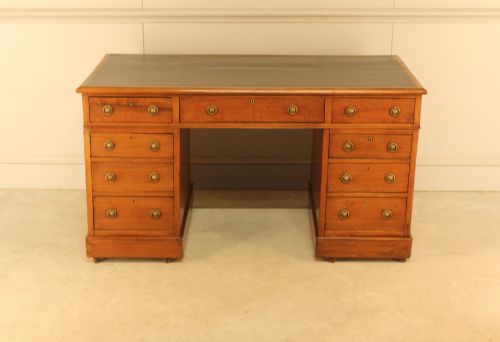
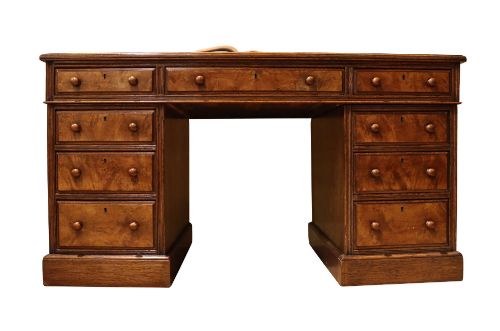
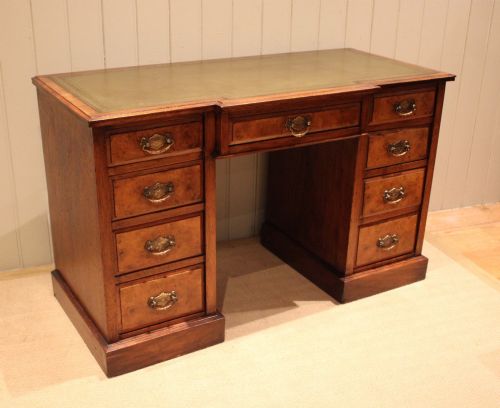
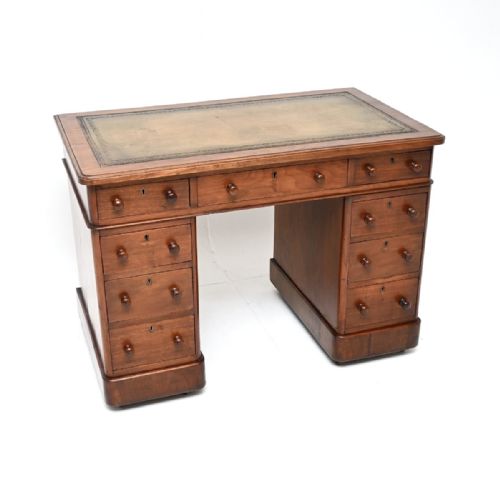
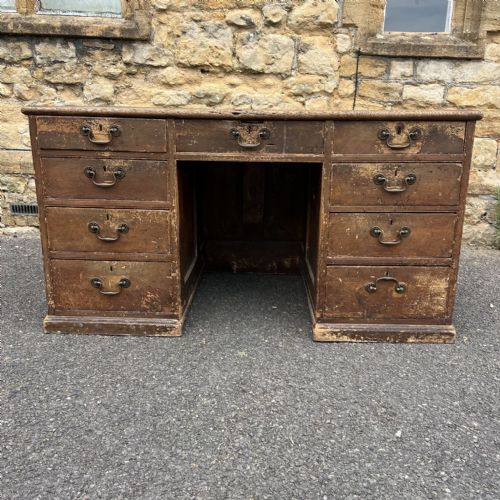
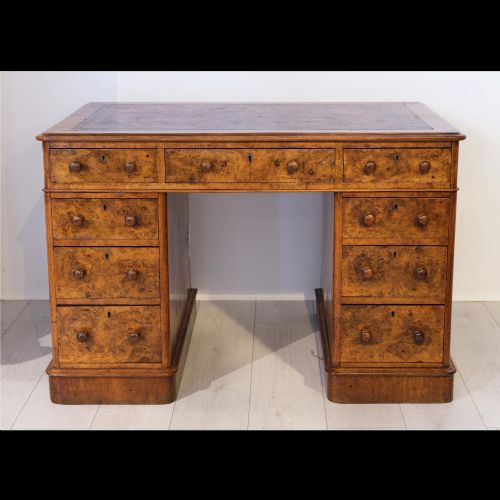
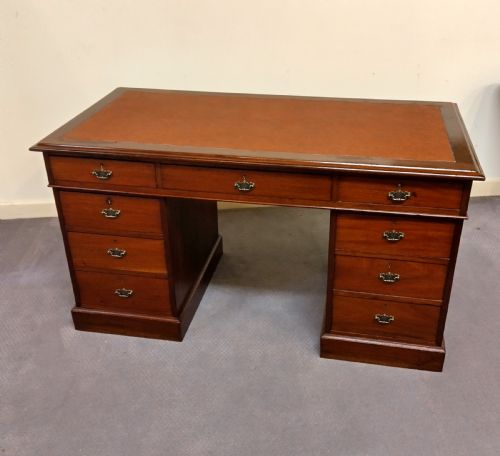
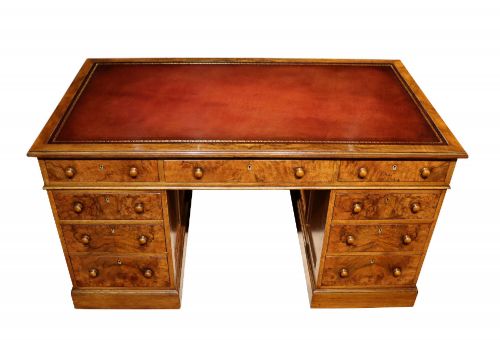
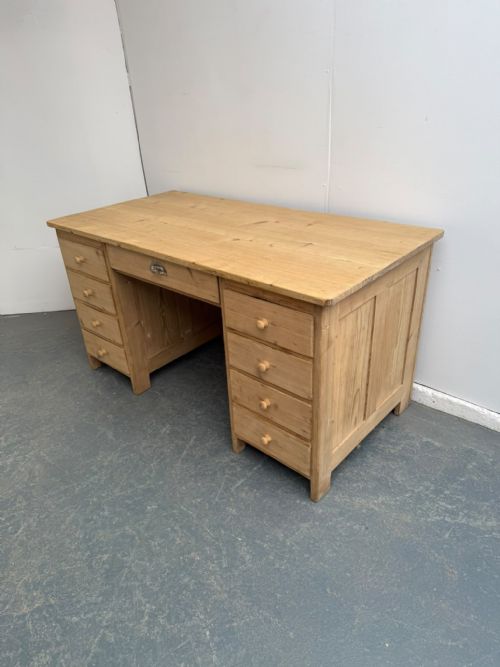
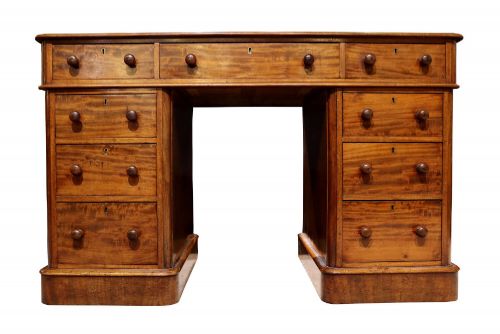
A nine drawer writing desk is typically encountered on this page as a pedestal desk or kneehole desk dating from the Victorian and Edwardian eras. These pieces arrange banks of small and medium drawers on either side of a central opening, topped with a spacious writing surface.
The layout provides substantial storage alongside a dedicated place to sit and write. Most examples found here originate from the nineteenth century or early twentieth century, spanning styles from late Victorian to Edwardian and revival periods.
How they were made
Cabinetmakers constructed these desks using timber carcasses faced in hardwoods like mahogany, walnut, burr walnut, satin birch, and oak. Writing surfaces were routinely inset with panels of tooled leather, often framed by decorative banding or polished wood margins.
Drawer construction relied on traditional joinery methods, fitted with brass handles or pulls, and supported by plinth bases or pedestals. Woods were selected for grain pattern and finished with wax or polish to highlight the natural figure.
Surviving nineteenth-century examples often incorporate inset leather writing surfaces and original brass drawer furniture.
What varies in quality
Quality in these desks rests on timber selection, such as figured burr walnut or dense mahogany, and the crispness of the secondary veneers and mouldings. Finer pieces display careful book-matching on drawer fronts and intact original brass hardware.
The structural integrity of the pedestals and the depth of the patination on the wood separate standard workshop production from superior cabinet work. Details like original leather writing inserts and secondary woods also distinguish better examples.
Edwards and Roberts·Heal and Son
The Nine Drawer Writing Desk Glossary
- Pedestal desk
- A heavy freestanding desk comprising two supporting pedestals of drawers with a central desktop spanning between them. This form provides substantial storage capacity while maintaining a formal silhouette.
- Kneehole desk
- A smaller form of pedestal desk featuring a central recessed space for the legs beneath the desktop. It typically includes a single shallow drawer above the opening flanked by banks of smaller drawers.
- Burr walnut
- Timber taken from the gnarled growth of a walnut tree, yielding complex, swirling grain patterns. Cabinetmakers used it as a decorative veneer on drawer fronts and panels.
- Satin birch
- A pale, fine-grained hardwood utilised during the nineteenth century for furniture surfaces. It offers a luminous, light finish that contrasts with darker timbers.
- Breakfront
- A piece of furniture where the central section projects forward from the flanking pedestals or cabinets. This architectural arrangement creates depth and visual rhythm across the front elevation.
Nine Drawer Writing Desk: Frequently Asked Questions
How do I use a nine drawer writing desk today?
These desks suit modern studies or home offices, offering ample drawer space for paperwork and supplies while serving as a substantial focal point.
The central kneehole provides comfortable legroom, while the expansive top accommodates laptops, lamps, and daily writing tasks without crowding.
How do I care for the leather top?
The leather writing surface benefits from occasional cleaning with a damp cloth and mild soap, avoiding harsh chemicals that strip the finish. Treating the leather with a neutral furniture wax or leather cream helps prevent cracking over time.
Keeping direct sunlight away from the desktop prevents the leather and surrounding wood from fading unevenly.
How can I tell a Victorian desk from an Edwardian one?
Victorian desks, dating from the mid to late nineteenth century, often display rich, dark mahogany or heavily figured burr walnut with robust, traditional proportions. They emphasise heavy patination and formal architectural details.
Edwardian pieces, made around the turn of the twentieth century, can exhibit lighter timbers like satin birch or more restrained inlay work, reflecting changing tastes towards airier interiors.