


Nickel Silver Pocket Watch
These nickel silver pocket watch examples are sturdy, dependable timekeepers spanning railway, military and domestic uses from the late Victorian era to the mid-century.
Nickel Silver Pocket Watch
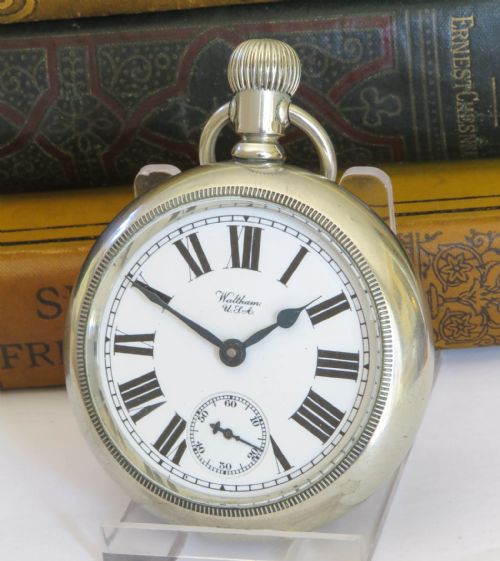
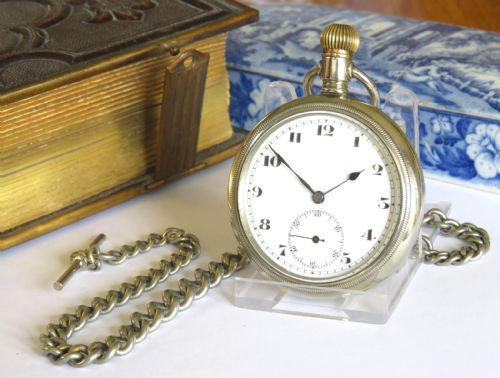
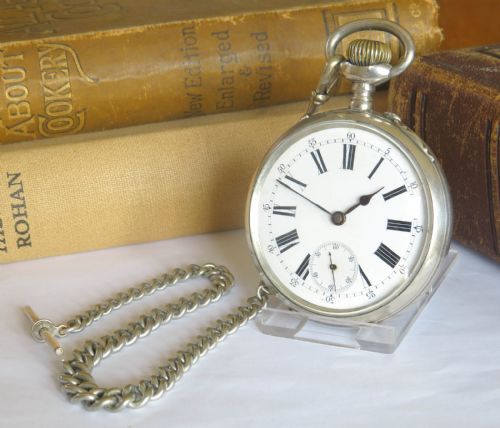
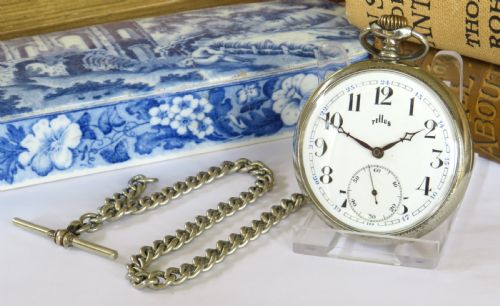
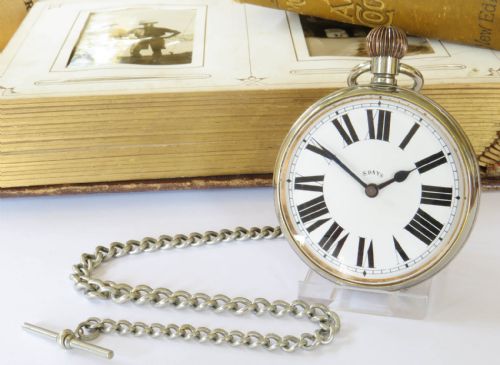
When you search for a nickel silver pocket watch, you are looking at practical timepieces produced across the late Victorian, Edwardian, Art Deco and mid-century periods. The examples listed here encompass standard pocket watches, sizeable goliath watches paired with chains, and specialised railway or military issues.
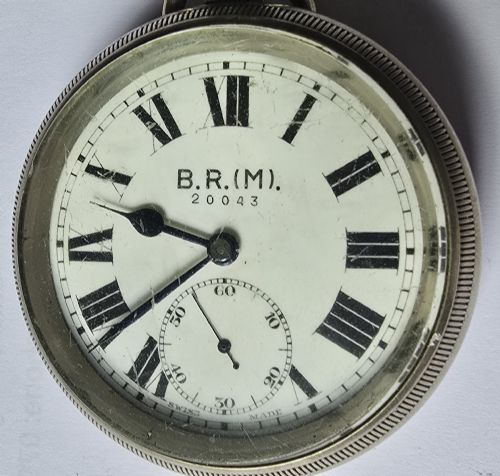
You are most likely to meet pieces originating from the decades between eighteen ninety and nineteen fifty. These include utilitarian railway service watches, military cockpit instruments, and domestic timepieces featuring enamel dials and steel hands.
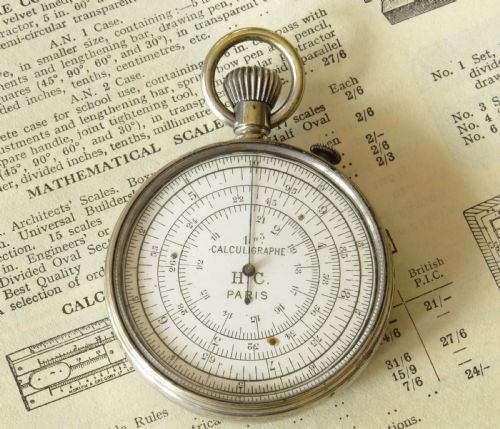
The selection ranges from standard daily carriers to unusual slide rule calculators and large eight-day goliath watches. Each piece reflects the functional requirements of its original working context rather than pure decorative luxury.
How they were made
The construction relies primarily on nickel alloys, brass, and silver-tone metal to create robust cases that could withstand daily wear in railway and military service. Glass protects the dial face, while enamel provides a clean, legible background for the painted or printed numerals.
Movements incorporate steel components and mechanical escapements such as the duplex system, housed securely within metal or nickel silver cases. Specialised items like slide rule calculators and cockpit watches integrate precision engineering with rugged exterior housings.
Nickel Silver Pocket Watch Retail Price Guide 2026
Typical asking prices for nickel silver pocket watch among the pieces listed under this phrase on Sellingantiques today, from the lower quarter to the upper quarter. They describe what is for sale here now, not the wider market.
Some railway workers relied on watches so large they needed their own dedicated leather travelling case just to survive the shift.
What varies in quality
Quality in these timepieces is determined by the precision of the movement and the provenance of the issue. Railway and military pieces carrying specific company or service marks demonstrate a higher grade of intended utility.
The finish of the case and the complexity of the mechanism, such as eight-day movements or specialised calculators, distinguish standard domestic pocket watches from high-specification instruments.
Waltham·Horos·Tellus·Octo·Havila·Doxa·Douard·Omega·H W Bedford London·Elliott Brothers London·Elgin·Waterbury USA
The Nickel Silver Pocket Watch Glossary
- Goliath watch
- A substantially larger than average pocket watch designed for travel desks, carriage use or heavy-duty service. These large timepieces often required dedicated stands or sturdy chains.
- Enamel dial
- A fused glass powder surface applied to a metal base to create a smooth, white watch face. This technique ensured permanent legibility without fading.
- Duplex escapement
- A specialised mechanical watch escapement mechanism that controls the release of power to the hands. It provides high precision through its unique wheel and roller design.
- Slide rule calculator
- A mechanical calculating device integrated into a watch format for mathematical computations. These instruments served scientific, engineering or navigational purposes.
Nickel Silver Pocket Watch: Frequently Asked Questions
What is a goliath pocket watch?
A goliath pocket watch is a significantly larger version of the standard pocket watch, often measuring over sixty millimetres across. They were popular for desks, carriages, and heavy-duty use.
These large pieces frequently feature eight-day movements that required less frequent winding compared to standard daily watches.
How do I wind an eight-day pocket watch?
An eight-day pocket watch uses a mainspring engineered to hold tension for over a week of continuous operation. You wind it via the crown or a dedicated key depending on the specific movement design.
Care should be taken not to overwind antique mechanisms when bringing them back into operation.
Were railway pocket watches different?
Railway pocket watches were built to strict standards of accuracy and durability for guards, stationmasters, and engine drivers. They often featured clear enamel dials and robust nickel silver cases to withstand harsh working environments.
Many bear specific regional railway issue marks on the case or dial.
Can I wear a pocket watch daily?
You can carry a pocket watch daily by securing it with a suitable chain to a waistcoat or belt loop. Ensuring the mechanical movement has been serviced will keep timekeeping reliable.
Handling the watch with care prevents unnecessary wear on the nickel silver case and glass crystal.