





Neoclassical Wooden Commode
A neoclassical wooden commode brings architectural proportion and quiet elegance to a room, offering practical storage disguised as fine furniture.
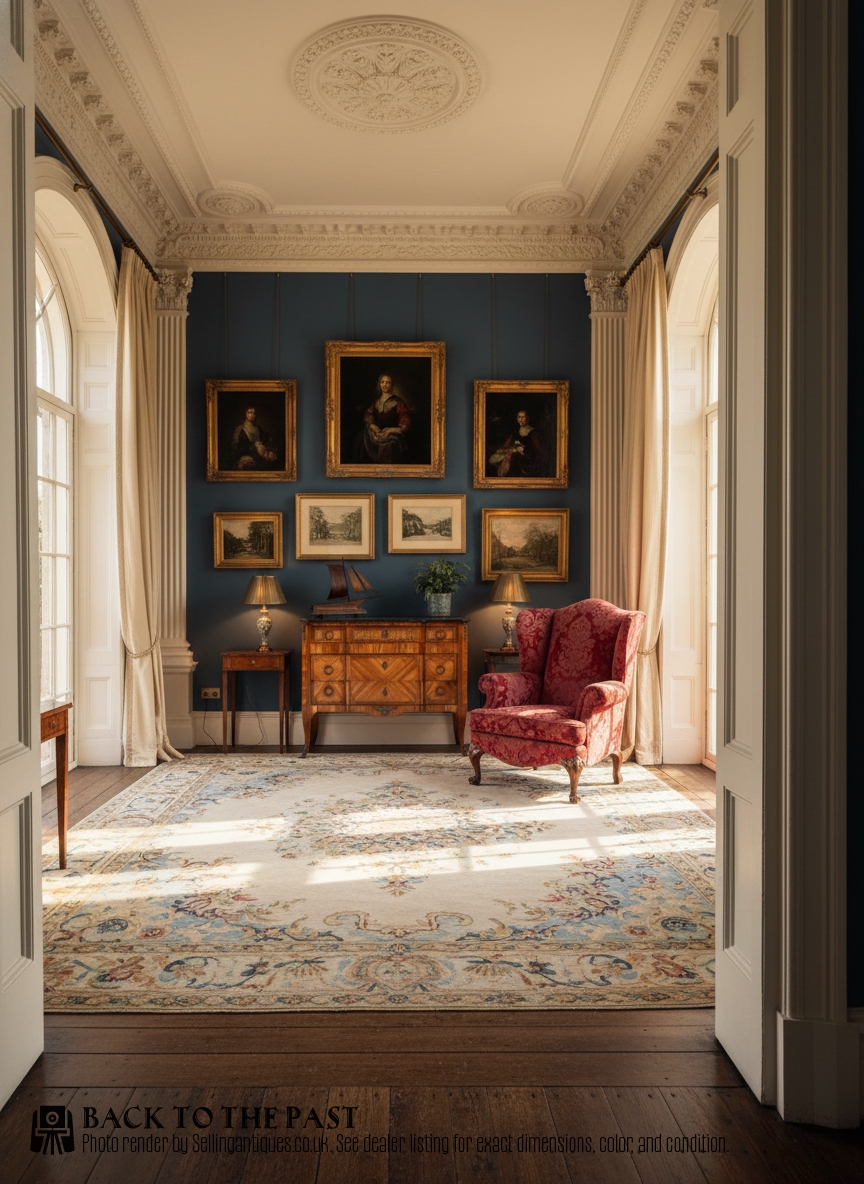
Neoclassical Wooden Commode
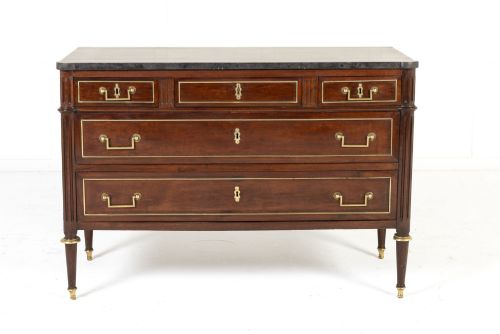
A neoclassical wooden commode is a drawer-based storage piece defined by classical restraint, symmetry, and architectural ornament. Buyers seeking this phrase encounter continental European examples, notably from Italy, Sweden, and the Netherlands, alongside British interpretations from the eighteenth and nineteenth centuries.
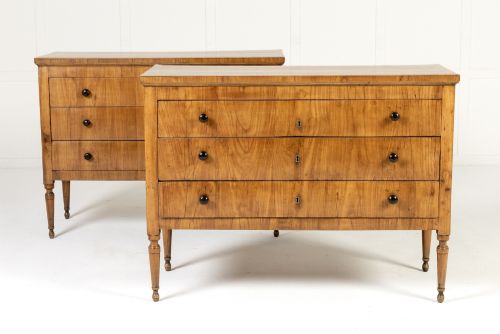
The pieces on this page appear primarily as chests of drawers, commodes, and side cabinets spanning the eighteenth century, nineteenth century, and early twentieth century. Swedish Gustavian and Biedermeier variants sit alongside Italian serpentine fronts and Dutch marquetry works, reflecting diverse regional expressions of the neoclassical style.
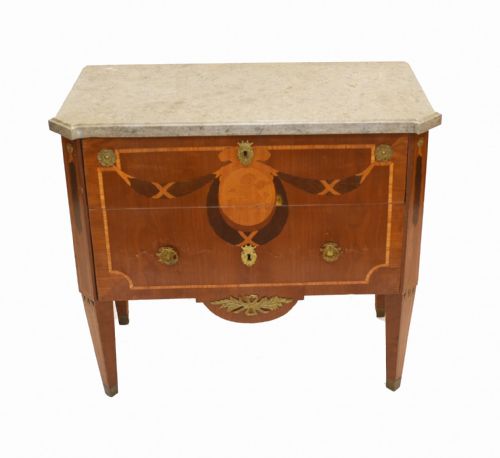
Most frequent among these listings are eighteenth-century walnut and nineteenth-century painted chests of drawers, often featuring two to three drawers for domestic utility. Marble tops and parquetry surfaces frequently accompany these continental forms, uniting formal reception-room presence with everyday storage capacity.
Materials and Construction
Makers constructed these cabinets using structural timbers such as pine and oak for internal framing and drawer carcasses, applying fine cabinet woods as veneers or solid surfaces. Walnut, fruitwood, burr elm, harewood, and satin birch provide the primary wooden textures across the inventory.
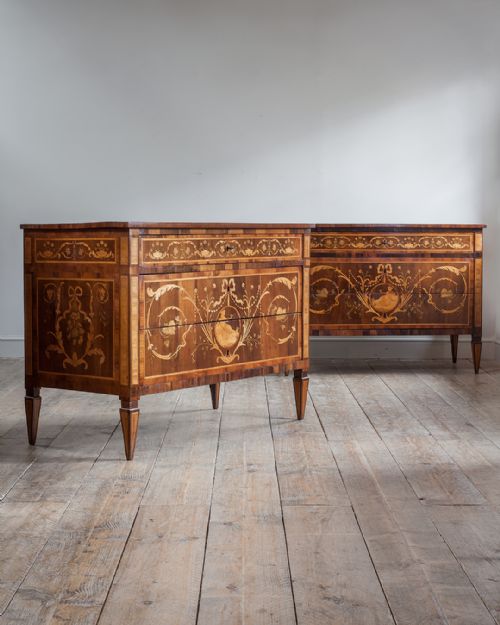
Decorative techniques rely heavily on marquetry, parquetry, and painted finishes rather than deep sculptural carving. Brass handles, escutcheons, and mounts punctuate the timber surfaces, while marble slabs frequently form the upper writing or display counter.
Neoclassical Wooden Commode Retail Price Guide 2026
Typical asking prices for neoclassical wooden commode among the pieces listed under this phrase on Sellingantiques today, from the lower quarter to the upper quarter. They describe what is for sale here now, not the wider market.
Some provincial makers happily mixed walnut carcasses with whatever fruitwood happened to be behind the workshop door.
Craftsmanship and Distinction
Quality reveals itself in the crispness of the timber selection and the precision of the veneer work, particularly where parquetry and marquetry create geometric or floral patterns. Superior pieces maintain harmonious proportions and intact original brass hardware that befits the architectural rigour of the design.
The integrity of painted finishes and the quality of applied marble tops further separate standard pieces from exhibition-grade examples. Finer domestic work demonstrates careful dovetailing in the drawer construction and sympathetic preservation of regional patination over centuries of use.
Pietro Ferrario·Hepplewhite
The Neoclassical Wooden Commode Glossary
- Commode
- A low chest of drawers or cabinet designed for domestic storage. Originating in France, the term applies broadly to continental drawer units of formal appearance.
- Gustavian
- The Swedish neoclassical style developed during the reign of Gustav III. It reinterprets French Louis XVI forms with a lighter, restrained Scandinavian palette.
- Parquetry
- Geometric wood-mosaic work used to decorate furniture surfaces. Craftsmen arrange contrasting timber veneers in repeating patterns like cubes or chevrons.
- Serpentine
- A gently undulating furniture front curving outward at the centre and inward at the sides. This contour requires advanced woodworking skill to execute properly.
- Marquetry
- The art of forming decorative patterns on a wooden carcass by fitting together thin veneers of various coloured woods. It differs from parquetry through its pictorial or floral motifs.
Neoclassical Wooden Commode: Frequently Asked Questions
How do I identify a Gustavian commode?
Gustavian pieces typically display muted painted finishes, often in grey, cream, or white, alongside restrained neoclassical detailing like fluted columns or simple rosettes. Their proportions are neat and architectural, reflecting Swedish adaptations of French court furniture.
Look for pine or birch construction beneath the paint layers and modest hardware that respects the clean lines of the Scandinavian aesthetic.
Where were these commodes used originally?
These pieces served primarily in formal bedrooms, drawing rooms, and private apartments of European residences. They held linens, clothing, or valuables while functioning as display surfaces for decorative objects.
In modern homes, they perform similar roles in hallways, living rooms, or dining spaces where surface area and enclosed storage are both required.
What timber types are most common?
Walnut and fruitwood dominate eighteenth-century continental examples, while nineteenth-century pieces frequently utilise birch, oak, or pine finished with paint. Exotic veneers like harewood and burr elm appear on higher-status items.
Pine and oak generally form the hidden structural carcases and drawer linings regardless of the primary exterior timber.
How do I care for a marble-topped commode?
Marble surfaces require simple dusting with a soft cloth and prompt wiping of liquid spills to prevent staining. Avoid acidic cleaners or harsh abrasives that can etch the polished stone.
Treat the wooden base with appropriate wax or polish suited to antique timber, keeping the piece away from direct heat sources and strong sunlight.