
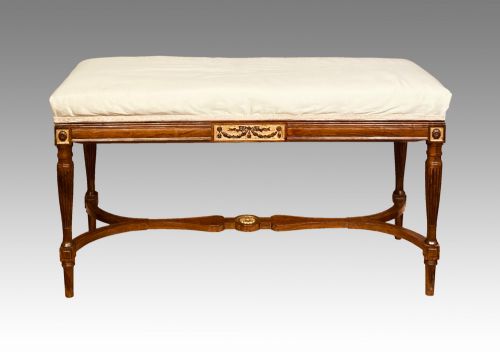
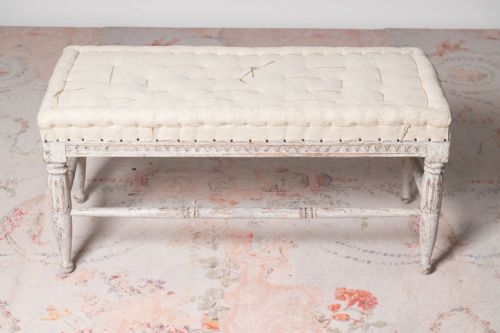


Neoclassical Window Seat
A neoclassical window seat brings symmetrical lines and classical restraint to a room, offering a seat designed specifically for the depth of a bay.

Neoclassical Window Seat
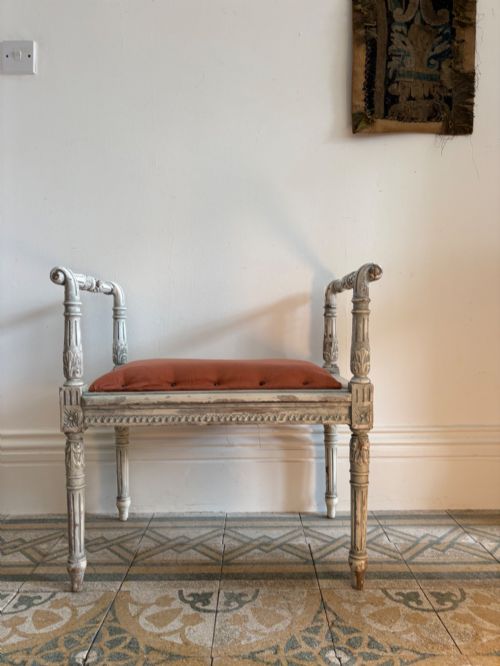
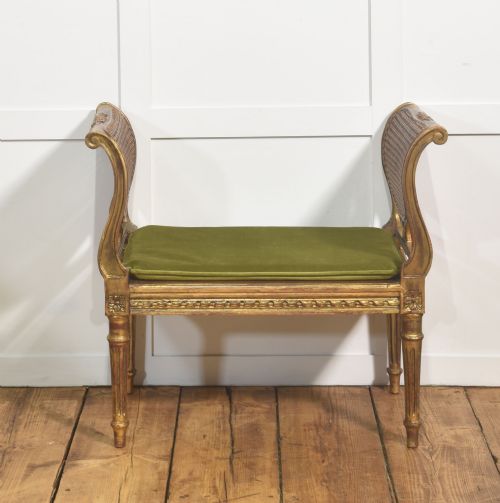
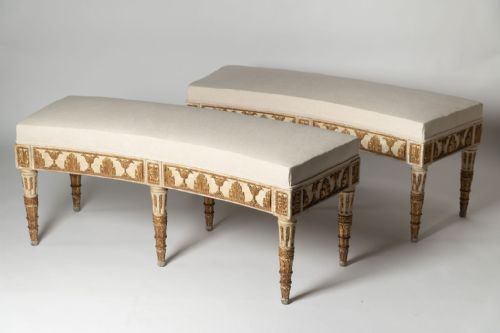
A neoclassical window seat occupies a specific place between a stool and a settee, taking forms such as long benches, X-frame stools, and curule seats designed for alcoves. These pieces draw on eighteenth-century, nineteenth-century, and early twentieth-century traditions, including George III, Louis XVI, Gustavian, and Empire styles.
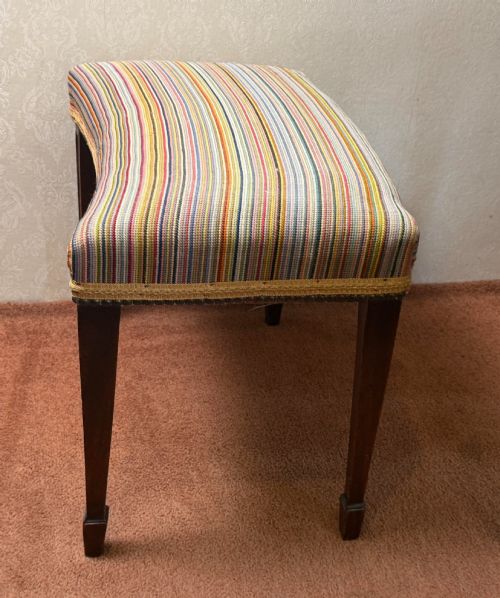
You will encounter pieces ranging from simple mahogany frames with square tapering legs to giltwood and gesso creations upholstered in silk, damask, velvet, or cane. The selection extends to painted satinwood, Swedish birch, and white painted wooden frames that reflect regional interpretations across England, France, Italy, and Sweden.
Materials and construction methods
Makers utilised solid timbers such as mahogany, oak, and rosewood alongside softer painted woods, satinwood, and birch for the structural frames. Giltwood and gesso finishes provide a gilded surface layer, while cane work introduces woven texture to seats and panels.
Upholstery forms a vital component of construction, employing materials like silk, velvet, red damask, and standard fabric over webbing or sprung foundations. Carved details define the wooden elements, displaying classical motifs through precise joinery and turned or tapering supports.
A music stool designated for nineteenth-century duets shares the exact same neoclassical footprint as a quiet bedroom bench.
Assessing quality in construction and design
The refinement of the carved ornamentation and the crispness of the framing separate standard examples from finer works. Well-drawn proportions and elegant lines indicate a higher level of design competence in the maker.
The choice of primary wood and the execution of the gilding or painted finish determine the visual weight of the piece. Superior textiles and intact canework contribute to the overall integrity of the seating.
Charles Nosotti
The Neoclassical Window Seat Glossary
- Curule stool
- An ancient Roman magistrate form featuring intersecting curved legs that form an X-shape, revived during neoclassical periods.
- Giltwood
- Timber coated with a thin layer of gold leaf over a prepared gesso and bole ground. This finish provides a bright reflective surface common on French and Italian seating.
- Gustavian
- The Swedish interpretation of French neoclassical and Louis XVI design, characterised by pale painted finishes and restrained classical carving. It favours lighter tones and simplified geometric forms.
- Canework
- A seating technique using woven rattan or cane strips to create a light, patterned mesh surface. This method appears on frames from the eighteenth century onwards.
- X-frame
- A structural support system utilising two diagonal members crossing to form an X. It underpins stools and benches originating from various nineteenth-century continental styles.
Neoclassical Window Seat: Frequently Asked Questions
Where should I place a window seat?
These benches fit naturally into the recess of a bay window or beneath a deep sill where floor space remains narrow. They also serve as end-of-bed seating or hallway benches.
Their low profile allows them to sit below window frames without obstructing light or views, making them practical for transitional spaces.
What is the difference between a window seat and a settee?
Window seats generally feature backless or low-backed forms designed specifically to fit narrow spaces without blocking light. Settees incorporate higher backs and often armrests for full seating support.
Both forms utilise similar neoclassical frames and upholstery materials across the listed periods.
How do I care for antique upholstery?
Protect delicate textiles such as silk and damask from direct sunlight to prevent fading and fibre degradation. Regular light vacuuming removes dust from the weave without straining the fabric.
Keep wooden frames conditioned and avoid placing upholstered seats near direct heat sources.