

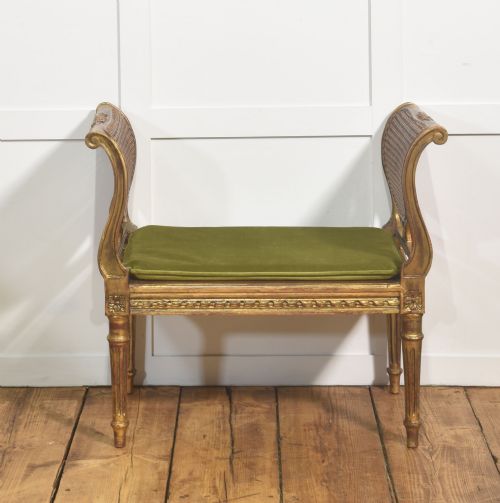


Gilt Wood Window Bench
A gilt wood window bench brings architectural polish to a narrow space, offering slender proportions and gilded detail.

Gilt Wood Window Bench
When you search for a gilt wood window bench, you encounter seating designed specifically to fit beneath a casement or in a compact corridor. The pieces gathered here span from the nineteenth century into the early twentieth century, showing influences from French Neoclassical, Louis XVI, and Italian Rococo styles.
You are most likely to meet rectangular forms, curule shapes, and low settees rather than massive daybeds. These seating items served practical functions in drawing rooms and bedrooms, often upholstered in textile, velvet, or cane.
Origins stretch across English Regency, French revival, and Italian workshops, giving you a diverse selection of regional interpretations. The forms include simple stools, long benches, and window seats that retain their original architectural character.
How they were made
Makers constructed these frames predominantly from wood, applying layers of gesso before laying fine metal leaf to achieve the characteristic gilt finish. Some pieces combine painted wood surfaces with gilded highlights, while others utilise dense timbers such as rosewood.
Upholstery methods varied from woven cane panels set into wooden borders to padded seats covered in plush velvet or patterned textiles. Joinery relied on traditional techniques suitable for supporting weight on slender, carved legs.
Gilt Wood Window Bench Retail Price Guide 2026
Typical asking prices for gilt wood window bench among the pieces listed under this phrase on Sellingantiques today, from the lower quarter to the upper quarter. They describe what is for sale here now, not the wider market.
Current listings feature materials including giltwood, painted wood, rosewood, cane, and velvet across the nineteenth and early twentieth centuries.
What varies in quality
The finesse of the carved gesso and the depth of the gilding separate standard work from exceptional craftsmanship. Crisp leaf application and well-defined floral or classical motifs indicate a superior workshop origin.
Structural integrity and the retention of original materials also dictate value. Pieces that preserve their early cane panels or period upholstery demonstrate greater authenticity than heavily altered examples.
Charles Nosotti
The Gilt Wood Window Bench Glossary
- Giltwood
- Timber coated with gold leaf or a metallic substitute over a prepared ground. This surface treatment provides the brilliant metallic sheen seen on classical furniture frames.
- Curule
- An X-shaped stool or bench design derived from ancient Roman magistrate seats. This form provides inherent structural strength with a distinct classical silhouette.
- Cane
- Woven rattan or split plant material used to form light, porous seat panels. It offers both flexibility and visual lightness.
- Neoclassical
- A revival style drawing inspiration from classical Greek and Roman art. It emphasises symmetry, straight lines, and restrained classical ornamentation.
Gilt Wood Window Bench: Frequently Asked Questions
Where should I place a window bench?
These benches suit narrow spaces such as hallways, entryways, or directly beneath low window sills where standard chairs are too bulky.
Their slender proportions also allow them to function as end-of-bed seating or occasional resting spots in a dressing room.
How do I care for giltwood?
Dust the gilded surfaces gently with a dry, soft cloth to prevent abrasion of the delicate metal leaf.
Keep the timber away from direct sunlight and high humidity to protect the underlying gesso from cracking.
How do I distinguish nineteenth-century pieces?
Examine the construction methods, tool marks, and the ageing of the gesso beneath the gold leaf. Nineteenth-century makers often combined traditional hand carving with specific revival motifs.
Cross-referencing stylistic details such as tapered legs or neoclassical urns helps confirm the period of origin.