

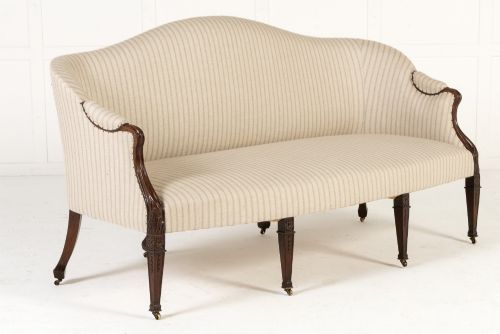


Neoclassical Upholstered Couch
These neoclassical upholstered couch pieces bring formal symmetry and structured seating to a room, offering both historical character and deep comfort.
Neoclassical Upholstered Couch
When you search for a neoclassical upholstered couch, you encounter formal seating that draws on classical antiquity through restrained ornament and balanced proportions. The items appearing here include pieces from the eighteenth century, the nineteenth century, the Georgian and Regency periods, and Edwardian revivals.
The forms span multiple stylistic interpretations, ranging from English George III and Hepplewhite designs to French Louis XVI style, giltwood frames, and Swedish Empire birch examples. These sofas and settees function as significant focal points in traditional and eclectic interiors alike.
Most examples present upholstered seating areas paired with exposed wooden or gilt frames, taking the shape of two-seater sofas, three-seater settees, and large country house seating. Their origins cross English, French, and Swedish workshops, displaying diverse regional takes on neoclassical taste.
How they were made
Makers constructed the structural frames of these seats using hardwoods such as mahogany and birch, alongside carved wooden elements finished with gilt or cream paint. These materials provided the necessary strength for supporting upholstered backs, arms, and seats.
Upholstery techniques involved traditional fabric applications using textiles like damask, linen, and general upholstery fabric to cover sprung or stuffed seating layers. Exposed frames often featured precise carving in the neoclassical manner, integrating classical motifs directly into the wood or gilt surface.
Neoclassical Upholstered Couch Retail Price Guide 2026
Typical asking prices for neoclassical upholstered couch among the pieces listed under this phrase on Sellingantiques today, from the lower quarter to the upper quarter. They describe what is for sale here now, not the wider market.
Several of these grand settees have spent centuries hosting generations of napping hounds without losing an ounce of their neoclassical dignity.
What varies in quality
The distinction between standard and superior pieces rests in the crispness of the frame carving and the fidelity of the period style. Master cabinetmakers executed proportions and classical details with sharper definition and greater architectural harmony.
Quality also resides in the selection of primary timbers, such as figured mahogany or dense birch, and the integrity of applied finishes like genuine giltwood or period-appropriate paint. Originality of the frame construction and the preservation of early structural joinery elevate the standing of an individual piece.
The Neoclassical Upholstered Couch Glossary
- Neoclassical
- A style spanning the eighteenth and nineteenth centuries that revived classical Roman and Greek motifs, order, and symmetry. It rejects heavy baroque curves in favour of straight lines and restrained ornamentation.
- Giltwood
- Wood that has been coated with a thin layer of gold leaf or gilt paint. This technique creates a luminous surface finish popular on formal French and English frames.
- Hepplewhite
- An eighteenth-century English design style associated with furniture maker George Hepplewhite, characterised by elegant shapes, shield backs, and tapered legs. Revival pieces emulate these refined proportions.
- Settee
- A long upholstered seat with a back and arms, designed for more than one person. It sits slightly smaller and lighter than a full-scale sofa.
- Swedish Empire
- A Scandinavian interpretation of the Empire style dating to the early nineteenth century. It frequently utilises native timbers such as birch combined with stark classical lines.
Neoclassical Upholstered Couch: Frequently Asked Questions
What defines a neoclassical couch?
These couches derive their aesthetic from classical antiquity, featuring straight tapered legs, urn or column motifs, and balanced proportions. They eschew excessive ornamentation in favour of architectural restraint and symmetry.
Craftsmen built them using traditional timber frames like mahogany or birch, often combining exposed carved wood with upholstered seating surfaces to balance formal elegance with comfort.
How do I date a settee?
Dating relies on examining construction methods, timber species, and stylistic markers tied to specific periods like George III, Regency, or Edwardian revivals. Secondary woods and joinery techniques offer clear clues to the decade of manufacture.
Comparing the decorative carving against known period pattern books helps separate eighteenth-century originals from later nineteenth-century or Edwardian interpretations.
Where should I place a gilt frame sofa?
Gilt frame settees work best in formal reception rooms, drawing rooms, or large living spaces where their reflective metallic finishes can catch natural light. They serve as primary statement seating against panelled or neutral walls.
Ensure the room has sufficient space to allow the sofa to sit away from high-traffic zones, protecting the delicate gilded surfaces from accidental knocks.
How do French and English styles differ?
French pieces, such as those in the Louis XVI style, often feature painted or giltwood frames with floral crests, rounded cartouche backs, and fluted legs. English equivalents like Hepplewhite or Regency designs tend to employ polished mahogany with sharper geometric lines.
Both traditions embrace classical restraint, but French seating leans towards decorative lightness while English versions emphasise architectural structure and timber grain.