

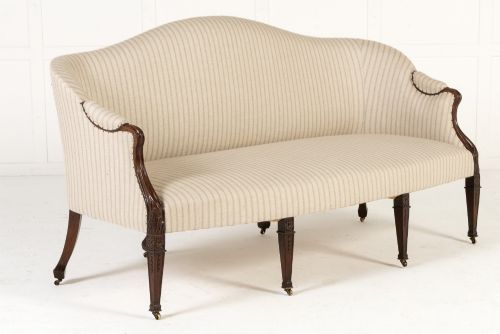


George III Mahogany Settee
These george iii mahogany settee pieces bring eighteenth-century refinement into a room through timber and upholstery.
George III Mahogany Settee
A george iii mahogany settee represents the seating of the late eighteenth century, built for formal parlours and reception rooms. These items take the form of multi-seat sofas with timber frames and upholstered cushions.
The most common examples on this page date from the eighteenth century, alongside later revival pieces produced in subsequent eras. Forms range from serpentine fronts and camel backs to chair-back settees.
Originating largely from English workshops, these items reflect the dominant aesthetics of the Georgian period. Makers of the era drew upon Hepplewhite and Chippendale design vocabularies to shape the mahogany frames.
How they were made
Construction relies upon solid timber frames shaped from mahogany, providing structural rigidity and a dark reddish-brown substrate. Artisans carved the exposed woodwork with restrained motifs characteristic of the period.
Upholstery forms a primary component of the construction, utilising materials such as horsehair, fabric, and damask. Brass elements occasionally appear as decorative tacks or functional hardware on the upholstered portions.
George III Mahogany Settee Retail Price Guide 2026
Typical asking prices for george iii mahogany settee among the pieces listed under this phrase on Sellingantiques today, from the lower quarter to the upper quarter. They describe what is for sale here now, not the wider market.
Materials recorded across the inventory include mahogany timber, brass hardware, and horsehair stuffing.
What varies in quality
The sophistication of the timber carving distinguishes finer examples from simpler workshops. Crisp lines on the mahogany frame indicate greater skill during initial shaping.
The choice of covering material alters the overall character, ranging from standard fabric to intricate damask upholstery. Original stuffing materials like horsehair contribute to historical integrity.
The George III Mahogany Settee Glossary
- Mahogany
- A durable tropical timber utilised for its rich grain and dark tone. It serves as the primary structural material for these frames.
- Serpentine front
- A curved seating rail that undulates outward in the centre and inward at the sides. This contour adds visual movement to the piece.
- Camel back
- An upholstered sofa back featuring a graceful, undulating crestline resembling a camel's hump. It provides a distinct silhouette against the wall.
- Horsehair
- Traditional stuffing material prized for its resilience and firmness. It offers structural support beneath the final layer of fabric.
- Damask
- A reversible figured fabric woven on a jacquard loom. It provides a formal sheen suited to eighteenth-century upholstery.
George III Mahogany Settee: Frequently Asked Questions
How do I use a settee today?
A george iii mahogany settee functions effectively as a principal seating arrangement in a drawing room or study. These pieces provide formal charm while remaining suitable for daily sitting.
Position the item against a panelled wall or floating within a spacious reception room to showcase the carved mahogany frame. Pair the seating with period-appropriate side tables to complete the layout.
What defines the George III style?
The George III style encompasses furniture produced during the reign of King George the Third, spanning the second half of the eighteenth century. This design vocabulary prioritises classical proportions, refined carving, and the extensive use of mahogany.
Craftsmen working in this manner often drew inspiration from designers such as Hepplewhite and Chippendale. The resulting items balance structural strength with decorative elegance.
How do I distinguish original pieces from revivals?
Distinguishing eighteenth-century examples from later revivals requires careful examination of timber patination, construction joints, and tool marks. Eighteenth-century frames show hand-tooling and natural wear consistent with age.
Revival pieces produced in the nineteenth and twentieth centuries often exhibit standardised machine cutting or different secondary timbers. Comparing the joinery to established period techniques clarifies the manufacturing era.
What maintenance do these settees require?
Maintenance involves protecting the mahogany woodwork from direct sunlight and maintaining stable humidity levels in the room. Dusting the carved frame regularly preserves the finish of the timber.
Upholstered surfaces benefit from gentle vacuuming with a soft brush attachment to remove particulate matter. Professional textile cleaning protects delicate fabrics like damask from premature wear.