

Neoclassical Table Lamps Pair
These neoclassical table lamps pair selections combine symmetrical design with classical motifs to anchor a room.
Neoclassical Table Lamps Pair
A neoclassical table lamps pair brings balanced illumination through matching columns, urns, or candelabra conversions rooted in 18th-century design principles. Buyers encounter matching lamp bases derived from classical architectural forms rather than single freestanding lights.
The selections span 19th-century works alongside Edwardian and early 20th-century revivals, drawing on French Empire and Louis XVI aesthetics. These paired lights often originate from architectural conversions or decorative urns adapted for domestic electricity.
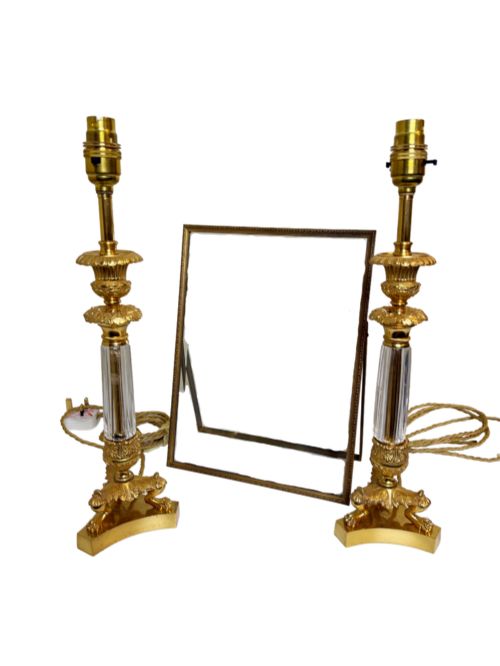
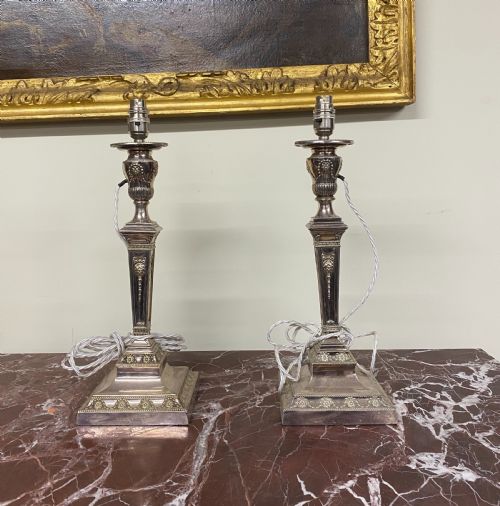
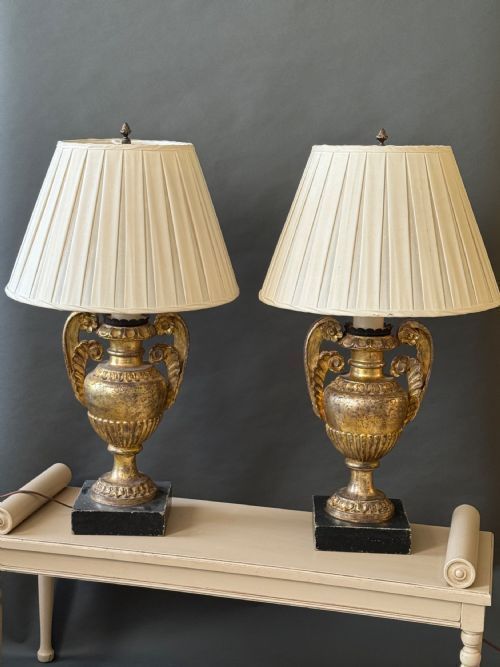
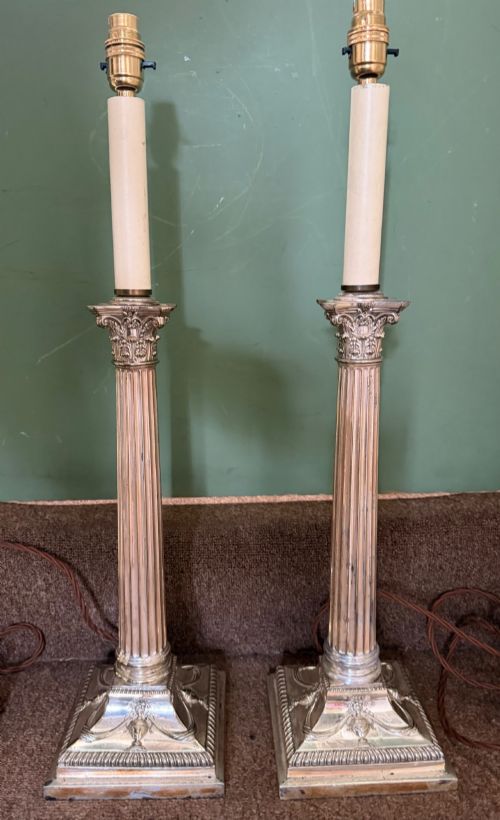
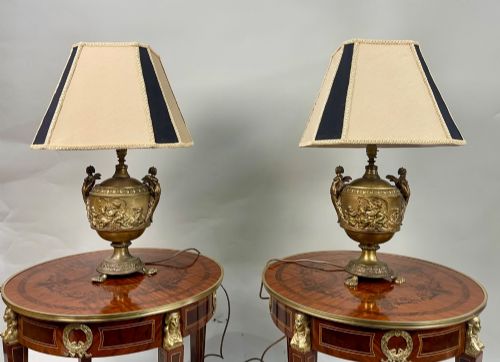
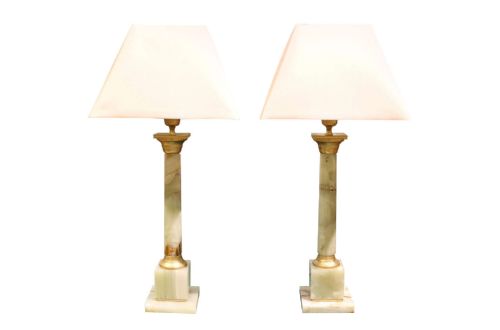
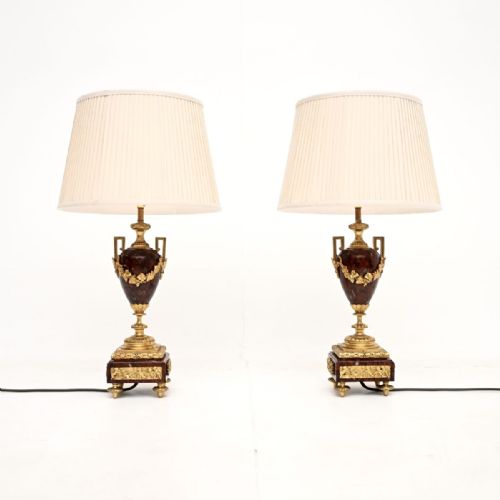
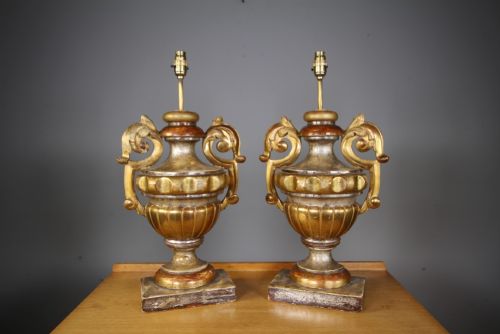
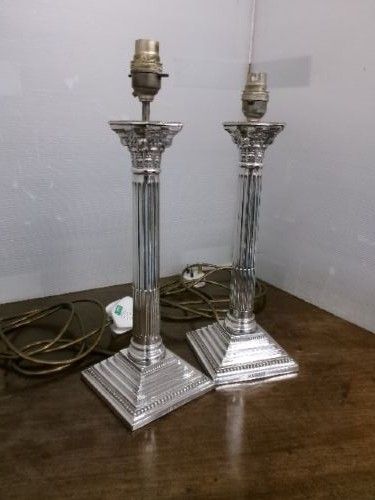
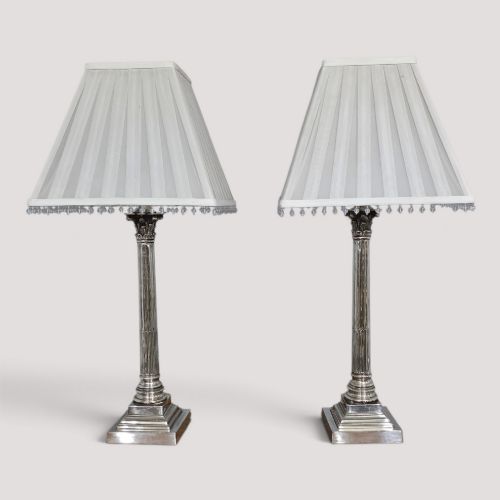
Forms include Corinthian columns, rouge marble cassolettes, and ewer-shaped vessels designed to stand symmetrically on side tables or pedestals. Each matching set maintains proportional balance to serve both functional lighting and architectural symmetry.
What varies in quality
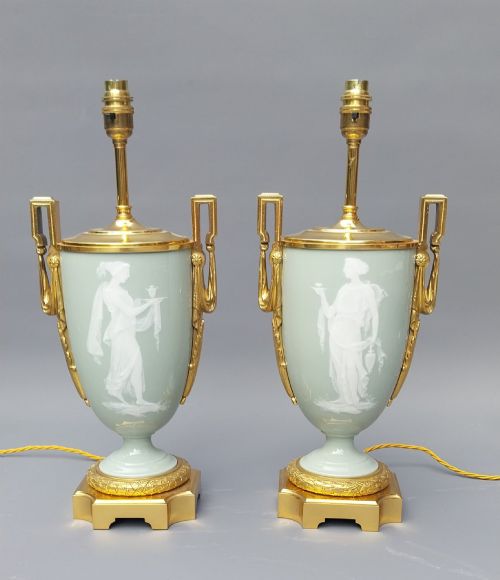
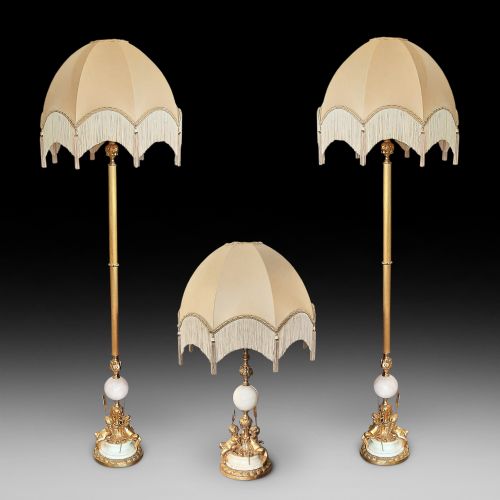
Quality rests in the crispness of the chasing on gilt bronze mounts and the purity of the marble or alabaster shafts. Superior examples exhibit finely articulated relief work, such as distinct putti figures or sharply cast Corinthian capitals.
The weight and gauge of the brass, silver plate, or ormolu dictate the substance of the pair, alongside the integration of original components during any period conversion. Matching symmetry between the two pieces remains essential to the standing of the set.
Neoclassical Table Lamps Pair Retail Price Guide 2026
Typical asking prices for neoclassical table lamps pair among the pieces listed under this phrase on Sellingantiques today, from the lower quarter to the upper quarter. They describe what is for sale here now, not the wider market.
Keep an eye out for mythological merman twin-arm candelabra holding up the light.
Mallett
The Neoclassical Table Lamps Pair Glossary
- Ormolu
- Gilded bronze used extensively for mounts and decorative fittings in French furnishings. It provides a rich gold-coloured surface finish that characterises fine period metalwork.
- Corinthian column
- An architectural column order featuring ornate capitals decorated with acanthus leaves. This form frequently inspires the vertical shafts of classical lamp bases.
- Pâte-sur-pâte
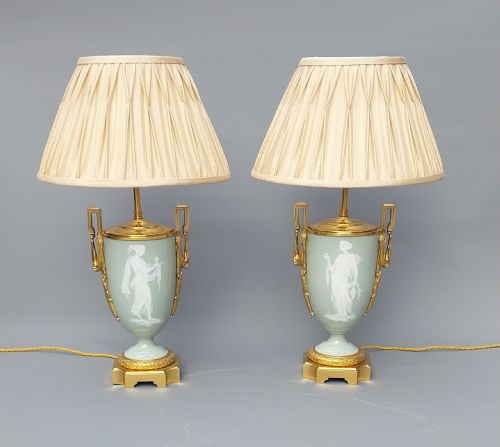
- A ceramic decorating technique where liquid clay is applied in layers to create a raised cameo effect. It appears on porcelain bodies paired with gilt bronze mounts.
- Cassolette
- A decorative vase or vessel equipped with a reversible lid that functions either as a container or a burner. These forms are frequently adapted into matched lamp bases.
- Tole-peinte
- Painted sheet metal used for decorative lamp bodies and canisters. It offers a smooth surface for applied colour and classical motifs.
Neoclassical Table Lamps Pair: Frequently Asked Questions
How do I style a pair?
Place matching lamps symmetrically on side tables, buffets, or pedestals to anchor a room with classical balance. Their paired height creates a unified focal point across a mantel or large surface.
Ensure the scale of the lamps matches the surrounding furniture so the pair commands the space without overwhelming it.
Are these lamps conversions?
Many examples began life as architectural columns, urns, cassolettes, or candelabra before being adapted for electrical wiring. These period adaptations preserve the original decorative art while adding modern utility.
Collectors value the retention of original mounts and material integrity despite the internal wiring update.
What materials are common?
The selection relies heavily on cast metals, brass, silver plate, and ormolu paired with natural stones like marble, alabaster, and onyx. Porcelain bodies with pâte-sur-pâte decoration also feature prominently.
These durable materials support intricate surface detailing and provide substantial weight to the lamp bases.
How do I tell periods apart?
Eighteenth-century and early 19th-century pieces often display heavier cast ormolu and authentic classical proportions derived directly from archaeological revivals. Later 19th-century and Edwardian examples incorporate revival styles with varied plating techniques and refined surface chasing.
Examining the construction of the base mounts and the wear on the metal helps determine the manufacturing era.