


Neoclassical Table Centrepiece
These neoclassical table centrepiece examples bring classical proportion and silver plate or gilt bronze to the dining table.
Neoclassical Table Centrepiece
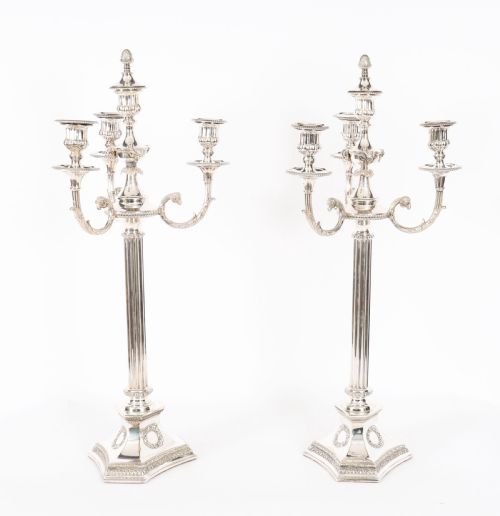
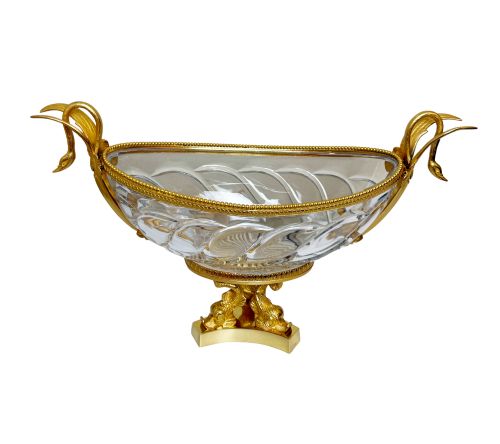
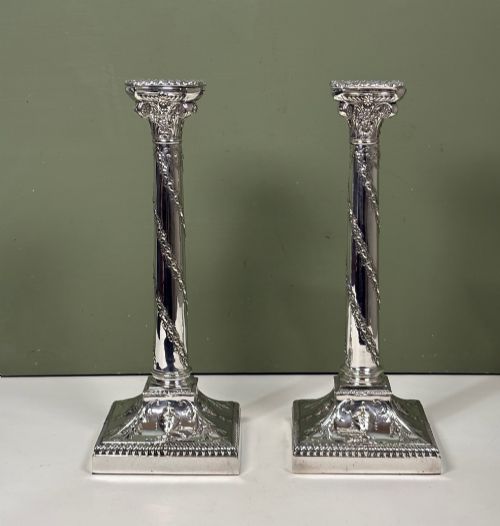
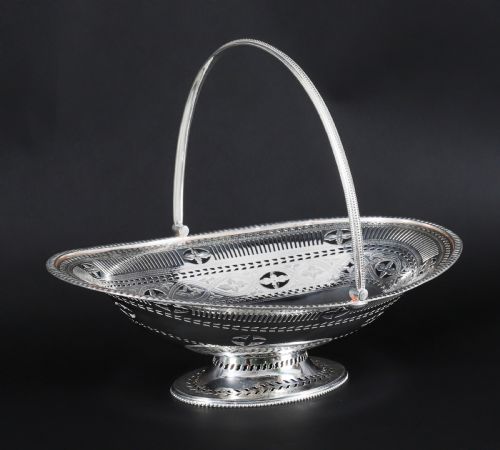
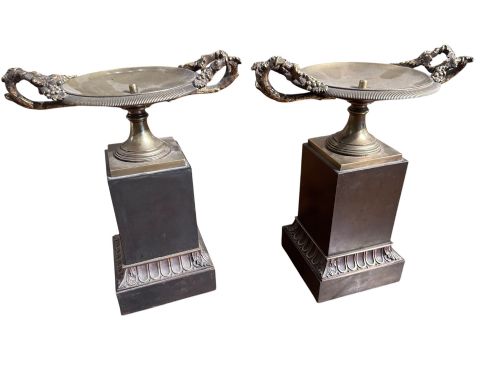
A neoclassical table centrepiece brings classical proportion to the dining table through forms like tazzas, jardiniere bowls, and fruit baskets. The pieces on this page span the eighteenth century to the twentieth century, with nineteenth-century silver plate and bronze items appearing frequently.
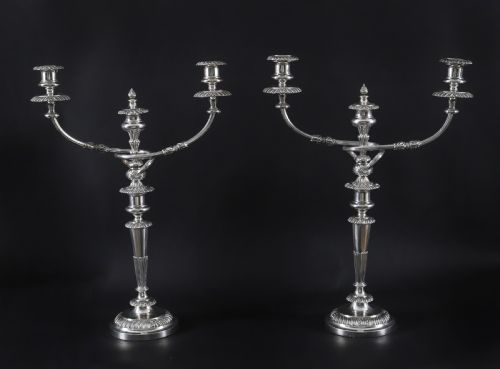
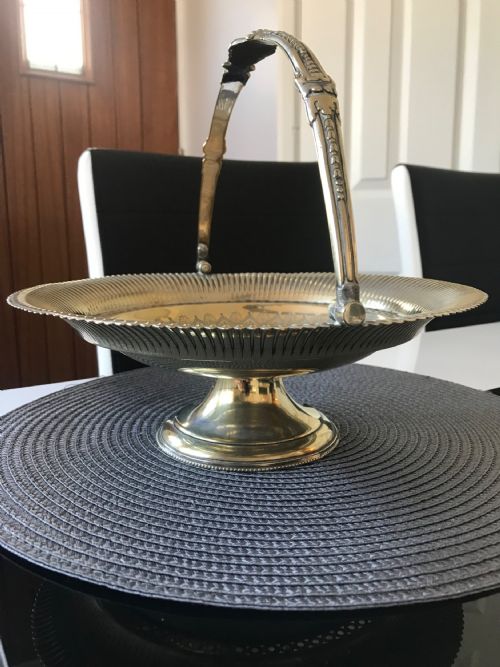
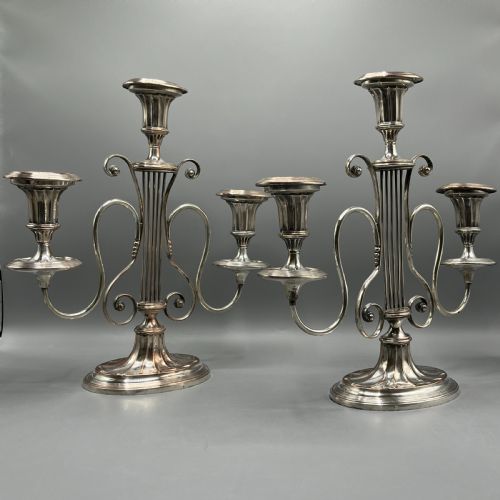
Makers shaped these items as candelabra, candlesticks, and decorative baskets using styles ranging from George III and French Empire to Victorian and Art Deco. Buyers encounter multi-light candelabra alongside glass inserts and marble bases.
What varies in quality
The weight of the metal and the crispness of the cast ornamentation separate the finer examples from simpler production. Heavy gilt bronze and substantial silver plate retain sharp detail in acanthus leaves and classical motifs.
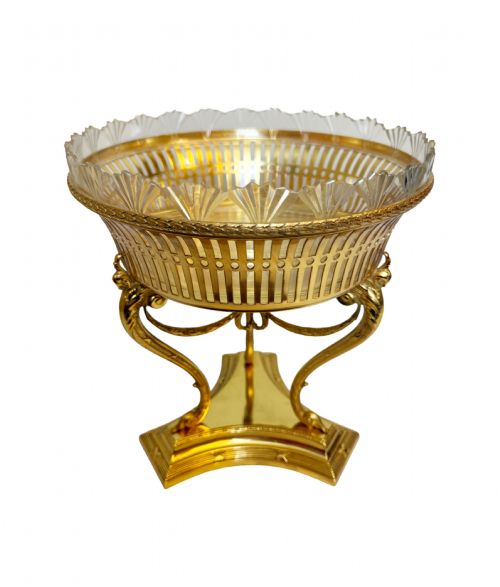
The clarity and depth of cut glass inserts alongside the integrity of the underlying bronze or silver plating define the standing of each piece. Superior items show harmonious proportions between the metalwork and any glass or marble components.
Listings feature items in silver plate, bronze, and gilt bronze spanning the eighteenth to twentieth centuries.
Matthew Boulton·Barker Ellis
The Neoclassical Table Centrepiece Glossary
- Candelabra
- A branched candlestick holding multiple lights. These branch arrangements often feature removable arms for conversion.
- Tazza
- A shallow bowl on a tall foot, used historically for serving small foods or display. They appear in pairs alongside marble and ormolu.
- Jardiniere
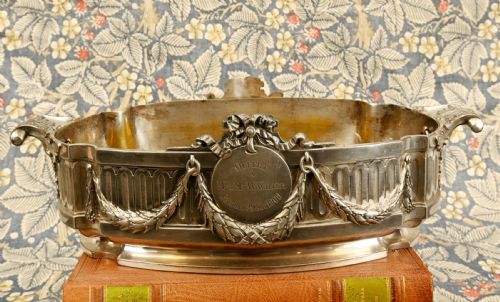
- A decorative pot or stand designed to hold growing plants or flowers. These items often incorporate cut glass bowls within bronze frames.
- Old Sheffield plate
- An early form of plating created by fusing a thin sheet of silver to a thicker copper core. This technique predates modern electroplating methods.
- Ormolu
- Gilt bronze ornamentation applied to furniture, clocks, and decorative objects. The technique involves finishing bronze with a fine gold amalgam.
Neoclassical Table Centrepiece: Frequently Asked Questions
What is a neoclassical table centrepiece used for?
These pieces serve as the focal point of a dining table or sideboard, historically holding fruit, sweetmeats, or floral arrangements.
Many examples incorporate arms for candles to illuminate formal dining spaces.
How do I date an antique candelabra?
Dating relies on stylistic markers such as George III proportions, Victorian neoclassical motifs, or later Art Deco geometry.
Hallmarks on silver and silver plate provide specific assay office and year indicators.
What is the difference between silver plate and solid silver?
Solid silver items are made entirely of precious metal throughout their structure, often bearing full town and maker hallmarks.
Silver plated items feature a thin layer of silver bonded to a base metal such as copper or nickel silver.
How do I care for gilt bronze and ormolu?
Dusting gently with a soft, dry cloth prevents the accumulation of dirt on delicate chased surfaces.
Moisture and harsh chemical cleaners must be avoided to protect the historic gilt finish.