
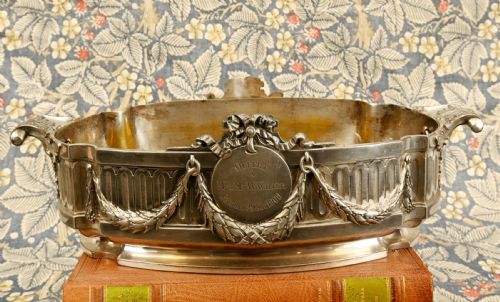


French Silver Centrepiece
A french silver centrepiece brings grand dining to the table, taking shape as a silver-plated bowl, mirrored plateau or figural candelabra.
French Silver Centrepiece
A french silver centrepiece serves as the main decorative focal point for a dining table, spanning forms such as planters, jardinieres, plateau mirrors, candelabra, serving dishes, decorative bowls and tazzas. These pieces emerge across periods from the nineteenth century through to nineteen thirty, showing how table decoration evolved over decades.
The objects appearing on this page include nineteenth century neo-classical planters, Napoleon III silvered bronze bowls after Lerolle Fres, and Victorian rococo revival cut crystal centrepieces. Buyers also encounter Art Nouveau crystal and silver metal candelabra alongside nineteen thirty Art Deco silver-plated bread baskets and modernist chrome comports.
Origins stretch across classic French design movements, taking in French Empire, Napoleon III and French Art Deco aesthetics. Many pieces incorporate cut crystal liners, glass inserts or marble and wood elements to support floral displays, fruit or candle illumination.
Materials and construction
Maker workshops utilised silver plate, silvered bronze, electroplated nickel silver and silver metal over base metals, alongside chrome during the Art Deco era. These metallic structures often incorporate cast figural elements, cherubs or neo-classical motifs produced in French foundries.
Sorcerer type plateau mirrors distort dinner table reflections, turning guests into curious optical illusions.
Quality and craftsmanship
Quality rests on the crispness of the casting in bronze or metal mounts and the depth of the silver plating. Pieces associated with documented makers or specific sculptural models display superior hand-finishing in chased details.
The integration of materials dictates overall execution, particularly where heavy cut crystal or mercury glass meets intricately pierced silver-plated metalwork. Heavier gauges of metal and substantial marble or mirrored bases distinguish more ambitious commissions from standard production.
Lerolle Fres·Brille, Paris·Christofle et Cie
The French Silver Centrepiece Glossary
- Centrepiece
- A large decorative object placed in the middle of a dining table. These items often incorporate bowls, baskets or figural supports.
- Jardinerie
- An ornamental stand or bowl designed to hold plants and flowers. They frequently feature pierced metal galleries and glass liners.
- Plateau Mirror
- A mirrored glass tray placed on the table to reflect light and elevate centrepieces or candelabra. Sorcerer type mirrors distort reflections slightly for dramatic effect.
- Tazza
- A shallow bowl or cup elevated on a stem and foot. They appear singly or in matched pairs for fruit or sweet service.
- Mercury Glass
- Double-walled glass blown with a silvering solution sealed inside. This technique creates a reflective, mirror-like sheen.
French Silver Centrepiece: Frequently Asked Questions
What is a french silver centrepiece used for?
These pieces function as table ornaments, holding floral arrangements, fruit, bread or candles during formal meals. They anchor the visual arrangement of a dining table.
Many designs include detachable glass liners or shallow bowls specifically intended to contain water and fresh flowers without damaging the metal structure beneath.
How do I clean silver-plated centrepieces?
Maintenance requires gentle cleaning with a soft cloth and dedicated silver care products designed for plated surfaces. Abrasive cleaners strip the thin layer of silver from the base metal.
Glass inserts and crystal bowls lift out from the metal framework, allowing them to be washed separately in warm soapy water.
What is the difference between silver plate and silvered bronze?
Silver plate involves applying a thin layer of silver over a base metal such as nickel silver or copper. This provides a bright reflective finish typical of nineteenth and twentieth-century dining wares.
Silvered bronze applies a silver finish directly to a cast bronze sculpture. This technique highlights the fine chased details of figures and classical mounts.
How do I identify Art Deco pieces?
Art Deco centrepieces feature geometric lines, smooth chrome surfaces and streamlined bowls without excessive ornamentation. They often date around nineteen thirty.
Earlier nineteenth-century pieces lean towards neo-classical symmetry, rococo curves or elaborate naturalistic floral motifs associated with Victorian revivals.