



Neoclassical Storage Chest
A neoclassical storage chest brings symmetry and architectural order to a room, offering structured storage built to last through the centuries.
Neoclassical Storage Chest
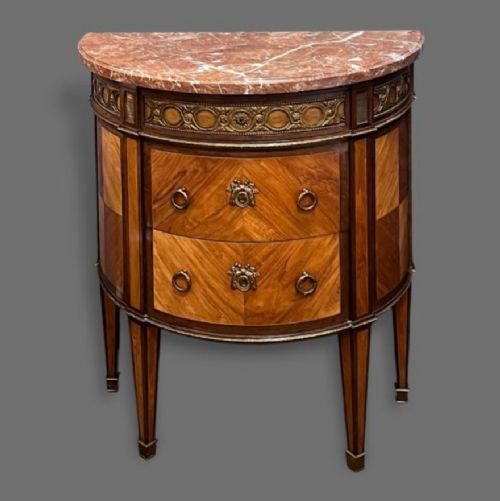
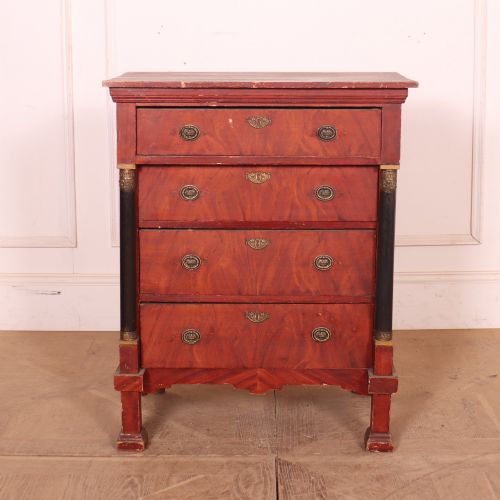
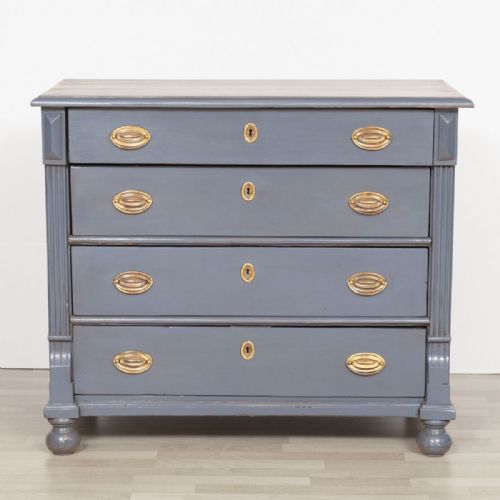
A neoclassical storage chest embodies the balanced proportions, clean lines, and classical restraint associated with the movement. These pieces primarily manifest as commodes, chests of drawers, and occasional cabinets originating across various European regions.
Buyers will encounter French, Italian, Swedish, and Dutch examples most frequently on this page. These pieces date predominantly from the eighteenth and nineteenth centuries, spanning periods such as the Georgian and Victorian eras.
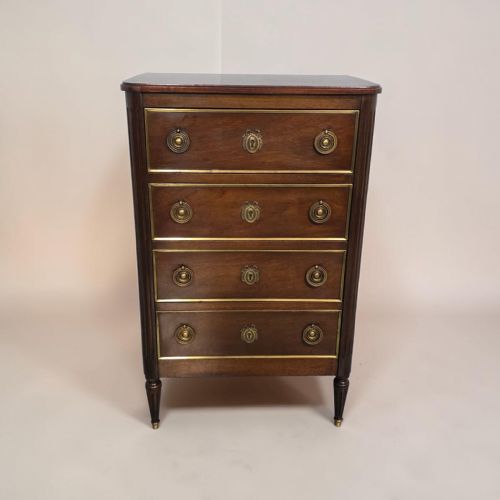
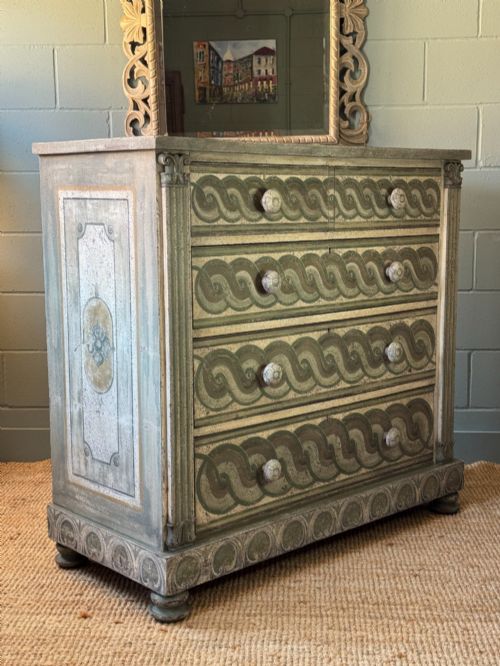
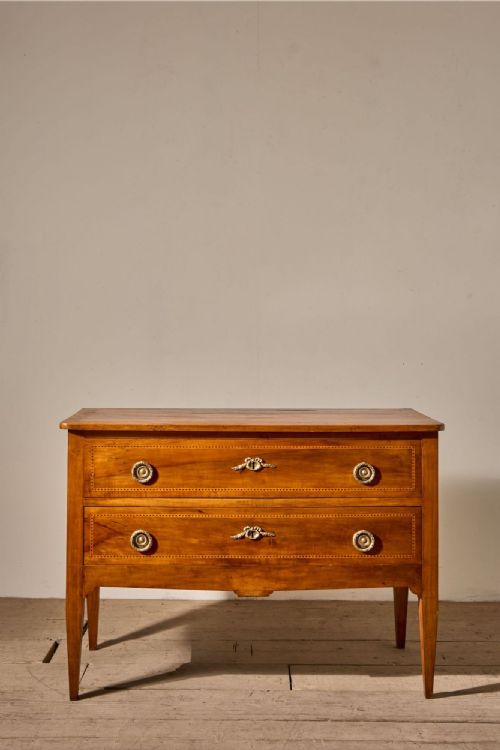
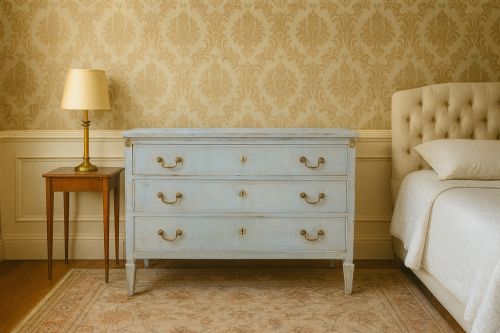
The form typically presents a rectangular or demi-lune silhouette raised on tapering legs or a solid plinth base. Drawer configurations range from three to four stacked rows, often featuring brass or ormolu mounts.
Materials and construction
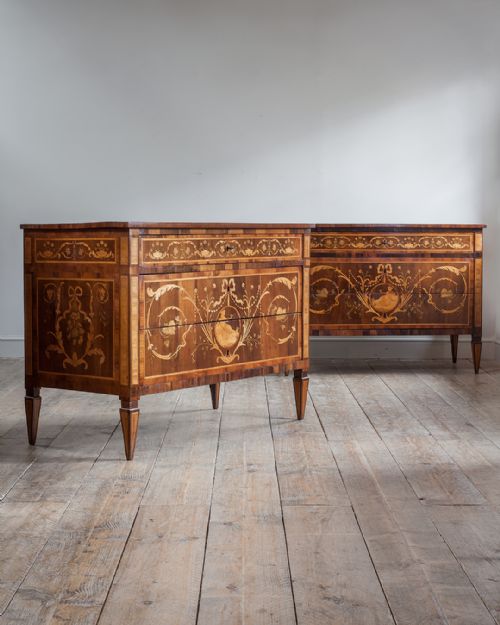
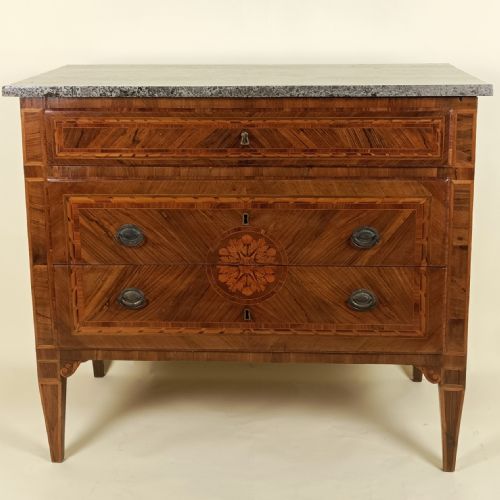
Cabinetmakers utilised dense hardwoods such as mahogany, walnut, and cherrywood for structural stability and cabinet carcasses. Overlay veneers and marquetry patterns incorporated exotic timbers including satinwood and kingwood to create geometric or figural surface designs.
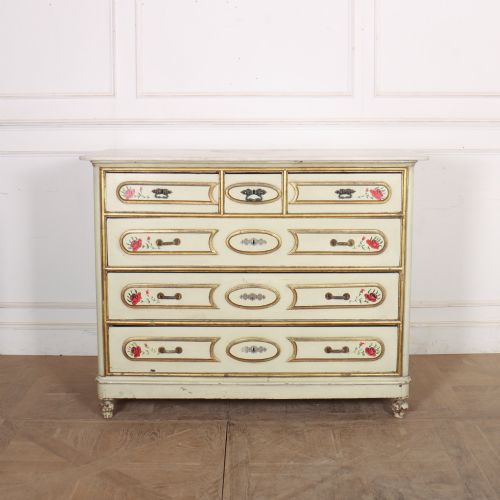
Stone tops, particularly marble, provide a durable and cool horizontal surface on many commodes. Applied ormolu mounts and cast brass handles furnish decorative contrast against the dark timber or painted wood finishes.
Materials recorded across the current inventory include marble, brass, mahogany, walnut, satinwood, cherrywood, birch, and painted wood.
Evaluating quality and execution
The refinement of the cabinetwork dictates the distinction between standard and superior pieces. Finer examples display precise dovetail joinery in the drawer construction and carefully matched wood veneers across the drawer fronts.
The execution of surface decoration also separates tiers of quality. Hand-carved ormolu mounts, intricate marquetry, and well-preserved painted or polished surfaces demonstrate superior workshop output.
Mon Krieger·Riesener
The Neoclassical Storage Chest Glossary
- Commode
- A low chest of drawers or cabinet developed in France during the seventeenth century. These pieces usually feature multiple drawer tiers and often stand on relatively tall legs.
- Marquetry
- The art of applying decorative pieces of veneer to a structure to form intricate designs or pictures. Craftsmen utilise various coloured woods to achieve tonal depth.
- Ormolu
- Gilded bronze used for decorative mounts and furniture hardware. Artisans cast and finish these metal elements to accent corners, key escutcheons, and drawer pulls.
- Demi-lune
- A half-moon shape characteristic of certain console tables and commodes. This curved front profile softens the linear geometry typical of classical furniture.
- Parquetry
- A geometric mosaic of wood pieces used for decorative floors and furniture surfaces. This technique creates repeating patterns such as cubes or chevrons.
Neoclassical Storage Chest: Frequently Asked Questions
How do I care for a marble top?
Clean marble surfaces using a soft cloth dampened with warm water and mild, pH-neutral soap. Avoid acidic liquids, vinegar, or harsh chemical cleaners that can etch the stone.
Place protective felt pads under any decorative objects or lamps set upon the marble. Periodic re-sealing helps protect the stone from absorbing accidental spills.
Where should I place this chest?
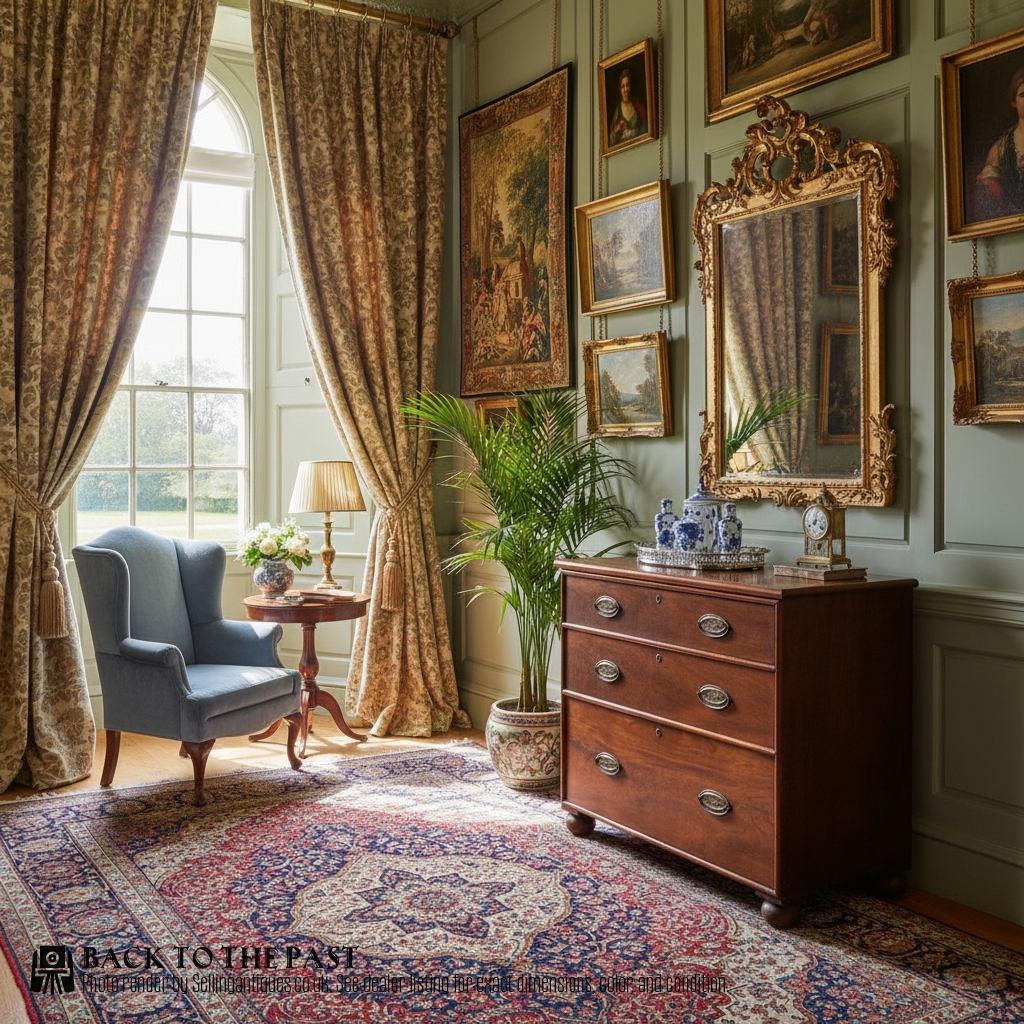
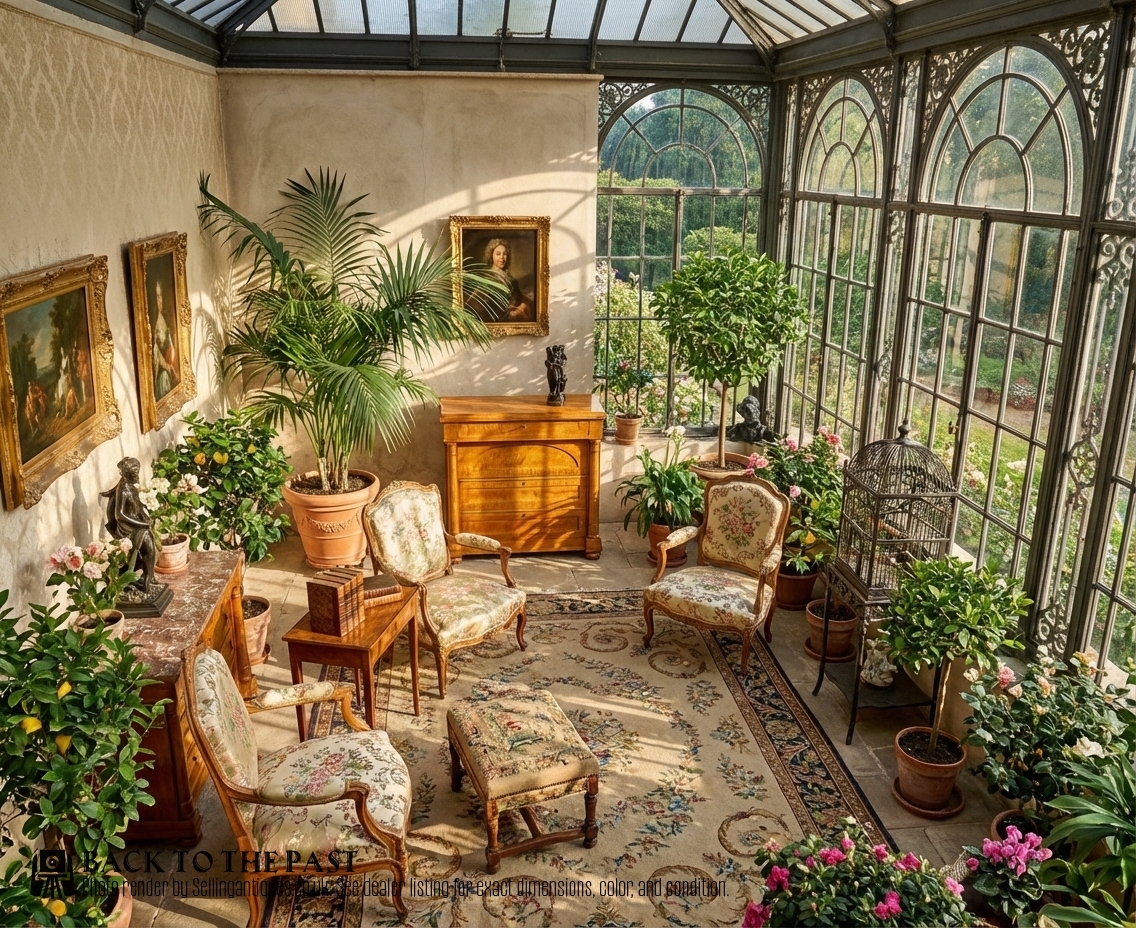
A neoclassical storage chest functions well as a focal point in a hallway, drawing room, or bedroom. The flat top surface provides a display area for mirrors, lamps, or decorative objects.
Keep the piece away from direct heat sources and strong sunlight to prevent the timber or painted finishes from drying out or fading over time.
How do I distinguish regional styles?
Regional characteristics often reveal the origin of a piece through timber choice and painted finishes. Swedish and Dutch examples frequently display bright painted surfaces or light birch timbers.
Italian and French pieces lean towards rich walnut, mahogany, or elaborate marquetry and ormolu mounts. Reviewing the specific drawer construction and secondary woods also aids identification.
Are these chests suitable for daily use?
These pieces were built for practical storage and remain sturdy enough for regular domestic use. The drawers provide deep compartments for linens, clothing, or household items.
Opening and closing drawers gently preserves the antique runners and internal framing. Avoid overloading the drawers to maintain the structural integrity of the timber joints.