


Neoclassical Stone Ornament
Neoclassical stone ornament brings classical antiquity into gardens and rooms through carved marble, reconstituted stone and polished porphyry.
Neoclassical Stone Ornament
Neoclassical stone ornament encompasses architectural forms, garden statues and decorative objects inspired by ancient Greece and Rome. Buyers seek these pieces to anchor a garden landscape or bring sculptural presence to an interior space.
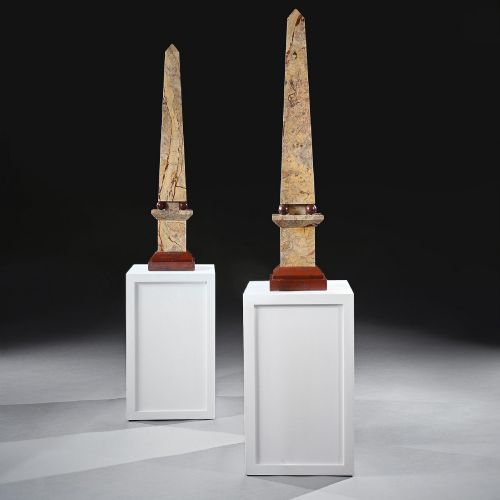
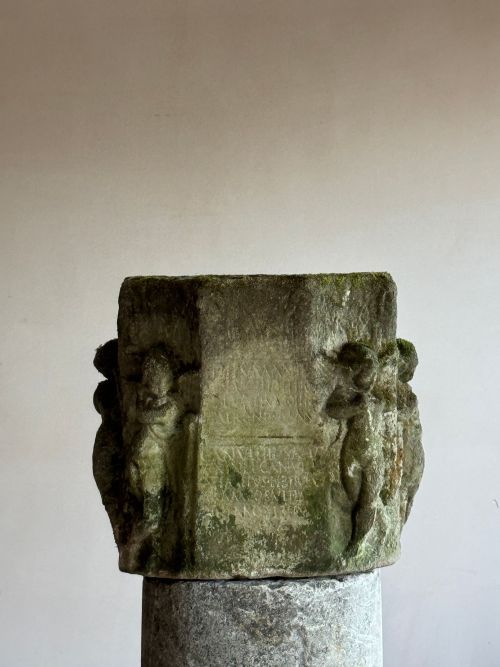
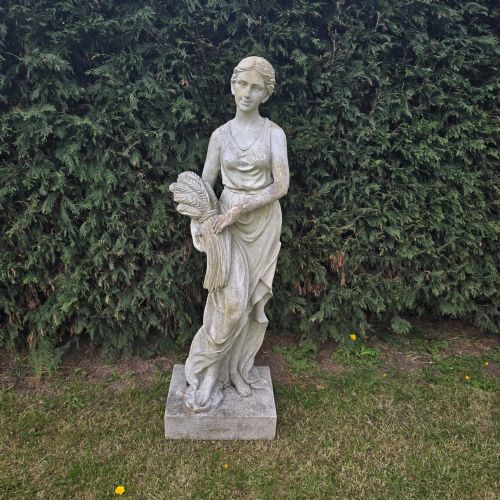
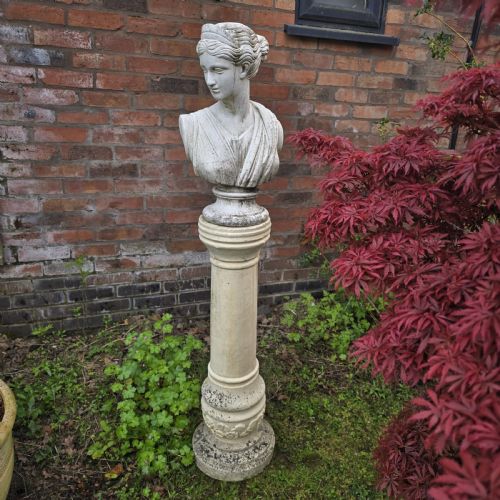
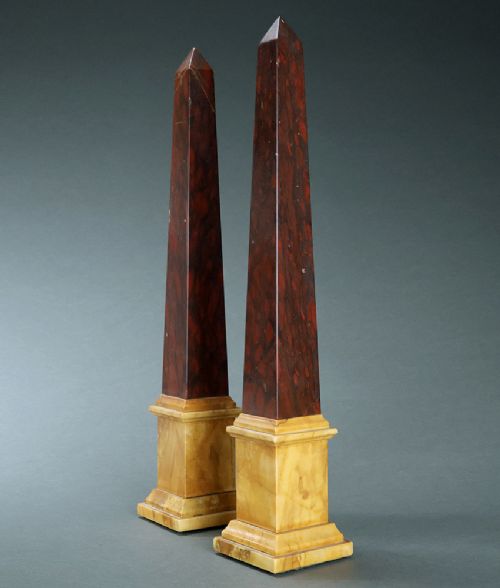
The selections on this page span the nineteenth and twentieth centuries, including Grand Tour souvenirs, garden urns and substantial marble obelisks. Figures of classical deities and allegorical subjects appear alongside architectural pedestals and finials.
Italian workshops and regional stone carvers produced the majority of these works, utilising marbles, limestones and cast stone. Pieces range from monumental garden statuary to small specimen objects designed for domestic display.
Materials and construction methods
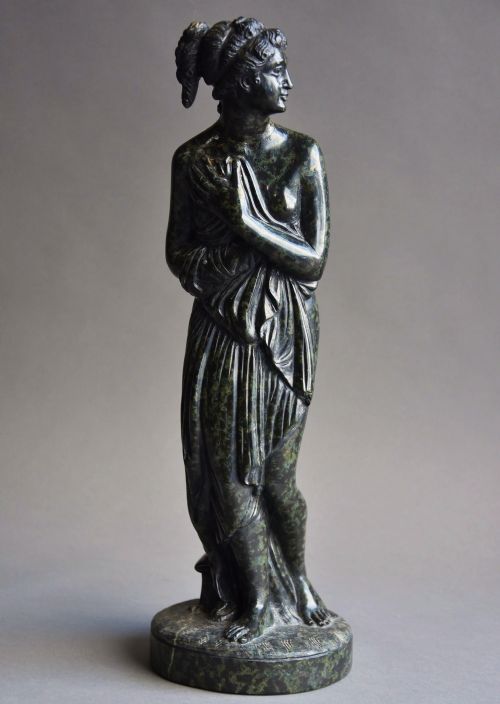
Carvers shaped solid blocks of white marble, green serpentine, Portasanta and Rosso Antico marble using chisels, rasps and hand drills. Polished surfaces reveal the natural grain and fossil inclusions of the stone.
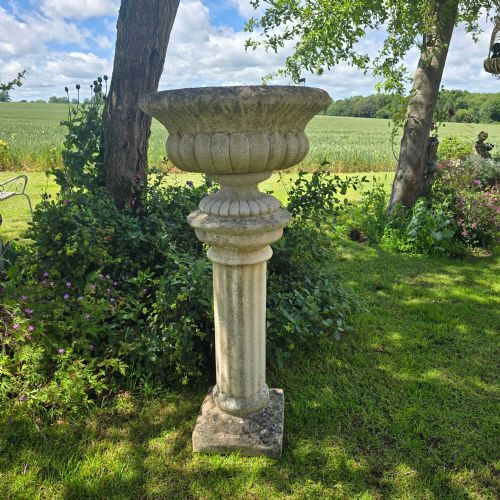
Cast stone and reconstituted stone pieces utilise aggregate mixtures poured into moulds to replicate the appearance of carved limestone or marble. Garden statuary and pedestals frequently employ these durable composite materials for outdoor placement.
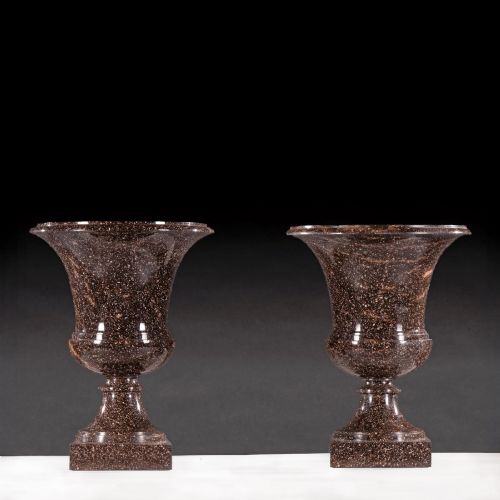
Grand Tour souvenirs incorporate specimen marbles assembled from regional geological samples, while Swedish Blyberg porphyry demonstrates specialised hard-stone cutting techniques.
Alcibiades lends his famous dogs to nineteenth-century Italian serpentine carvers, proving that ancient loyalties translate exceptionally well into green marble.
Distinctions in execution and material
Selim Bright·Antonio Canova
The Neoclassical Stone Ornament Glossary
- Obelisk
- A tall, four-sided, narrow tapering monument which ends in a pyramid-like shape at the top. These decorative objects frequently appear in specimen marbles from Italian workshops.
- Campana urn
- A bell-shaped vessel with flared rims and handles, derived from ancient examples. These garden and tabletop vessels are often carved from marble or porphyry.
- Grand Tour
- A traditional trip of Europe undertaken by upper-class European young men of sufficient means. Souvenirs from these travels included miniature marble obelisks and serpentine figures.
- Serpentine
- A group of green silicate minerals often used as a decorative stone. Italian carvers utilised this material for classical models and animal figures.
- Porphyry
- An igneous rock containing large crystals, highly valued for its purple or red coloration and hardness. Swedish examples appear in classical urn forms.
Neoclassical Stone Ornament: Frequently Asked Questions
How do I care for marble garden ornaments?
Marble statuary benefits from gentle cleaning with water and soft brushes to remove biological growth without damaging the surface. Winter protection prevents frost damage in colder climates.
Indoor marble requires only dusting and occasional wiping with a damp cloth. Avoid harsh chemical cleaners that etch polished stone.
What is a Grand Tour souvenir?
Grand Tour souvenirs are smaller-scale replicas of classical sculptures and architectural monuments purchased by travellers during eighteenth and nineteenth-century European journeys. These pieces served as scholarly mementoes for home display.
They range from specimen marble obelisks to carved serpentine figures after ancient prototypes.
Where were these stone ornaments placed?
Garden statues, urns and pedestals historically occupied formal terraces, lawns and courtyards to frame landscape vistas. Obelisks and busts served as focal points in gardens and grand interiors alike.
Smaller decorative objects and figural groups found placement on tables, mantelpieces and cabinets within nineteenth-century drawing rooms.
How do I distinguish cast stone from carved marble?
Carved marble displays natural veining and tool marks left by the carver's chisel upon close inspection under good light. The crystalline structure of the stone remains visible beneath the polished surface.
Cast stone often reveals a granular composite texture under magnification and may show mould seams where the liquid aggregate mixture was joined.