





Neoclassical Side Cupboards
Neoclassical side cupboards bring architectural symmetry and refined marquetry to a room, offering practical storage disguised as classical art.
Neoclassical Side Cupboards
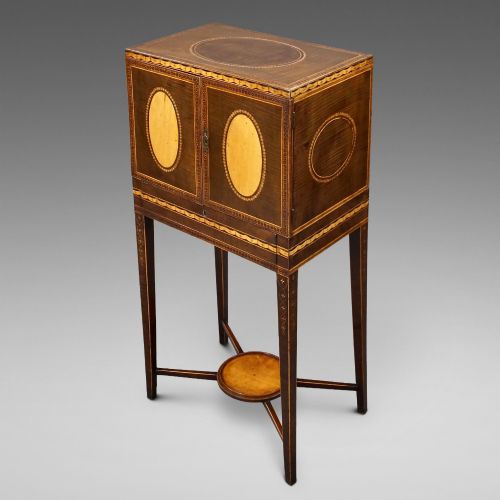
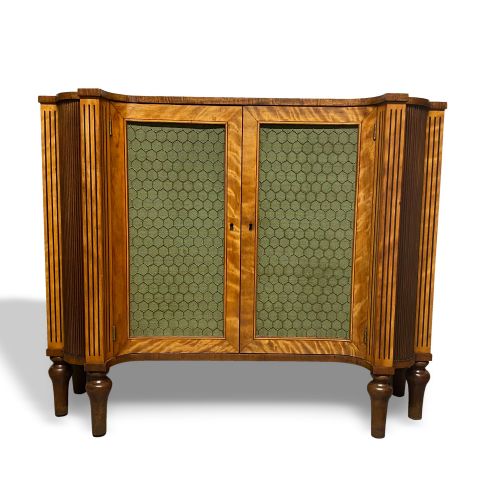
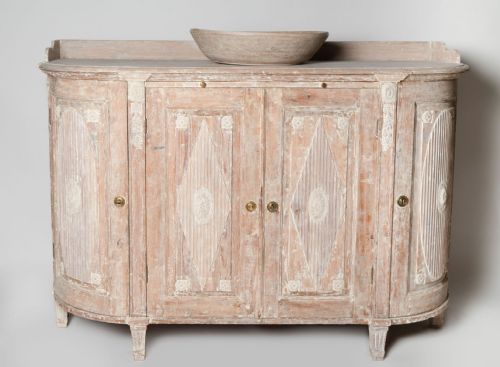
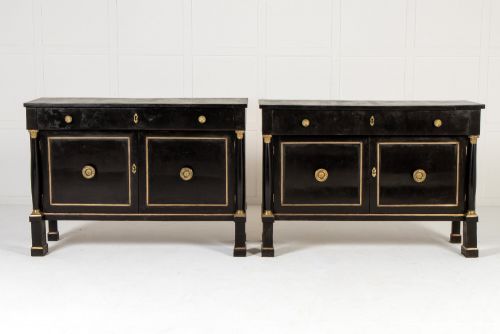
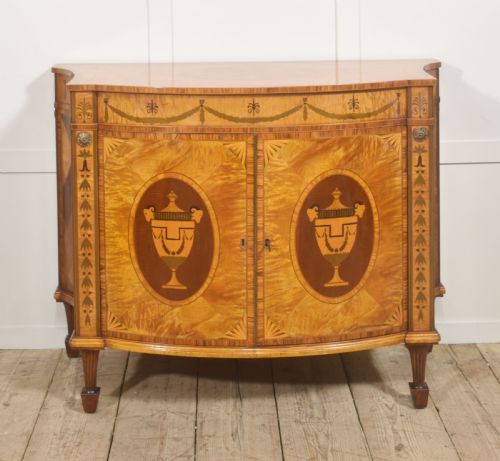
Neoclassical side cupboards are formal storage pieces designed to hug a wall, taking the form of demi-lune commodes, bow-front cabinets, and low sideboards.
You will most frequently encounter satinwood and mahogany revival pieces from the late nineteenth and early twentieth centuries, alongside eighteenth-century Italian and French examples.
These items range from diminutive bedside tables and nightstands to tall porcelain-mounted cabinets and grand buffets.
Materials and construction
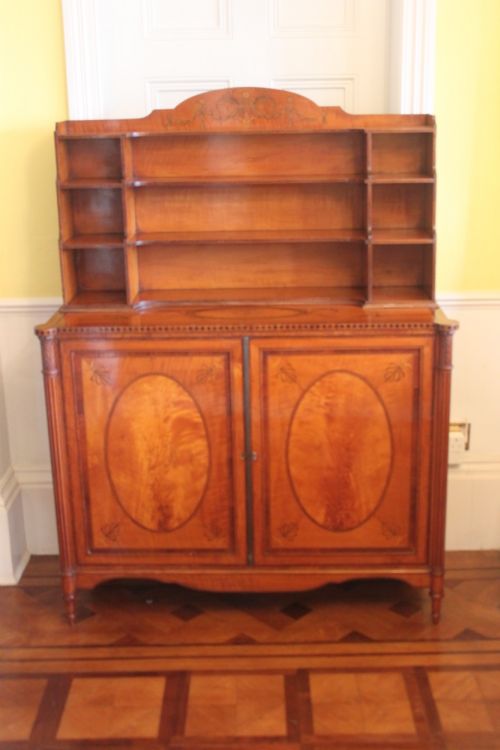
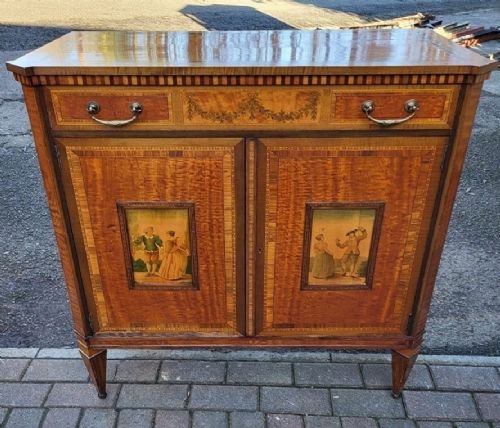
Cabinet makers built these pieces using foundational timbers like mahogany, walnut, and pine, often applying fine veneers of satinwood and harewood to the exterior.
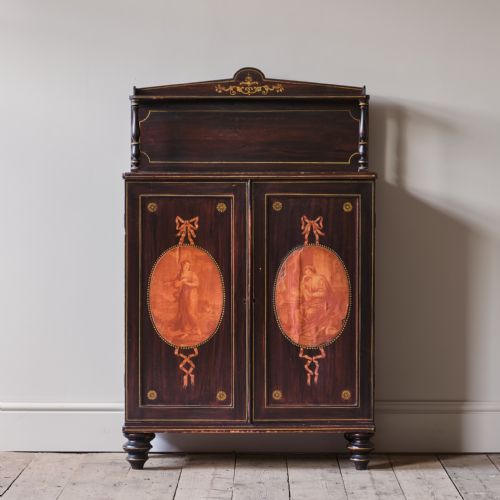
Decoration relied heavily on intricate marquetry, boxwood inlay, and hand-applied paint, supplemented by cast brass and ormolu mounts.
Structural flourishes included marble tops, tambour fronts, and parcel gilt detailing executed in revival styles such as Sheraton, Adam, and Louis XVI.
Listings feature satinwood, mahogany, and walnut woods across eighteenth-century, Victorian, and early twentieth-century periods.
Quality and execution
The distinction between standard production and exhibition quality rests on the crispness of the marquetry and the fidelity of the classical proportions.
Master workshops distinguished their output through the weight of the ormolu mounts, the selection of figured timber veneers, and the hand-painted pictorial details.
Ince & Mayhew·Pietro Ferrario·Maple & Co.·Edmond Poteau
The Neoclassical Side Cupboards Glossary
- Demi-lune
- Half-moon shape. This curve is typical of commodes and side cabinets designed to sit flush against a wall.
- Marquetry
- Inlaid wood patterns. Craftsmen used various coloured woods to create pictorial designs on the cabinet surface.
- Ormolu
- Gilded bronze. This material served for decorative mounts and feet on French and revival pieces.
- Parcel gilt
- Partially gilded. Gold leaf was applied selectively to highlight carved wooden details.
- Tambour
- Slatted sliding door. Thin strips of wood glued to canvas allowed doors to curve around cabinet corners.
Neoclassical Side Cupboards: Frequently Asked Questions
What is a neoclassical side cupboard?
These are decorative storage items influenced by classical Greek and Roman design, featuring balanced proportions, urn or floral inlays, and tapered legs.
They function as commodes, sideboards, or bedside cabinets in refined interiors.
How do I spot a revival piece?
Revival pieces from the Victorian and Edwardian eras imitate eighteenth-century forms like Sheraton and Adam styles using mechanical veneering techniques.
Look at the interior secondary woods and the style of the hardware to determine the actual period of manufacture.
Where were these cupboards placed?
Original locations included formal dining rooms, grand hallways, and bedrooms where they held porcelain, linens, or personal items.
Today they serve similar auxiliary storage roles in living rooms and entryways.
Are painted finishes original?
Many eighteenth and nineteenth-century pieces feature painted decorations, simulated wood grain, or delicate floral scenes applied by period artists.
Condition and patination of the painted surface help confirm whether the decoration dates to the original construction or a later revival.