
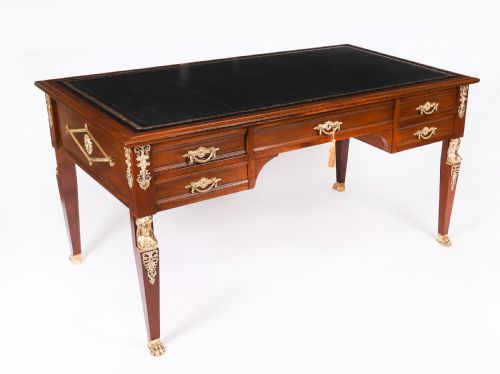
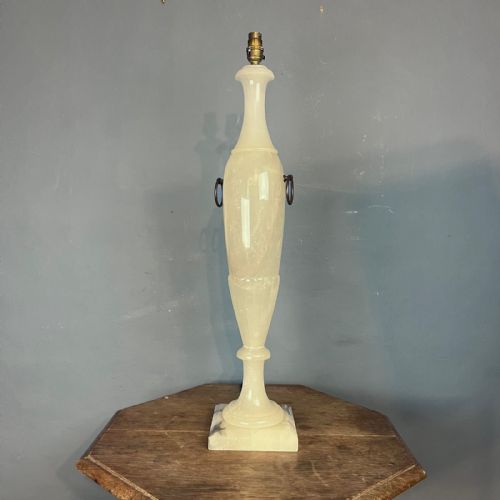
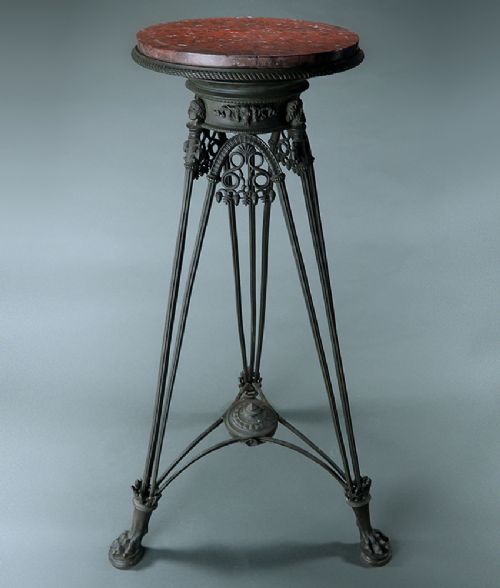
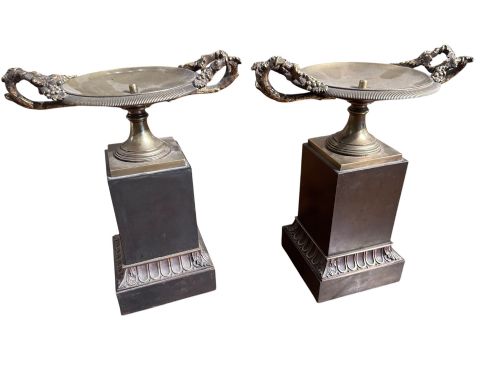
Neoclassical Pedestal Table
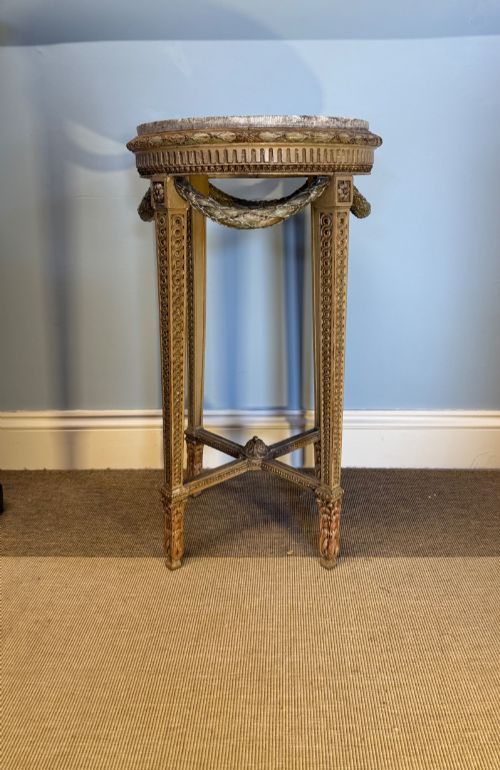
These pieces take the form of a neoclassical pedestal table, bringing classical symmetry, restrained geometry, and architectural presence into a room.
Neoclassical Pedestal Table
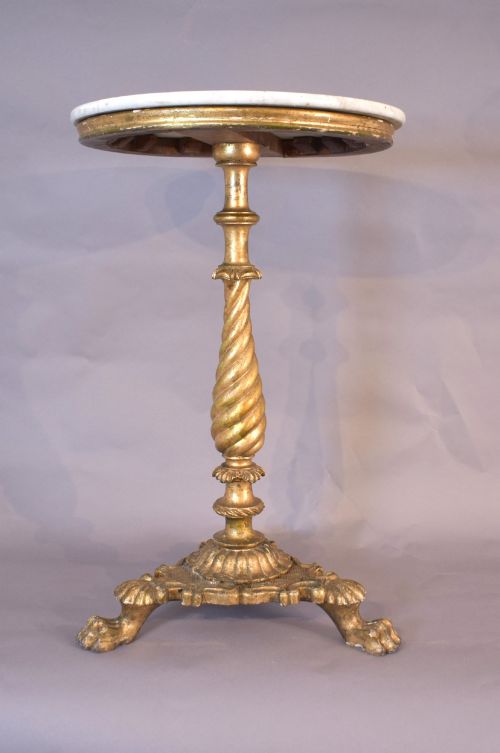
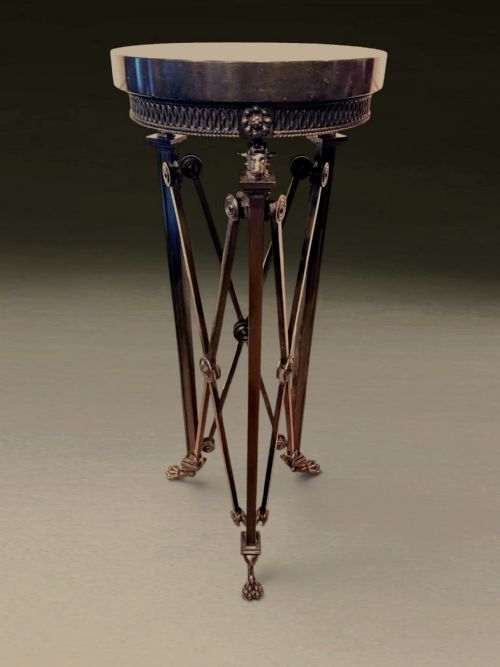
A neoclassical pedestal table brings together classical architectural motifs and central support structures, appearing in forms such as centre tables, guéridons, and pillar-supported stands. These pieces draw on French Empire, Regency, and Adam Revival traditions, translating ancient motifs into domestic furniture.
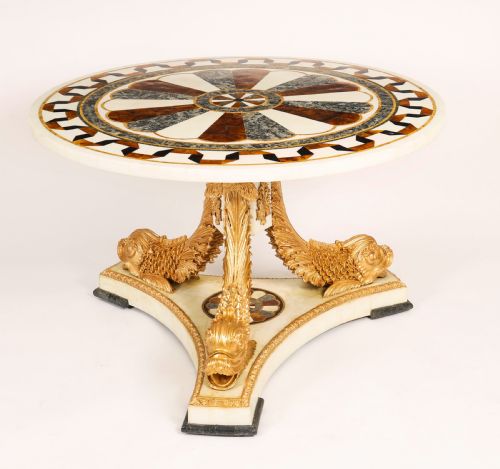
Buyers seeking a neoclassical pedestal table will encounter round marble-topped stands, tripod tables, and column-supported designs spanning the eighteenth century through to the twentieth century. The selection reflects diverse European workshops interpreting classical proportion through local materials.
Materials and construction
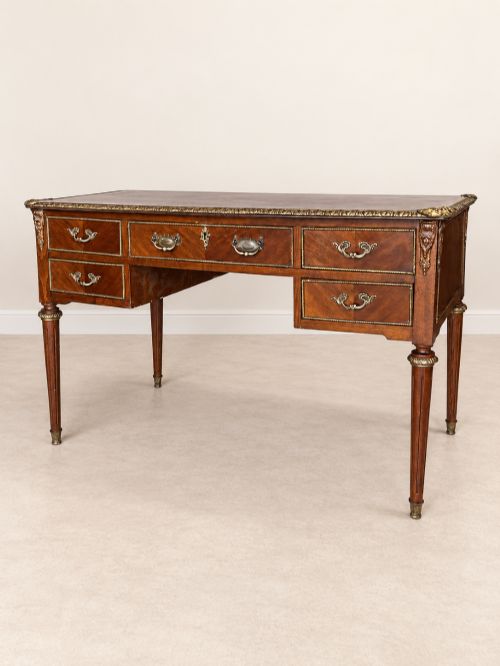
Cabinetmakers and metalworkers combined timber frames with cast metal mounts, utilising mahogany, walnut, and birch alongside bronze, ormolu, and brass. Marble tops provide solid surfaces for centre tables and guéridons, often resting directly on wooden aprons or column capitals.
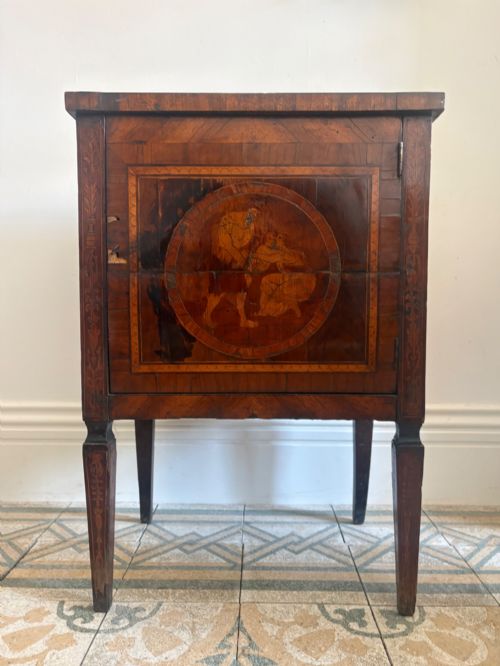
Surface decoration relies on inlaid marquetry, gilded wood, and cast brass details such as rams' heads and floral mouldings. Construction methods balance the structural weight of stone tops with stable, central column or tripod supports.
The materials recorded in these listings span nineteenth-century brass, marble, and ormolu alongside earlier eighteenth-century walnut and mahogany.
Evaluating craftsmanship
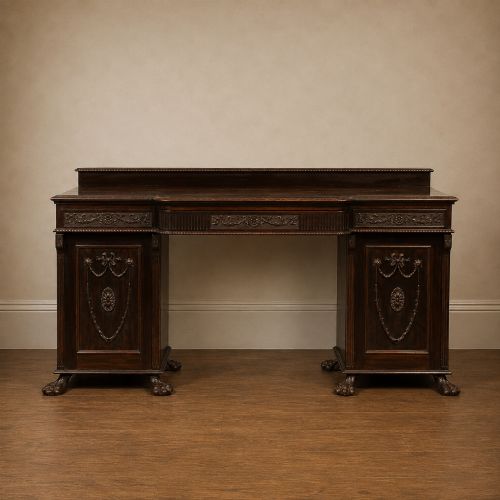
Quality rests in the crispness of cast ormolu mounts and the precision of inlaid marquetry across the tabletop and pedestal. Finer examples display sharp architectural details on columns and capitals, whereas simpler pieces rely on painted decoration or plain turned wood.
The integration of heavy materials, such as marble or alabaster slabs, dictates the stability and proportion of the central support. Superior pieces maintain balanced weight distribution without excessive reinforcement visible in the finished frame.
The Neoclassical Pedestal Table Glossary
- Guéridon
- A small French table supported by one or more central columns, often featuring a circular marble top. These pieces originated in the seventeenth century and adapted well to nineteenth-century revival styles.
- Ormolu
- Gilded bronze mounted onto furniture or decorative objects to provide bright metallic highlights against dark wood or stone. The technique requires mercury gilding or electroplating on older items.
- Marquetry
- The art of applying pieces of veneer to a structure to form decorative patterns and pictorial designs. Cabinetmakers use contrasting timbers to achieve tonal depth on tabletops and cabinet doors.
- Tripod table
- A small freestanding table supported by three legs stemming from a central pillar. This configuration ensures stability on uneven floors.
- Column lamp
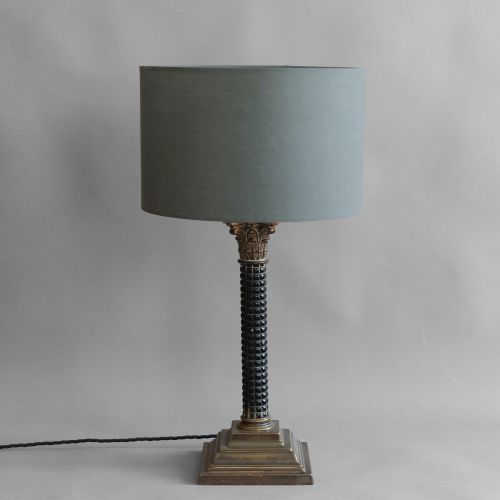
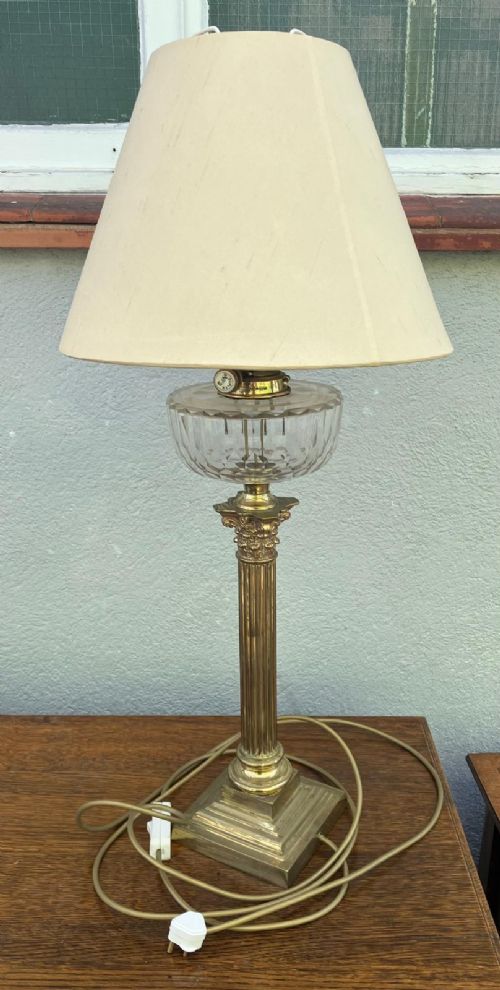
- A vertical lighting fixture shaped like a classical architectural column, utilising brass, bronze, or silver plate. These items adapt classical orders such as Corinthian, Doric, and Ionic for household lighting.
Neoclassical Pedestal Table: Frequently Asked Questions
What is a neoclassical pedestal table?
A neoclassical pedestal table is a piece of furniture centered on a single column or support, decorated with motifs drawn from ancient Greece and Rome. These items include guéridons, centre tables, and occasional stands.
They reflect historical revivals spanning the eighteenth, nineteenth, and early twentieth centuries, incorporating materials like marble, mahogany, and ormolu.
Where should I place a pedestal table?
These tables suit hallways, drawing rooms, or bedrooms as centre tables, bedside surfaces, or lamp stands. Their compact footprints allow them to sit effectively beneath windows or beside seating.
Round marble-topped variants function well as display surfaces for decorative objects or lighting.
How do I identify French Empire style?
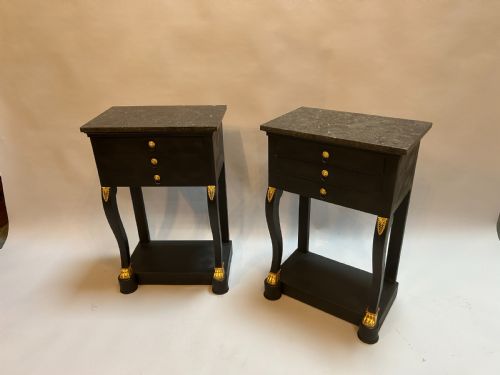
French Empire pieces display heavy classical influences, often featuring gilt bronze mounts, mahogany veneers, and architectural elements like columns and rams' heads. The aesthetic prioritizes symmetry, dark woods, and bright metallic contrasts.
Many examples date from the nineteenth century or draw on later revival periods inspired by Napoleonic design.
What maintenance do marble tops need?
Marble surfaces require gentle cleaning with mild soap and water, avoiding acidic substances that can etch the polished stone. Regular dusting keeps the porous surface protected.
Heavier tops should remain supported evenly across their wooden frames to prevent structural strain.