




Louis XVI Style Gueridon
Louis xvi style gueridon tables are round French occasional tables topped in marble or fine timber, offering practical elegance for any room.
Louis XVI Style Gueridon
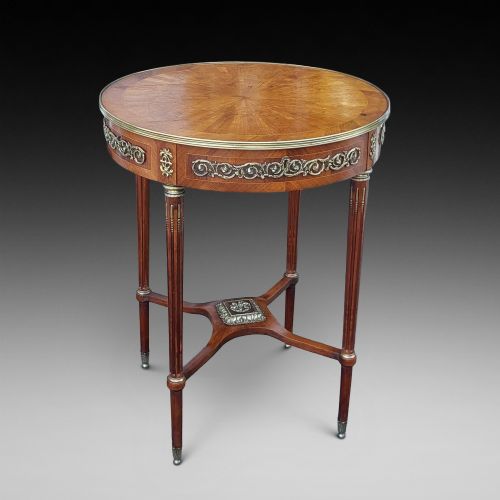
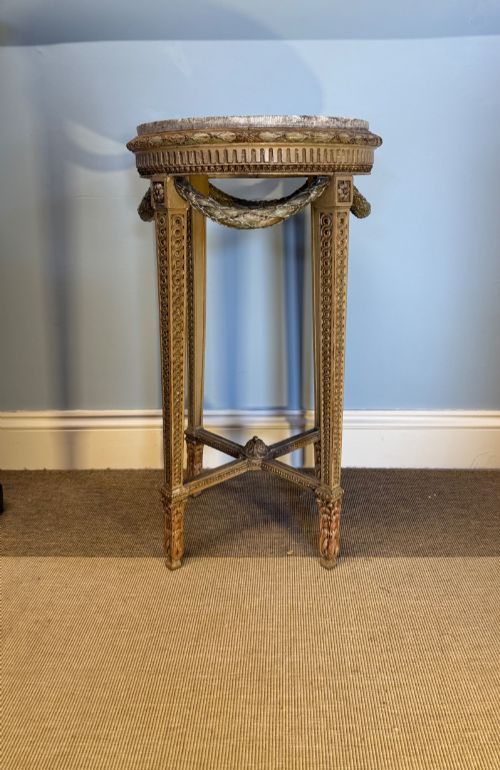
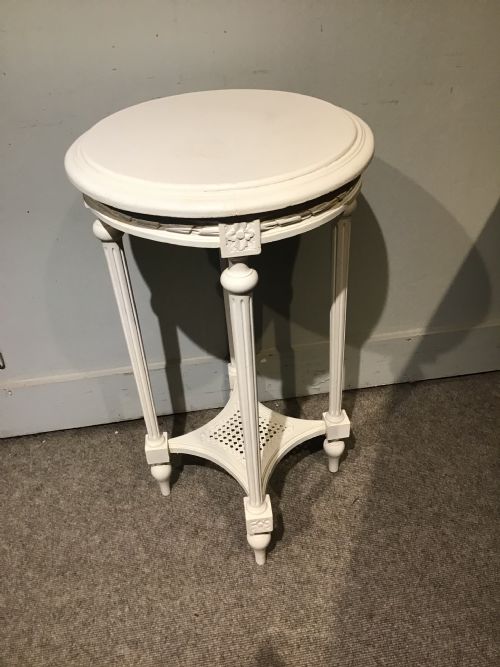
A louis xvi style gueridon is a round freestanding table designed for versatility as a side table, centre table, or plant stand. These pieces emerge predominantly from the nineteenth and early twentieth centuries in French workshops.
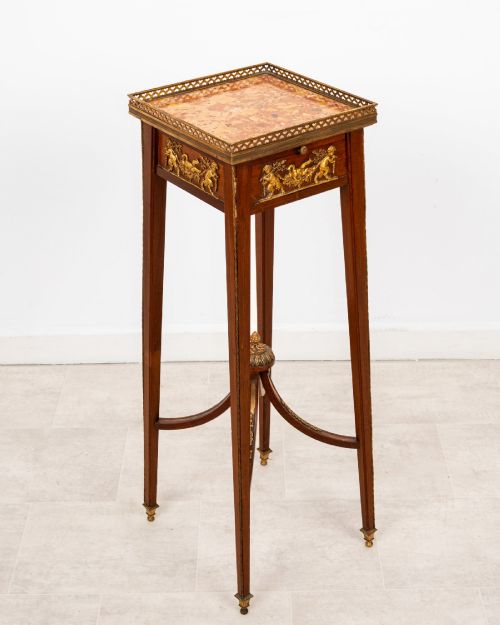
The most common examples on this page pair mahogany, walnut, or kingwood structures with inset marble tops, brass mounts, and slender tapered legs characteristic of neoclassical design.
Materials and construction
Cabinetmakers built these tables using hardwoods such as mahogany and walnut, frequently applying intricate marquetry, parquetry, or painted finishes to the surfaces. Tops were commonly fashioned from solid slabs of white or rouge marble, onyx, or occasionally inset porcelain plaques.
Gilt bronze and ormolu mounts, brass galleries, and cast column supports provided the decorative accents that defined the French revival aesthetic.
Listings feature mahogany, walnut, and kingwood timbers paired with marble, onyx, and brass.
Judging quality and execution
Quality rests in the crispness of the bronze or ormolu mounts and the precision of the timber marquetry. Finer examples display meticulous hand-chasing on metalwork and seamless joinery in the complex parquetry patterns.
The selection of the marble top and the weight of the underlying timber structure distinguish standard production items from pieces produced by notable makers.
François Linke·A Hugnet Paris·Weisweiler
The Louis XVI Style Gueridon Glossary
- Gueridon
- A small French round table, typically supported by a central column or three to four legs. The form originated in the seventeenth century and remained popular through various revival periods.
- Ormolu
- Gilded bronze used for decorative mounts and feet on fine furniture. The technique involves applying a mercury and gold amalgam to bronze before firing.
- Marquetry
- The art of applying small pieces of veneer to a structure to form decorative patterns or pictures. Craftsmen used various coloured woods to achieve tonal depth.
- Parquetry
- Geometric mosaic woodwork used for flooring and furniture surfaces. It differs from marquetry by relying on repeating angular shapes rather than pictorial designs.
- Galleried
- Having a raised rim or pierced metal gallery around the edge of the tabletop. This feature prevented items from sliding off the surface.
Louis XVI Style Gueridon: Frequently Asked Questions
What is a gueridon table used for?
These round tables function as versatile occasional tables, bedside stands, or decorative centrepieces in reception rooms. Their compact footprint allows them to fit easily beside seating or in corners.
Historically, they held lamps, ornaments, or tea services, a purpose they serve equally well in modern interiors today.
How do I identify the period?
Dating relies on examining the timber species, construction methods, and the style of the cast metal mounts. Nineteenth-century pieces often show hand-cut dovetails and heavier patination on the wood.
Revival pieces from around nineteen hundred frequently blend classical Louis XVI proportions with the more elaborate casting techniques of that later era.
Are the marble tops original?
Most marble and onyx tops original to these tables fit flush into a dedicated wooden rebate or brass gallery. White and rouge varieties are typical for the nineteenth century.
Replacement tops generally lack the specific edge profiling and historical wear patterns found on the underside matching the table frame.
How should I care for the wood?
Maintain polished mahogany and walnut surfaces by dusting with a soft, dry cloth and avoiding silicone-based sprays. Keep the furniture away from direct heat sources and strong sunlight to protect the polish.
Wax can be applied sparingly once or twice a year to nourish the timber and preserve the natural sheen of the grain.