

19th Century French Gueridon
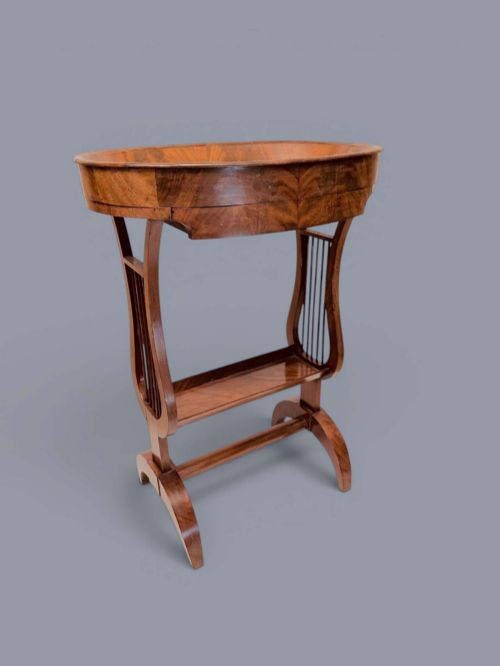
A 19th century French gueridon is a round freestanding table designed for a salon or centre room, offering both practical surface space and distinct period character.
19th Century French Gueridon
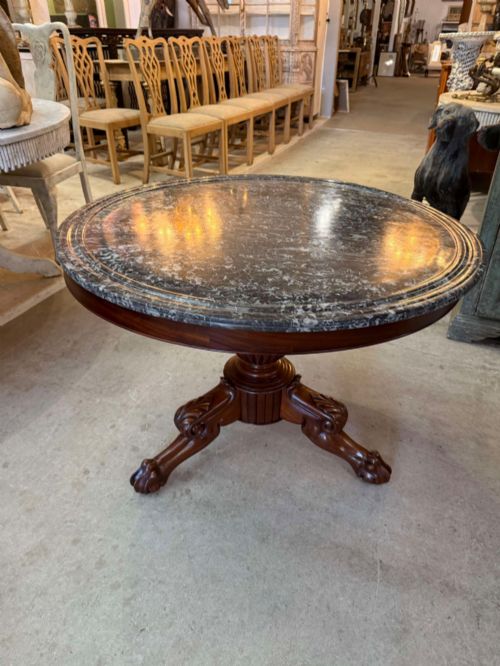
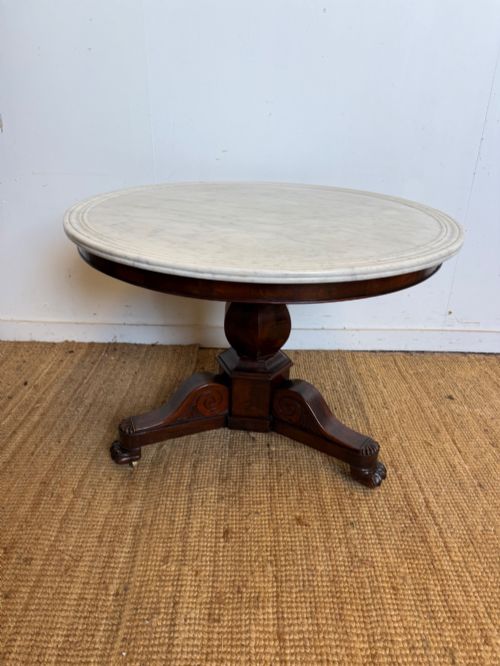
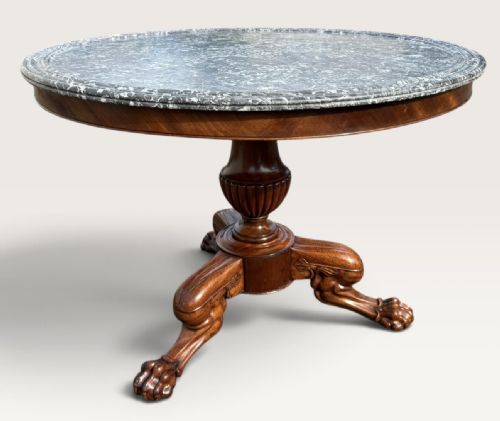
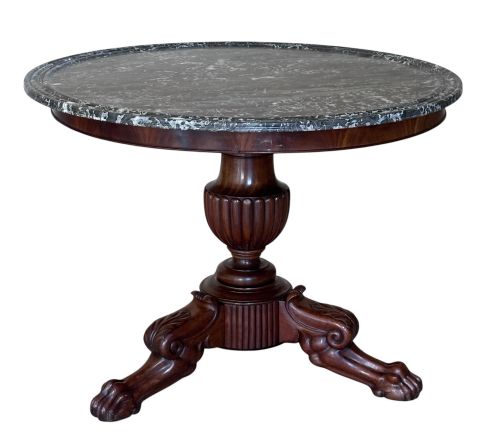
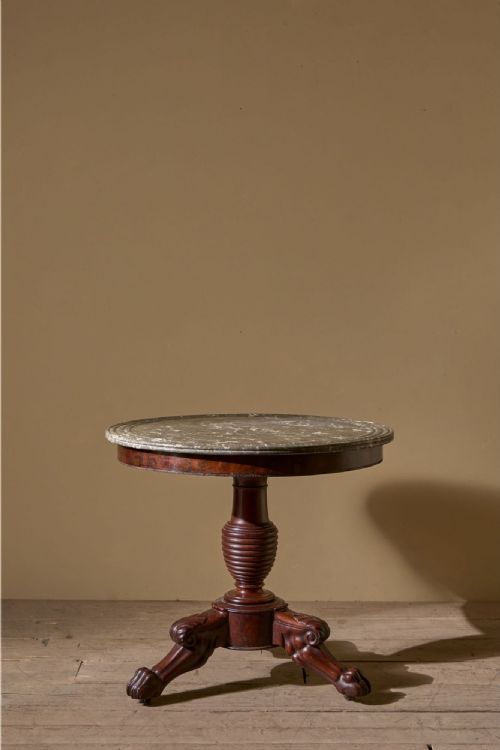
A 19th century French gueridon functions as a central focal point in a room, typically taking the form of a round table supported by a central column or pillar base. These pieces served historically for holding lamps, decorative objects, or serving drinks in high-status interiors.
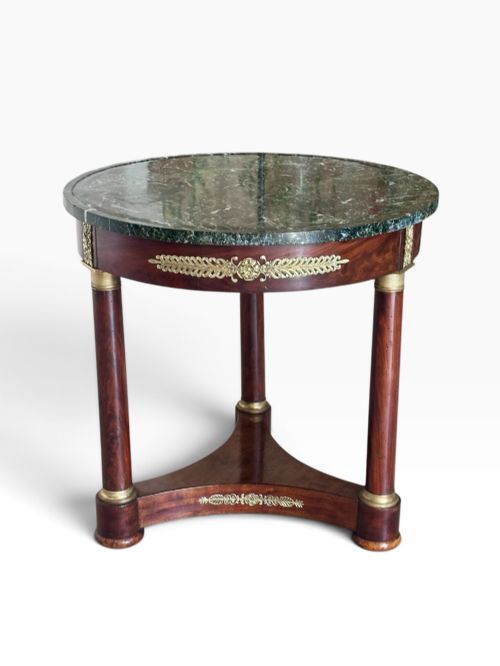
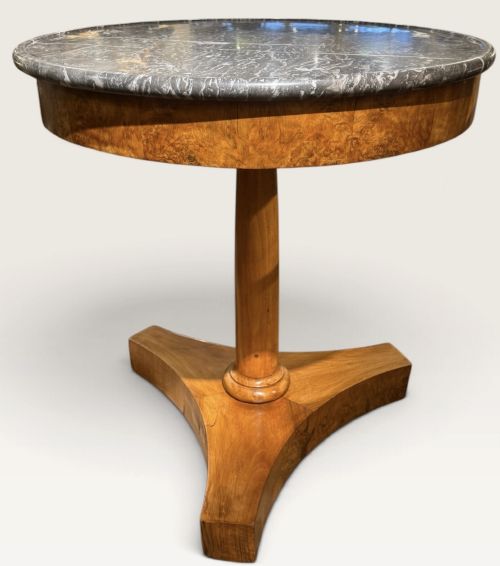
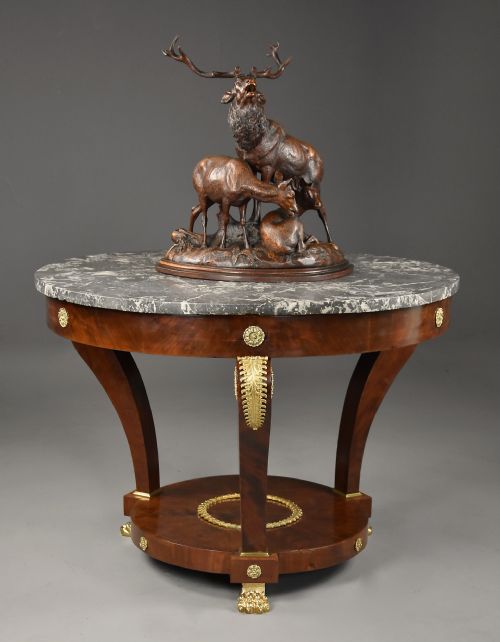
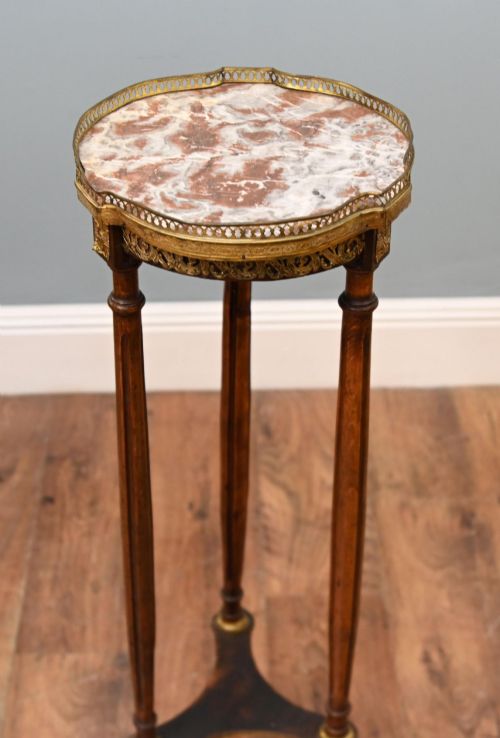
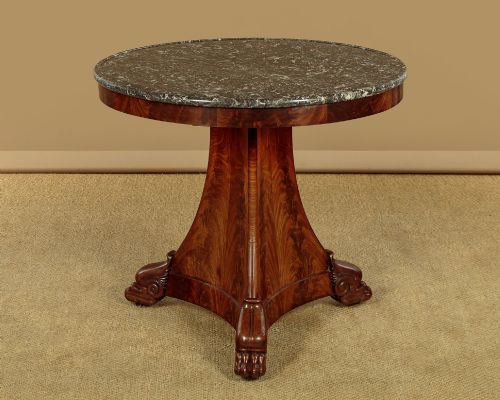
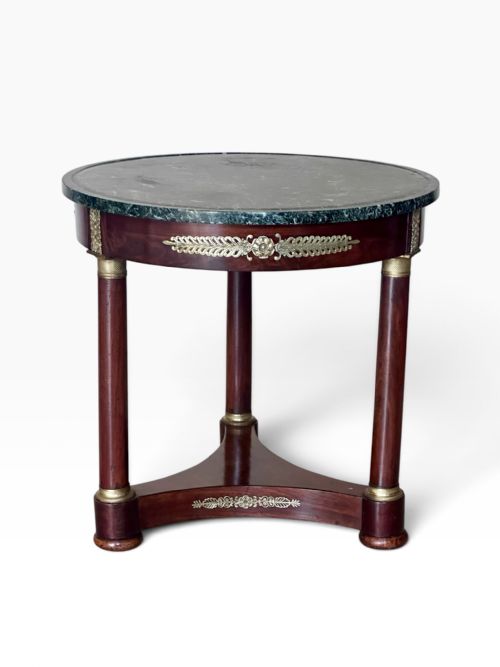
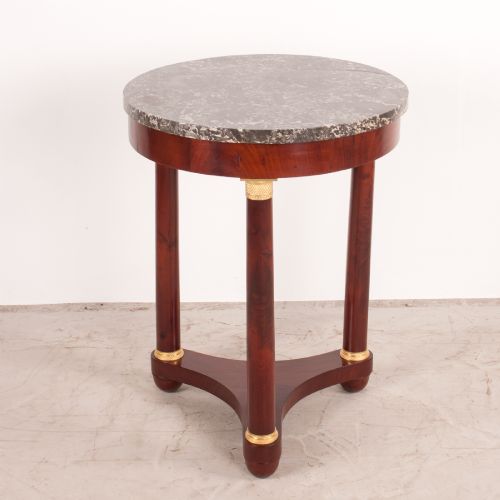
The version most commonly met on this page is the mahogany centre table topped with inset marble, often resting on a sturdy tripartite or pedestal base. Examples range from austere neoclassical designs to ornate Empire and Louis Philippe interpretations.
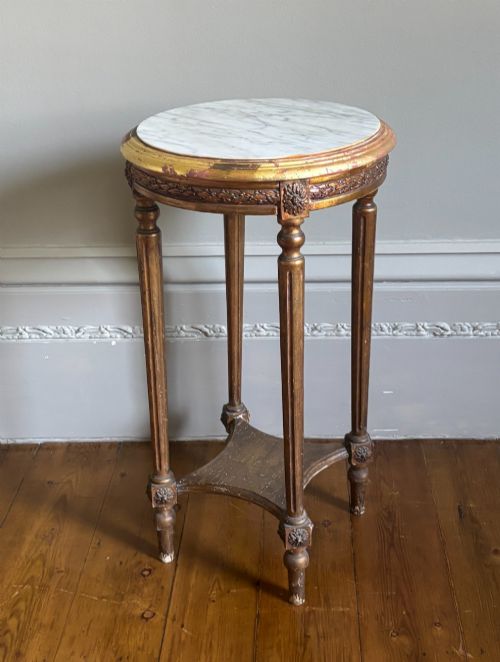
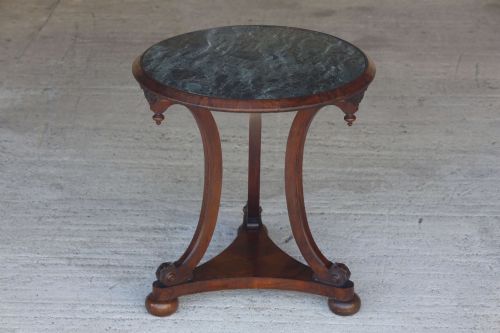
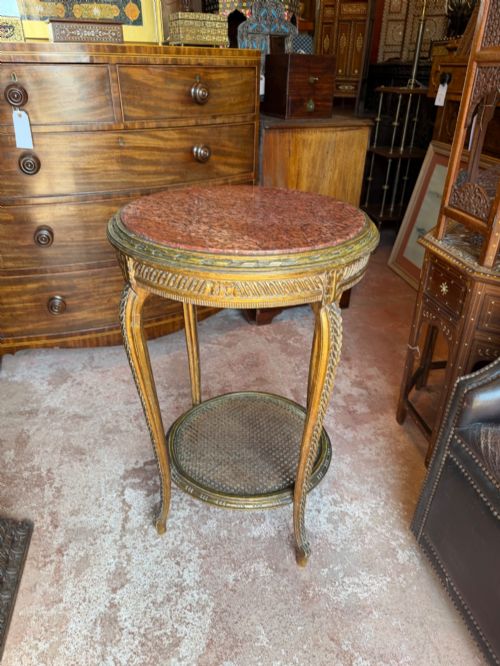
Beyond the standard centre table, variations include occasional tables, plant stands, and bistro formats designed for diverse domestic settings. Each piece reflects the shifting tastes of the nineteenth century, moving from severe classical lines towards heavier revival styles.
Materials and construction
Cabinetmakers constructed these tables using a solid timber frame of mahogany, walnut, or oak, frequently applying rich veneers like kingwood, rosewood, or burr elm to the top surfaces. This underlying woodwork provided the stability necessary to support heavy stone without warping.
Inlaid marble slabs, ranging from white veined varieties to dark black or red stones, were carefully fitted into recessed tops to provide a durable and waterproof surface. Cast bronze, ormolu mounts, and brass galleries were added to edges and bases for decorative accent.
19th Century French Gueridon Retail Price Guide 2026
Typical asking prices for 19th century french gueridon among the pieces listed under this phrase on Sellingantiques today, from the lower quarter to the upper quarter. They describe what is for sale here now, not the wider market.
Some nineteenth-century tables come equipped with hidden compartments for concealing secret love letters or midnight snacks.
Standards of craftsmanship
The division between ordinary and exceptional tables rests on the selection of timber and the precision of the joinery in the pedestal base. Superior examples exhibit tightly figured veneers and robust structural framing that prevents the central column from sagging under heavy stone.
Ornamentation also dictates value, distinguishing between mass-produced cast metal elements and finely hand-chiseled ormolu mounts. The quality of the marble top, including the depth of its veining and the accuracy of its inset fit, signals the tier of the original workshop.
The 19th Century French Gueridon Glossary
- Gueridon
- A small French round table, typically supported by a single central pillar rather than four legs.
- Ormolu
- Gilt bronze mounted onto furniture as a decorative decorative element, widely used in French neoclassical and Empire pieces.
- Tri-form
- A three-sided base structure commonly found beneath the central column of nineteenth-century pedestal tables.
- Breccia
- A type of decorative multi-coloured marble with angular fragments, frequently utilised for luxury tabletops.
- Gallery
- A raised rim of brass or wood running around the edge of a table top to prevent items from sliding off.
19th Century French Gueridon: Frequently Asked Questions
Where do I put a gueridon?
These round tables sit naturally in the middle of a hallway, entrance foyer, or living room as a freestanding centrepiece. They provide a convenient surface for a central lamp or floral arrangement without blocking traffic flow.
Because of their circular footprint, they fit easily into awkward corners or beside seating groups where rectangular furniture feels too bulky.
Are marble tops original?
Most stone tops on these tables are original to the piece, fitted closely into a recessed wooden framework designed specifically to hold their weight. You can usually tell by the matching wear patterns between the stone edge and the surrounding timber.
Replacements do occur due to accidental breakage, but a period-correct stone will still show appropriate historical ageing and correct thickness for the nineteenth century.
How do I clean the wood?
Maintain polished mahogany and walnut surfaces by dusting them regularly with a dry, soft cloth to prevent grit accumulation. Avoid modern silicone sprays, relying instead on traditional beeswax applied sparingly to nourish the grain.
Keep stone sections away from acidic liquids like lemon juice or wine, wiping up spills immediately to protect the polished surface from permanent etching.
How do I date these tables?
Dating relies on identifying stylistic markers, such as the heavy proportions and architectural columns typical of early Empire pieces versus the softer curves of later Louis Philippe designs. Construction methods, including the type of secondary woods used in the interior framing, also offer clues.
Examining the metal mounts and the character of the marble edge work helps narrow the decade of manufacture within the nineteenth century.