

Neoclassical Painted Accent Chair
A neoclassical painted accent chair brings linear elegance and decorative colour into a room.
Neoclassical Painted Accent Chair
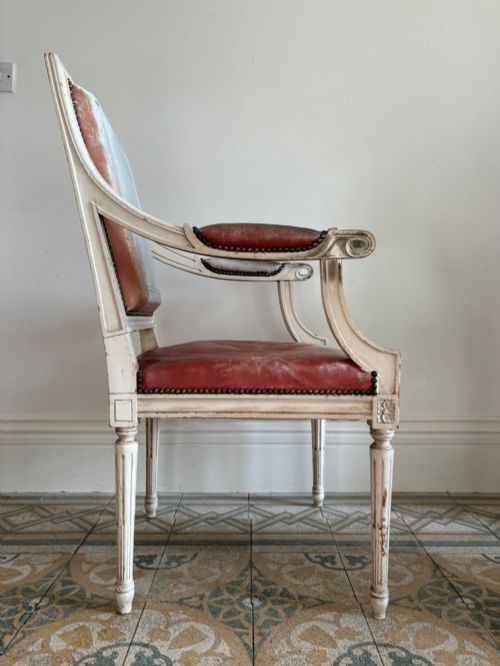
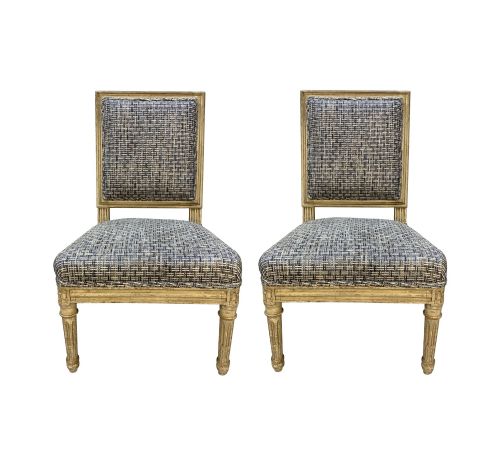
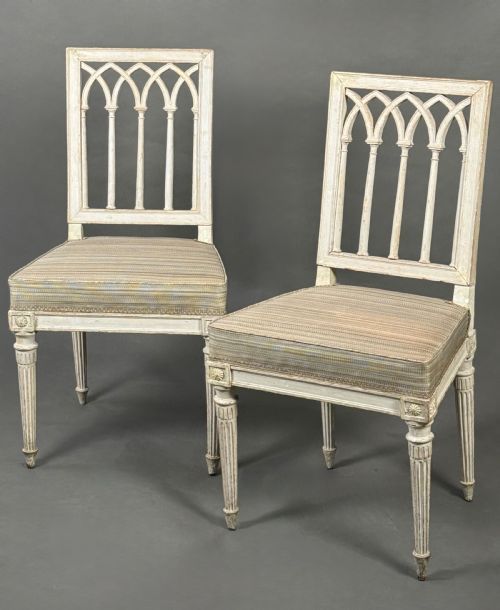
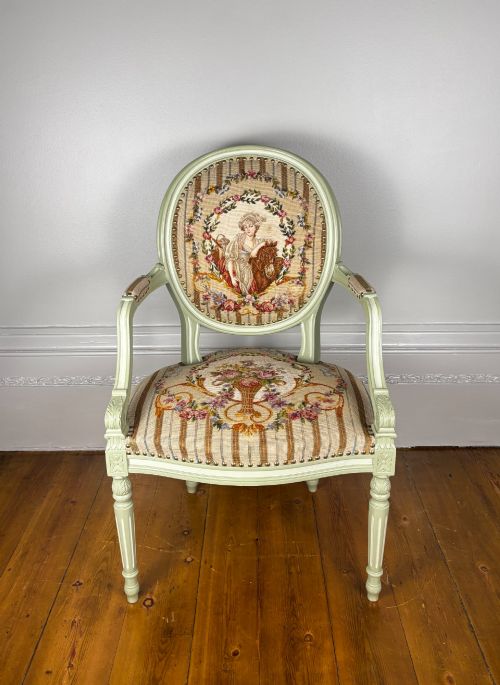
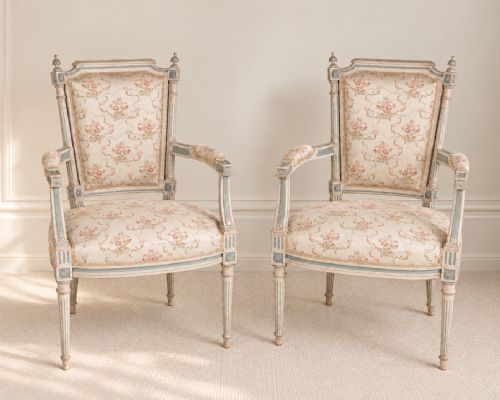
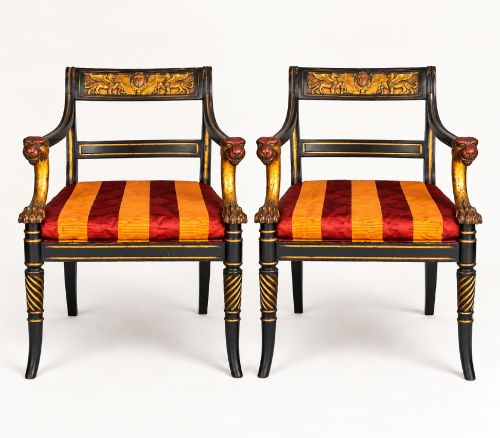
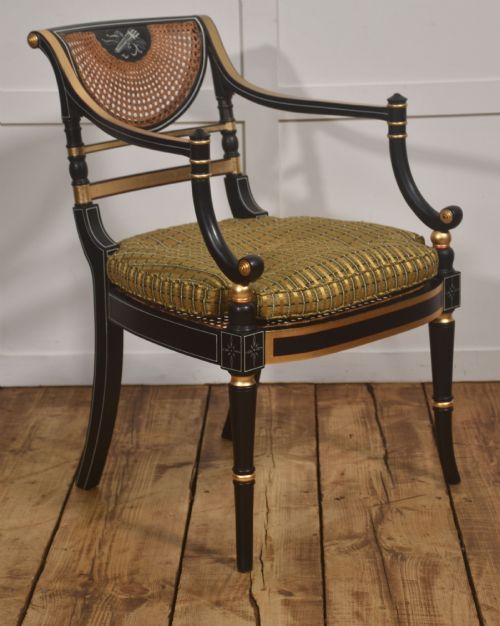
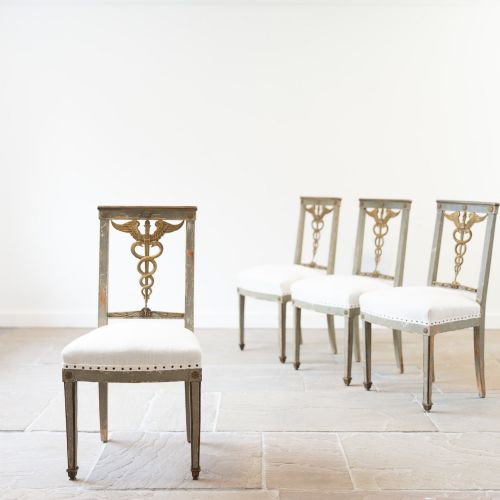
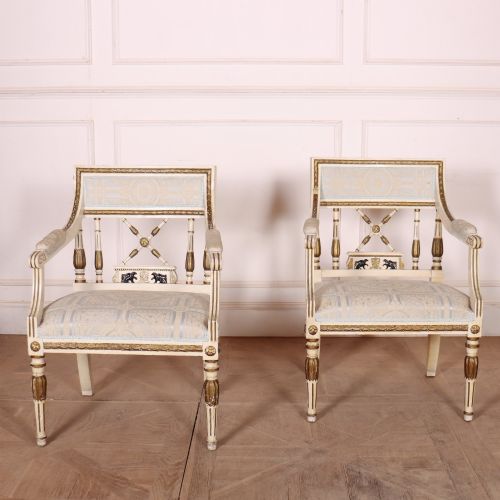
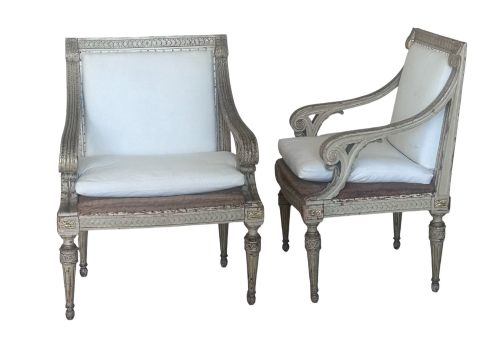
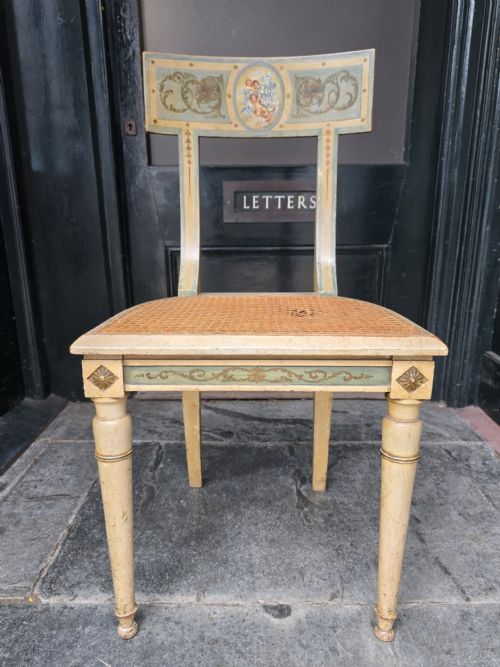
A neoclassical painted accent chair combines classical geometric restraint with surface decoration, taking forms such as armchairs, side chairs, and elbow chairs. Buyers find pieces dating from the eighteenth century through to the early twentieth century, reflecting revivals spanning the Georgian, Regency, Louis XVI, and Gustavian styles.
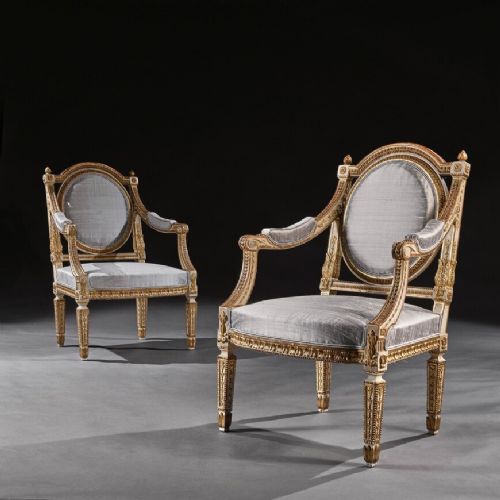
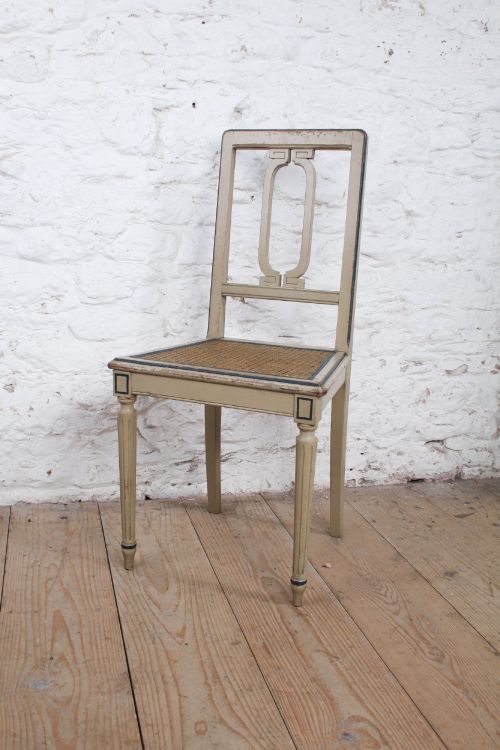
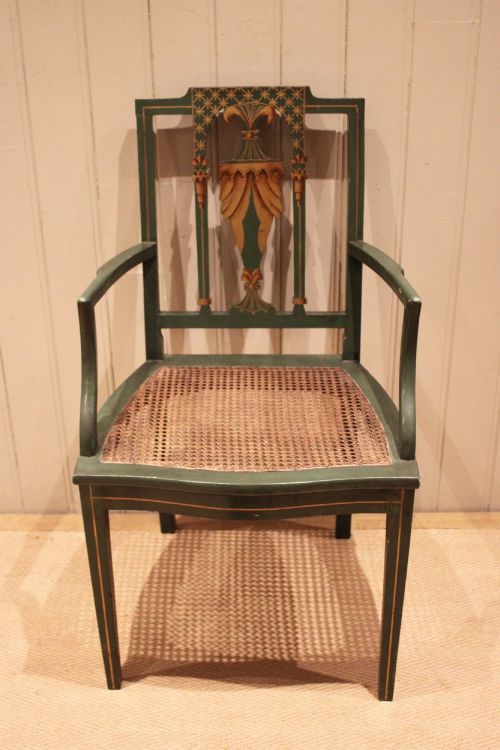
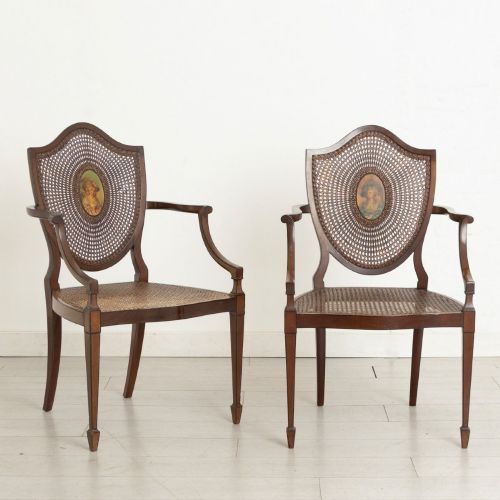
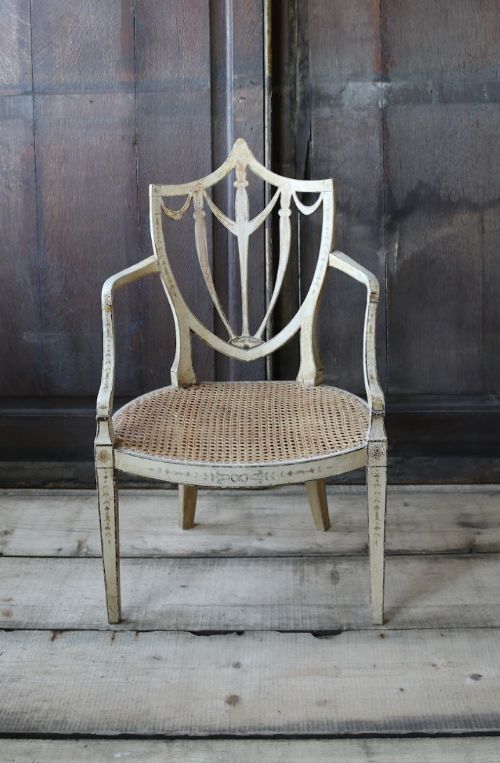
The most common examples on this page are French and English chairs built from wood and cane, carrying applied paint, gold leaf, and fabric upholstery. Makers varied forms from shield-backs to medallion backs, often grouping them into pairs or small sets for salon and parlour use.
How they were made
Carpenters shaped beech and other timbers using hand carving techniques to form the structural frames of these seats. Caning was woven into open wooden seat bases, while alternative frames received textile or fabric upholstery over padding.
Surface finish relied upon paint, often enhanced with gold leaf and parcel-gilt detailing over wood. Artisans applied polychrome and decorative floral or musical motifs directly to the painted ground.
Neoclassical Painted Accent Chair Retail Price Guide 2026
Typical asking prices for neoclassical painted accent chair among the pieces listed under this phrase on Sellingantiques today, from the lower quarter to the upper quarter. They describe what is for sale here now, not the wider market.
Some nineteenth-century makers snuck miniature painted songbirds into floral garlands, leaving a tiny hidden chorus on the chair back.
What varies in quality
The sophistication of the hand-carved woodwork and the preservation of the original painted surface separate standard examples from finer ones. Crispness in the neoclassical motifs, such as fluted legs and carved shields, indicates skilled workshop output.
Integrity of the structural frame and the survival of early painted or gilded decoration determine the standing of each piece. Later repainting alters the character of an antique surface compared to original eighteenth or nineteenth-century finishes.
The Neoclassical Painted Accent Chair Glossary
- Fauteuil
- An open-arm armchair with an exposed wooden frame, typically originating in French furniture design. These chairs feature upholstered seats and backrests set between open wooden arms.
- Parcel-gilt
- A decorative treatment where specific carved details of a wooden frame receive a thin layer of gold leaf while the rest of the surface is painted. This technique highlights structural lines and ornaments.
- Cane
- Woven rattan or plant material utilised to create lightweight, resilient seat panels. It appears frequently on eighteenth and nineteenth-century chair frames.
- Shield-back
- A chair back contouring to the silhouette of a shield, popular in Hepplewhite and later neoclassical furniture design. The wooden frame often encloses open splats or upholstered panels.
- Medallion chair
- A seat featuring a circular or oval upholstered backrest framed by carved wood. This form is characteristic of Louis XVI style seating.
Neoclassical Painted Accent Chair: Frequently Asked Questions
How do I use a neoclassical painted accent chair at home?
These chairs function well as occasional seating in living rooms, bedrooms, or hallways where visual lightness matters. Their painted frames add decorative colour without overwhelming the surrounding space.
Because they are lighter than heavy upholstered armchairs, they move easily to accommodate guests. Pairing them near a desk or in a corner creates a distinct focal point.
How can I tell an eighteenth-century chair from a later revival piece?
Eighteenth-century examples display hand-tool marks and timber shrinkage consistent with age. Joinery techniques such as pegged mortise and tenon joints point towards earlier construction methods.
Revival pieces from the nineteenth and twentieth centuries often use standardised machine-sawn components and different assembly methods. Examining the underside and the wear patterns on the painted surface helps clarify the period of manufacture.
What is the difference between French and English neoclassical chairs?
French designs, such as Louis XVI and Gustavian styles, often incorporate carved medallion backs, fluted round legs, and exposed show frames. The paint finishes tend towards muted greys, creams, and pale tones.
English neoclassical and Hepplewhite pieces frequently utilise shield-back designs with tapered legs and contrasting polychrome or floral painted decoration. The timber preparation and overall proportions reflect distinct regional cabinet-making traditions.
How do I care for original painted wood surfaces?
Keep these chairs away from direct sunlight and steady moisture to protect the fragile paint and gold leaf layers. Dust them gently with a dry, soft cloth rather than chemical polishes.
Stable indoor temperatures prevent the underlying wood from expanding and contracting, which protects the paint from flaking over time.