

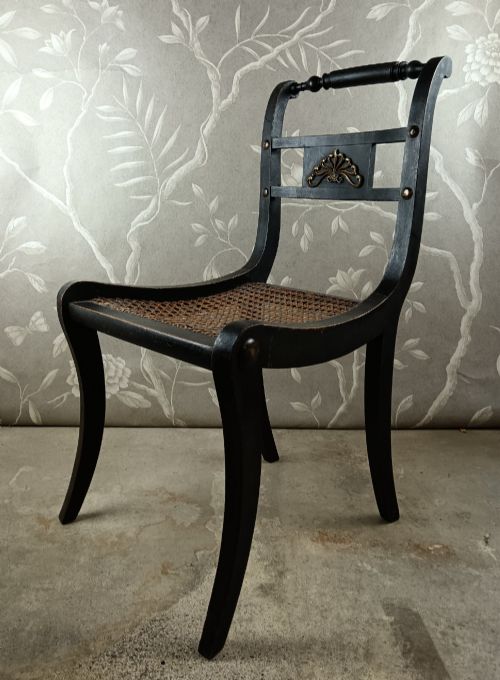


Caned Seat Bedroom Chair
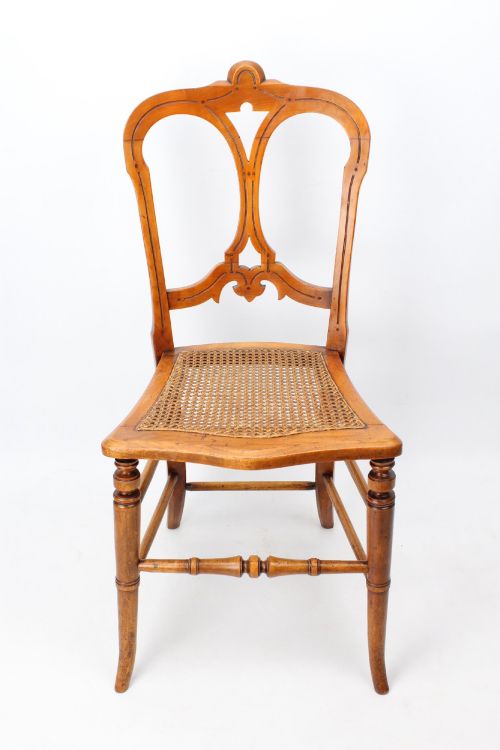
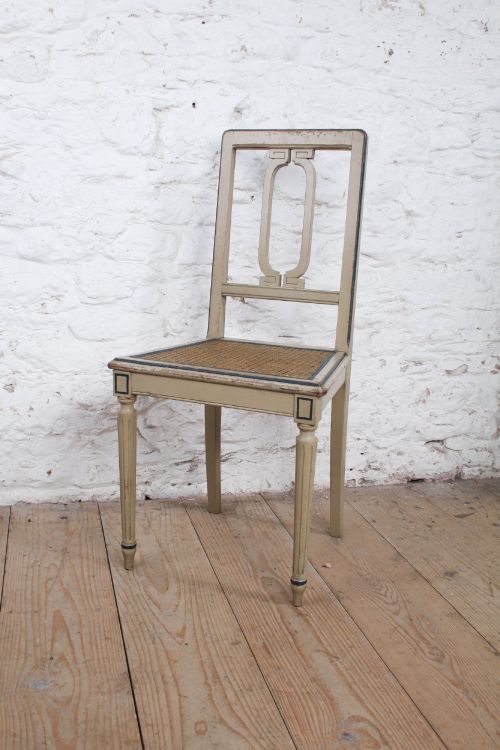
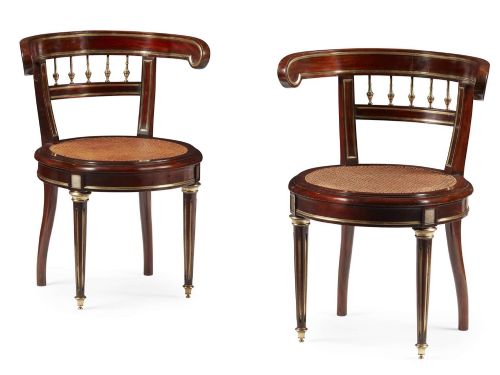
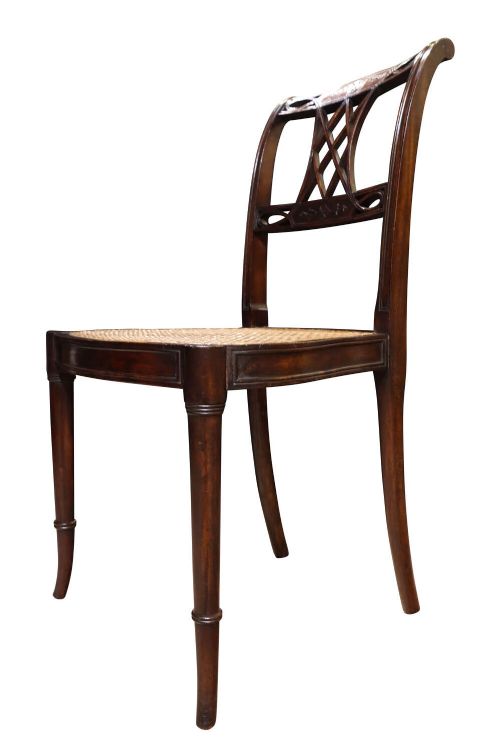
A caned seat bedroom chair offers a light, breathable seat designed for the sleeping chamber, featuring woven natural cane panels.
Caned Seat Bedroom Chair
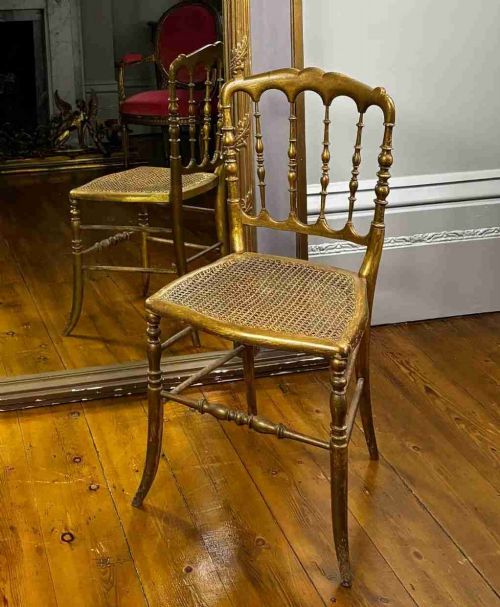
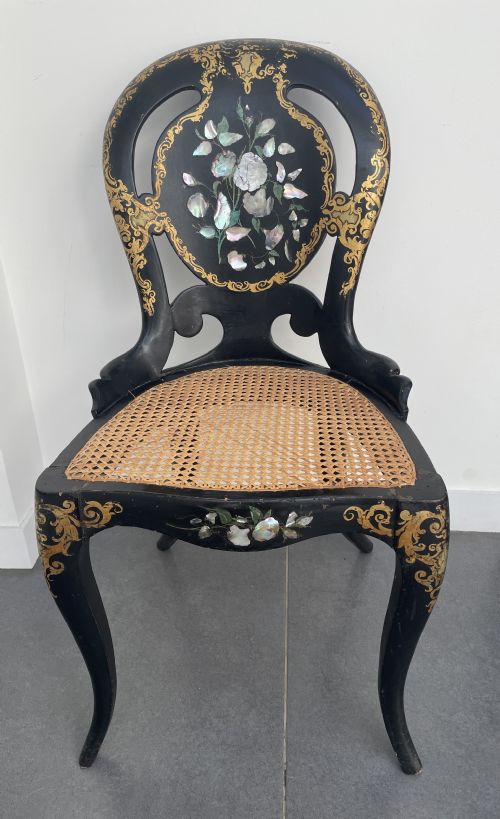
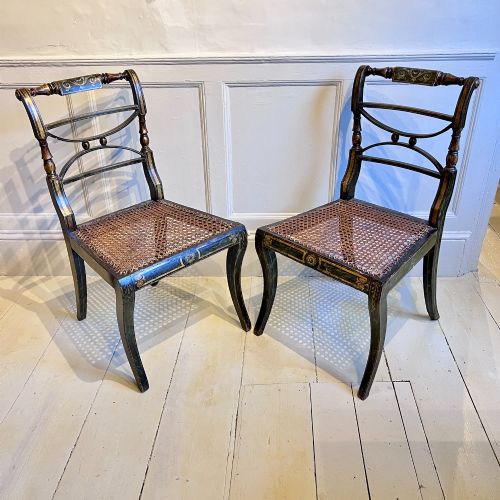
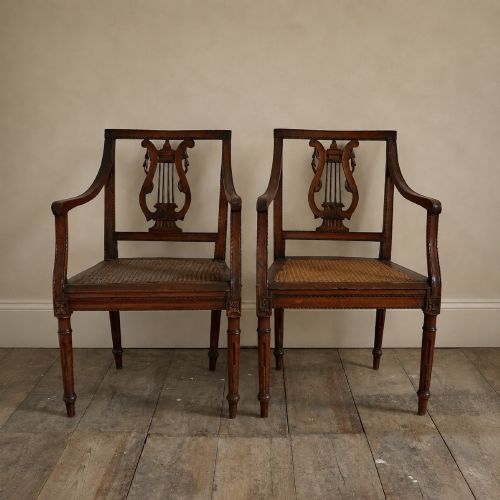
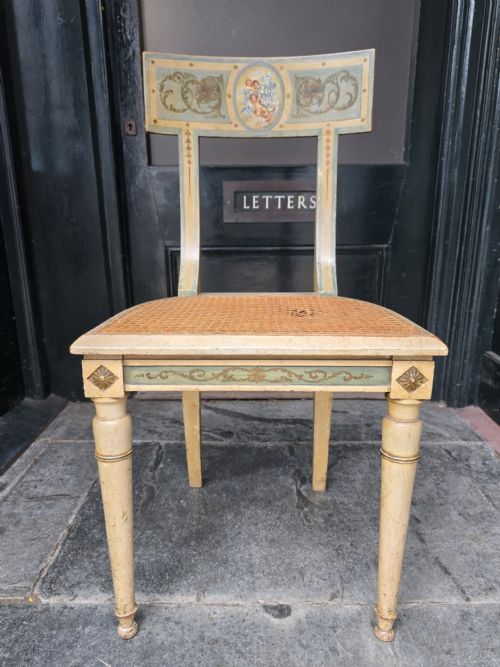
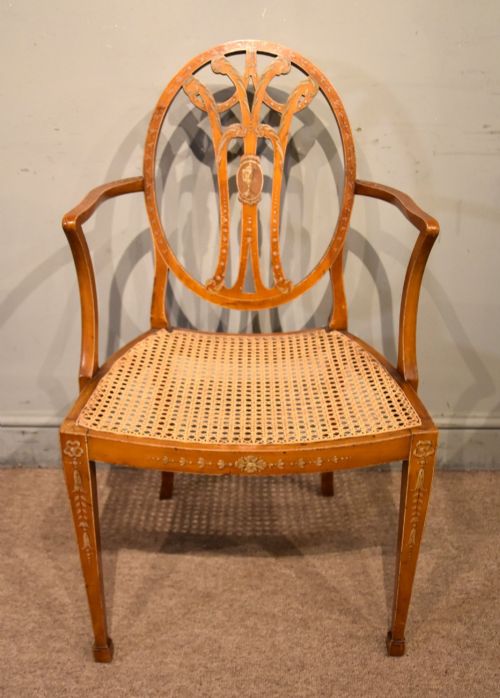
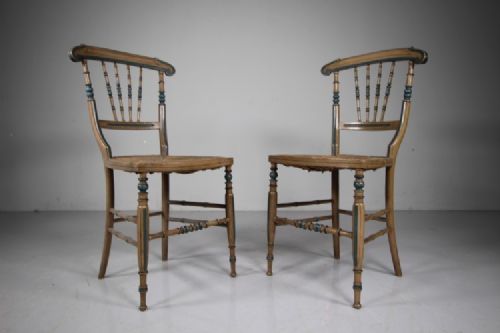
A caned seat bedroom chair comprises lighter seating forms designed for private chambers, appearing frequently across the nineteenth century and into the early twentieth century. You will encounter various stylistic interpretations on this page, ranging from Regency painted models and Victorian mahogany or papier-mâché examples to Edwardian satinwood and mahogany bedroom chairs.
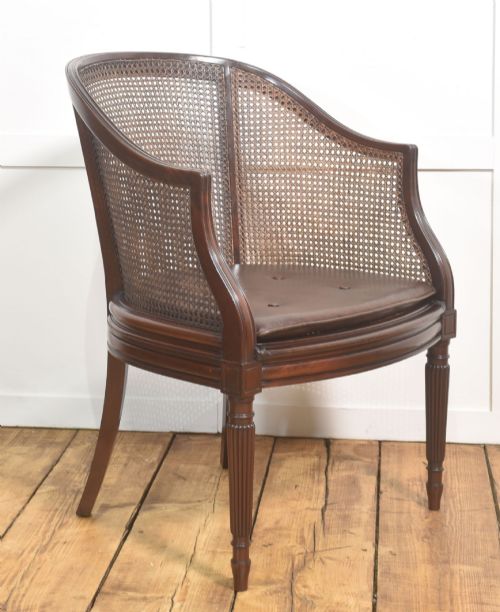
Makers produced these seating pieces in diverse regional styles, encompassing French Napoleon III and Arts and Crafts designs, alongside Jacobean Revival oak chairs featuring barley twist legs. Side chairs, armchairs, tub armchairs, and bergere formats dominate the selection, offering different levels of support for the bedroom or dressing room.
Materials and Construction
Craftsmen utilised a variety of woods for the frames, including mahogany, oak, satinwood, walnut, and Indian rosewood, alongside ebonised, painted, and simulated rosewood finishes. Structural enrichment sometimes involved giltwood, gold leaf, and brass details, or inlaid mother of pearl.
The defining feature rests in the woven cane or rattan seat panel, which provided a resilient and cool surface. Workshops applied decorative treatments such as hand carving or scumble paint to enhance the visual appeal of the wooden framework.
Caned Seat Bedroom Chair Retail Price Guide 2026
Typical asking prices for caned seat bedroom chair among the pieces listed under this phrase on Sellingantiques today, from the lower quarter to the upper quarter. They describe what is for sale here now, not the wider market.
Some nineteenth-century makers cleverly disguised ordinary timber as exotic wood by applying scumble paint with a skilled hand.
Evaluating the Pieces
Quality depends upon the integrity of the wooden frame and the precision of the joinery connecting the legs, seat rails, and backrests. Original painted surfaces or patinated timber finishes carry greater weight than later overpainting.
The condition and execution of the woven cane seating panel dictate the standard of the piece, as tight, uniform weaving indicates superior craftsmanship. Finer examples display refined decorative elements such as precise inlay work, giltwood detailing, or distinct stylistic attribution.
The Caned Seat Bedroom Chair Glossary
- Bergere chair
- An enclosed upholstered or caned armchair with wooden frames, popular in French and English seating design. These models often feature woven cane panels on both the back and the seat.
- Cane
- A material derived from the peeled bark of rattan palms, woven in patterns to form flexible seats and backs. This technique allows for a lightweight and ventilated furniture surface.
- Ebonised wood
- Timber treated with a dark stain or finish to imitate ebony. This treatment gained popularity in nineteenth-century decorative furniture.
- Scumble paint
- A decorative glazing technique applied over a base coat to create mottled or textured wood-grain effects. Artisans utilised this method to simulate finer timbers on simpler frames.
- Sabre leg
- A concave curved leg tapering toward the foot, characteristic of Regency design. This form derives from classical Greek furniture archetypes.
Caned Seat Bedroom Chair: Frequently Asked Questions
What is a caned seat bedroom chair?
A caned seat bedroom chair is a light seating piece designed primarily for domestic sleeping quarters. These chairs utilise woven cane to create a breathable and flexible seating panel.
Craftsmen built them in various stylistic periods, providing both decorative utility and functional seating in private rooms.
How do I identify a Regency period chair?
Regency chairs typically display classical lines, sabre legs, or painted finishes that reflect early nineteenth-century aesthetics. Makers frequently employed simulated rosewood or ebonised wood during this era.
Details such as Trafalgar styling or lyre-shaped back splats help distinguish these pieces from later Victorian or Edwardian productions.
Where were these chairs used?
These seating pieces originated for use in bedrooms, dressing rooms, and private salons. Their lightweight construction made them easy to move around domestic chambers as needed.
The breathable cane seat suited personal spaces where comfort and ventilation mattered.
How should I care for a cane seat?
Cane requires moderate humidity to prevent the natural fibres from becoming brittle and snapping. Avoid placing the chair near direct heat sources or in overly dry environments.
Cleaning involves gentle dusting with a soft brush and occasional damp wiping to maintain the moisture of the rattan.
What distinguishes Edwardian examples?
Edwardian chairs often feature lighter woods like satinwood or mahogany, sometimes incorporating delicate painted ornamentation or inlay. They reflect the refined, revivalist tastes of the early twentieth century.
These pieces typically present slender proportions compared to heavier Victorian counterparts.