



Neoclassical Oval Wall Mirror
A neoclassical oval wall mirror brings balance and classical proportion to a room, using symmetrical frames and refined ornamentation to catch the light.
Neoclassical Oval Wall Mirror
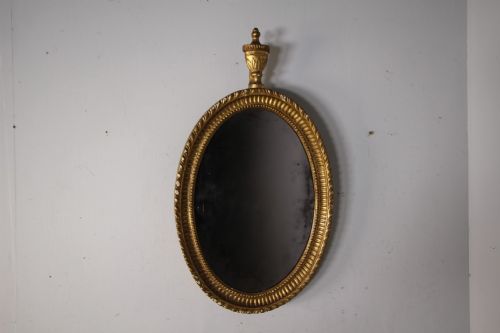
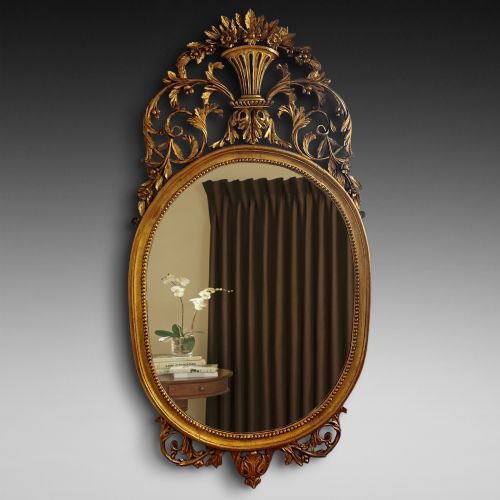
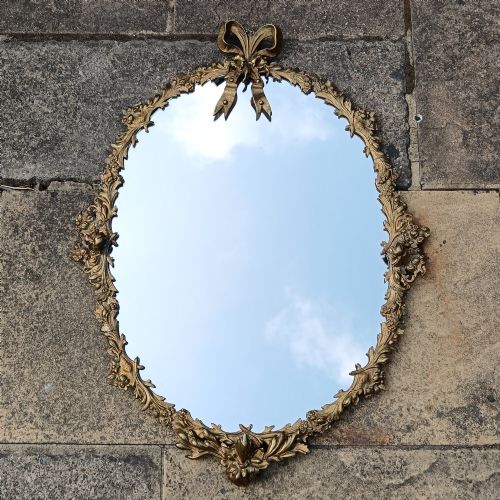
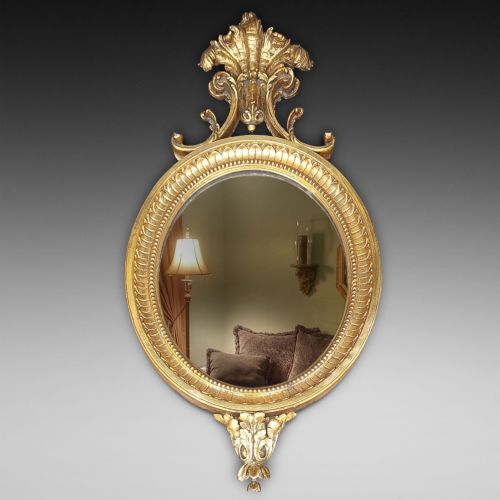
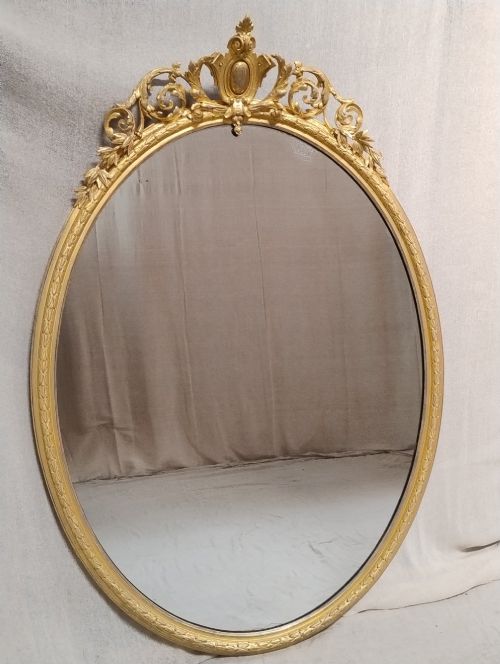
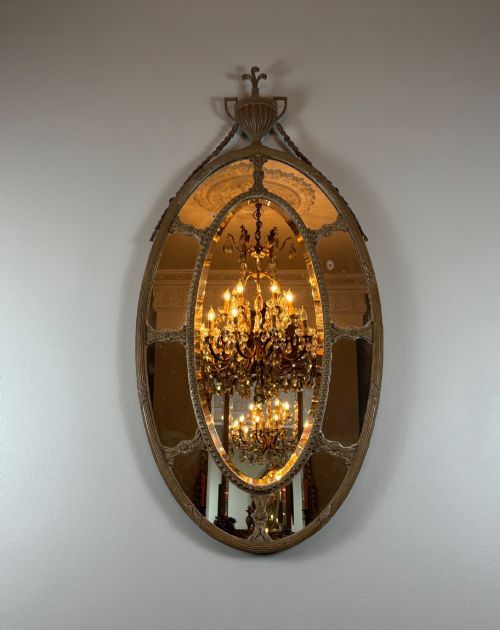
A neoclassical oval wall mirror draws upon classical motifs such as urns, swags, ribbons, and bows within a symmetrical frame. Buyers searching this phrase encounter pieces spanning the Georgian era through to late revival periods, with 19th-century examples appearing frequently alongside 18th-century originals.
The format serves primarily as a decorative wall hanging for halls, drawing rooms, or overmantles, where the vertical curve softens interior angles. Most pieces follow English or French design traditions, including specific Adam and Louis XVI revival styles.
Proportions range from smaller pier mirrors to large overmantle pieces, often shaped by regional cabinet-making conventions of their respective centuries. The visual weight relies heavily on the detailing of the crest and apron surrounding the central glass.
Materials and construction methods
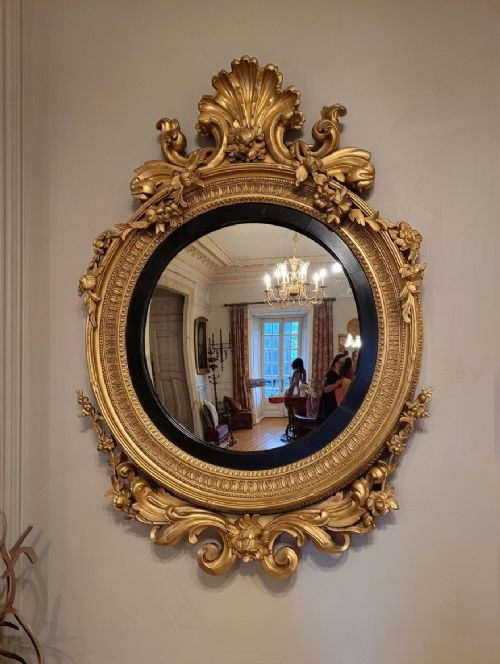
Carved timber frames form the structural core of these mirrors, utilising softwoods that accept intricate detail work. Artisans then applied layers of gesso to build up high-relief neoclassical ornamentation, including delicate swags and classical urns.
Gilding represents the predominant finish, applied using gold leaf or liquid gold over a prepared ground. Certain examples incorporate ebonised finishes with parcel-gilt highlights, or painted silk elements set within the frame.
Some frames incorporate delicate ribbon bows carved from wood, forever tied in frozen loops.
Evaluating craftsmanship and detail
The crispness of the carved or moulded ornament dictates the visual success of the piece, separating finely modelled swags and ribbons from softer, blunter casts. Sharp relief work demonstrates the hand of a skilled artisan rather than mass-produced composition moulding.
The integration of the mirror plate within the frame also indicates the tier of manufacture, where mercury plates or bevelled glass sit securely behind rebate lines designed specifically for the oval format.
The Neoclassical Oval Wall Mirror Glossary
- Giltwood
- Wood that has been coated with gold leaf over a prepared base. This surface treatment gives antique frames their characteristic warm metallic glow.
- Gesso
- A plaster-like mixture applied to wood frames and carved or moulded into decorative motifs. It provides a smooth base for subsequent gilding.
- Girandole
- A decorative wall mirror featuring attached candle sconces. The candle light reflects directly off the glass to illuminate the room.
- Overmantle
- A large mirror designed specifically to hang above a fireplace mantelpiece. These pieces often feature horizontal or extended vertical proportions.
- Mercury Plate
- An older type of mirror glass backed with a tin and mercury amalgam. It produces a characteristic mottled, deep reflection distinct from modern silvered glass.
Neoclassical Oval Wall Mirror: Frequently Asked Questions
Where should I hang an oval wall mirror?
These mirrors suit spaces that benefit from reflected light and vertical emphasis, such as entrance halls, above fireplace mantels, or between windows.
The curved outline works particularly well to break up the harsh straight lines of standard wall paneling or furniture groupings.
How do I distinguish an original Georgian mirror from a later revival?
Georgian originals display the specific tool marks, timber shrinkage, and hand-cut gesso work characteristic of eighteenth-century workshop practices.
Revival pieces made during the Victorian or Edwardian periods often employ machine-prepared timbers and standardised composition mouldings for their ornament.
What is mercury glass?
Mercury glass refers to mirror plates produced using a tin and mercury backing technique common before the mid-nineteenth century.
This method creates a soft, uneven reflection with small dark spots that collectors prize for authenticity.
How do I clean an antique gilt frame?
Dust giltwood and gesso frames gently with a soft, dry brush to prevent damage to the delicate gold leaf surface.
Avoid using liquid cleaners, water, or chemical sprays, as moisture strips the historic gilding and softens the underlying gesso.