




Neoclassical Marquetry Credenza
A neoclassical marquetry credenza brings refined symmetry and intricate timber work to a room, offering both display space and concealed storage.
Neoclassical Marquetry Credenza
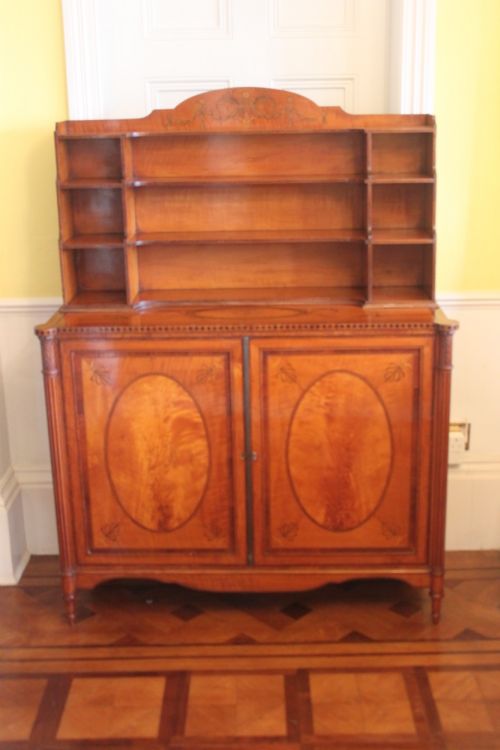
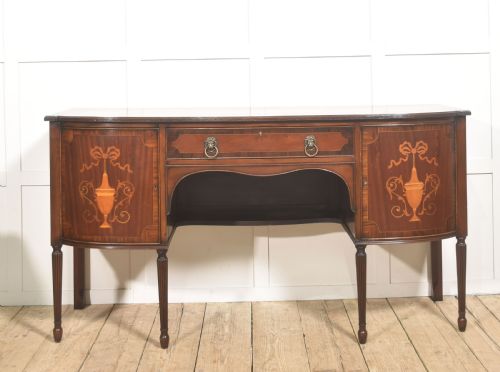
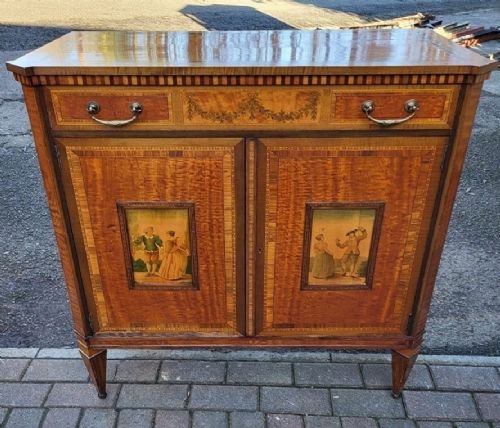
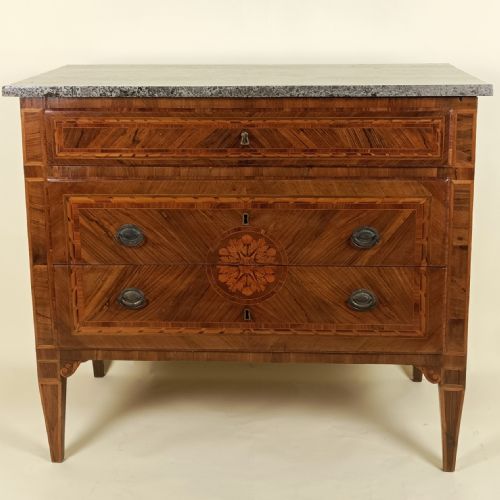
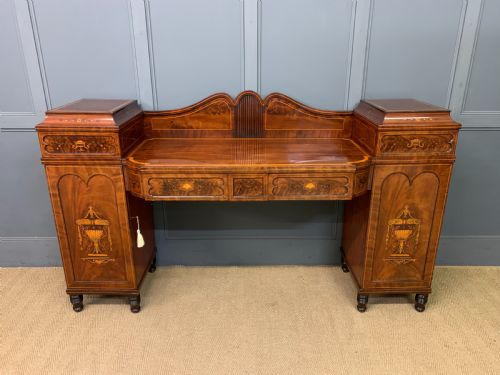
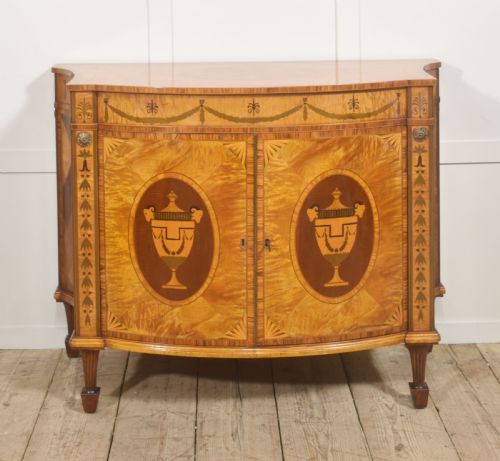
A neoclassical marquetry credenza encompasses architectural case furniture designed with classical restraint, geometric balance, and pictorial wood veneers. These pieces appear in forms such as side cabinets, sideboards, commodes, and display cabinets across the listings.
The selection ranges from eighteenth-century George III and Italian examples to later nineteenth- and twentieth-century revivals in the Sheraton and Louis XVI styles. Buyers frequently encounter satinwood and mahogany structures enhanced by boxwood and rosewood inlay.
Materials and Construction
Cabinet makers built the carcases using solid timbers such as mahogany, walnut, and maple, applying fine face veneers of satinwood to create contrasting fields for the marquetry designs. Boxwood and various stained woods were cut into delicate pictorial or geometric motifs set flush into the primary surfaces.
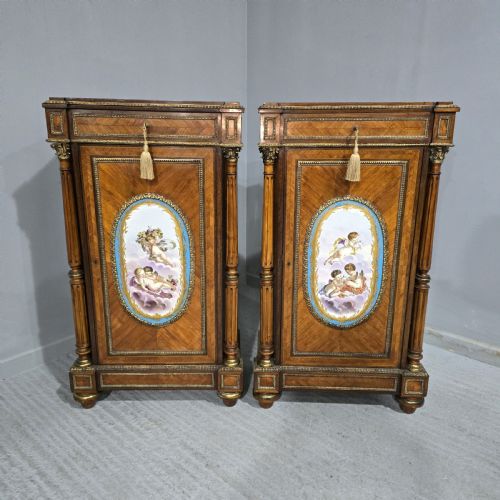
Mounts and decorative accents utilised cast brass and ormolu, while heavy stone tops in white and variegated marble completed the upper surfaces of commodes and cabinets. Glazed doors and delicate parcel gilding further accented the classical proportions and borders.
Some nineteenth-century makers hid secret drawers behind gilded friezes, treating formal storage as a private puzzle for the owner.
Craftsmanship and Distinction
The distinction between standard production and exhibition-quality work rests upon the precision of the veneer cutting and the complexity of the pictorial marquetry. Finer examples display meticulous shading in the wood elements, creating three-dimensional depth within floral and classical urn motifs.
Structural harmony also dictates value, seen in the seamless integration of ormolu mounts, the weight and choice of marble tops, and the integrity of the secondary timbers used in drawer construction. Pieces bearing documented signatures from notable workshops command attention for their verified provenance.
James Hicks·Maple and Co.·Pietro Ferrario·Edwards and Roberts
The Neoclassical Marquetry Credenza Glossary
- Marquetry
- Decorative veneer work arranged in pictorial or geometric patterns across a furniture surface. Craftsmen cut contrasting wood species to fit precisely together before gluing them to the carcase.
- Satinwood
- A pale, lustrous timber native to Ceylon and the West Indies, highly prized in eighteenth- and nineteenth-century cabinet making. Its golden sheen provides a bright ground for darker inlaid borders.
- Ormolu
- Gilded bronze used for decorative mounts, handles, and feet on high-status case furniture. The technique involves applying a mercury and gold amalgam to cast bronze before firing.
- Demi-Lune
- A half-moon shape in plan, commonly applied to the tops and fronts of side cabinets and commodes. This curved profile allows the furniture to sit compactly against a wall.
- Breakfront
- A cabinet or sideboard whose central section projects forward from the flanking wings. This architectural arrangement adds visual depth and structure to large case pieces.
Neoclassical Marquetry Credenza: Frequently Asked Questions
How do I date a marquetry credenza?
Dating relies on examining the secondary timbers, construction methods, and the specific nuances of the revival style or period ornament. Eighteenth-century pieces often show hand-cut dovetails and native softwood carcase linings, whereas later revival items from the nineteenth and twentieth centuries may display machine-sawn elements.
Stylistic cues also help narrow the timeline, as Sheraton and Adam revivals frequently employ lighter satinwood grounds and distinct neoclassical motifs that differ from earlier Georgian proportions.
Where should I place a credenza?
These decorative case pieces sit best against a primary dining room or drawing room wall where their marquetry tops and intricate veneers remain visible. Demi-lune and bow-front variants function well in hallways or reception areas to break up long expanses of wall.
Avoid positioning them in direct sunlight or near heat sources, as extreme temperature fluctuations risk drying out the delicate veneers and causing the wood to lift.
Are marble-topped commodes fragile?
The marble slabs on these commodes are heavy and structurally independent of the wooden carcase beneath, resting securely in their rebated frames. While the stone itself is durable, care must be taken during relocation to lift the marble separately to prevent cracking.
Daily use requires only simple dusting, avoiding acidic liquids that can etch the polished stone surface.
What is the difference between marquetry and inlay?
Inlay involves recessing a piece of material into a solid wood ground that has been carved out to receive it. Marquetry, by contrast, assembles an entire picture or pattern from veneer sheets before applying the complete composition to the furniture surface.
Pieces described with marquetry typically feature complex floral, urn, or geometric designs composed of multiple contrasting wood species.