
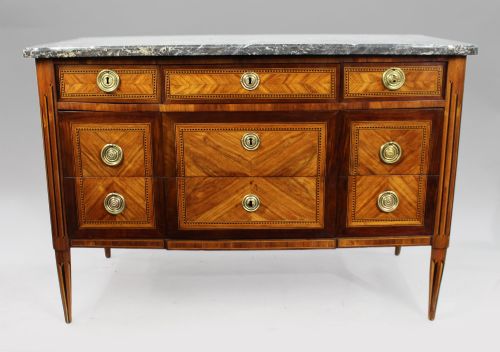
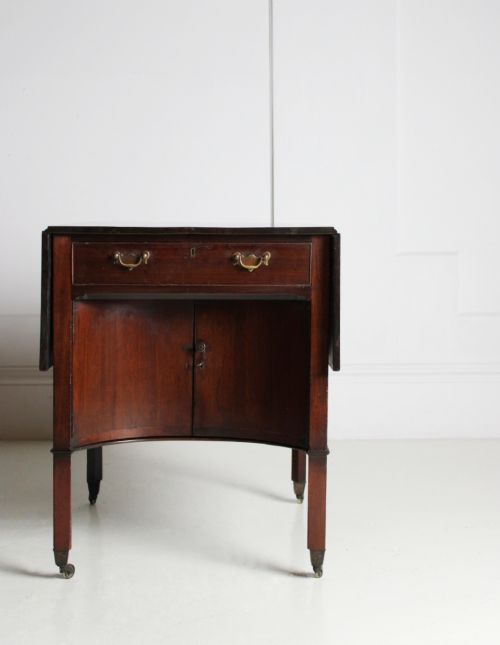

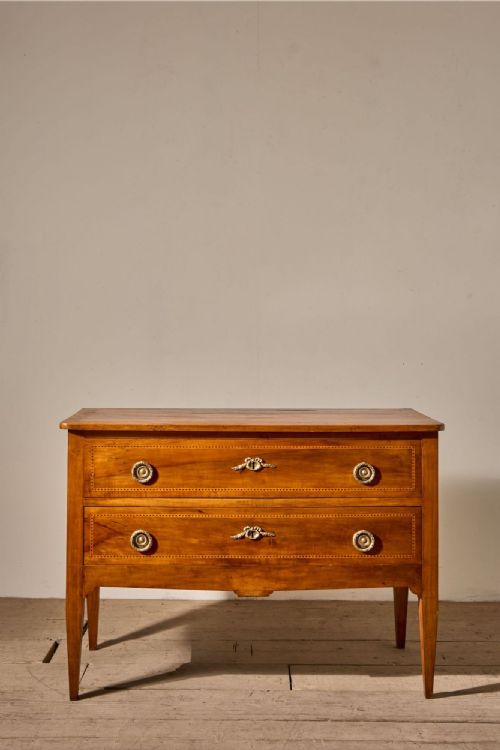
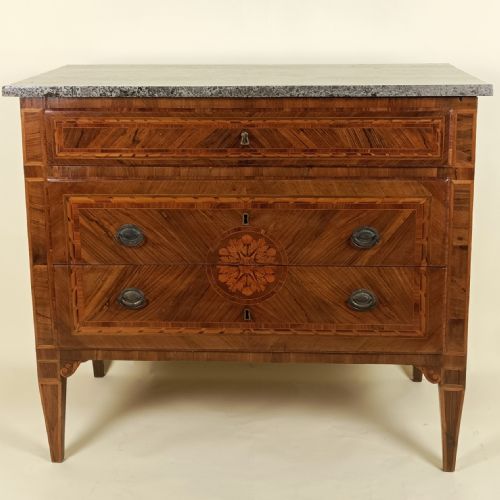


Tapered Leg Commode
These tapered leg commodes are practical storage pieces defined by slender uprights, bringing refined continental elegance and Georgian balance into any interior.
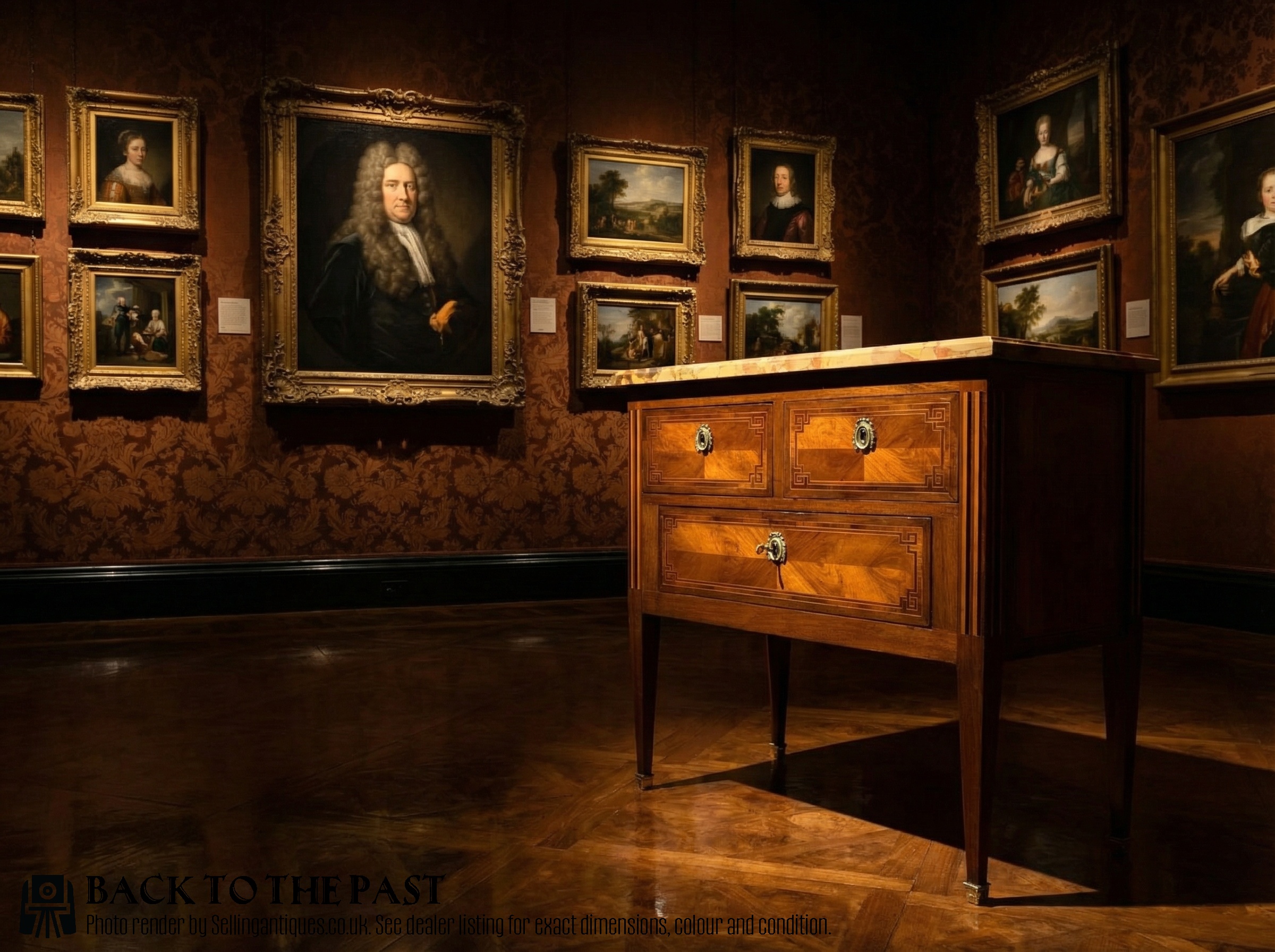
Tapered Leg Commode
A tapered leg commode provides functional drawer storage while maintaining a lighter footprint than traditional bulky chests. When exploring these pieces, expect to encounter Georgian and Louis XVI influences alongside Italian Neoclassical and French Provincial examples.
The selections span the eighteenth century, the nineteenth century, and around nineteen hundred, offering diverse regional interpretations. Forms range from classic multi-drawer chests to side cabinets, writing desks, and side tables.
Mahogany, walnut, and cherrywood dominate the construction, often enhanced by satinwood and fruitwood details. Many incorporate marble tops and brass hardware to complete the formal aesthetic.
Materials and construction
Cabinet makers utilised dense hardwoods like mahogany and walnut as structural foundations, applying fruitwood and satinwood veneers for decorative surfaces. Parquetry and marquetry techniques created intricate geometric and floral patterns across drawer fronts and tops.
Heavy marble slabs rest securely on top surfaces, particularly on French and Italian pieces from the eighteenth century. Brass mounts and handles provide functional accents, while straight tapered legs anchor the elevation cleanly.
Cabinet makers occasionally hid delicate fruitwood stringing inside drawer linings, rewarding only the most thorough domestic searcher.
Judging the craftsmanship
Quality rests upon the precision of the parquetry and marquetry work, where tighter joints and well-matched grain patterns signal superior atelier production. The crispness of the leg taper and the harmony of the timber selection elevate certain pieces above standard utility furniture.
Original brass hardware and undamaged marble tops contribute significantly to the integrity of the object. Subtle details like bleached walnut finishes or regional Lombardy characteristics distinguish individual cabinet maker outputs.
The Tapered Leg Commode Glossary
- Commode
- A low chest of drawers or cabinet designed for domestic storage. Originating in France, the form evolved across various European styles.
- Parquetry
- Geometric wood inlay work forming repeating patterns. This technique decorates drawer fronts and top panels.
- Marquetry
- The art of applying veneer pieces in pictorial designs. Makers used contrasting timber colours to depict floral or architectural scenes.
- Neoclassical
- A style drawing inspiration from classical antiquity, characterised by straight lines and symmetrical balance. It strongly influences late eighteenth-century forms.
Tapered Leg Commode: Frequently Asked Questions
What is a tapered leg commode?
A tapered leg commode is a low storage chest featuring slender, downward-narrowing legs. These pieces combine practical drawer space with a lighter visual aesthetic than heavy box chests.
They appear across various periods, including the Georgian era and Louis XVI styles, utilising woods such as mahogany, walnut, and cherrywood.
How do I date a commode?
Dating relies on examining the timber species, construction methods, and stylistic cues such as hardware and leg shape. Eighteenth-century examples often feature hand-cut dovetails and distinct regional marquetry.
Nineteenth-century interpretations frequently adopt earlier Louis XVI or Georgian motifs while retaining the structural characteristics of their own era.
Where were these commodes made?
The available pieces originate from British, French, and Italian workshops, reflecting distinct regional tastes. French and Italian examples frequently incorporate marble tops and elaborate parquetry.
English Georgian pieces lean towards mahogany and satinwood construction, prioritising balanced proportions and clean cabinetwork.
How do I care for a marble top?
Marble surfaces require gentle cleaning with a damp cloth and mild soap, avoiding acidic substances that etch the stone. Regular dusting keeps the polished finish intact.
Ensure heavy objects are placed carefully to prevent chipping the edges of the stone slab.
Are these commodes suitable for modern living?
These commodes offer versatile storage for hallways, living rooms, or bedrooms, fitting easily into contemporary layouts. Their slender legs prevent the room from feeling overcrowded.
Drawer configurations accommodate daily items while the surface provides space for lamps or decorative objects.