

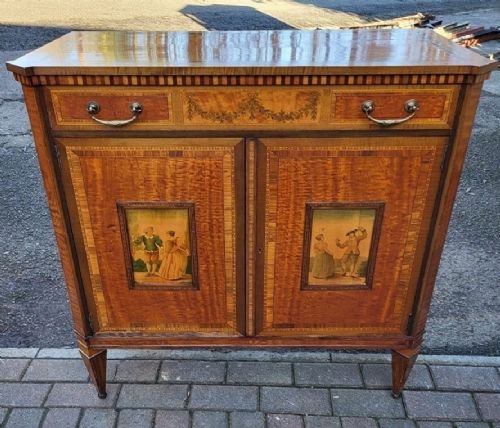

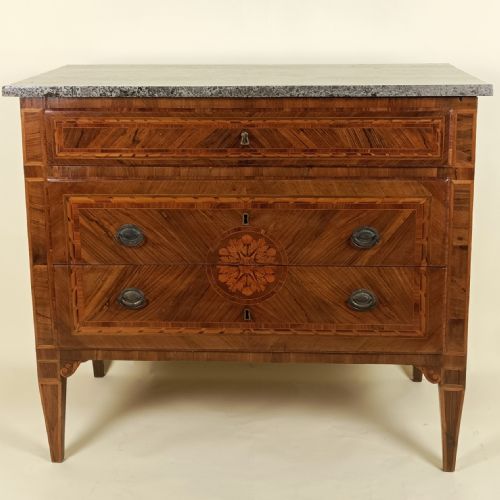

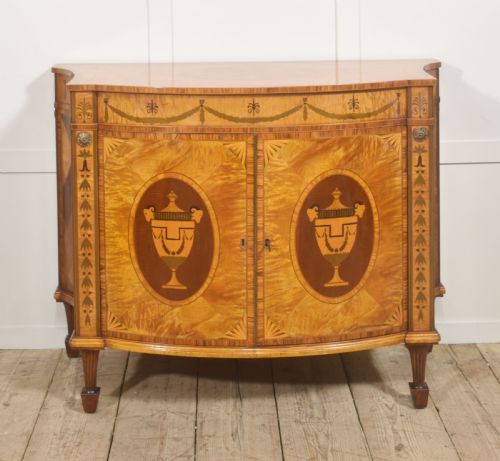


Neoclassical Marquetry Cabinet
A neoclassical marquetry cabinet brings together precise architectural lines and intricate wood inlays for a formal room centrepiece.
Neoclassical Marquetry Cabinet
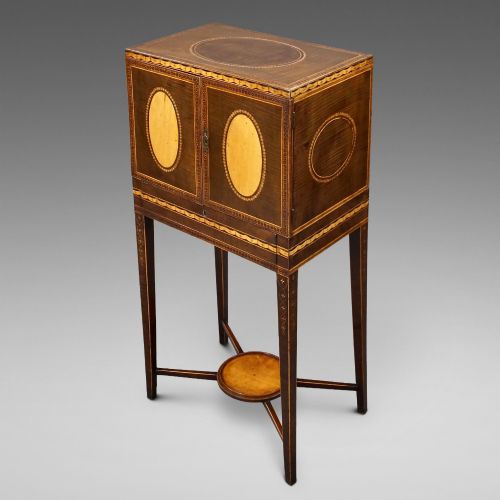
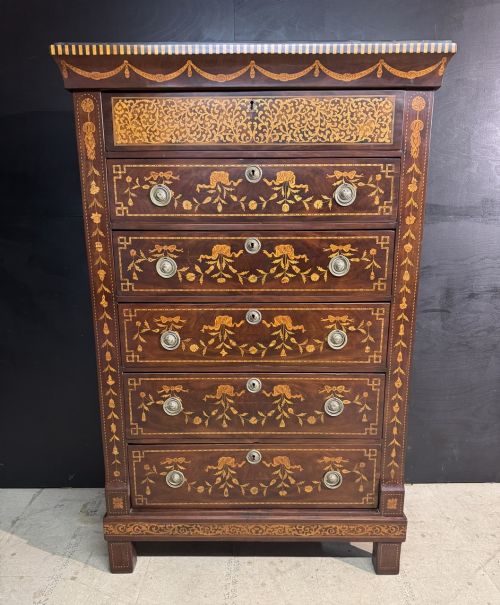
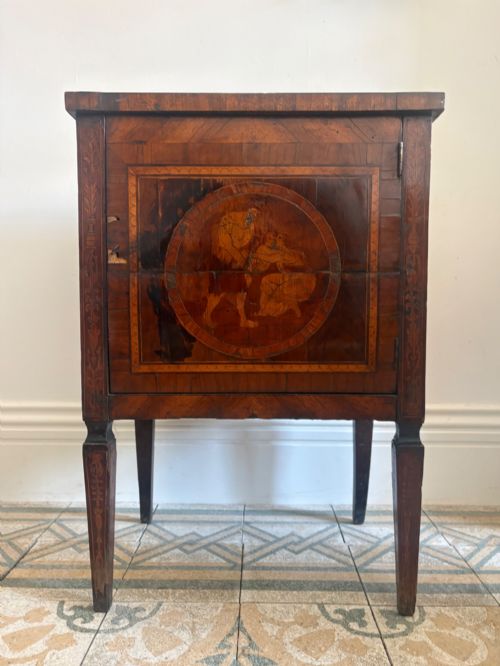
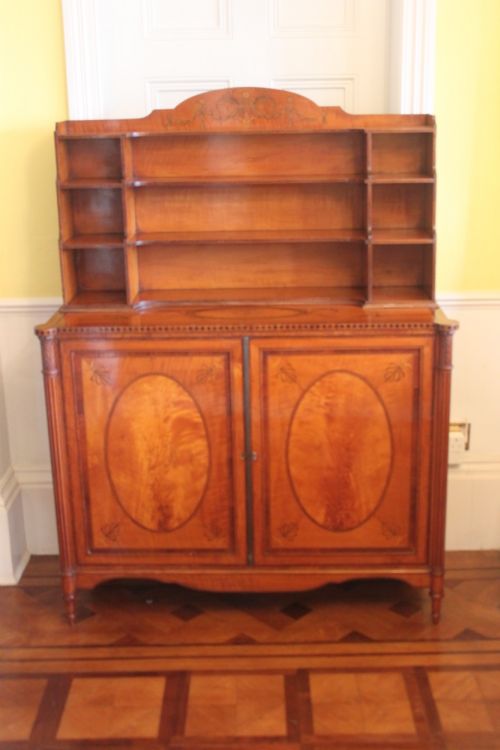
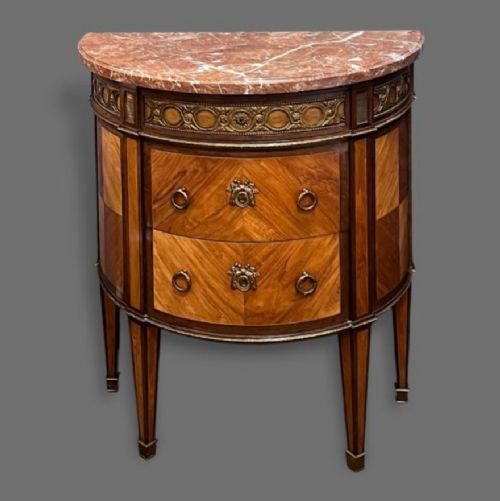
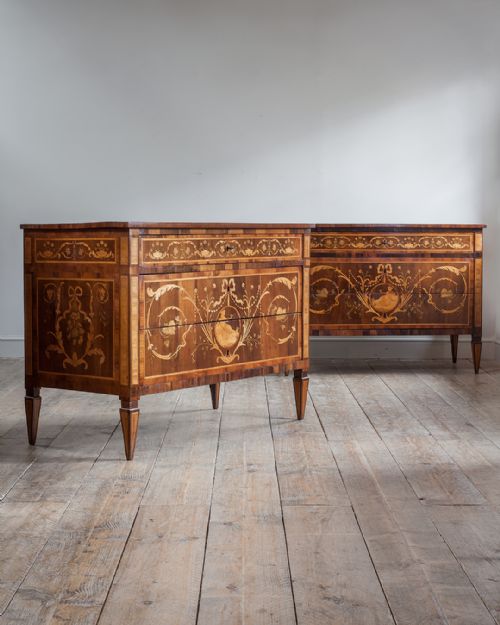
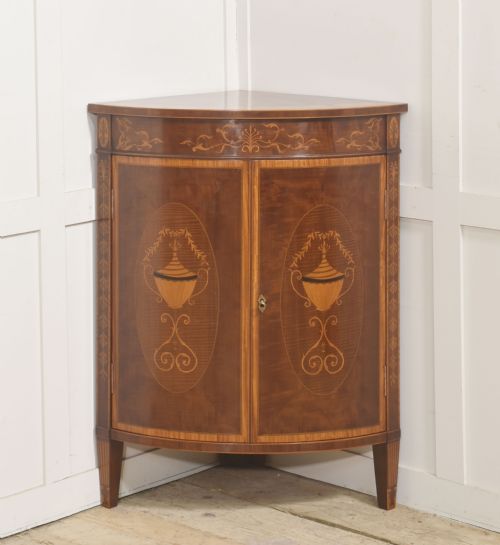
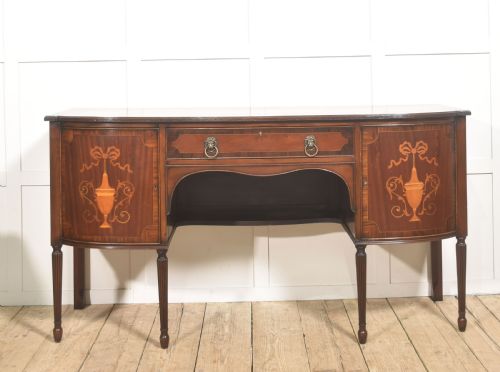
A neoclassical marquetry cabinet encompasses side cabinets, commodes, chests of drawers, and display cabinets originating from the eighteenth, nineteenth, and early twentieth centuries. These pieces reflect stylistic revivals including Sheraton, Louis XVI, and Adam, alongside period examples from England, France, Italy, and the Netherlands.
The version most frequently met on this page is the satinwood or mahogany side cabinet or commode, often featuring demi-lune or bowfront shapes. Italian and Dutch regional examples also appear, alongside English Sheraton revival pieces and French ormolu-mounted variations.
Buyers encounter storage forms ranging from tall chests and linen presses to corner cabinets and bedside commodinos. These items serve functional storage roles while displaying complex wood veneers and classical decorative motifs.
Materials and Construction
Cabinet makers utilised foundational timbers such as mahogany, walnut, and satinwood, applying contrasting veneers of boxwood, harewood, and kingwood to create detailed pictorial or geometric patterns. These woods provide the natural colour variation necessary for nuanced floral and architectural marquetry designs.
Ormolu mounts, brass details, and marble tops frequently complete the construction, particularly on French commodes and Italian side pieces. Structural joinery supports curved serpentine and demi-lune forms, matching wood inlays with cast metal ornamentation.
Periods represented span from the eighteenth-century origins through the nineteenth-century Victorian era up to early twentieth-century revivals.
Assessing Craftsmanship
Quality rests in the precision of the veneer work and the integration of the marquetry across curved surfaces like bowfronts and demi-lune doors. Finer execution shows seamless alignment where individual wood pieces meet.
The selection of cabinet timbers and secondary woods dictates the standard of the piece, alongside the crispness of any gilt bronze or ormolu mounts. Works bearing identified cabinet maker signatures demonstrate higher workshop standards.
James Hicks·Maple and Co·Pietro Ferrario·Edwards and Roberts·Jean Werner·Paul Sormani
The Neoclassical Marquetry Cabinet Glossary
- Marquetry
- Decorative veneer work forming pictures or patterns by assembling small pieces of different coloured wood. This technique contrasts with simpler inlay by covering the entire surface.
- Satinwood
- A durable tropical hardwood with a characteristic golden-yellow sheen used extensively in eighteenth and nineteenth-century cabinet making. It forms the pale ground for many revival and neoclassical designs.
- Ormolu
- Gilt bronze ornamentation applied to furniture, popular in French neoclassical and revival pieces. It provides metallic contrast against dark kingwood or polished mahogany.
- Demi-lune
- A half-moon or semicircular shape common in commodes and side cabinets from the late eighteenth century onwards. This profile requires specialised curved veneer fitting.
- Commode
- A low chest of drawers or cabinet originating in France, typically standing on relatively tall legs. These pieces often feature marble tops and elaborate marquetry facades.
Neoclassical Marquetry Cabinet: Frequently Asked Questions
Where should I place a neoclassical marquetry cabinet?
These cabinets suit formal reception rooms, hallways, or drawing rooms where their detailed wood veneers remain visible. Placing them away from direct sunlight protects the natural tones of satinwood, mahogany, and walnut.
Because many forms feature finished backs or curved profiles like demi-lune shapes, they function well against flat walls or positioned within room corners depending on the specific cabinet type.
How do I distinguish eighteenth-century pieces from later revivals?
Examining secondary framing timbers, construction joinery, and the wear patterns on internal drawer linings helps differentiate period items from later nineteenth and early twentieth-century revivals. Eighteenth-century pieces often display hand-cut joinery specific to their regional workshops.
Revival pieces from the Sheraton or Louis XVI revival periods frequently use standardised machine-cut elements alongside period-appropriate styling, reflecting the historicism of later decades.
How do I care for antique wood veneers?
Maintaining stable indoor humidity levels prevents veneer lifting or wood shrinkage on antique cabinets. Avoid harsh chemical cleaners and excessive moisture when dusting.
Applying appropriate traditional wax polish occasionally nourishes the timber and preserves the natural lustre of satinwood and kingwood without building up heavy residues.
What is the difference between marquetry and parquetry?
Marquetry involves arranging various coloured wood veneers to create pictorial scenes, urns, floral motifs, or scrolling designs. It requires artistic precision in cutting disparate veneer pieces.
Parquetry uses geometric or symmetrical wooden tiles to create repeating patterns such as cubes or chequers, focusing on abstract form rather than pictorial illustration.