

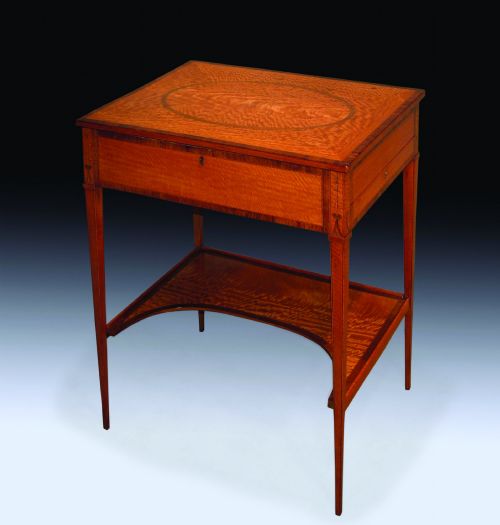


Georgian Inlaid Work Table
A georgian inlaid work table brings delicate craftsmanship and concealed compartments into the sitting room.
Georgian Inlaid Work Table
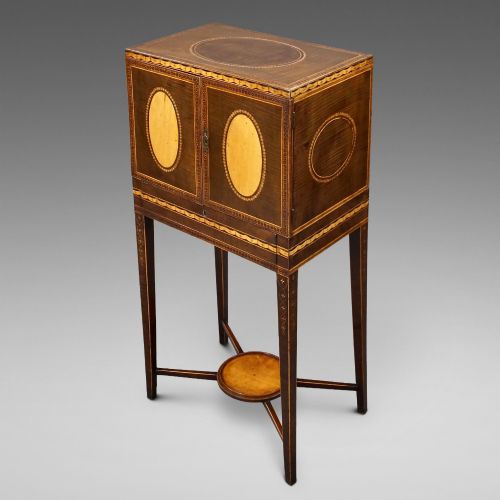
A georgian inlaid work table serves as a multifunctional piece designed for needlework, writing, and small domestic tasks. These tables date primarily from the Georgian, Regency, and Sheraton periods, spanning the eighteenth and nineteenth centuries.
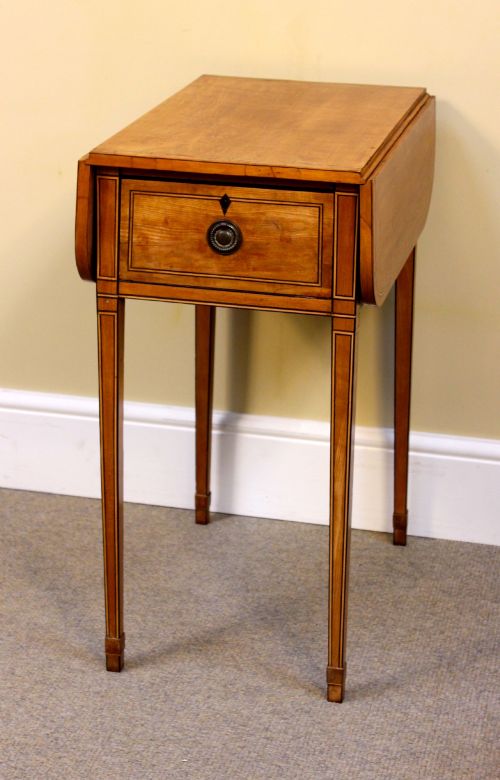
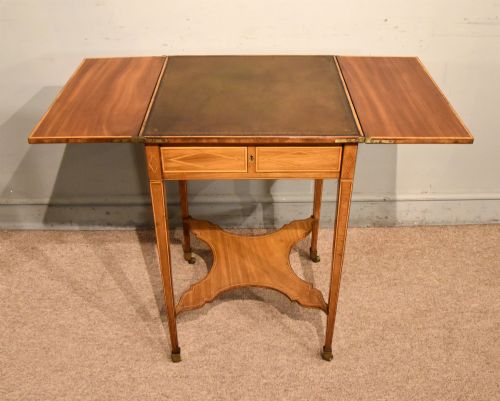
The most common forms on this page include sewing tables, drop leaf tables, and occasional tables fitted with drawers or fabric bags. Makers constructed them to sit beside chairs or sofas in polite rooms, combining utility with decorative marquetry.
Makers utilised various secondary forms alongside dedicated work tables, such as side tables and writing tables, which share the same compact proportions and inlaid surfaces. The typical survivor reflects the refined tastes of the late eighteenth and early nineteenth centuries.
How They Were Made
Cabinet makers built the primary carcass using timbers such as mahogany, rosewood, and satinwood, often selecting finely grained stock for the top and drawer fronts. They integrated contrasting veneers and bandings in boxwood and ebony to create geometric or floral borders.
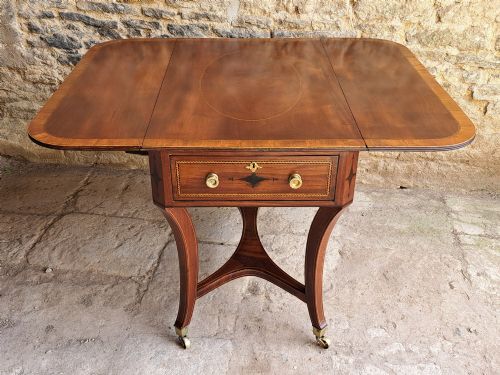
Inlaid decoration required precise hand-cutting of veneers and recesses, secured with animal glue and smoothed flush. Many examples include brass stringing or brass inlay set directly into the wood to accentuate the structural lines.
Form variations include side tables, sewing tables, and occasional tables fitted with brass inlay and drop leaves.
What Varies in Quality
Quality rests in the choice of timber and the precision of the inlay work, where crisp junctions between contrasting woods distinguish superior pieces. Subtle details such as the figuration of the satinwood or mahogany grain elevate the visual impact of the surface.
The internal construction of drawers and secret compartments reveals the maker's hand, including hand-cut dovetails and well-fitted internal trays. Tables that retain their original fabric bags and fitted interiors command greater interest from collectors.
The Georgian Inlaid Work Table Glossary
- Inlay
- The technique of inserting pieces of contrasting wood, metal, or other materials into a recessed bass surface to form a decorative pattern. This defines the primary visual character of these tables.
- Satinwood
- A durable, yellowish-gold timber native to Ceylon and India, highly prized for its lustrous grain. Cabinet makers used it extensively for veneers and banding on late eighteenth-century furniture.
- Drop leaf
- A table top featuring hinged flaps that fold down to save space or lift up to extend the surface. These flaps often rest on swinging brackets or pivoted legs.
- Drop flap
- A hinged panel or leaf attached to the side or ends of a table. It allows the footprint of the furniture to alter according to immediate domestic requirements.
- Stringing
- A narrow strip of contrasting wood or brass inlaid into channels cut into the surface of the furniture. It outlines panels, drawers, and table tops with precise linear contrast.
Georgian Inlaid Work Table: Frequently Asked Questions
What was a work table used for?
A georgian inlaid work table served as a dedicated piece of furniture for holding sewing equipment, threads, and needlework supplies. Ladies sat at these tables to mend garments or practice embroidery during the afternoon.
Beneath the work surface, makers often suspended a fabric bag or incorporated shallow drawers with compartmentalised trays. This kept domestic sewing tools organised and close at hand in the parlour.
How do I tell Regency from Georgian styles?
Georgian furniture generally encompasses pieces made during the reigns of the Georges, spanning the eighteenth and early nineteenth centuries. The style leans towards classical proportions, understated mahogany frames, and delicate stringing.
Regency style represents a specific phase within the late Georgian era, running into the early nineteenth century. It incorporates bolder brass inlay, rosewood veneers, and classical motifs inspired by ancient Rome and Greece.
Are these tables sturdy enough for daily use?
These tables were built with solid hardwood frames and traditional joinery designed to withstand regular household duties. Their compact size makes them suitable for use beside modern seating as lamp or side tables.
Care should be taken to protect antique polished surfaces from moisture and excessive heat. Gentle handling of drop leaves and internal compartments preserves the historic mechanics.
What is Sheraton style on these tables?
Sheraton style derives from the designs published by cabinet maker Thomas Sheraton in the late eighteenth century. It is characterised by slender tapered legs, rectangular forms, and meticulous satinwood or harewood inlay.
Tables from this design tradition often feature delicate stringing and contrasting crossbanding. The aesthetic prioritises geometric lightness and refined elegance over heavy ornamentation.