
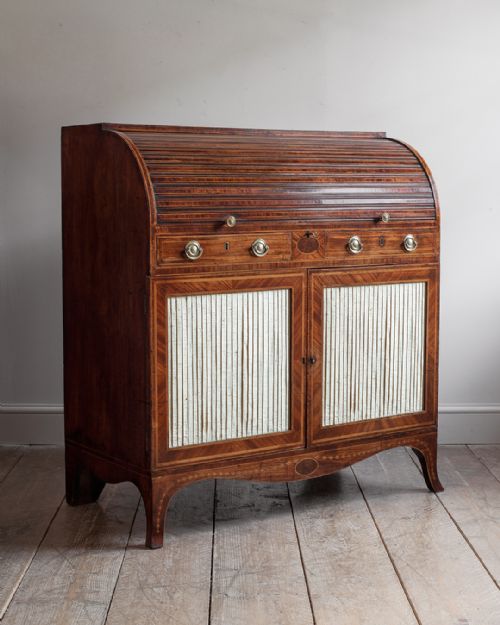
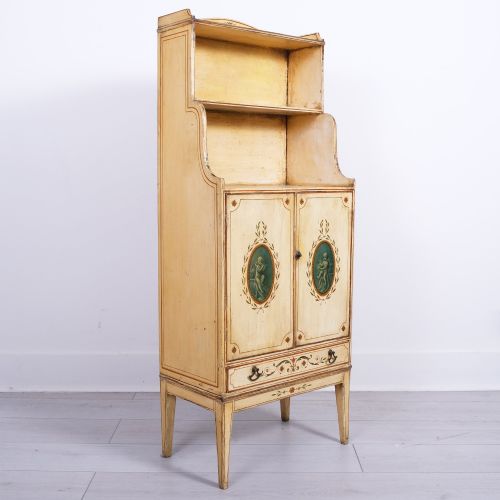
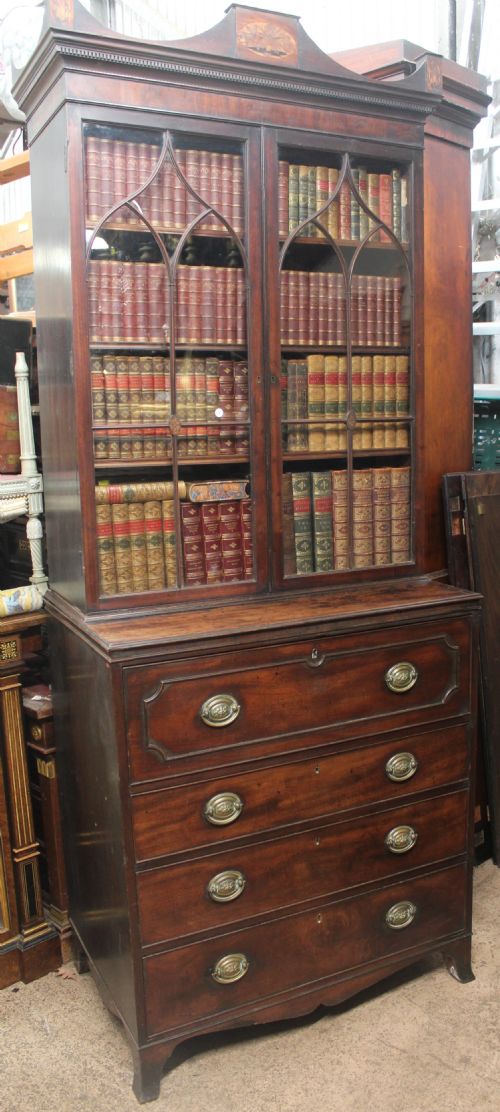
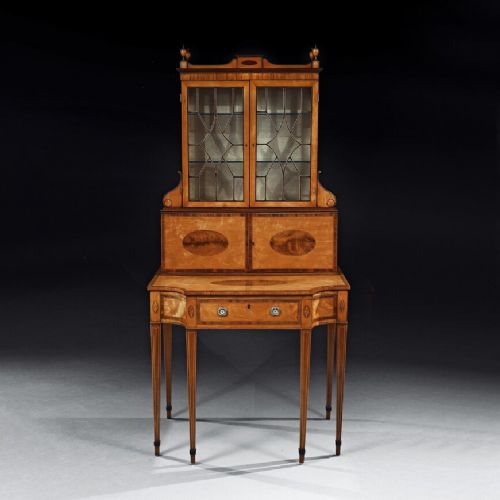



18th Century Sheraton Cabinet
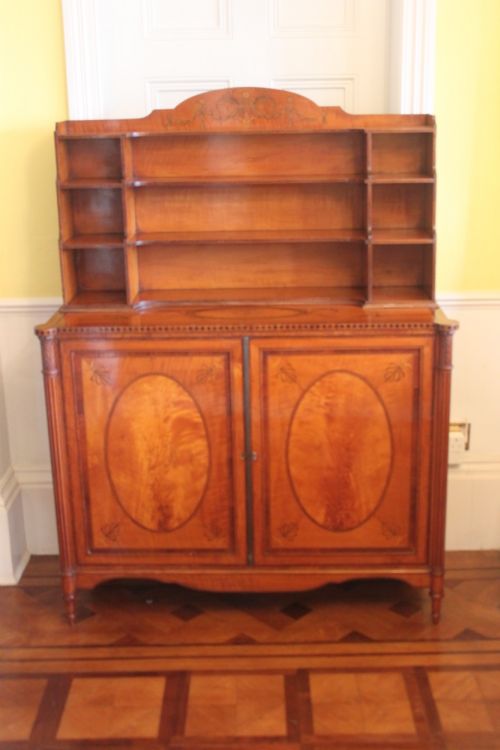
An 18th century sheraton cabinet brings refined neoclassical lines and figured timbers into a room, offering both display and concealed writing space.
18th Century Sheraton Cabinet
An 18th century sheraton cabinet encompasses sophisticated case pieces designed during the late Georgian period, including secretaire bookcases, writing cabinets, and sideboards. These items reflect the lighter, more elegant neoclassical aesthetic popularised in the late eighteenth century, moving away from heavier earlier proportions.
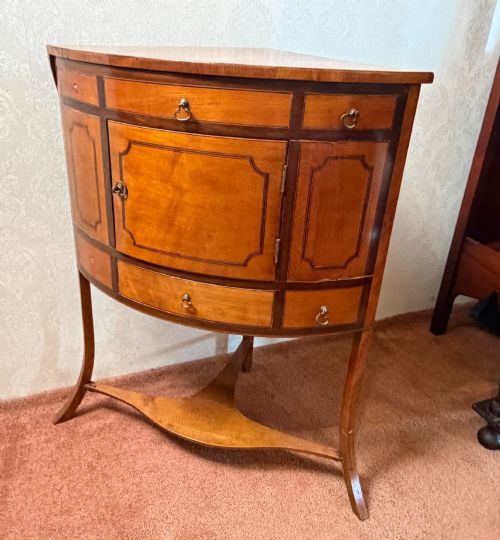
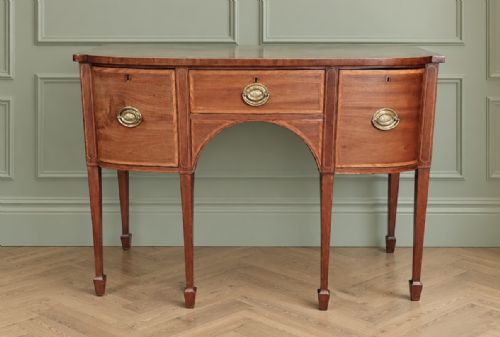
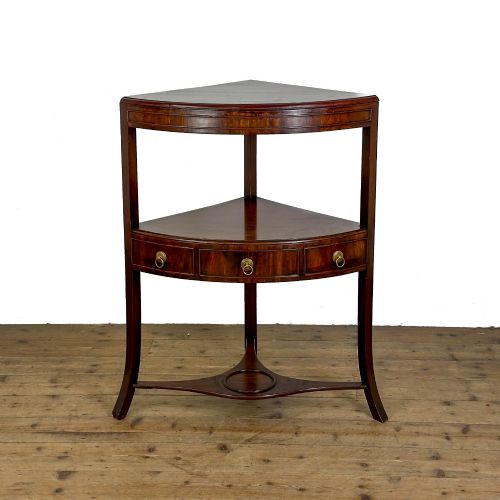
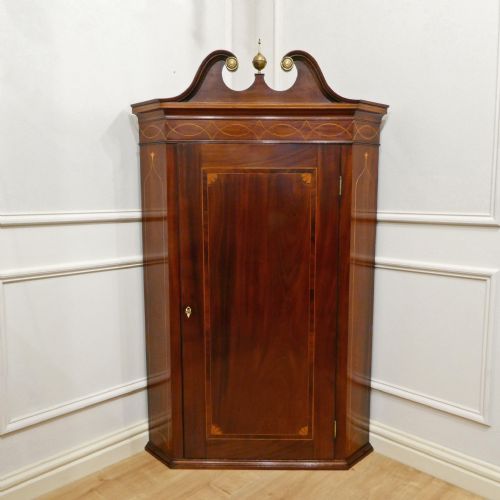
The pieces appearing on this page span the eighteenth and early nineteenth centuries, categorised under periods such as Georgian, George III, and the Regency era. Sideboards and corner cupboards frequently emerge alongside writing cabinets and cylinder desks.
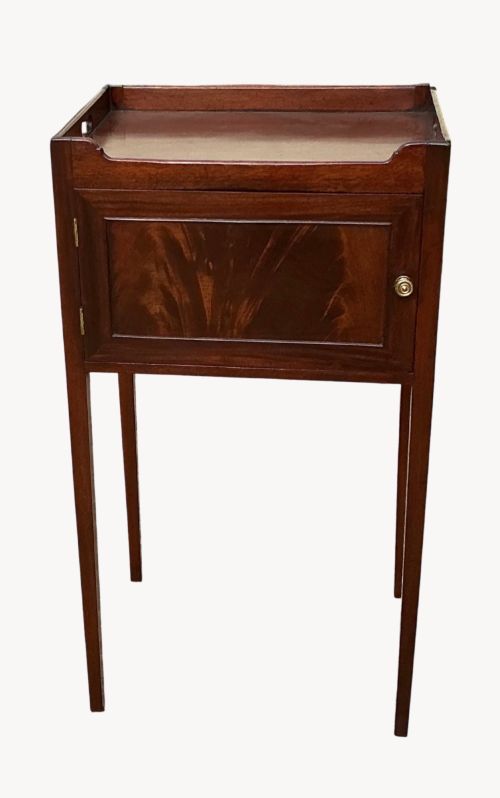
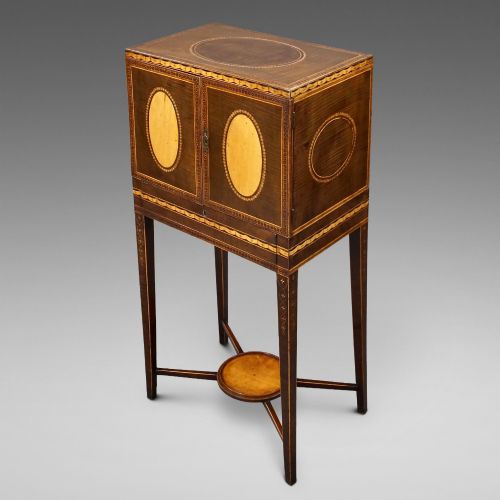
Buyers seeking an 18th century sheraton cabinet encounter variations in form from bowfront sideboards to glazed corner cupboards and compact bedside tables. Mahogany and satinwood predominate among the surviving examples listed here.
What varies in quality
The standard of an 18th century sheraton cabinet depends heavily on the selection of timber figures and the precision of the contrasting inlay work. Finely figured flame mahogany and richly toned satinwood elevate the visual impact of a piece significantly above plain timber alternatives.
Subtlety in proportion and the crispness of executed details, such as tambour doors, cylinder actions, and internal writing drawers, distinguish master workshops from standard regional production. The integrity of original brass fittings and glass panes also influences the overall standing of the piece.
Listings feature mahogany, satinwood, harewood, and boxwood inlay across 18th-century Georgian and Sheraton periods.
The 18th Century Sheraton Cabinet Glossary
- Sheraton
- A neoclassical furniture style dating from the late eighteenth century, characterised by straight lines, tapered legs, and contrasting veneer inlays. It draws its name from the designer Thomas Sheraton.
- Satinwood
- A durable, lustrous tropical timber with a yellowish colour and a satin-like sheen, frequently used for veneering and inlay work.
- Secretaire
- A cabinet or desk featuring a fitted pull-down writing drawer that conceals small pigeonholes and pigeon drawers.
- Tambour
- A flexible shutter made of narrow vertical strips of wood glued to canvas, allowing curved cabinet doors to slide open smoothly.
- Harewood
- Sycamore wood that has been stained grey, often utilised in high-end marquetry and inlay during the eighteenth century.
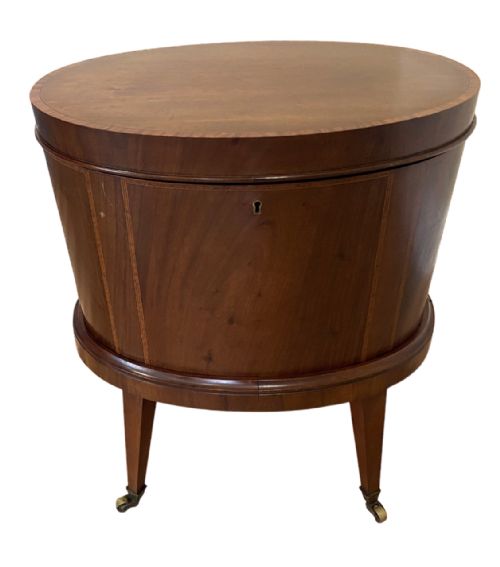
- Cellarette
- A lockable freestanding cabinet or box designed to hold bottles of wine and spirits, typically positioned beneath a sideboard.
18th Century Sheraton Cabinet: Frequently Asked Questions
How do I identify George III furniture?
George III pieces date from the reign of George the Third, spanning from the mid to late eighteenth century into the early nineteenth century.
They display refined proportions, superior timber selection such as flame mahogany, and precise decorative elements like boxwood inlay.
Where were these cabinets used?
These items functioned primarily in formal reception rooms, dining rooms, and private studies of grand houses and town residences.
Sideboards served dining needs, while secretaire bookcases and writing cabinets provided dedicated spaces for correspondence and book storage.
How do I care for satinwood?
Satinwood surfaces require protection from direct sunlight and excessive moisture to prevent fading and veneer lifting.
Regular dusting with a dry, soft cloth and occasional application of appropriate furniture wax help maintain the timber lustre.