
Neoclassical Marble Side Table
A neoclassical marble side table brings architectural order and cool stone into a room, anchoring a space with centuries of continental design.
Neoclassical Marble Side Table
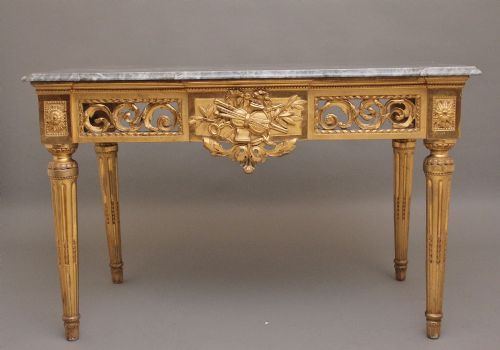
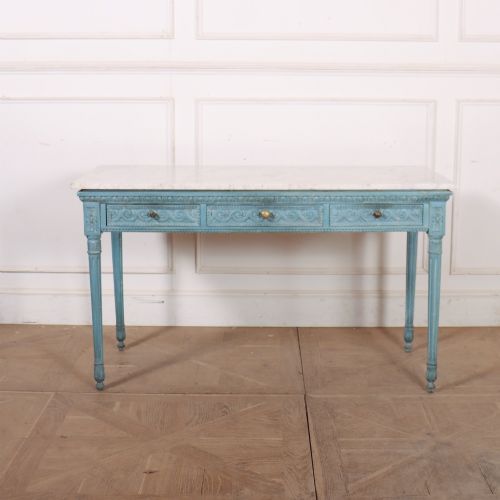
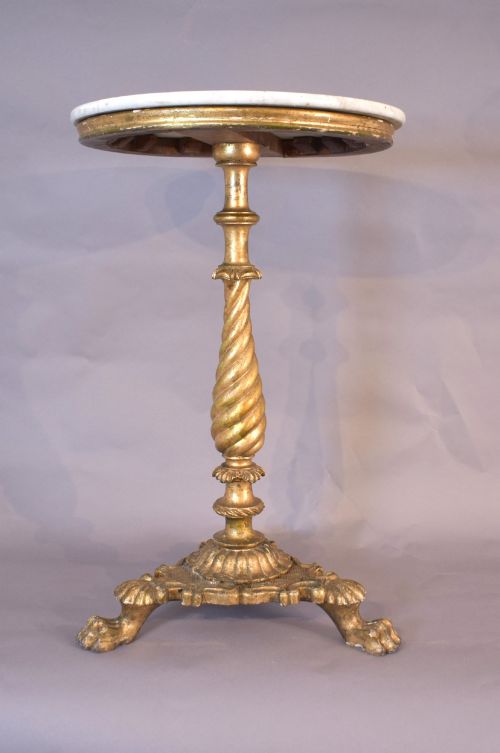
A neoclassical marble side table represents a deliberate turn towards classical antiquity, taking the form of console tables, guéridons, and occasional tables fitted with smooth stone tops. These pieces draw on French Empire, Louis XVI, and Italian neoclassical idioms, bringing disciplined proportions and symmetry into domestic interiors.
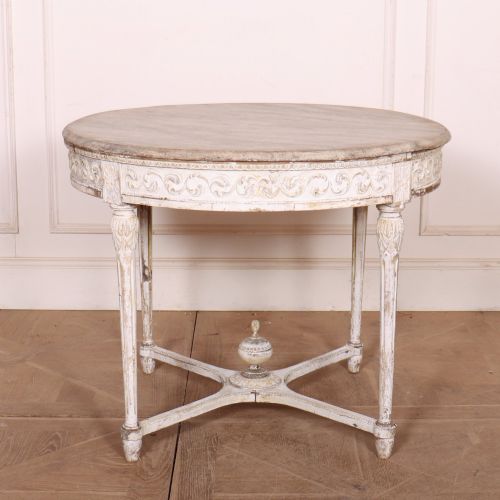
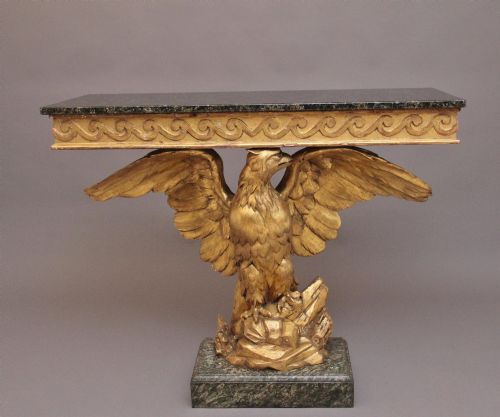
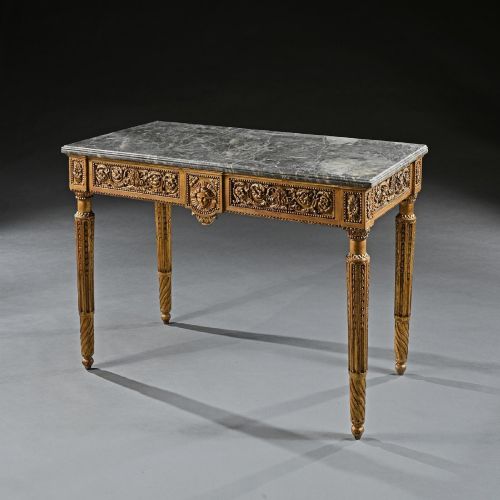
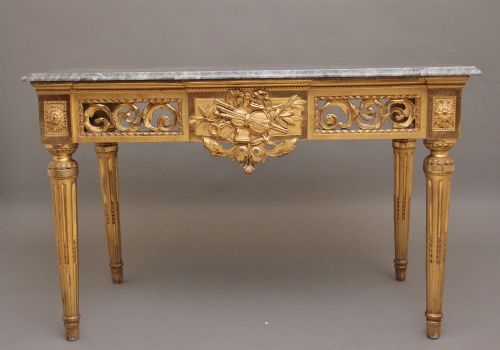
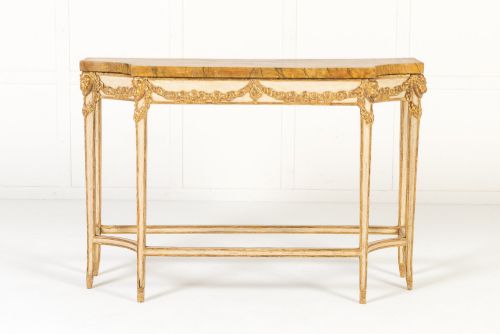
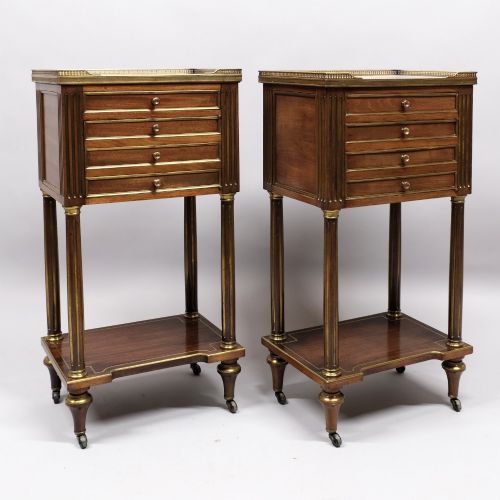
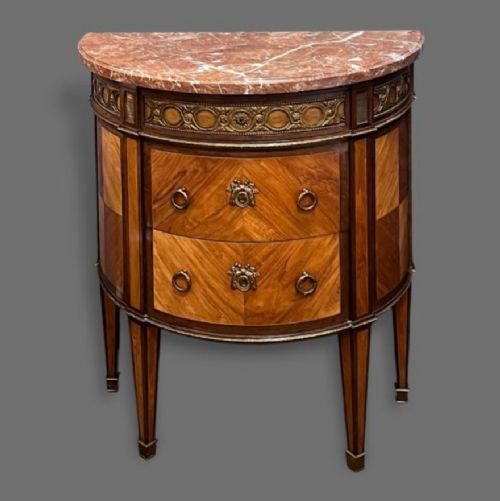
The console table is the most prevalent format on this page, designed to stand flat against a wall often supported by carved giltwood, painted wood, or mahogany bases. Alongside these wall tables, buyers will encounter circular occasional tables, bouillotte tables, and compact bedside cabinets incorporating stone surfaces.
Origins stretch across European workshops, with Italian and French pieces dominating the selection alongside Swedish and English revival examples. Dating spans from the late eighteenth century through the nineteenth century and into the early twentieth century revival periods.
How They Were Made
Craftsmen shaped these tables using dense timbers such as mahogany, walnut, and rosewood, alongside softwood carcasses prepared for intricate gesso, paint, and leaf gilding. Frames were hand-carved with architectural motifs like fluting, egg-and-dart, and classical foliage.
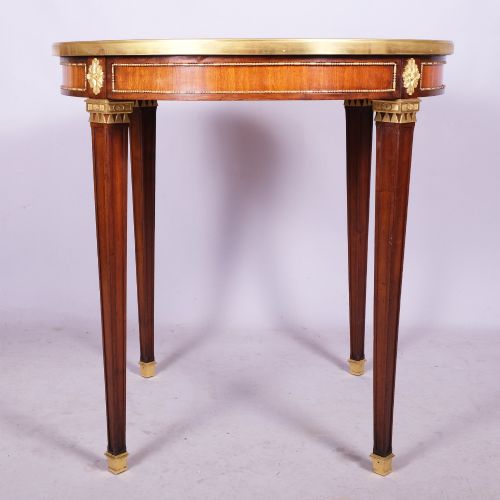
Marble slabs, including white varieties, fossil stone, and faux porphyry, were cut and polished to form the inset or surface tops, resting directly upon the wooden frames. Metalwork components, particularly cast brass and ormolu mounts, were applied to corners, legs, and aprons to accent the geometric lines.
What Varies in Quality
The distinction between standard and exceptional pieces rests upon the crispness of the hand-carved wood or the weight and chasing of the ormolu mounts. Finer examples display deeply undercut foliage and deliberate attention to the joinery of the frame.
The selection of the marble top also dictates the character of the piece, with thicker, richly figured slabs and specialist faux finishes marking out superior commissions from simpler workshop output.
Masion Ramsay
The Neoclassical Marble Side Table Glossary
- Console table
- A wall-mounted or flat-backed table secured with front legs, traditionally designed to stand beneath a mirror. These pieces form a major portion of neoclassical seating and display furniture.
- Guéridon
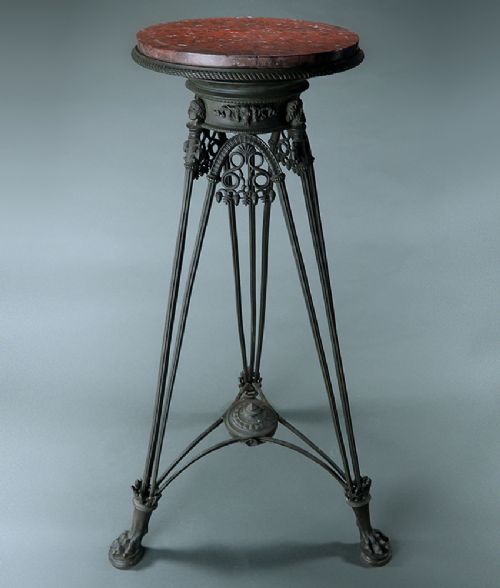
- A small circular table on a central pillar or tripod base, frequently topped with marble. Originating in seventeenth-century France, the form persisted strongly through nineteenth-century revival periods.
- Ormolu
- Gilt bronze ornaments cast and chased by hand, applied to furniture frames for decorative contrast. This technique requires mercury gilding methods common in period French workshops.
- Bouillotte table
- A small neoclassical occasional table featuring a raised gallery edge around the marble top to prevent small items from rolling off. They were originally designed for the card game of the same name.
Neoclassical Marble Side Table: Frequently Asked Questions
Where should I place a console table?
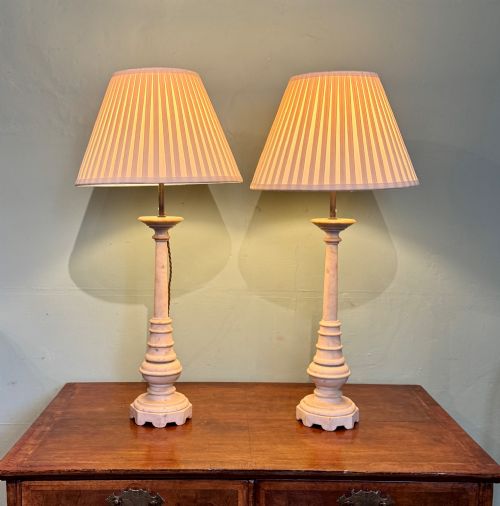
These tables suit hallways, living rooms, and dining spaces where floor depth is restricted. Placing one against a prominent wall establishes a focal point, particularly when paired with a mirror or lighting above.
The flat back allows the furniture to sit flush against plaster surfaces while providing a durable stone surface for decorative objects.
How do I care for the marble top?
Marble requires gentle cleaning with warm water and mild, non-acidic soap to preserve the polished finish. Avoid placing citrus or vinegar directly onto the stone to prevent etching.
Wiping spills promptly keeps the porous material protected over years of daily use.
What is the difference between Empire and Louis XVI styles?
Louis XVI style pieces lean towards lighter, straighter lines with delicate fluting and classical restraint. Empire pieces, influenced by Napoleonic conquest, introduce heavier proportions, militaristic ormolu mounts, and darker timbers.
Both fall under the broader neoclassical umbrella but reflect different decades of historic design evolution.
Can these tables be used for daily dining?
Most side and console formats are proportioned for display, serving drinks, or holding lamps rather than heavy weight-bearing tasks. Their delicate giltwood or carved bases are engineered for stability against walls rather than freestanding central use.
Centre tables and larger guéridons offer more robust footprints for general utility.