


Empire Occasional Table
An empire occasional table brings classical proportion and striking timber to a room, offering a functional surface rooted in nineteenth-century design.
Empire Occasional Table
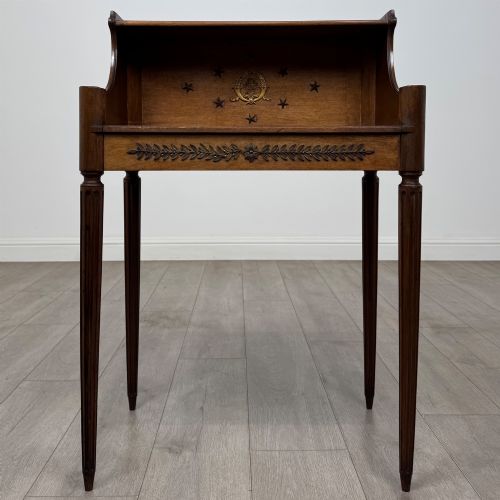
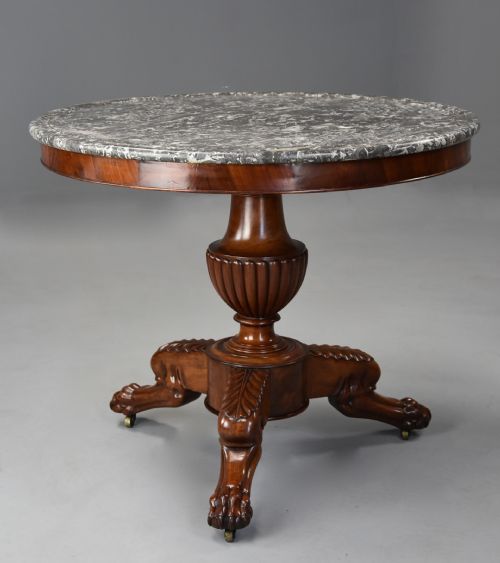
An empire occasional table encompasses circular gueridons, rectangular sofa tables, and compact side pieces originating primarily from nineteenth-century French and broader European workshops. These pieces frequently manifest as freestanding centre tables or smaller lamp tables designed to anchor a room with architectural symmetry.
The selection ranges from early nineteenth-century examples bearing the restraint of the neoclassical movement to later revival pieces from the Victorian and Edwardian eras. Buyers encounter various formats including drop-leaf sofa tables, tilt-top designs, and multi-tiered tables suited for daily use.
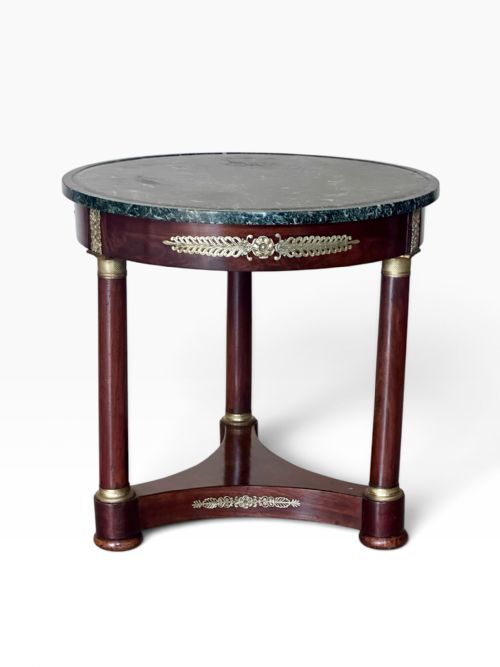
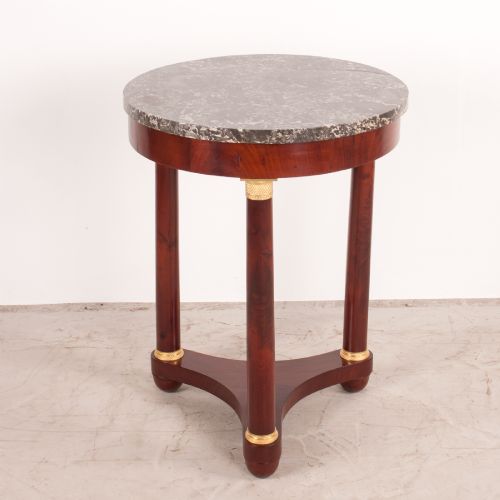
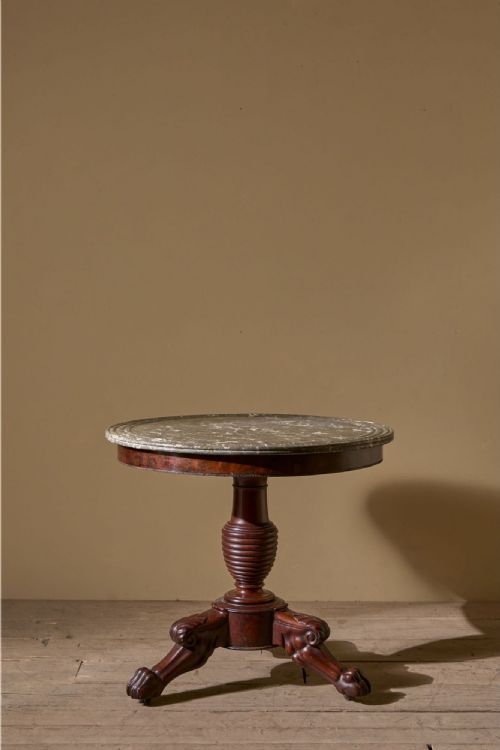
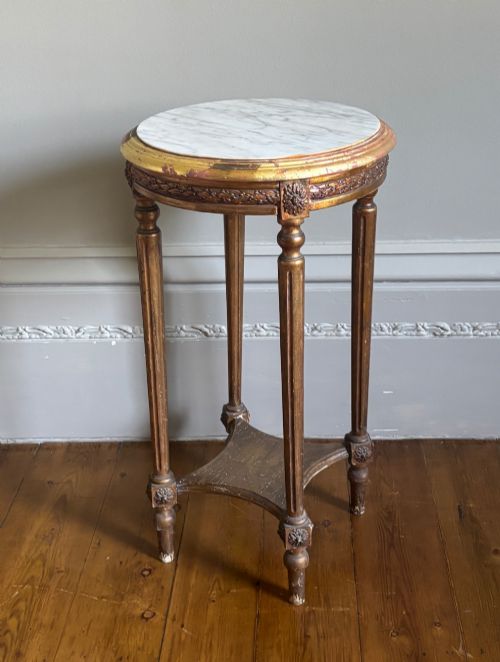
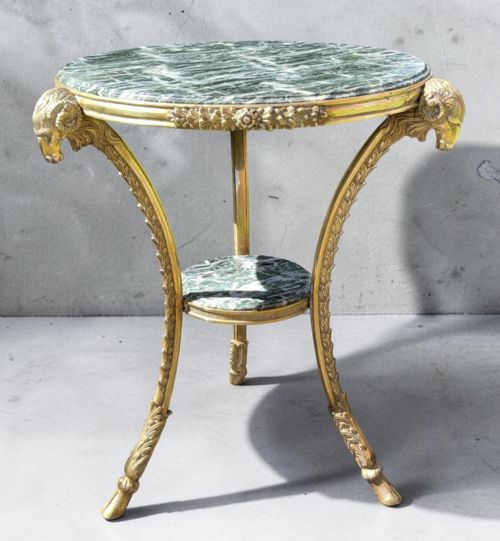
The overarching aesthetic draws heavily on classical vocabulary, often pairing dark timbers with reflective stone or cast metal mounts. Pieces survive in forms spanning from austere mahogany models to ornate gilded creations adorned with animal motifs.
Materials and construction
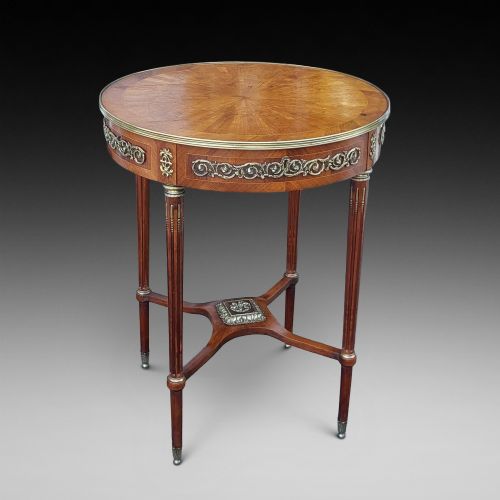
Cabinetmakers utilised dense native and exotic hardwoods such as mahogany, walnut, kingwood, rosewood, and Karelian birch as the primary structural bodies, frequently applying them as veneers over secondary foundations. Ebonised wood and burr elm also appear, providing deep tonal contrast and intricate grain patterns across circular and rectangular surfaces.
Gilt bronze, ormolu, and cast brass mounts punctuate the timber frames, fixed to feet, columns, and aprons to highlight structural junctions with metallic brilliance. Heavy white, grey, or black marble slabs sit flush into recessed tops, secured by their own mass to provide a cool, durable working surface.
Several tables feature cast brass rams heads on their columns, offering a steadfast gaze across the centuries.
Evaluating quality and execution
Structural integrity relies on the precision of the joinery and the selection of stable secondary woods that prevent warping beneath heavy stone tops. Original veined marble slabs fitted cleanly without excessive filler indicate a higher standard of original commission.
The Empire Occasional Table Glossary
- Gueridon
- A small circular table supported by a central pillar or tripod base. This form dominates French nineteenth-century production.
- Ormolu
- Gilt bronze applied as decorative mounts to furniture. The technique involves coating bronze with a gold amalgam and firing.
- Biedermeier
- A central European style emphasising utilitarian comfort and clean lines without excessive ornamentation. Birch and walnut timbers feature prominently.
- Restauration
- A French period bridging the fall of the Empire and the July Monarchy. Pieces retain classical restraint while softening architectural severity.
- Marquetry
- The art of applying pieces of veneer to a structure to form decorative patterns. Craftsmen select contrasting woods to achieve pictorial depth.
Empire Occasional Table: Frequently Asked Questions
What is an empire occasional table used for?
These tables function as versatile surfaces for lamps, display items, or drinks within sitting rooms and hallways. Their compact proportions allow them to sit easily beside seating or occupy central spaces as focal points.
Historically, specific variations like sofa tables accommodated needlework and writing materials. Today, they serve equally well in contemporary interiors for holding books and decorative objects.
How do I identify a French empire table?
Identification relies on observing classical architectural motifs, such as columns, pilasters, and symmetrical geometry. Ormolu mounts depicting classical figures, swans, or rams heads frequently accent the dark mahogany frames.
Many examples incorporate inset marble tops and heavy pillar-and-base construction. The absence of complex curves in favour of straight lines and balanced proportions points directly to the aesthetic.
Are these tables suitable for everyday use?
Solid construction and durable stone or timber surfaces make these tables robust enough for daily domestic life. Marble tops offer high resistance to liquid spills and heat from cups.
Care must be taken to protect polished wooden veneers from moisture and direct heat sources. Using coasters and gentle cleaning cloths preserves the historic finish over time.
How do I date a nineteenth century table?
Dating relies on examining construction methods, timber choices, and stylistic shifts between the early neoclassical phase and later Victorian revivals. Early nineteenth-century examples often display tighter adherence to strict French Empire or Biedermeier canons.
Later revival pieces from the end of the century incorporate machine-sawn elements and varied regional interpretations. Comparing the mounting techniques and secondary woods helps narrow down the decade of manufacture.