





Neoclassical Inlaid Chest
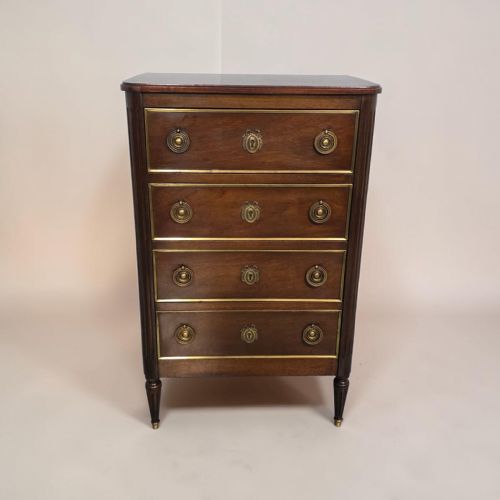
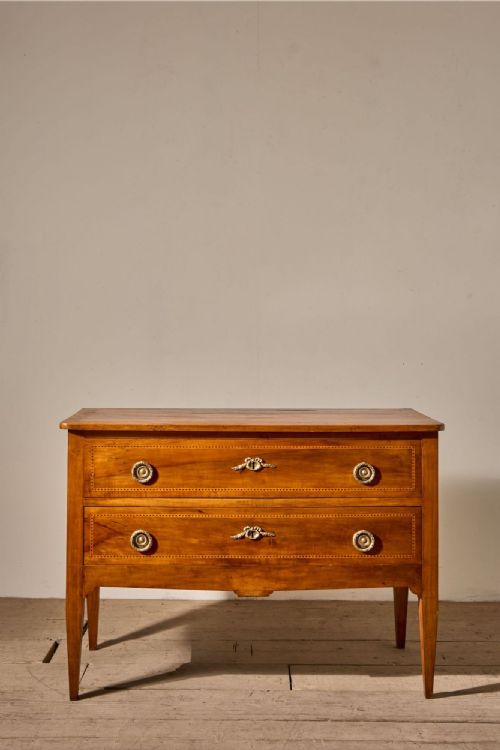
These neoclassical inlaid chests combine architectural symmetry with intricate wood marquetry, offering a sophisticated storage solution that anchors a period interior.
Neoclassical Inlaid Chest
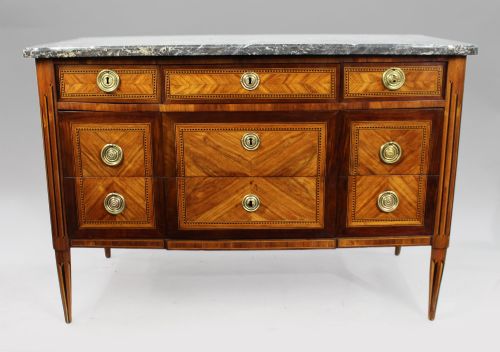
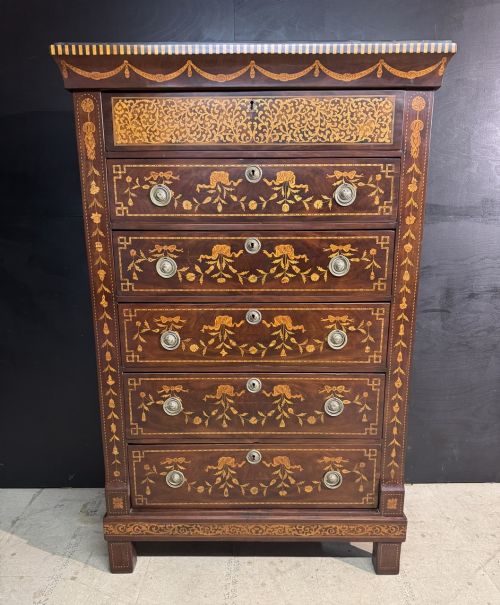
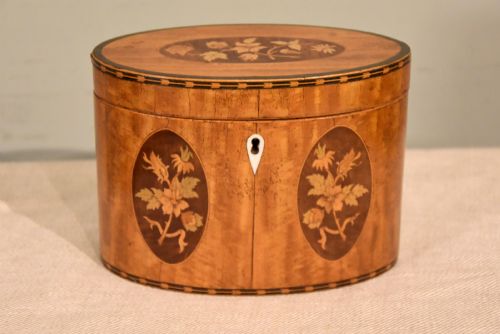
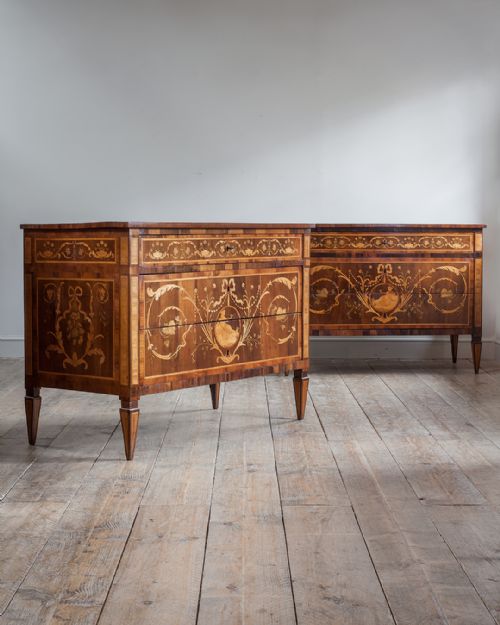
A neoclassical inlaid chest brings together balanced proportions, restrained classical ornamentation, and precise surface decoration across various forms. Buyers searching for a neoclassical inlaid chest will encounter European commodes, tall chests of drawers, and smaller tea caddies or decorative boxes spanning the eighteenth to early twentieth centuries.
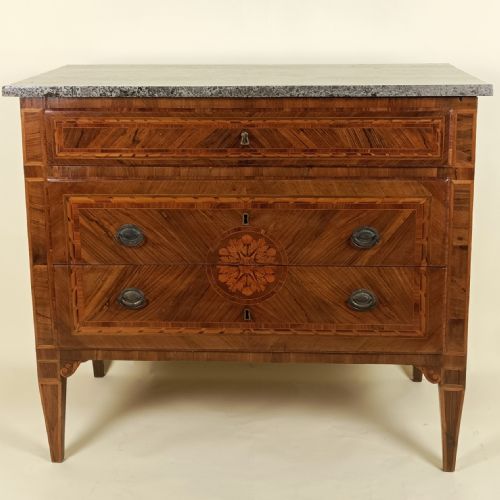
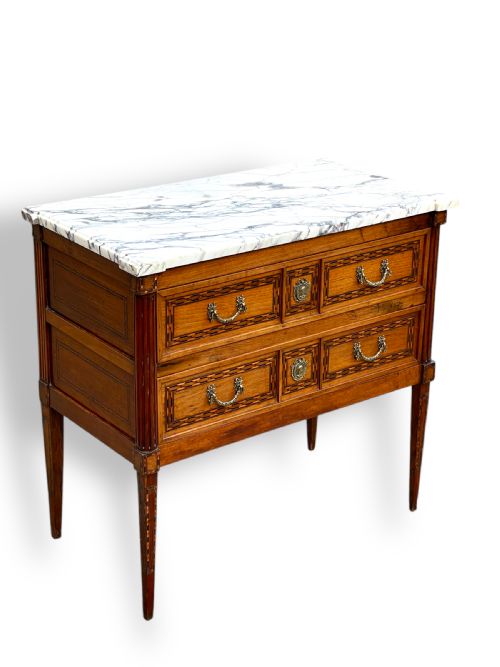
Continental examples dominate the selection, with Dutch, Italian, and French pieces frequently appearing alongside British Georgian designs. These items range from grand marble-topped commodes originating in Lombardy and Paris to regional walnut and cherrywood chests from Austria and Alsace.
Drawer configurations vary from two-drawer commodes to tall multi-drawer formats, often paired with contrasting timber veneers and geometric or floral banding. The overarching aesthetic remains disciplined, relying on balanced panels and classical motifs rather than excessive carving.
Materials and construction
Cabinetmakers constructed carcases from domestic and exotic timbers, laying down foundational woods like walnut, mahogany, oak, and birch before applying decorative veneers. Satinwood, fruitwood, harewood, kingwood, burr elm, and boxwood were carefully sliced and fitted to create elaborate parquetry and marquetry surfaces.
Contrasting woods provided pictorial depth, while brass mounts, handles, and occasionally gallery rails completed the hardware assembly. Many commodes were finished with heavy slab marble tops in white or grey tones, secured directly above the primary wooden frame.
Several gentleman's robes hide behind formal neoclassical drawer facades, proving past owners valued secret wardrobe space above all else.
Distinctions in quality
Quality rests upon the precision of the timber matching and the intricacy of the inlay work across the front and sides. Superior examples display seamless transitions between contrasting woods like satinwood and boxwood, where botanical or geometric patterns remain crisp and tightly fitted without visible gaps.
Structural integrity of the carcase and the original quality of the marble top significantly affect the standing of a piece. Finer commissions integrate fire-gilded or well-cast brass hardware and retain secondary timbers that show consistent age and hand-planed drawer linings.
The Neoclassical Inlaid Chest Glossary
- Marquetry
- The art of applying decorative pieces of veneer to a structural structure to form pictorial or geometric designs. This technique allows cabinetmakers to use contrasting tones of satinwood, boxwood, and walnut.
- Parquetry
- A geometric mosaic of wood pieces used for floors and furniture surfaces, creating repeating patterns like cubes or chevrons. It forms the structured background panels on many eighteenth-century commodes.
- Commode
- A low chest of drawers or cabinet developed in France during the seventeenth century and widely adopted across Europe. They frequently feature marble tops and sophisticated decorative inlays.
- Serpentine
- A curved furniture front characterised by a convex centre flanked by concave curves, or vice versa. This shaping demands advanced joinery skills to ensure drawers operate smoothly within a non-linear frame.
- Satinwood
- A durable, lustrous timber native to Ceylon and the West Indies, prized for its golden yellow sheen. It serves as a primary ground veneer in late eighteenth-century British and continental pieces.
Neoclassical Inlaid Chest: Frequently Asked Questions
How do I clean the marble top?
Wipe the surface gently with a soft cloth dampened in warm water and mild neutral soap. Avoid acidic cleaners, vinegar, or harsh commercial agents that can etch or dull the polished stone.
Dry the marble thoroughly afterwards with a clean microfiber cloth to prevent water spots and maintain the natural lustre of the stone.
Are these chests suitable for daily use?
These pieces function well for everyday storage when handled with reasonable care and placed away from direct heat sources or rapid humidity shifts. Drawer interiors offer practical space for linens, clothing, or household items.
Opening and closing drawers evenly prevents undue stress on the internal runners and preserves the antique carcase joinery over time.
How do I distinguish regional styles?
Dutch examples often feature dense floral marquetry covering the entire facade, sometimes executed in burr elm or walnut. Italian and French commodes frequently pair architectural parquetry panels with fitted marble tops and restrained neoclassical symmetry.
British Georgian pieces tend to favour lighter satinwood veneers with delicate banding, maintaining strict geometric boundaries rather than sprawling pictorial scenes.
What causes veneer lifting?
Fluctuations in room temperature and humidity cause the underlying wood carcase and the historical animal glues to expand and contract at different rates. This natural movement can eventually weaken the adhesive bond beneath the veneer.
Keeping pieces stable and away from radiators or direct sunlight helps minimise the risk of surface timbers separating from the frame.