



Neoclassical Hall Lantern
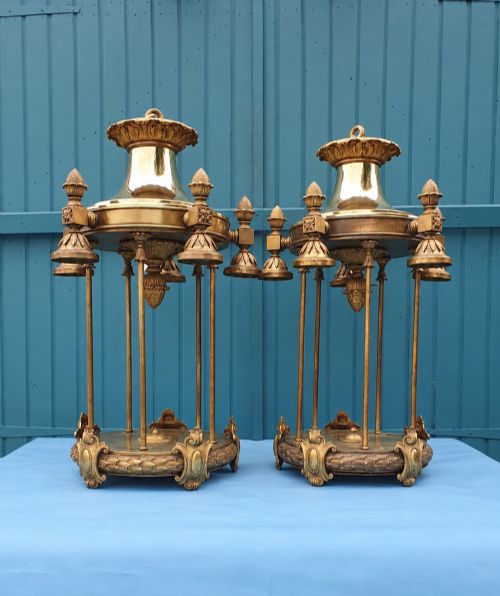
These neoclassical hall lanterns are stately bronze, brass, and glass fixtures designed to illuminate entryways with classical symmetry.
Neoclassical Hall Lantern
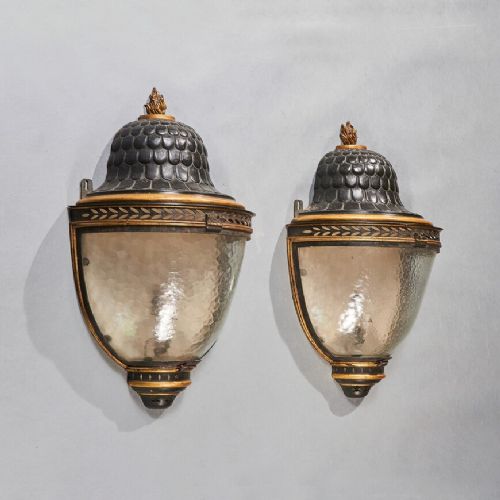
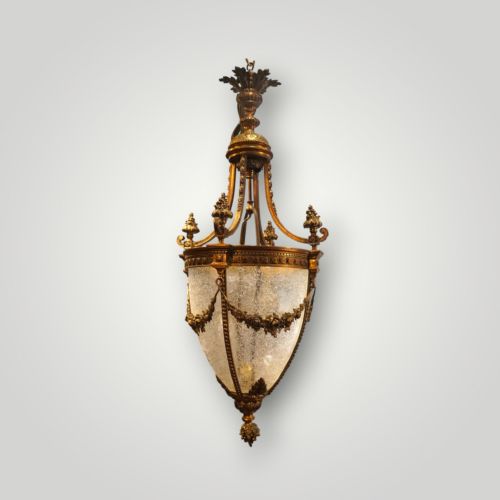
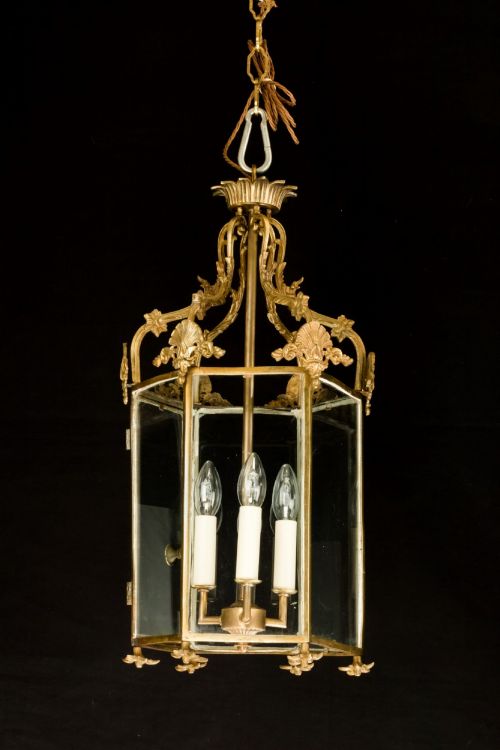
A neoclassical hall lantern brings architectural order and illumination to entranceways and corridors through balanced proportions and classical ornamentation. These fixtures appear in brass, bronze, tole peinte, and glass across various iterations from the nineteenth and early twentieth centuries.
The pieces listed here range from French Empire and Louis XVI styles to Edwardian brass designs and French neo-classical ceiling lights. Most examples take the form of hanging pendants, ceiling lanterns, or wall lanterns intended to command attention in a hallway.
How they were made
Metalworkers utilised cast and chased bronze, ormolu, and brass to form the structural frames and decorative mounts of these lanterns. Parcel gilt surfaces and gilded brass provide the metallic sheen characteristic of the style.
Panels of cut glass enclose the light source, sometimes shaped into convex forms that diffuse the illumination evenly. Tole peinte appears in specific examples, introducing painted metal components into the decorative scheme.
Neoclassical Hall Lantern Retail Price Guide 2026
Typical asking prices for neoclassical hall lantern among the pieces listed under this phrase on Sellingantiques today, from the lower quarter to the upper quarter. They describe what is for sale here now, not the wider market.
Materials across these listings concentrate on brass, glass, bronze, and tole, spanning the nineteenth century into the 1930s.
What varies in quality
The refinement of the cast bronze or brass mounts distinguishes standard production from superior examples. Crisp detailing in the acanthus leaves, bead reels, and classical motifs indicates a higher grade of craftsmanship.
The integration of the cut glass panels within the metal framework dictates the overall visual coherence of the lantern. Thick, clear, or precisely cut glass panes secured cleanly within ormolu or gilded frames elevate the piece.
The Neoclassical Hall Lantern Glossary
- Ormolu
- Gilded bronze used for decorative mounts on furniture and lighting. This technique involves applying finely ground gold to a bronze base.
- Parcel gilt
- Partly gilded metal where specific sections receive gold leaf or gilt. This method highlights particular architectural details against a darker metallic base.
- Convex lantern
- A lighting fixture featuring curved, outward-projecting glass panes. This shape disperses light across a wider angle in a hallway.
- Louis XVI style
- A French design movement characterised by straight lines, symmetry, and classical antiquity. It forms a primary aesthetic foundation for these lanterns.
Neoclassical Hall Lantern: Frequently Asked Questions
Where should a hall lantern hang?
These lanterns suit high-ceilinged entrance halls, vestibules, and wide corridors where they can be viewed from multiple angles. Their vertical proportions draw the eye upward and establish an architectural focal point.
Ensure adequate clearance beneath the fixture so that movement through the doorway remains unobstructed. The hanging height should align with the scale of the surrounding space.
How do I identify French Empire style?
French Empire pieces draw heavily on the formal vocabulary of ancient Rome and Greece. Look for martial motifs, laurel wreaths, and heavy cast bronze or ormolu mounts.
These lanterns often feature substantial proportions and symmetrical arrangements designed to project imperial authority and grandeur.
Can these lanterns be rewired?
Most antique lighting requires rewiring to meet modern electrical safety standards before installation. Professional electricians can adapt the internal fittings while preserving the external metalwork.
Retaining the original sockets or visible historical components is possible during the rewiring process to maintain the character of the fixture.
What is tole peinte?
Tole peinte refers to painted sheet metal, typically iron or steel, finished with decorative pigments. In lighting, it provides a contrasting texture to polished brass or bronze.
This material allows for painted surface details that soften the industrial rigidity of plain metal frames.