
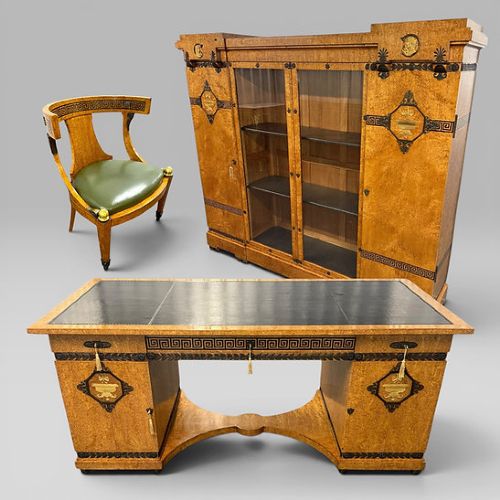
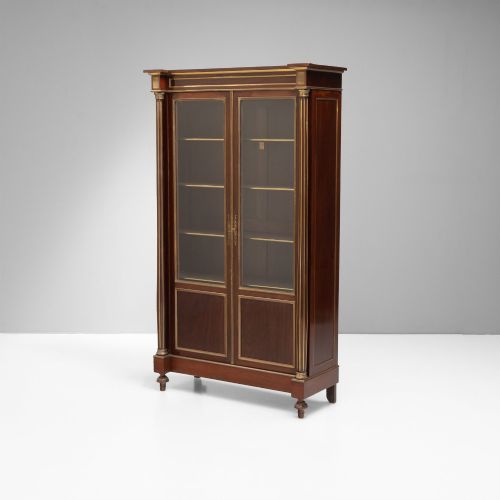


Neoclassical Glazed Cabinet
These neoclassical glazed cabinet examples combine architectural balance with fine timber, bringing formal symmetry to a room.
Neoclassical Glazed Cabinet
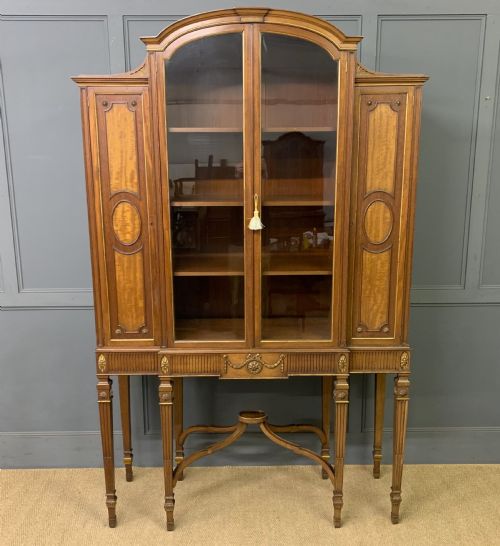
A neoclassical glazed cabinet brings formal balance to a room, drawing on classical architecture for its symmetry and proportion. Buyers seeking this phrase encounter display cabinets, vitrines, and breakfront bookcases originating from the nineteenth and early twentieth centuries.
The pieces on this page lean heavily toward revival aesthetics, including Sheraton Revival, Louis XVI Revival, and Adam styles. They often incorporate glass panels to showcase collections or books while protecting them behind timber frames.
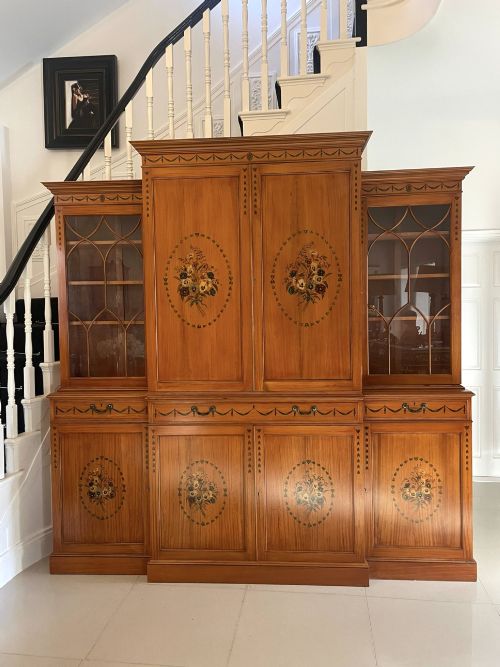
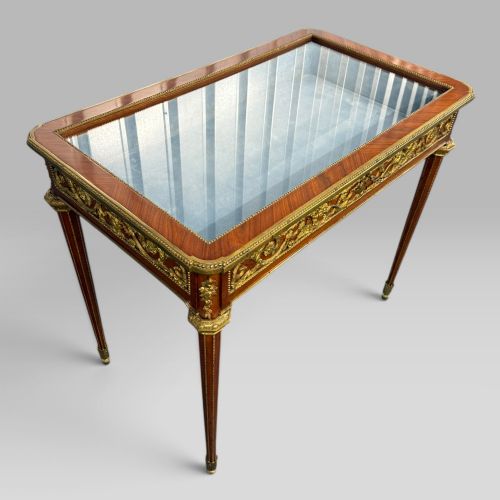
Forms range from tall breakfront bookcases and corner cabinets down to vitrines and display tables. Most items date from the Victorian, Edwardian, and later nineteenth century periods, with French and English workshops dominating the selection.
The markers of distinction
Quality rests in the precision of the timber preparation and the depth of the marquetry work. Finer examples display tightly grained satinwood and mahogany with hand-cut inlay rather than printed or surface-painted decoration.
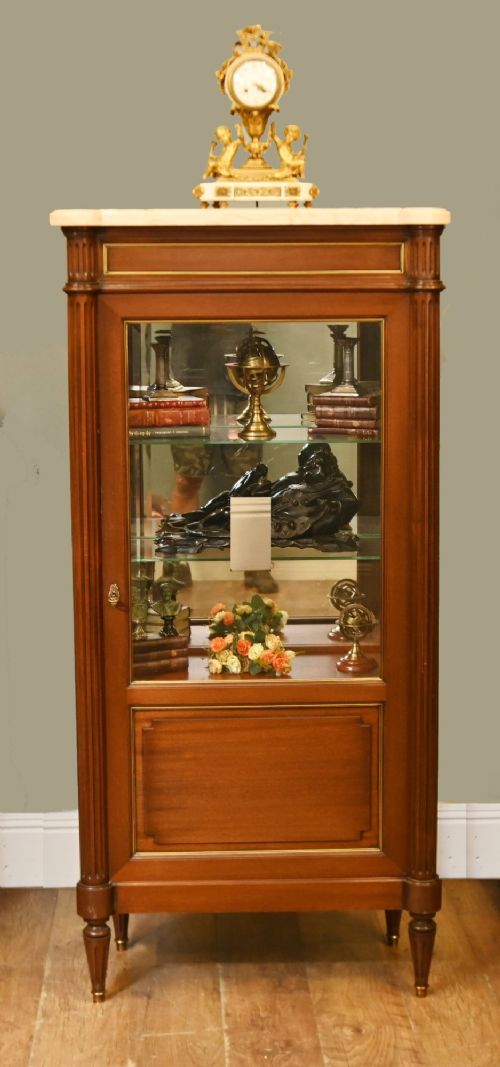
The integration of metal mounts reveals the maker's hand, where cast ormolu sits flush to the wood with clean chasing. Structural proportions follow strict classical ratios, separating ordinary utility pieces from exhibition items.
Listings feature mahogany, satinwood, and walnut across nineteenth-century and Edwardian periods.
François Linke·Mercier Frères·James Hicks·Jewell of Holborn·Paul Sormani·Waring and Gillow·Edwards and Roberts·Sandberg and Co·C Hindley and Sons
The Neoclassical Glazed Cabinet Glossary
- Ormolu
- Gilded bronze or brass used for decorative mounts on furniture. It adds a bright metallic contrast to dark woods such as mahogany.
- Marquetry
- Inlay work using thin veneers of different coloured woods to create pictorial or geometric patterns. Makers apply it to drawer fronts and cabinet doors for visual depth.
- Astragal
- A small moulding used in glazed doors to hold the individual panes of glass in place. These form the geometric grid patterns characteristic of period cabinets.
- Vitrine
- A glass-fronted display cabinet designed specifically for showing porcelain, silver, or curiosities. The sides and doors use glass panels to maximise light inside.
- Breakfront
- A piece of furniture where the central section projects forward from the flanking wings. This architectural arrangement creates shadow lines and formal presence.
Neoclassical Glazed Cabinet: Frequently Asked Questions
What is a neoclassical glazed cabinet?
A neoclassical glazed cabinet is a display piece or bookcase influenced by ancient Greek and Roman architecture, featuring clean lines, symmetry, and glass doors.
These cabinets typically date from the nineteenth and early twentieth centuries, emerging during various revival periods such as the Sheraton and Louis XVI revivals.
How do I identify a revival style?
Revival styles borrow motifs from earlier historical periods, such as painted neoclassical decoration, urns, swags, and classical columns.
Examination of the timber, secondary woods, and construction methods usually points to the actual nineteenth or twentieth century date of manufacture.
Where should I place a vitrine?
A vitrine suits drawing rooms, libraries, or living spaces where its glass panels can reflect light and showcase collections.
Keep such cabinets away from direct sunlight and sudden temperature changes to protect nineteenth-century veneers and glass.
What woods were commonly used?
Makers favoured dense hardwoods like mahogany and satinwood, often enhanced with walnut, ebonising, and marquetry inlay.
These timbers provided a stable canvas for brass mounts, painted details, and gilt ormolu ornaments.