
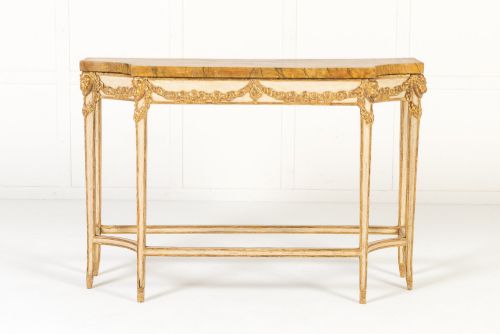
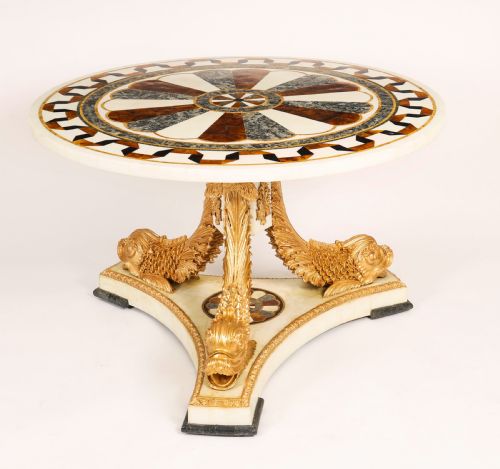
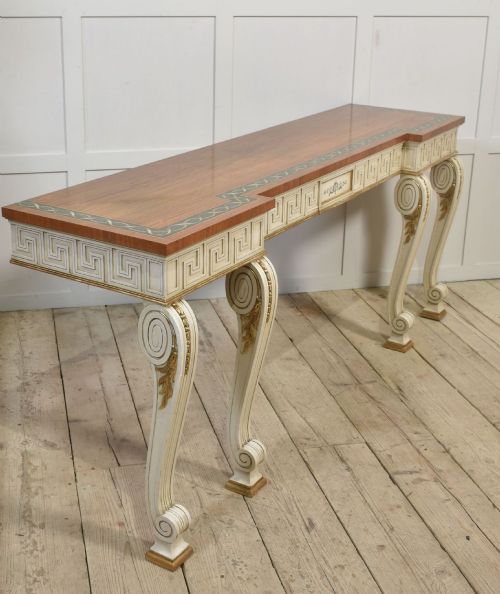
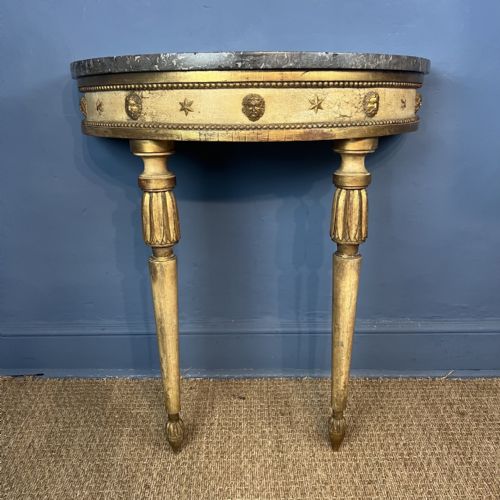
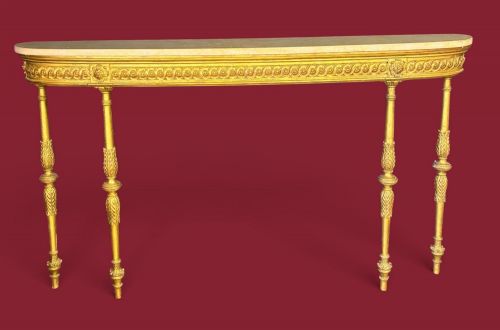
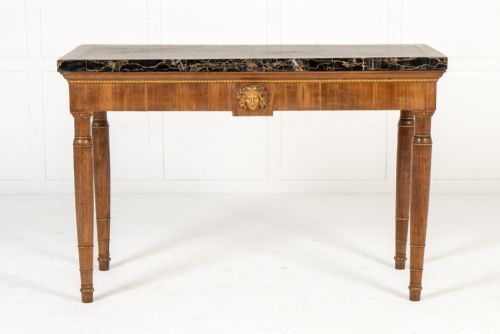


Neoclassical Gilt Hall Table
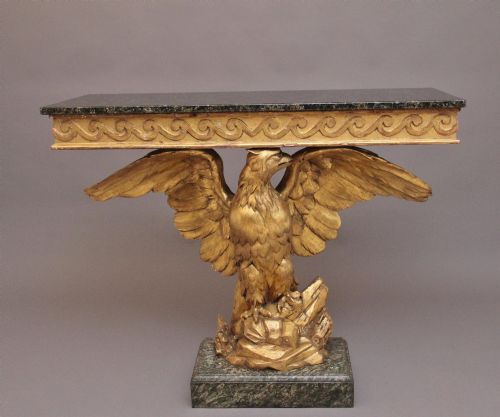
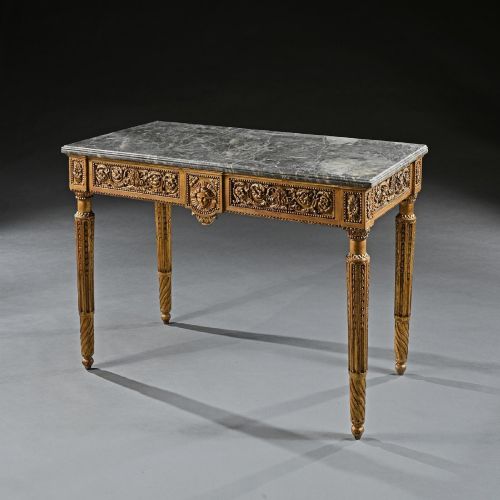
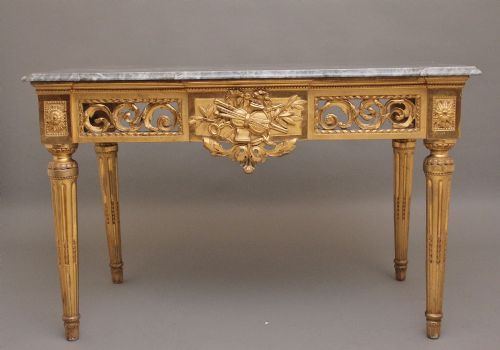
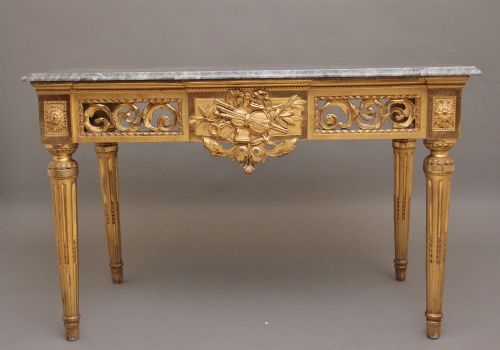
These neoclassical gilt hall table pieces bring classical proportion and gleaming surface to an entranceway, combining heavy marble tops with ornate gilded frames.
Neoclassical Gilt Hall Table
A neoclassical gilt hall table typically takes the form of a console table designed to stand flat against a wall, frequently paired with a matching pier mirror above it. The selection spans the eighteenth century through the twentieth century, taking in Italian, French, English, German, and Swedish interpretations of classical design.
The primary shapes include rectilinear console tables, semi-lune or demi-lune half-moon designs, and occasional centre tables that share the same classical vocabulary. Italian and French pieces from the eighteenth and nineteenth centuries sit alongside later revivals from the Regency and Edwardian periods.
Materials and construction methods
Carved wood provides the structural framework for giltwood and painted examples, utilising mahogany, walnut, and softer timbers beneath gesso and gold leaf. Gesso is applied in multiple layers to a wooden base to create a smooth, absorbent ground for gilding.
Heavy stone tops in white marble, rouge marble, and porphyry sit directly upon the wooden bases, often secured by their own considerable weight. Ormolu, bronze ornaments, and parcel gilt highlights provide decorative contrast against painted or polished timber surfaces.
Materials recorded across the current inventory include solid mahogany, walnut, carved giltwood, gesso, ormolu, and various marble types.
Judging the standard of execution
Depth and crispness of carving separate standard production from superior work, particularly in the rendering of acanthus leaves, dolphin motifs, and centaur designs. Hand-carved wooden elements show clean undercut edges and naturalistic flow compared to softer moulded composition ornament.
The quality of the gilding and paint finish dictates the visual impact of the piece, with genuine gold leaf over traditional gesso ageing into a warm, mellow lustre. Original marble tops, well-matched figuring, and integrated mirror frames enhance the coherence of the whole object.
The Neoclassical Gilt Hall Table Glossary
- Console table
- A table supported by wall brackets or console legs, designed to stand against a vertical surface. They rarely stand independently without wall stabilisation.
- Giltwood
- Timber carved and coated with gold leaf applied over a prepared gesso ground. This technique creates a rich, reflective metallic surface.
- Demi-lune
- A half-moon shape used for table tops and frames to fit snugly against a hallway wall. These tables conserve floor space in narrow passageways.
- Ormolu
- Gilded bronze or brass applied as decorative mounts and ornaments on furniture. The technique involves treating metal with a mercury and gold amalgam.
- Pier mirror
- A tall mirror designed to hang on the pier or wall space between windows, frequently positioned directly above a matching console table.
Neoclassical Gilt Hall Table: Frequently Asked Questions
Where should a hall table go?
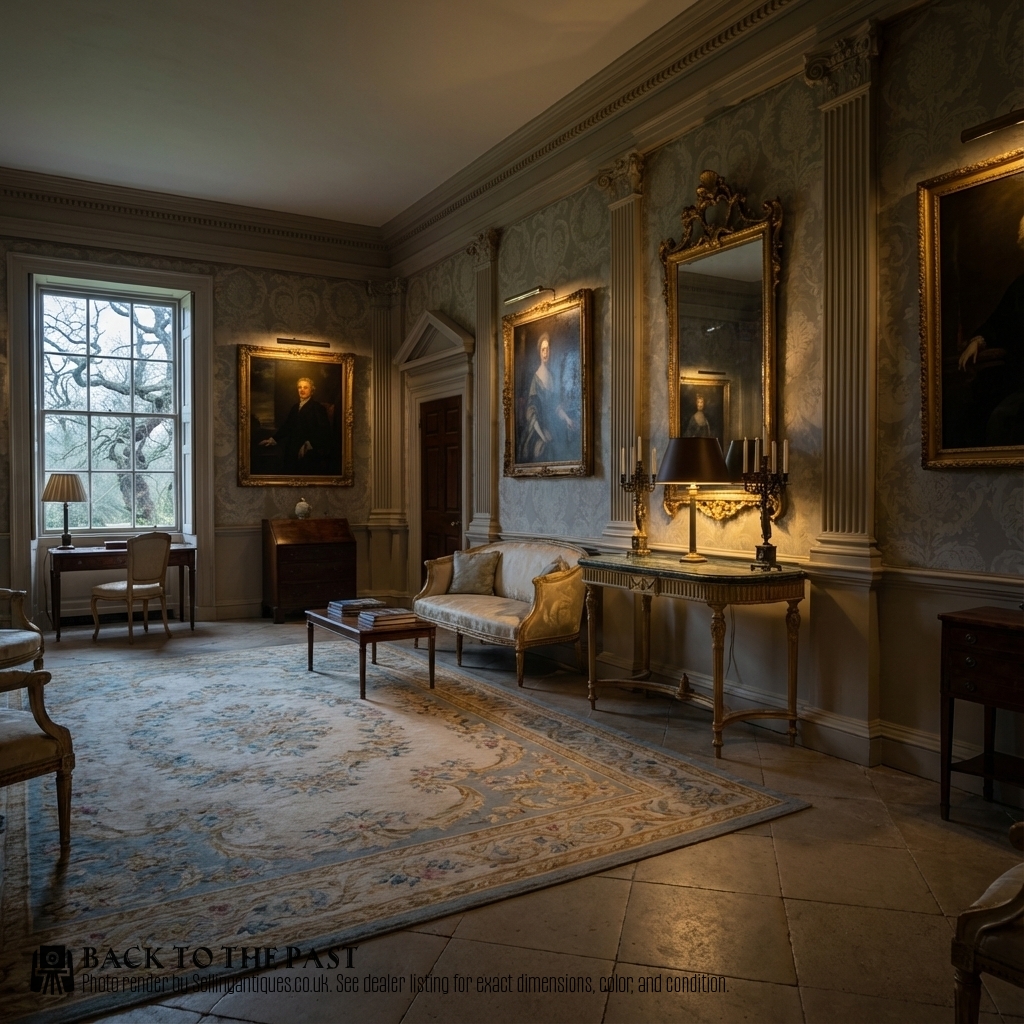
These tables belong in an entrance hall or narrow corridor where wall space allows a shallow piece of furniture to sit without blocking movement. They provide an immediate focal point upon entering a home.
Positioning them beneath a matching mirror or painting creates a balanced display surface for lamps, bowls, or decorative objects.
How do I care for marble tops?
Marble surfaces require simple dusting with a soft cloth and immediate wiping of liquid spills to prevent staining. Acidic substances like citrus juice or wine can etch polished stone.
Avoid harsh chemical cleaners and abrasive pads, using mild soap and water when deeper cleaning becomes necessary.
What is parcel gilding?
Parcel gilding is a decorative technique where only specific carved details, motifs, or mouldings receive gold leaf while the rest of the surface is painted or polished. This creates contrast between the gilded areas and the background colour.
It was widely utilised on Italian and English neoclassical furniture to highlight architectural details.
Are these tables heavy?
The combined weight of solid timber frames and thick marble slabs makes these pieces substantial and heavy to move. The stone tops usually lift off separately from the wooden bases to make transport safer.
Wall fixings are occasionally recommended to secure tall console tables and prevent tipping.
How do I spot a revival piece?
Revival pieces from the late nineteenth and early twentieth centuries adopt eighteenth-century neoclassical styles but utilise machine-sawn timbers and later secondary woods. Closer inspection of construction joints and tool marks reveals the true era of manufacture.
These later interpretations still display skilled craftsmanship and heavy marble tops.