


Neoclassical Framed Prints
Neoclassical framed prints bring classical antiquity into domestic rooms through detailed engravings and gouache works set in period frames.
Neoclassical Framed Prints
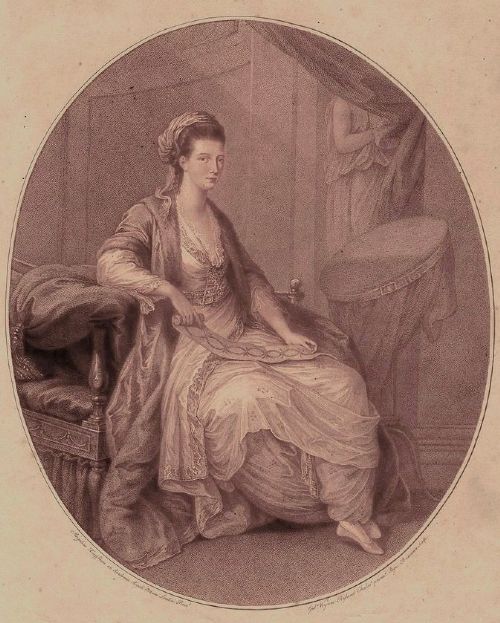
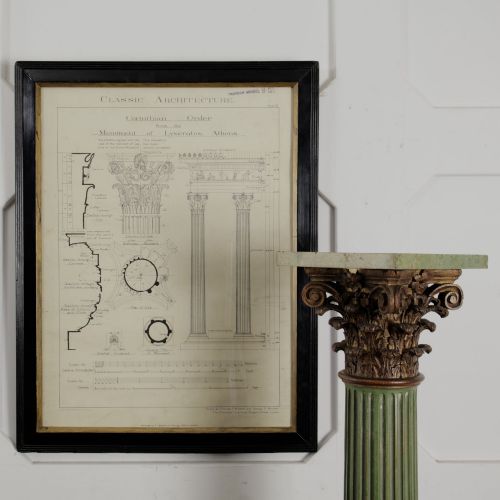
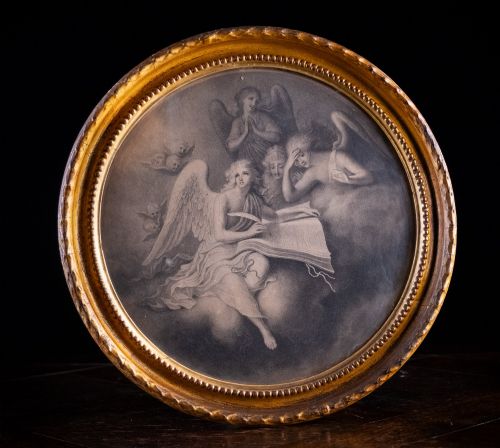
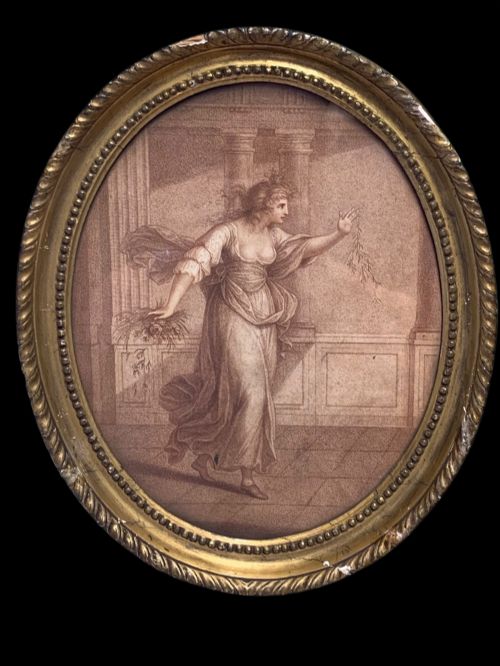
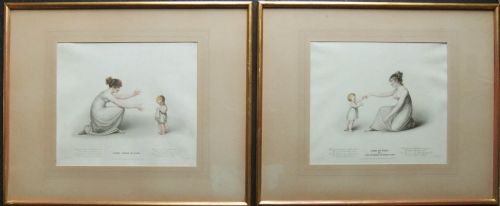
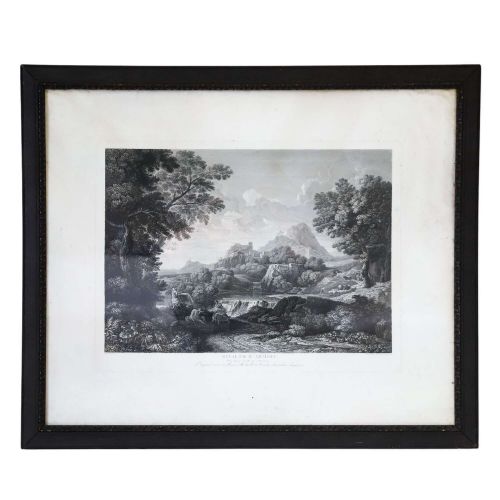
Neoclassical framed prints comprise architectural plates, mythological scenes, and portrait engravings produced across the eighteenth and nineteenth centuries. These works draw inspiration from ancient Greece and Rome, depicting subjects such as the Corinthian order, temple antiquities, and classical figures under styles spanning Georgian, Regency, and Victorian periods.
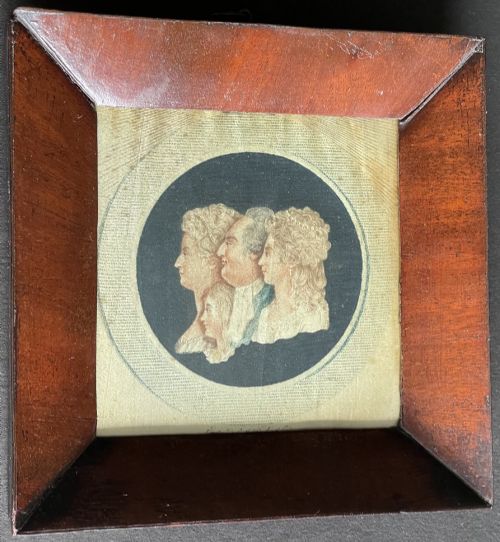
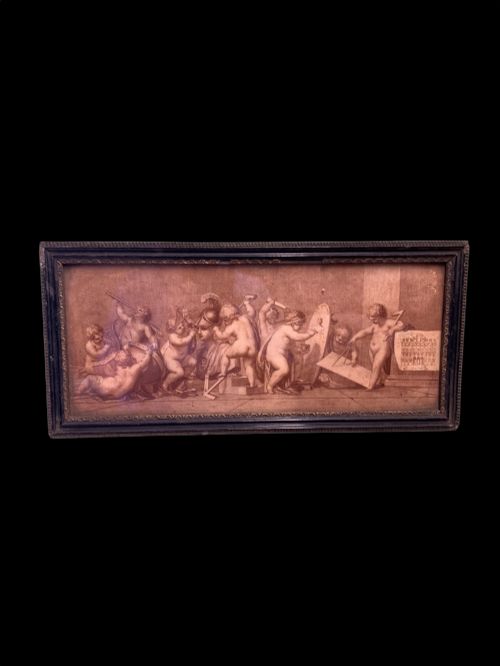
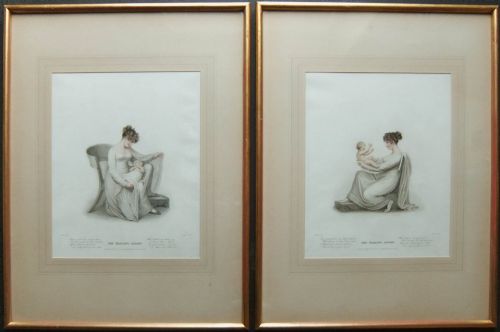
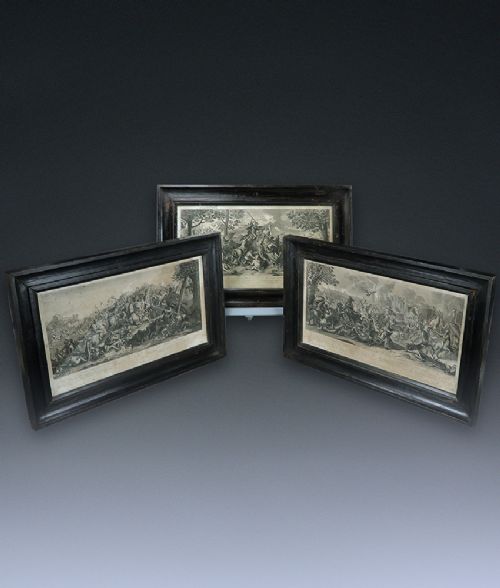
The pieces on this page appear within frames constructed from wood and finished with gold leaf, giltwood, or gilt. Buyers encounter single sheets alongside matched sets, including pairs of engravings and larger series depicting architectural subjects like Raphael's Loggia or the Vatican.
The selection ranges from early eighteenth-century copper engravings and stipple prints to later nineteenth-century classical plates and early twentieth-century reproductions. Subjects include mythological narratives, architectural elevations, and theatrical portraits framed behind glass.
Materials and Technique
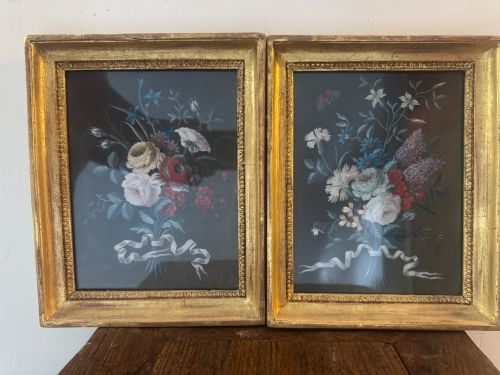
The works rely upon paper supports inscribed with ink using copper engraving, etching, lithography, or stipple techniques, alongside hand-applied gouache on select botanical and figural still lifes. Printmakers transferred intricate classical designs onto plates to produce crisp lines that capture architectural precision and human form.
Framing materials consist of timber housings finished in gold leaf, giltwood, or plain wood, protecting the delicate paper surfaces beneath glass panes. The combination of traditional printmaking media and gilded wooden frames defines the physical construction of these pieces.
Architectural prints, classical engravings, and botanical gouaches form the core object types found in this category.
Quality Variations
Quality rests upon the crispness of the ink impression and the preservation of the paper support, where deeper plate marks and fine lines indicate superior print runs. Earlier eighteenth-century impressions generally exhibit sharper detail than later nineteenth-century restrikes or twentieth-century reproductions.
The character of the frame contributes to the overall standard, with period giltwood and gold leaf surrounds offering greater historical integration than modern replacements. The survival of original margins on the paper and the absence of heavy foxing or fading distinguish finer examples.
Adam Buck·Le Brun·John Flaxman·Simon François Ravenet·Pierre Buillon·Henri Chatillon·Victor Adam·Alessandro Mocchetti·Ottaviani·Francesco Piranesi
The Neoclassical Framed Prints Glossary
- Engraving
- A printmaking technique where an artist cuts lines directly into a copper plate with a burin. This method yields sharp, precise lines suitable for detailed architectural subjects.
- Stipple engraving
- A method of creating prints through a dense pattern of dots rather than continuous lines. It allows for subtle tonal gradations, particularly in portraiture.
- Giltwood
- Wood carved and covered with a thin layer of gold leaf or metal powder. It provides a reflective, ornate border typical of period frames.
- Lithography
- A planographic printing process based on the repulsion of oil and water on a limestone or metal plate. It enabled the production of detailed tonal images in later nineteenth-century sets.
Neoclassical Framed Prints: Frequently Asked Questions
How should I hang these prints?
Protect the paper and frame by keeping them away from direct sunlight and damp conditions. Hang them securely using appropriate wall fixings suited to the weight of the timber and glass.
Pair matching sets together at eye level to maintain balance within a room, echoing the symmetrical arrangements common in period interiors.
What subjects do these prints feature?
The subjects focus primarily on classical antiquity, including Greek and Roman architectural ruins, mythological narratives, and theatrical portraits. Many plates record archaeological findings from sites like Herculaneum and Athens.
Others depict decorative schemes from the Vatican Loggie, floral still lifes, and royal figures rendered in neoclassical styles.
Are the frames original to the prints?
Some pieces retain their original period frames finished in giltwood, gold leaf, or wood, while others have been framed at later dates to preserve the paper. Inspecting the joinery and finish helps determine the age of the housing relative to the print.
Matching an eighteenth-century engraving with a contemporary period frame enhances the historical integrity of the piece.
How do I date an antique print?
Dating relies upon the paper quality, printing technique, plate marks, and stylistic markers recorded in the publisher text or marginalia. Eighteenth-century works often feature distinct hand-laid paper and copperplate impressions.
Comparing the stylistic details of the neoclassical figures and architectural orders provides further clues to the period of production.