

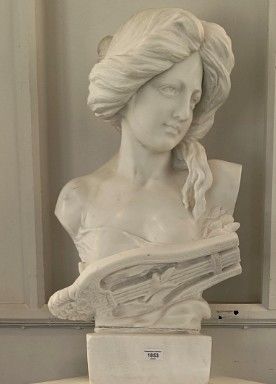
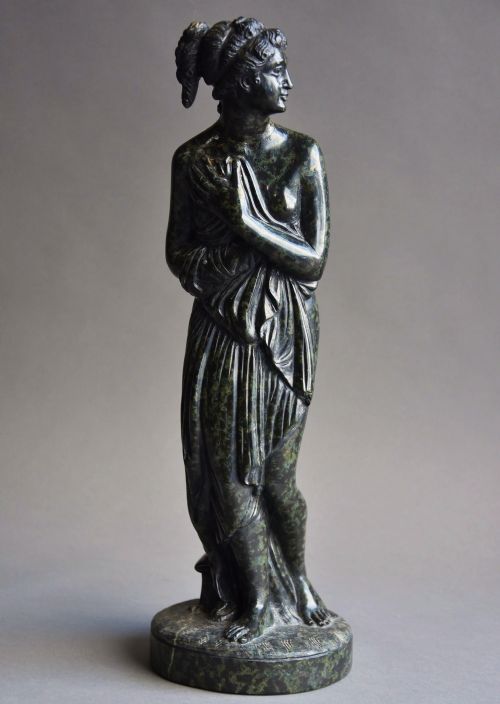
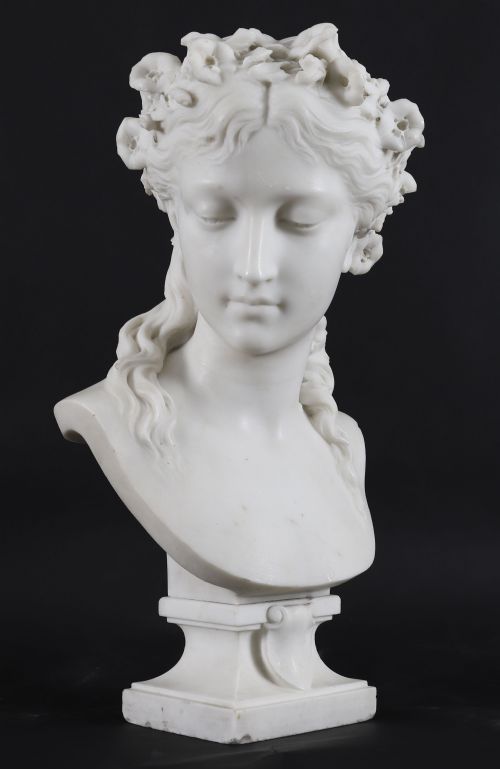
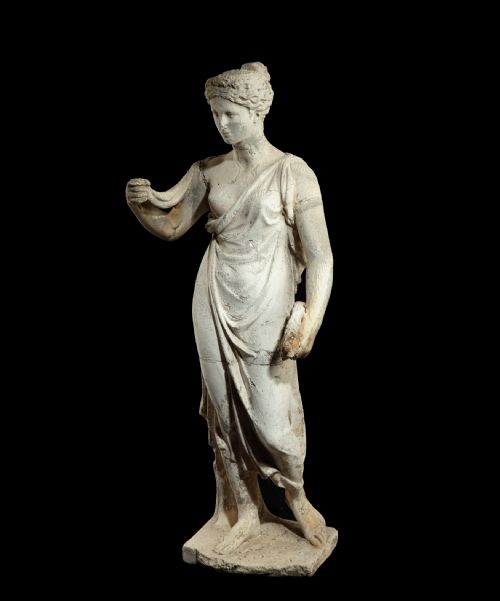


Neoclassical Female Statue
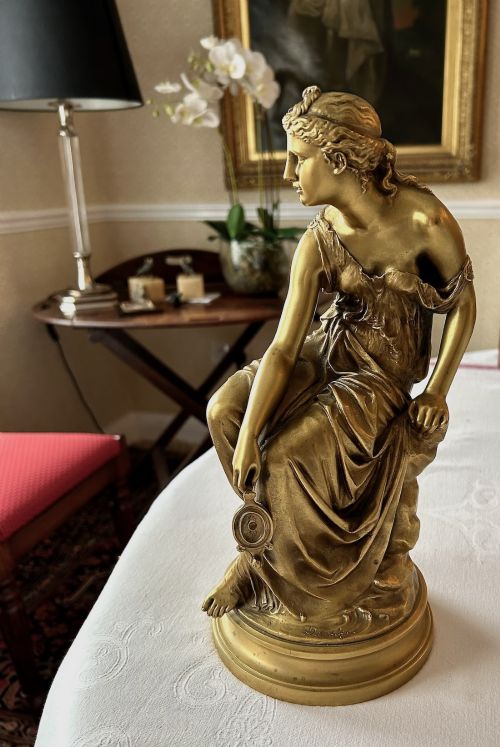
A neoclassical female statue brings the calm restraint of antiquity into a room through figures of maidens, goddesses, and muses.
Neoclassical Female Statue
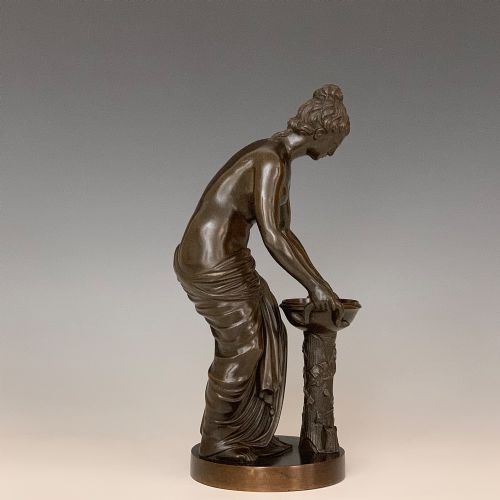
When searching for a neoclassical female statue, buyers encounter carved marble and cast bronze figures rooted in classical antiquity. These pieces draw directly from Hellenistic models, Roman copies, and Grand Tour souvenirs collected across the nineteenth century.
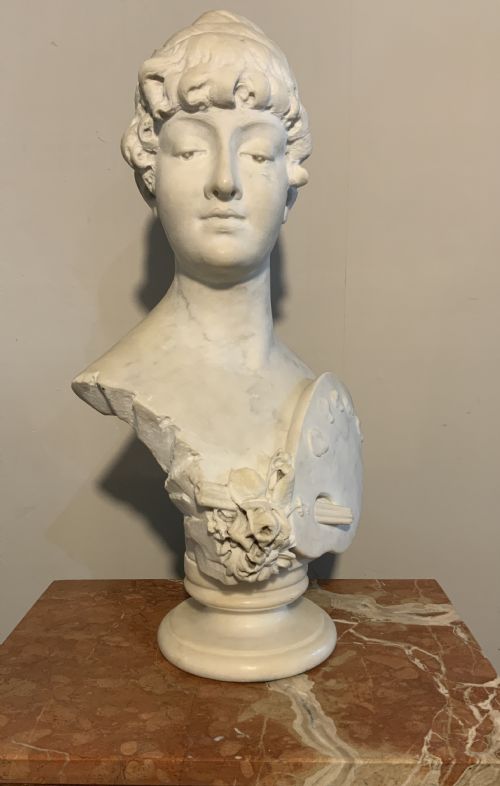
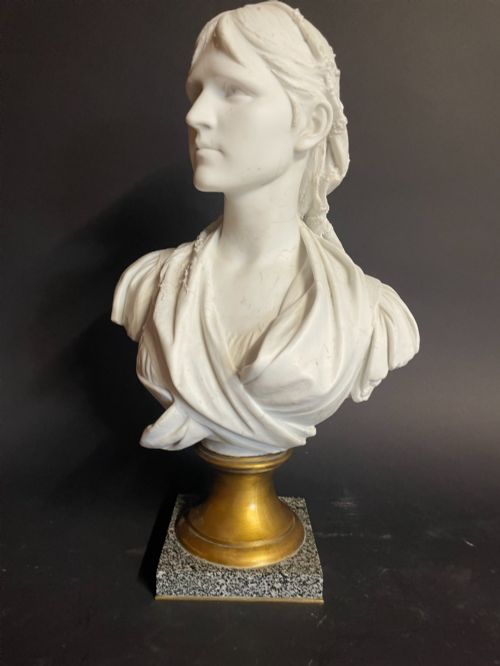
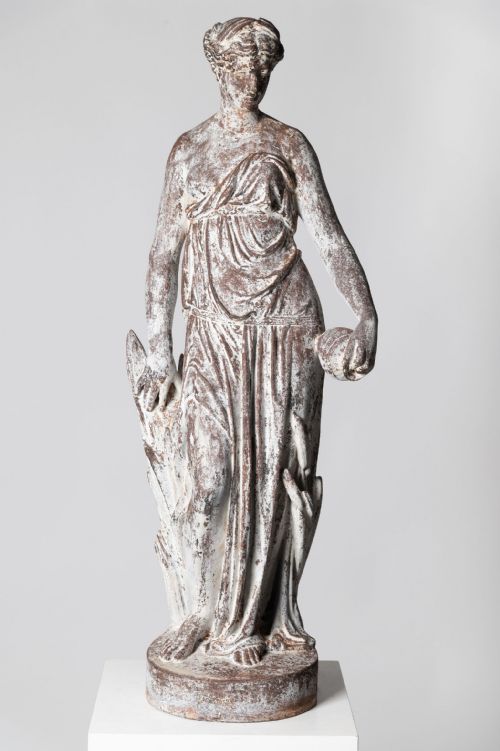
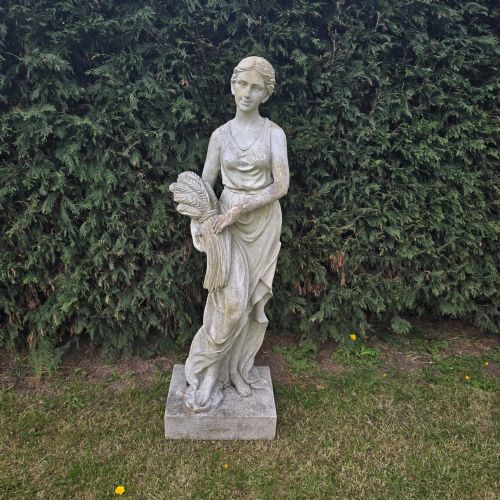
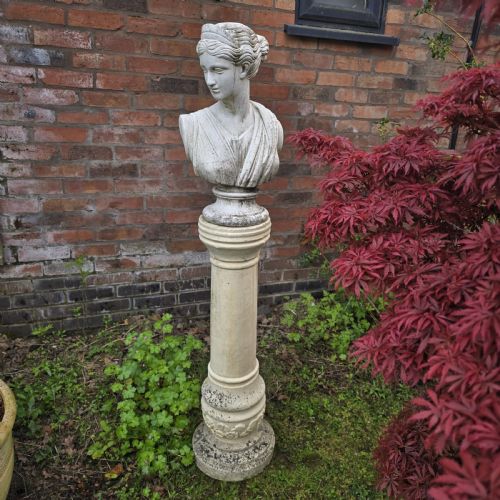
The selection here ranges from cabinet-sized busts of muses and historical ladies to large garden statues in stone and cast iron. Marble figures of Venus and local portraits appear alongside terracotta busts and porcelain figures.
Nineteenth-century interpretations dominate the offerings, spanning the Victorian era through the early twentieth century. Makers and foundries across France, Italy, and England reproduced these classical subjects in diverse scales and media.
Materials and Technique
Carved marble and cast bronze form the backbone of these pieces, alongside terracotta, plaster, and porcelain. Sculptors carved Carrara marble by hand using pointing machines to transfer proportions from plaster models, while foundries cast bronze through the lost-wax or sand-casting methods.
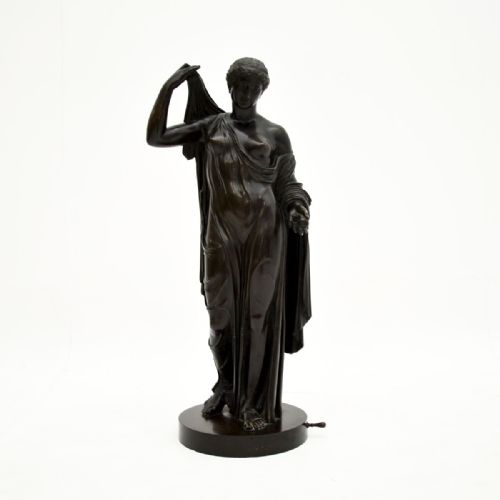
Surface finish defines the character of each material, from the polished sheen of white marble to the patinated dark tones of French bronze. Terracotta and plaster pieces often receive a painted or bronzed surface layer to emulate metal or stone.
Several figures hold lamps or cornucopias, doubling as functional light sources or receptacles while maintaining their classical composure.
Variations in Quality
In marble and stone, superior examples show deep undercut drapery and subtle anatomical modeling that capture the softness of skin against cloth. Foundry stamps and artist signatures add documented attribution to the finest works.
Etienne-Henri Dumaige·Ferdinand Barbedienne·Antonio Canova·Eugene Aizelin·Humphrey Hopper·Carrier-Belleuse·F. De Luca
The Neoclassical Female Statue Glossary
- Grand Tour
- A traditional trip through Europe undertaken by upper-class young men in the eighteenth and nineteenth centuries. Tourists acquired small bronzes and carved stone figures as mementos of classical antiquity.
- Lost-wax casting
- A metal-casting method where a wax model is melted from a mould and replaced with molten bronze. This technique allows for intricate detail and complex undercuts in sculptural figures.
- Carrara marble
- A type of white or blue-grey marble from the city of Carrara in Tuscany. Sculptors prized this stone for its fine grain and consistent texture.
- Parian ware
- A type of unglazed biscuit porcelain developed in England during the nineteenth century. It mimics the appearance of carved white marble and found frequent use for portrait busts and classical figures.
- Torchere
- A tall stand or ornamental pedestal designed to hold a light or figure holding a lamp. These often take the form of classical robed figures.
Neoclassical Female Statue: Frequently Asked Questions
What is a Grand Tour bronze?
Grand tour bronzes are small-scale reductions of ancient statues produced in Europe during the nineteenth century. Travellers purchased them as portable works of art to display at home.
These pieces typically depict famous classical subjects like Venus or mythological figures, cast by workshops in Italy and France.
How do I identify Carrara marble?
Carrara marble presents a bright white ground with subtle grey veining running through the stone. It takes a high polish while retaining a dense, uniform structure.
Sculptors favoured this material for nineteenth-century portrait busts and figures due to its clean appearance and responsiveness to chisel work.
Were these statues made for gardens?
Many larger statues and figures in stone, cast iron, and reconstituted stone were designed for outdoor display. They sat on plinths in nineteenth-century gardens and terraces.
Indoor pieces used more delicate materials such as marble, bronze, terracotta, and porcelain, which suited drawing rooms and libraries.
What subjects do these statues represent?
The subjects draw heavily from Greek and Roman mythology, including goddesses like Venus and Athena, along with the muses. Portrait busts of historical figures like Marie Antoinette also appear.
Artists frequently depicted allegorical representations of seasons, such as Summer, or generic classical maidens and musicians.