
Neoclassical Column Lamp
These neoclassical column lamps bring architectural order and formal symmetry to an interior, channelling classical antiquity through the decorative arts of the nineteenth and early twentieth centuries.
Neoclassical Column Lamp
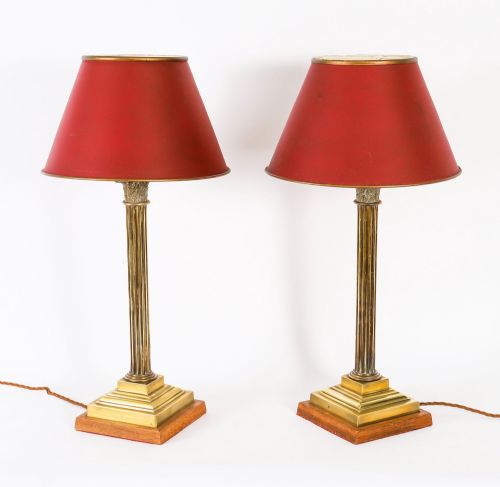
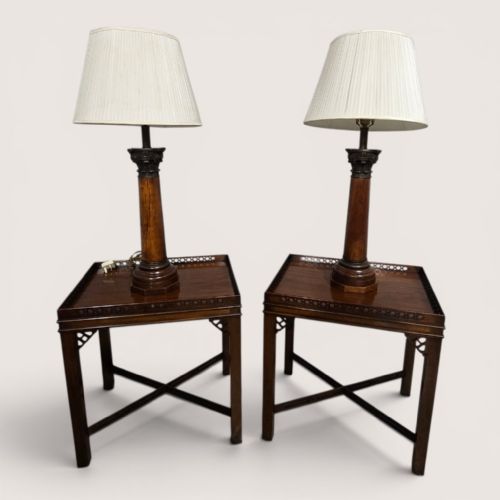
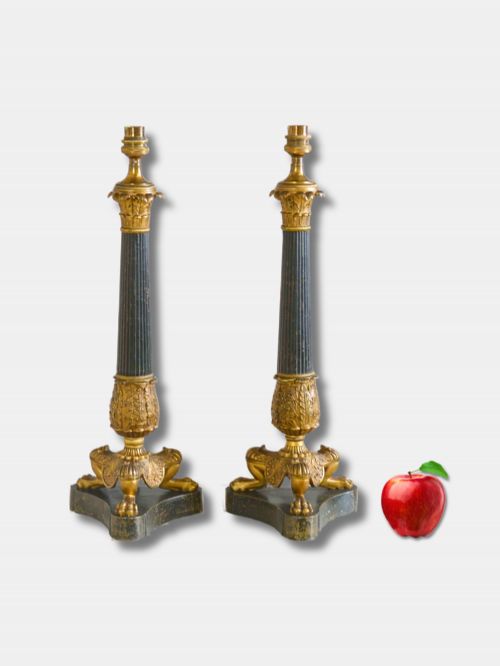
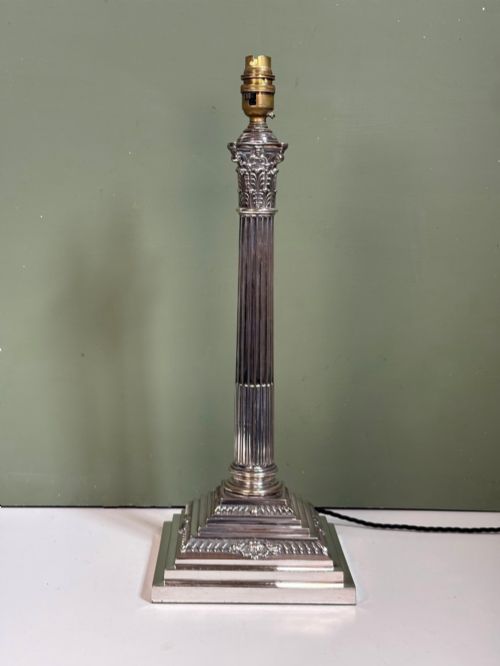
A neoclassical column lamp takes its primary form from ancient Greek and Roman architectural orders, translated into domestic lighting during the nineteenth century and the Edwardian era. You will frequently encounter table lamps and standard lamps shaped as fluted or plain columns with elaborate capitals.
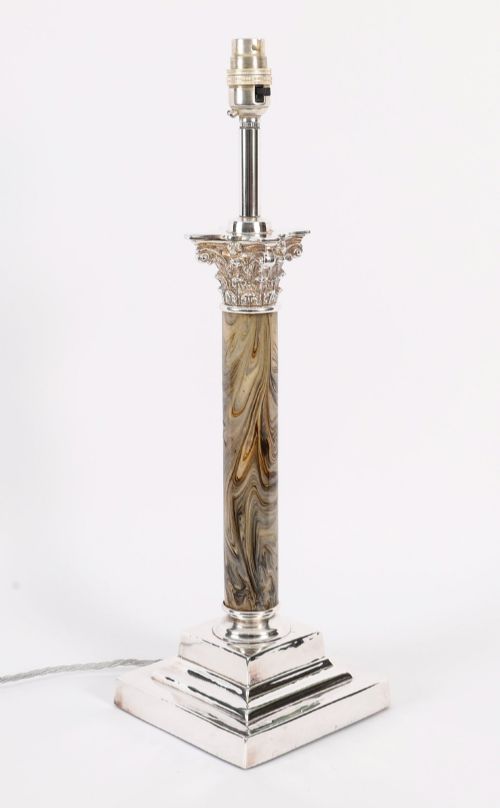
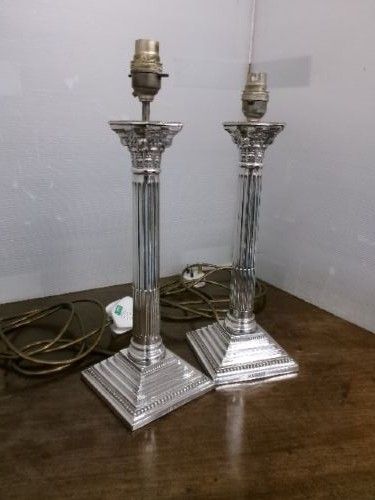
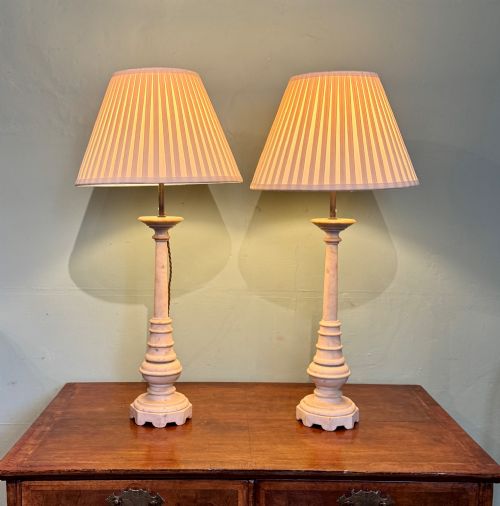
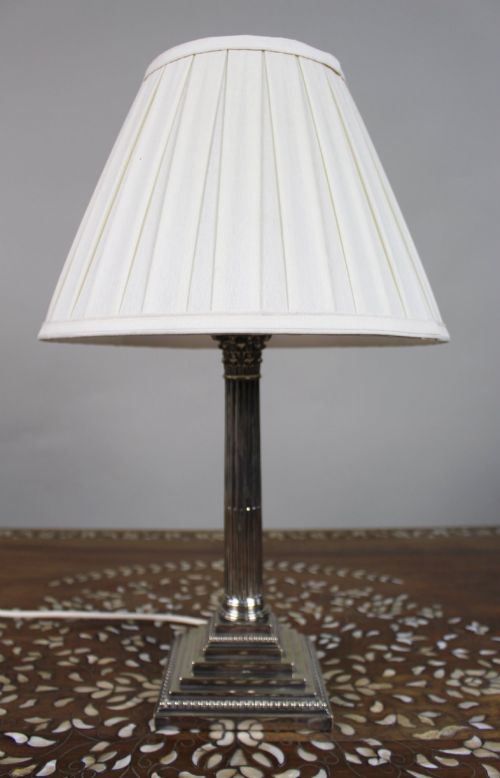
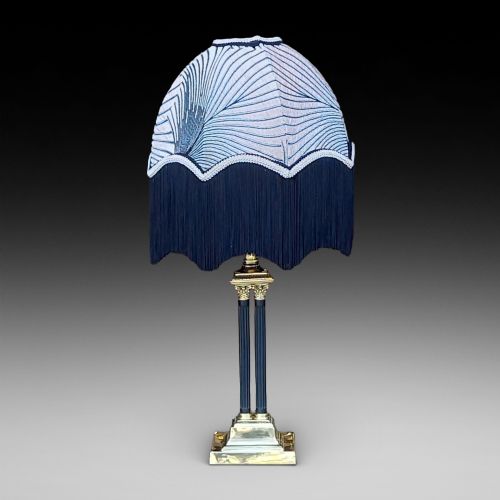
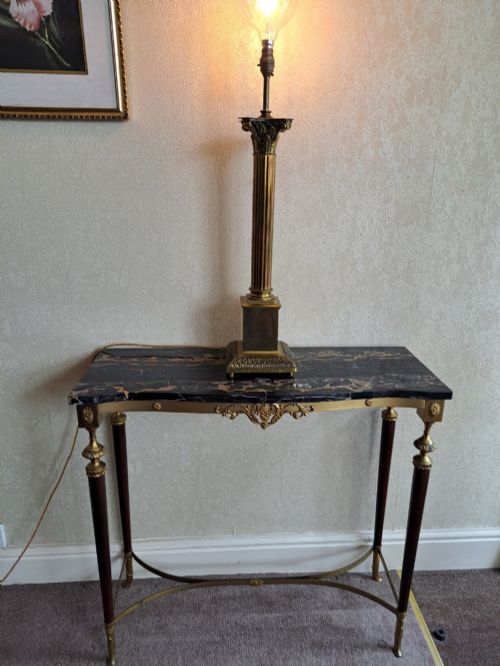
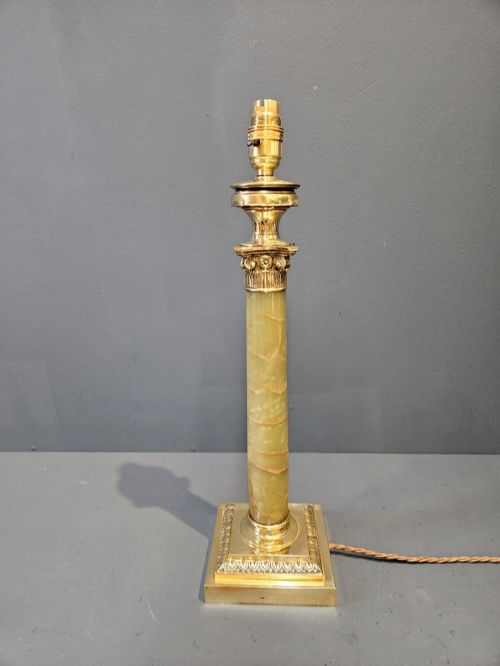
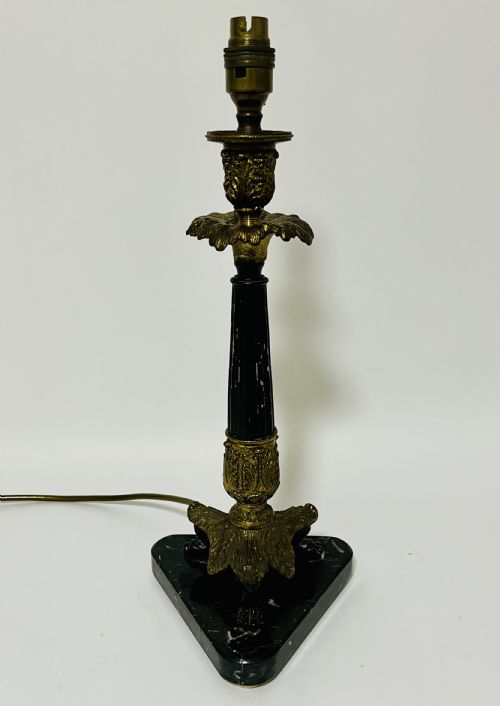
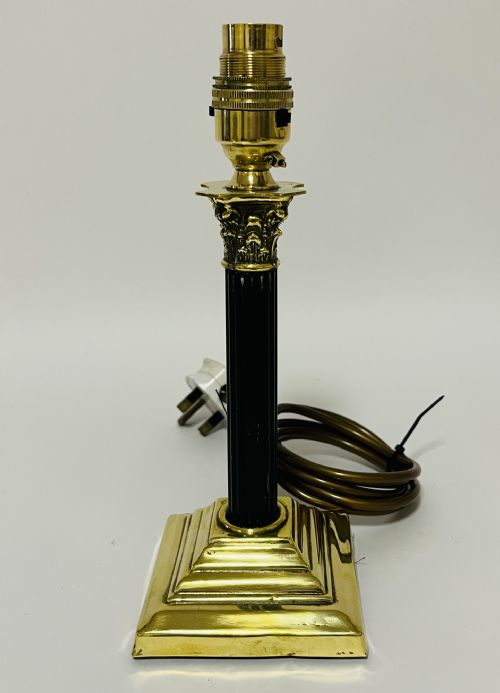
The prevailing style on this page is the Corinthian column, often rendered in polished brass or silver plate, though pieces also appear in white marble, ormolu, and carved oak. These lighting fixtures span periods from the Regency era through to the 1930s, reflecting revivals of classical taste across Britain and France.
Materials and construction
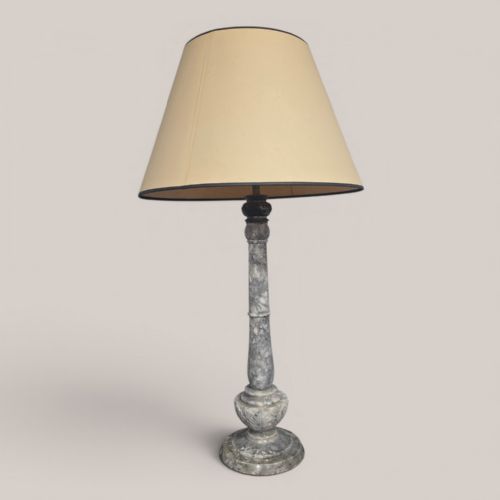
Metalwork dominates the construction of these pieces, utilising heavy cast brass, silver plate over base metals, and gilt ormolu, often paired with solid marble or alabaster bases for stability. Makers combined turned metal shafts with detailed capitals, integrating electrical wiring into structures originally built for candles or oil.
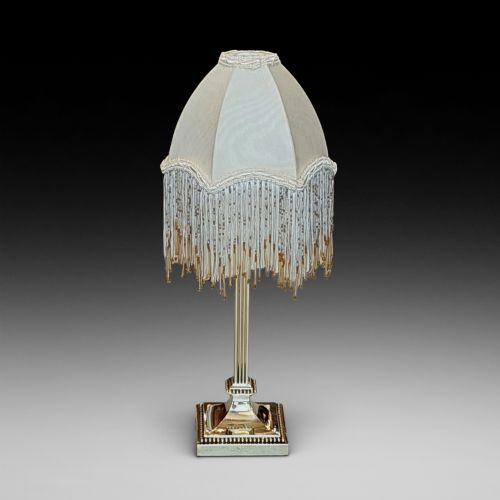
Fabric shades in silk or simple textiles frequently complete the design, resting atop heavy metallic bodies that require secure weighted bases to support standard lamps and tall table lamps.
Neoclassical Column Lamp Retail Price Guide 2026
Typical asking prices for neoclassical column lamp among the pieces listed under this phrase on Sellingantiques today, from the lower quarter to the upper quarter. They describe what is for sale here now, not the wider market.
Distinguishing quality
Quality rests in the crispness of the casting, particularly within the acanthus leaves and volutes of the capital, where finer pieces retain sharp, hand-finished detail rather than a soft, commercial blur. The weight of the materials also matters profoundly, as high-grade brass, thick silver plating, and dense natural marble provide the necessary heft and tactile presence.
Proportion and architectural correctness distinguish superior examples from simpler utilitarian adaptations, with better pieces maintaining balanced fluting and stable, well-engineered junctions between the column and its base.
The Neoclassical Column Lamp Glossary
- Corinthian
- The most ornate of the classical architectural orders, characterised by capitals decorated with rows of carved acanthus leaves and small scrolls.
- Ormolu
- Gilt bronze created by applying a finely ground high-carat gold mercury amalgam to a bronze object, producing a rich, lasting metallic finish.
- Torchere
- A tall stand or lamp originally designed to carry a torch or candle, adapted in these listings as an elevated standard lamp.
- Ionic
- A classical order distinguished by scroll-like ornaments known as volutes on the capital of the column.
- Fluting
- Shallow, concave grooves running vertically along the shaft of a column to create visual texture and a sense of height.
Neoclassical Column Lamp: Frequently Asked Questions
How do I date a brass column lamp?
Dating relies on examining the manufacturing marks, wiring apertures, and the style of the base and capital relative to known revival periods.
Heavier cast components and specific patination often point towards nineteenth-century origins, whereas later twentieth-century iterations show different assembly methods.
Are these lamps converted from oil or gas?
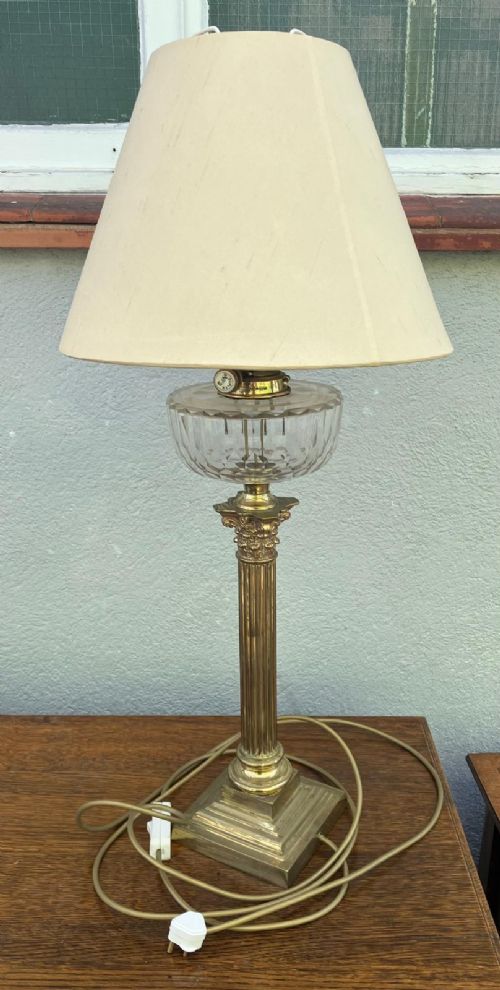
Many nineteenth-century column lamps were originally manufactured for oil or candles before being converted to electricity during subsequent decades.
Traces of burner mechanisms or older threaded collars inside the top section usually indicate this dual history of domestic lighting.
What is the difference between brass and silver plate?
Solid brass lamps display a warm metallic alloy throughout their structure, developing a natural patina that can be polished or left to age.
Silver-plated examples feature a thin layer of silver applied over a base metal like copper or brass, offering a brighter reflective surface.
Where should I place a standard column lamp?
Standard lamps and floor-standing column pieces suit corners of drawing rooms or studies where vertical architectural lines can balance surrounding furniture.
Their substantial height and formal silhouette require adequate floor space to let the classical proportions stand clear of heavy upholstery.