


Neoclassical Column Candlesticks
Neoclassical column candlesticks bring architectural proportion and classical order to a room, drawing on ancient orders of architecture for their form.
Neoclassical Column Candlesticks
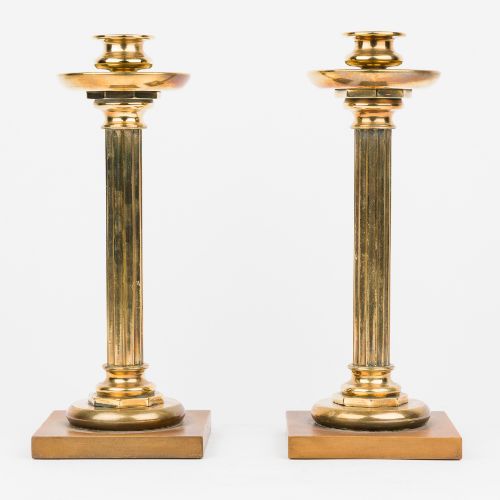
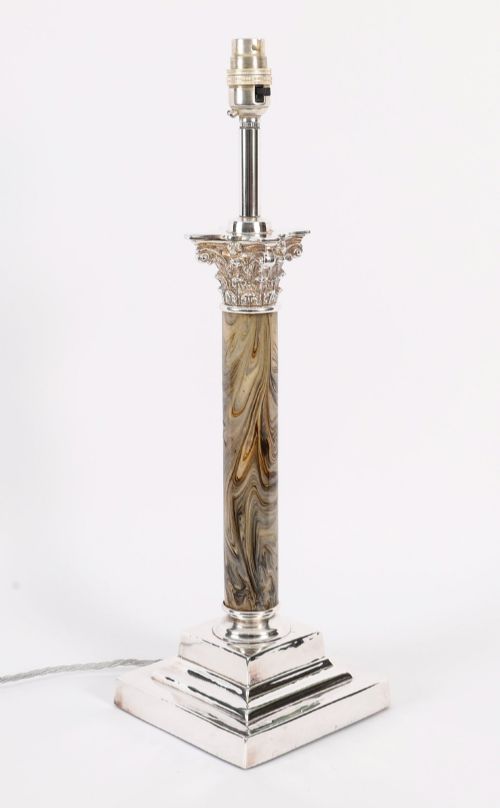
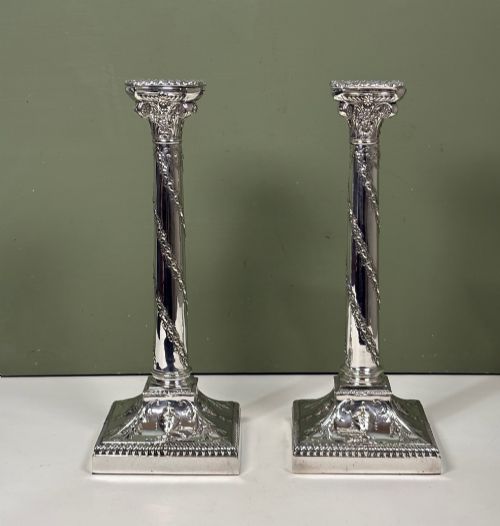
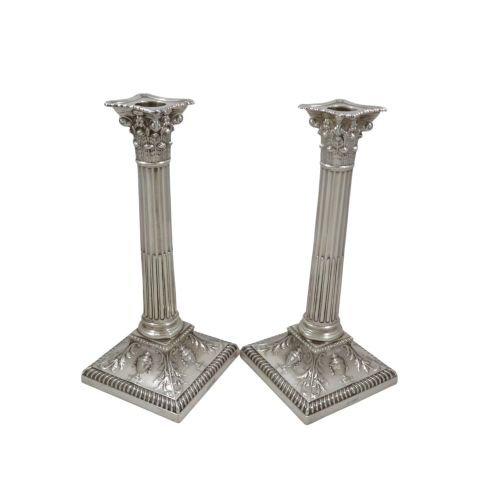
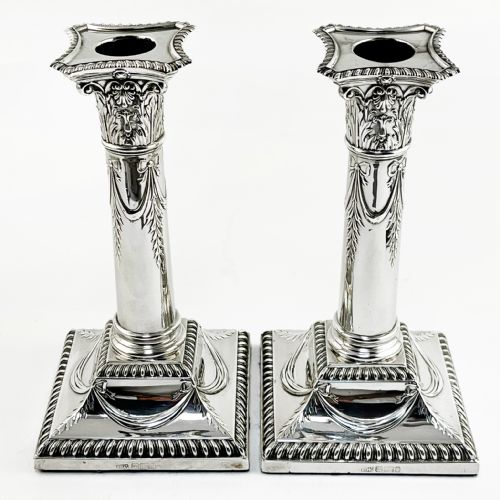
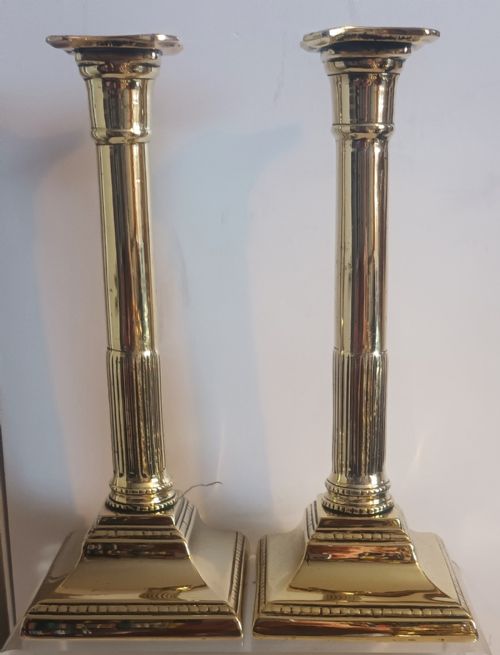
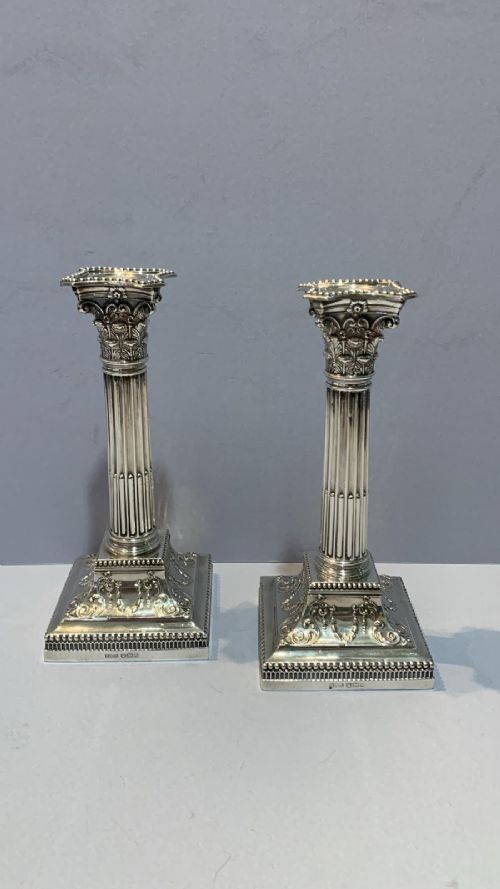
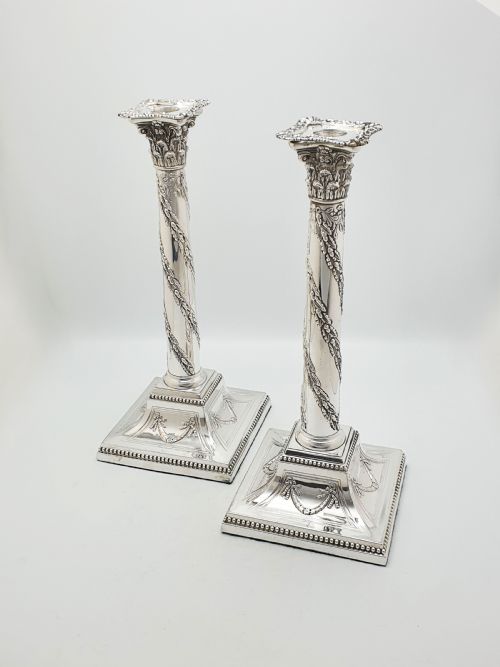
When you search for neoclassical column candlesticks, you find vertical shafts modelled after ancient Greek and Roman orders, most frequently topped with Corinthian or ionic capitals. These pieces appear in numerous variations across the eighteenth, nineteenth, and early twentieth centuries, spanning periods from Georgian and Victorian to Edwardian and Art Deco.
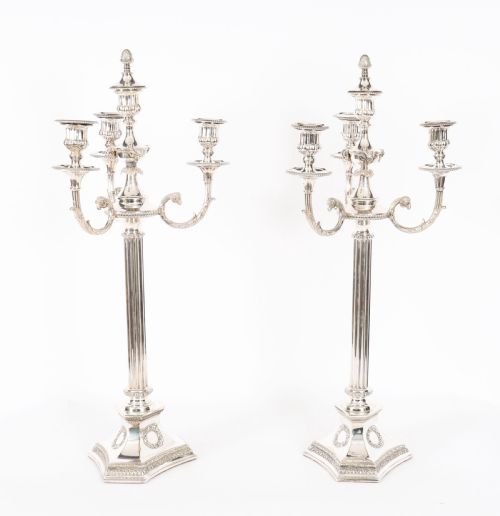
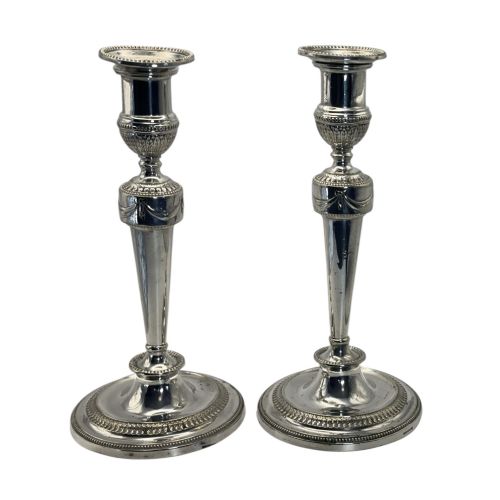
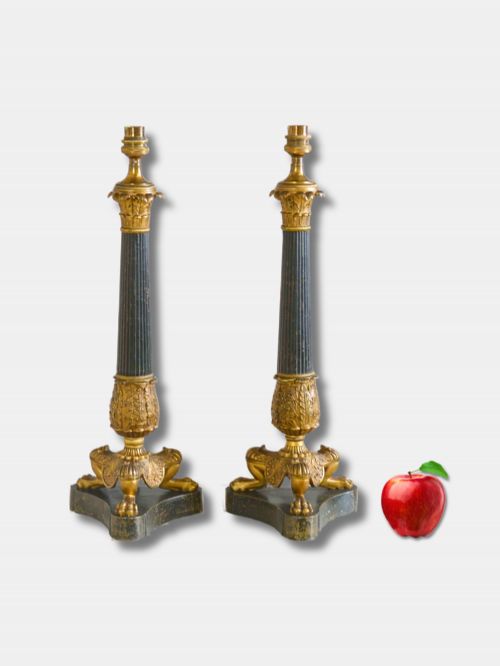
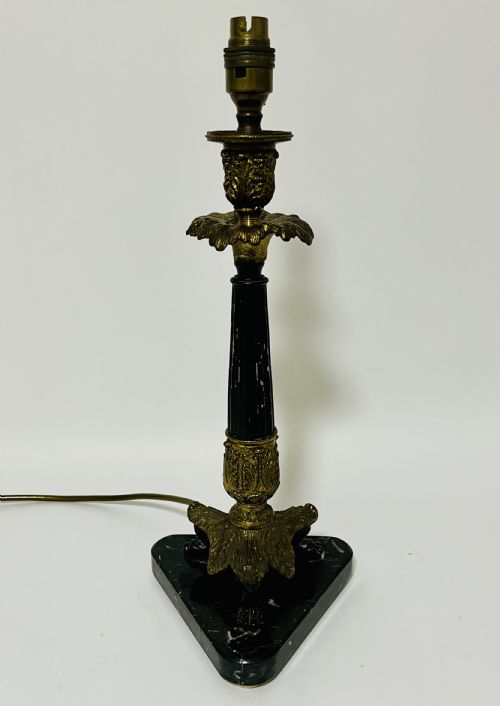
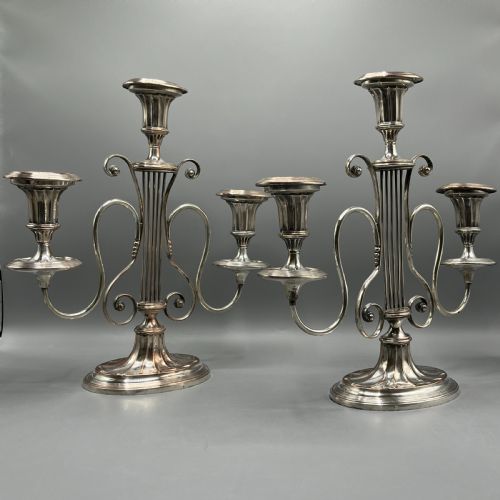
The items in this selection include pairs and sets taking the form of standard candlesticks, desk candlesticks, taper candlesticks, and larger multi-light candelabra. Many examples have been converted into table lamps over time while retaining their original column structures.
How they were made
Makers utilised metals such as brass, bronze, copper, and ormolu alongside silver plate, Old Sheffield plate, and sterling silver. Cast brass and bronze elements provide structural weight to the columns, frequently paired with applied details like lion's paw feet.
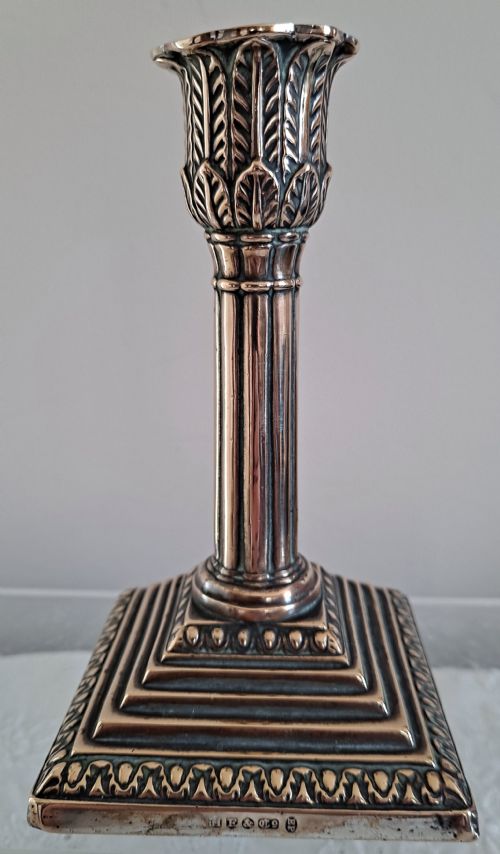
Plated and solid silver items rely on silversmithing techniques to form the fluted shafts and stepped bases, often incorporating removable drip pans or sconces for practical maintenance.
Listings feature items spanning the eighteenth century to the 1920s, constructed in brass, silver plate, sterling silver, bronze, and ormolu.
What varies in quality
The distinction between tiers rests upon the crispness of the casting in the acanthus leaves of the capitals and the depth of the fluting along the shafts. Heavier gauge metals and substantial bases provide better physical stability.
Proportion and architectural fidelity separate standard production items from finer workshop examples, where the classical orders are rendered with precise adherence to historical models.
Mappin & Webb·J. Miller·Harrison Brothers & Howson·Walter Latham & Son·Thomas Bradbury & Sons Ltd
The Neoclassical Column Candlesticks Glossary
- Corinthian column
- A classical architectural column form featuring an ornate capital decorated with carved acanthus leaves. This capital style is the most common sight on nineteenth-century silver plated and brass lighting.
- Ionic column
- A classical column characterised by scroll-like ornaments known as volutes on the capital. It offers a more restrained silhouette than the Corinthian alternative.
- Old Sheffield plate
- An early fused plating technique where a thin sheet of silver is fused to a copper base before shaping. Pieces made this way reveal thin lines of copper wear over time.
- Ormolu
- Finely ground high-carat gold applied to a bronze base using a mercury amalgamation process. It yields a rich, warm yellow surface finish seen on French classical pieces.
- Sconce
- The detachable top pan or nozzle of a candlestick designed to catch dripping wax. These components are frequently lost or replaced on older pieces.
Neoclassical Column Candlesticks: Frequently Asked Questions
How do I date these candlesticks?
Dating relies on hallmarks on silver pieces, combined with manufacturing techniques like Old Sheffield plate construction versus nineteenth-century electroplating.
Changes in stylistic revival periods, from Georgian through Victorian to Edwardian production, also guide the estimated decade of manufacture.
Were these originally oil lamps?
Many column candlesticks from the nineteenth and early twentieth centuries were manufactured specifically to hold wax candles, while others were produced as oil or kerosene lamps.
Column bodies intended for lighting often received later electrical conversions during the twentieth century.
How should I clean brass columns?
Maintenance depends on the surface finish and whether the metal retains a historical patina or a modern lacquered coating.
Gentle dusting with a soft cloth preserves the aged appearance, avoiding harsh chemical dips that strip away surface character.