
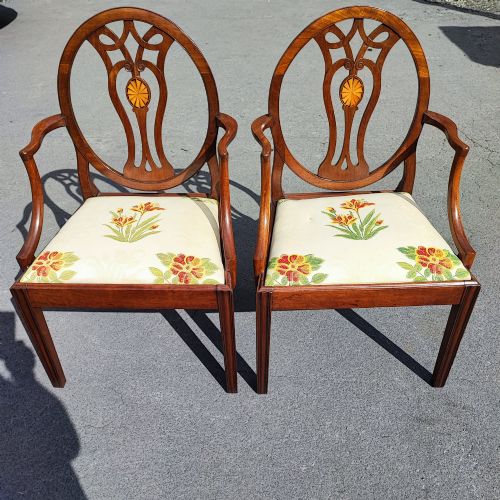
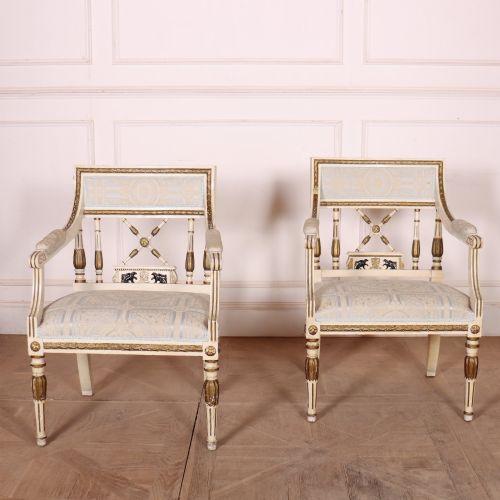
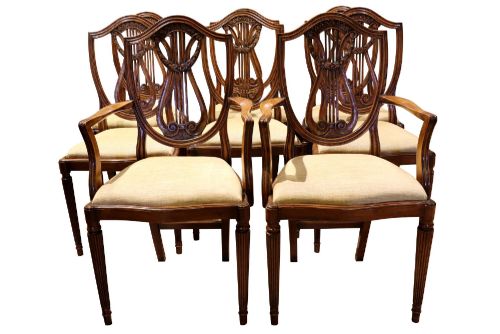
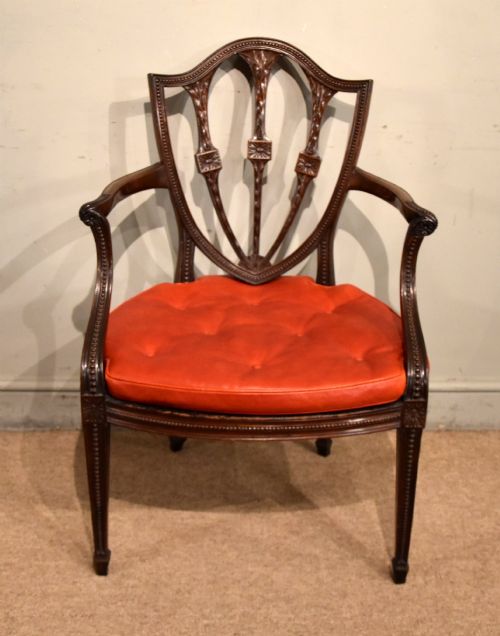

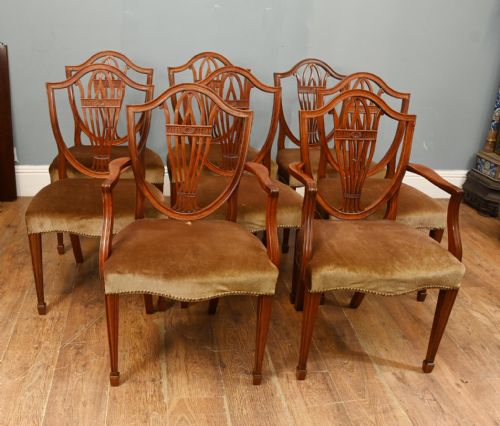


Neoclassical Carver Armchairs
Neoclassical carver armchairs offer refined proportions and restrained classical ornament, bringing formal symmetry and structured elegance to a room.
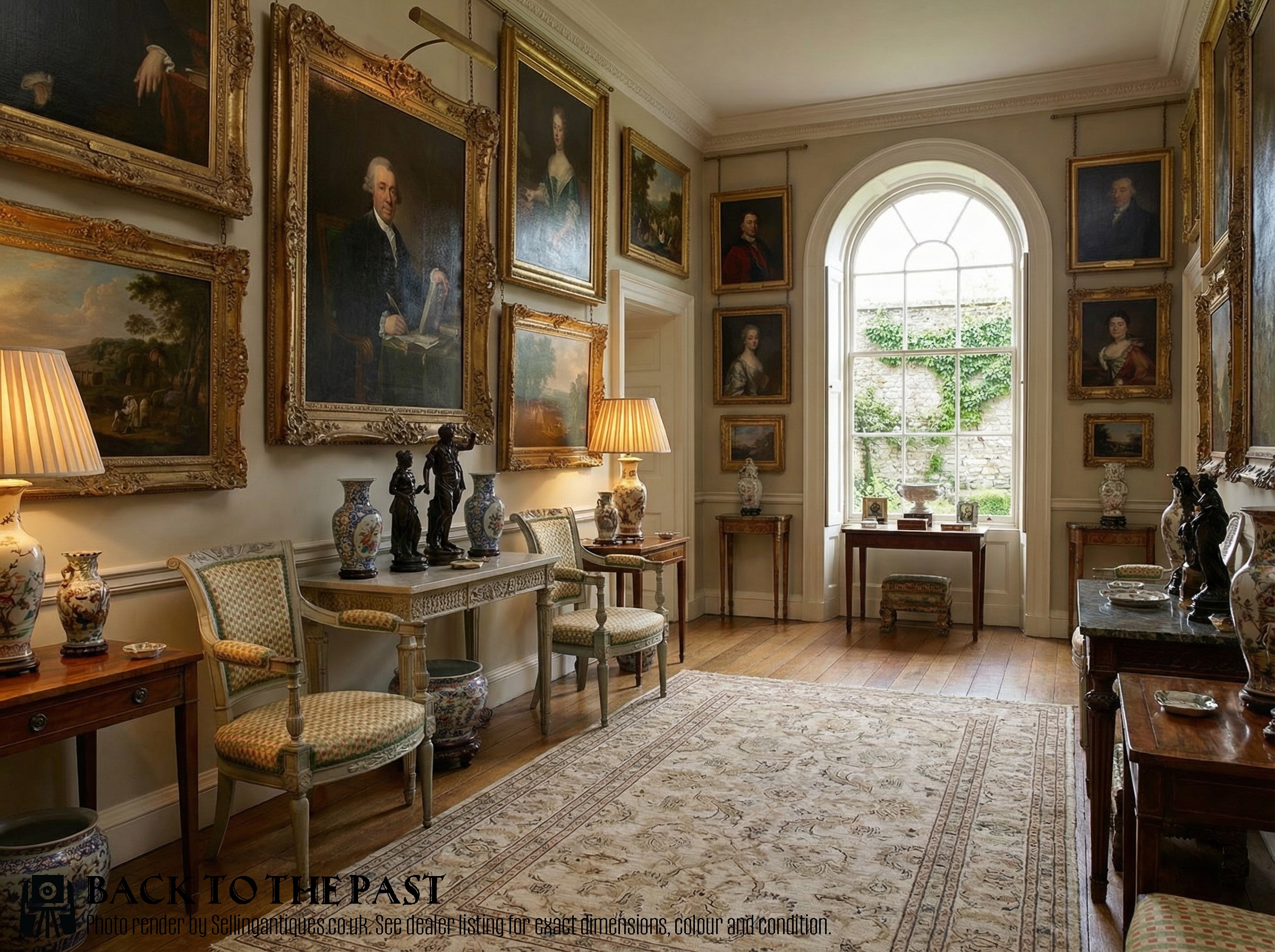
Neoclassical Carver Armchairs
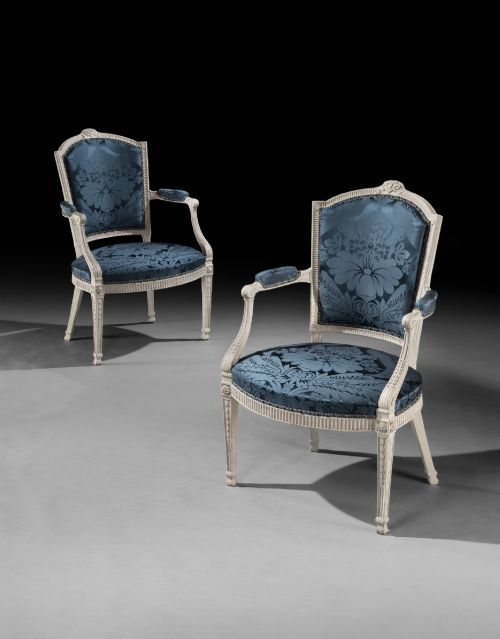
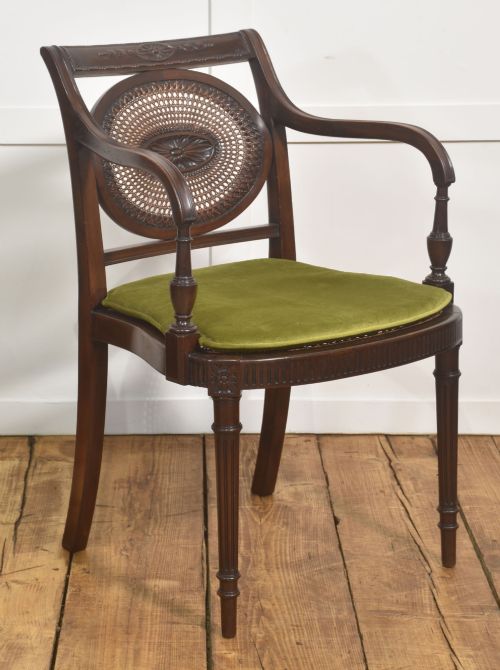
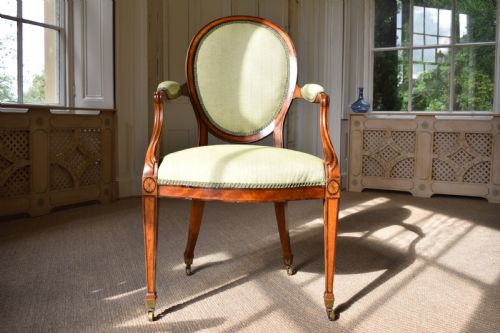
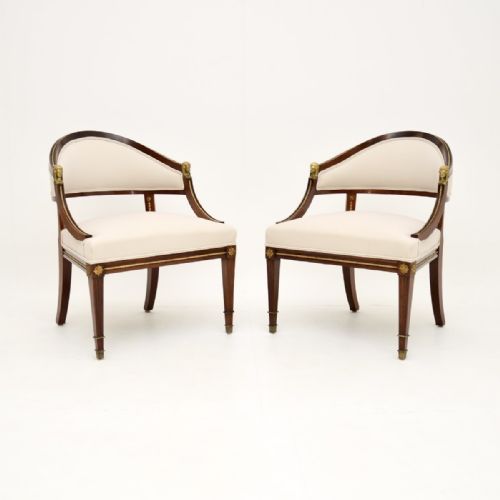
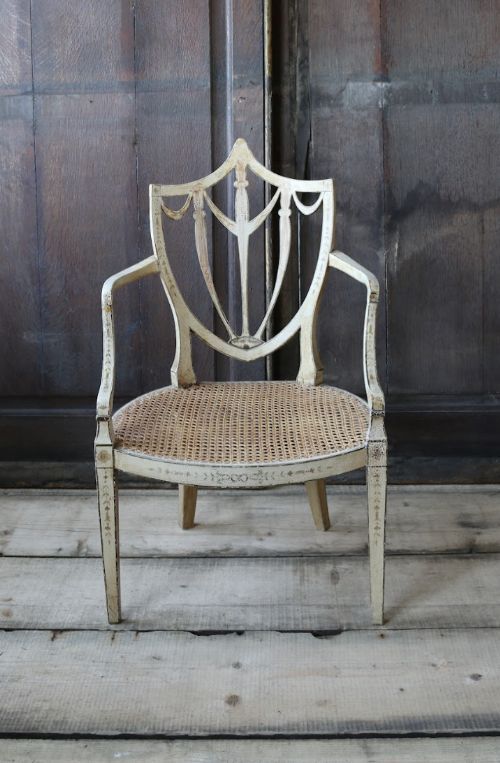
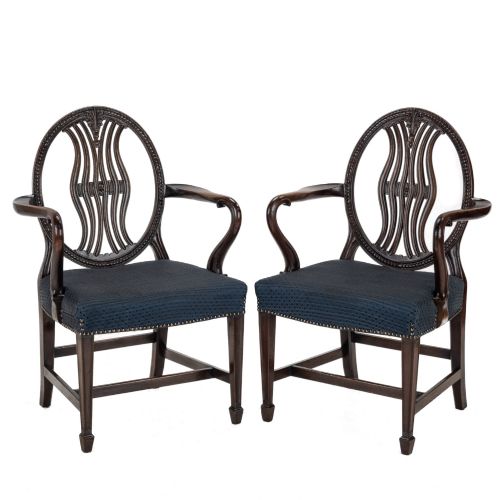
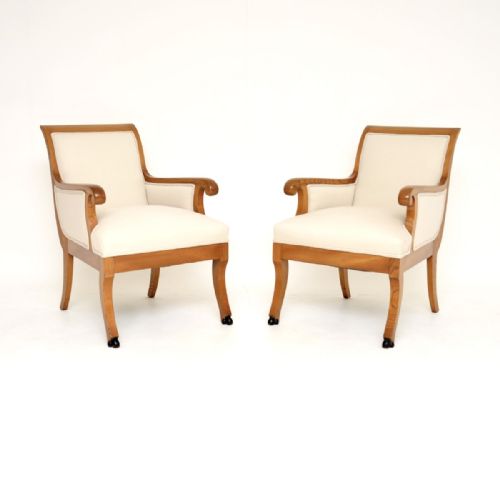
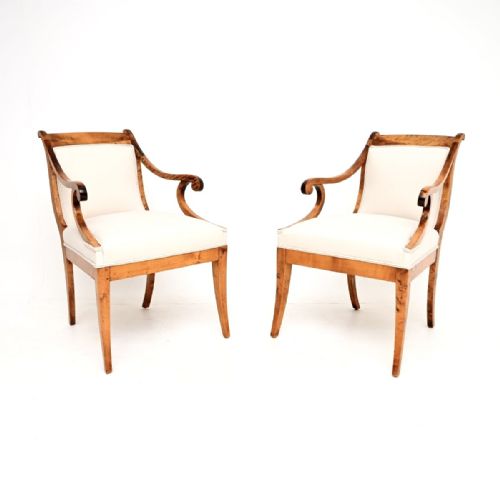
Neoclassical carver armchairs are dining and salon seats defined by straight tapered legs, urn or shield backs, and classical motifs derived from antiquity. These seating pieces appear frequently in pairs or larger suites, serving both functional dining use and decorative placement as open armchairs.
The selections span distinct periods, ranging from original 18th-century pieces made during the Georgian and late 18th-century eras to later revivals from the 19th, early 20th, and 1930 periods. Buyers will encounter English interpretations alongside Swedish Neoclassical, French styles, and Sheraton or Hepplewhite revivals.
Makers and designers referenced in the broader tradition include figures such as John Linnell and firms like Gillows, though many pieces survive simply within the distinct manner of the neoclassical vocabulary. Forms divide primarily between open armchairs, library chairs, and substantial suites of dining carvers.
Materials and construction methods
Carpenters and cabinetmakers constructed these frames predominantly from solid mahogany, satinwood, elm, birch, and walnut, often applying painted wood finishes or parcel gilding to highlight carved details. Surfaces frequently incorporate cane panels, brass mounts, and traditional upholstery stuffed with textiles, leather, silk damask, and velvet.
Joinery relied on traditional mortise and tenon techniques to support the structural demands placed on open armchairs and dining carvers. Carved ornaments including fluting, paterae, and lyre backs were executed directly into the timber or built up through gesso layers on painted and giltwood surfaces.
Several dining sets arrive in generous quantities, offering enough matching carvers to seat an entire royal delegation.
Distinctions in construction and design
Quality rests heavily on the crispness and depth of the hand-carving applied to the crest rails, splats, and arm supports, where sharper tool work distinguishes finer examples from softer, later recutting. The integrity of the timber selection, such as closely figured mahogany or well-chosen satin birch, dictates the foundational substance of the frame.
Proportion and structural rigidity set apart superior seating, ensuring that the rake of the back and the tapering of the legs maintain architectural balance without relying on excessive reinforcement. The retention of original painted or gilt surfaces, alongside period upholstery treatments, heavily influences the historical integrity of each chair.
Gillows·John Linnell
The Neoclassical Carver Armchairs Glossary
- Carver
- An armchair designed with open arms, traditionally positioned at the head of a dining table or used as a salon seat.
- Shield-back
- A chair back shaped in the outline of a classical shield, popular in Hepplewhite designs.
- Lyre-back
- A chair splat formed in the symmetrical shape of an ancient stringed musical instrument.
- Parcel gilt
- A decorative treatment where specific carved details or mouldings are highlighted with gold leaf over a painted or wood base.
- Patera
- A circular classical ornamental motif carved in low relief, resembling a libation dish.
Neoclassical Carver Armchairs: Frequently Asked Questions
How do I distinguish original 18th-century pieces from later revivals?
Original 18th-century pieces display authentic tool marks, natural timber oxidation, and construction methods consistent with Georgian cabinetmaking. Later revivals from the 19th or 20th centuries often show machine-assisted cuts, different secondary woods, and stylistic compromises characteristic of their specific manufacturing era.
Examining the underside of the seat frame and the interior joinery provides clear evidence of the period. Wear patterns on foot terminals and the patina accumulated on the wood surface also help confirm genuine age.
Can these armchairs be used safely around a modern dining table?
These armchairs function effectively in contemporary settings provided the seat height and arm clearance match standard modern dining table dimensions. Most carver designs allow the arms to slide partially beneath the table edge, though lower or more projecting arms require careful measurement.
Protecting high-traffic frames from accidental knocks ensures the longevity of antique timber and delicate carved details. Regular maintenance of the upholstery fabrics preserves both the structural comfort and the visual appeal of the seating.
How should I care for painted and giltwood finishes?
Painted and giltwood surfaces require gentle dusting with a dry, soft cloth to prevent abrasive particles from scratching the delicate gesso and gold leaf layers. Avoid liquid cleaners, chemical polishes, and direct sunlight, all of which can degrade the painted decoration and cause the finish to flake.
Maintaining stable indoor humidity levels protects the underlying timber from shrinking or expanding, which otherwise stresses the brittle gesso layers. Professional conservation is recommended if minor flaking or surface separation occurs.