


Neoclassical Candle Stands
These neoclassical candle stands bring classical architectural proportion and heavy cast metalwork into a room, offering functional illumination rooted in ancient design.
Neoclassical Candle Stands
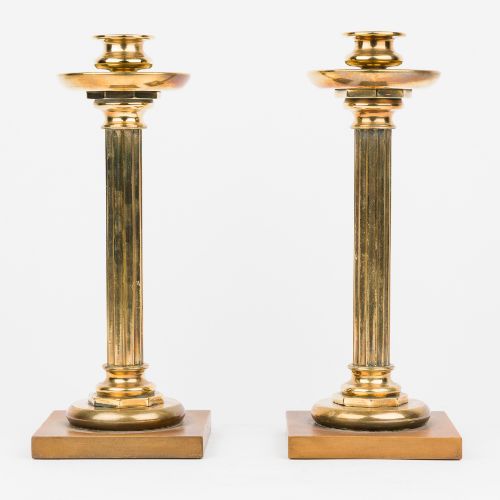
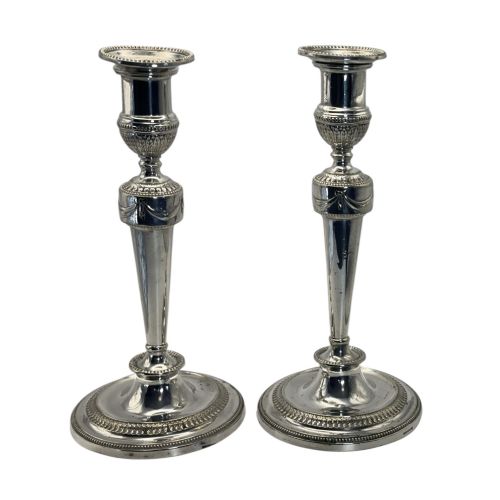
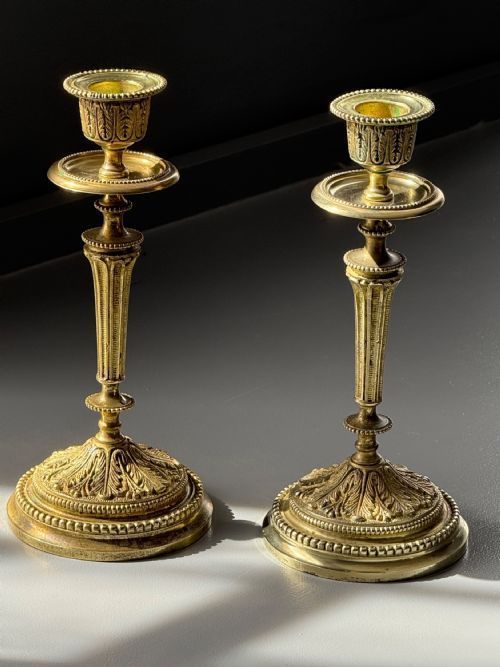
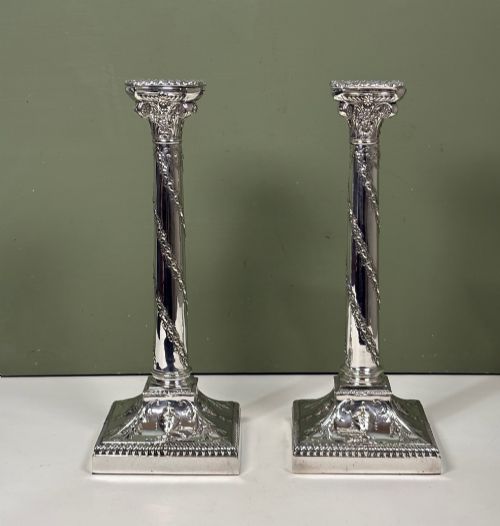
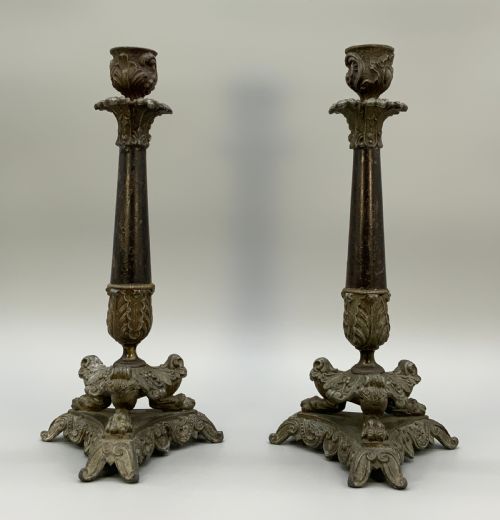
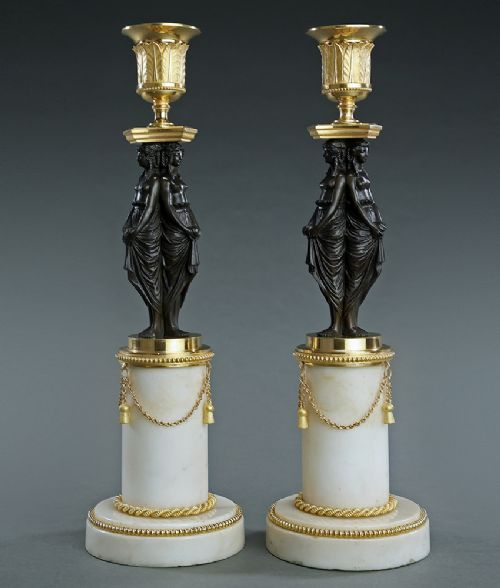
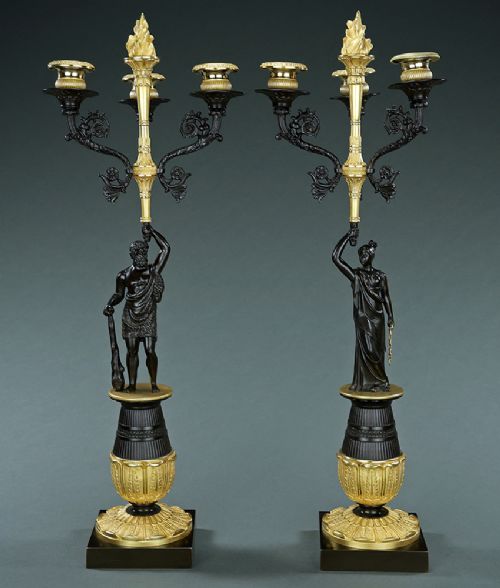
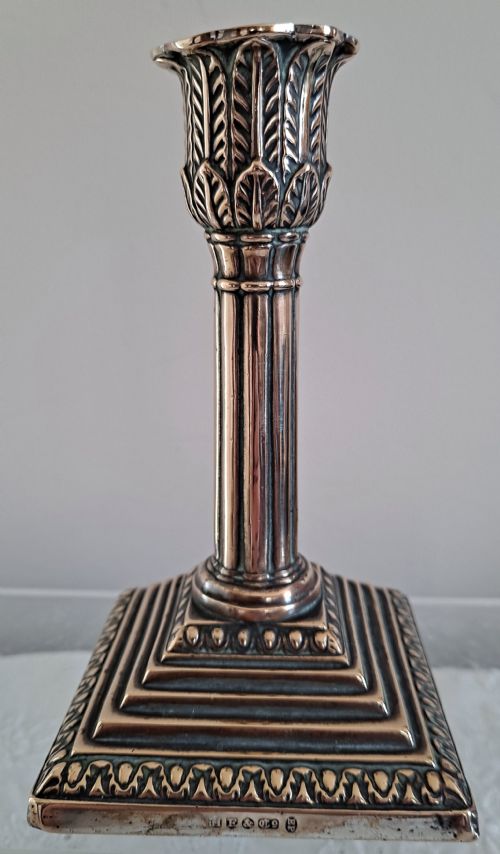
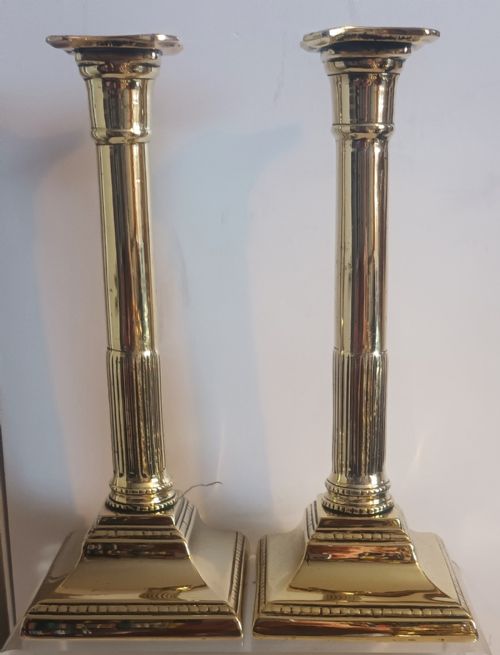
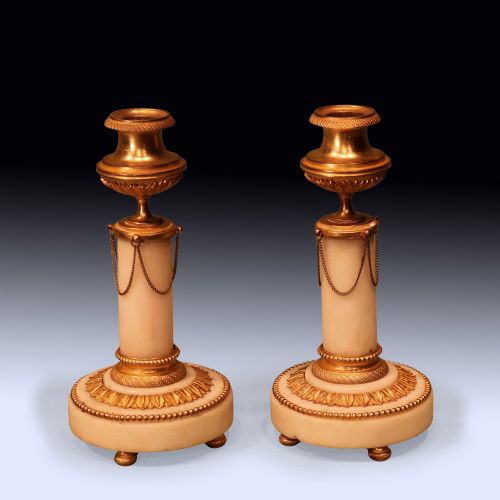
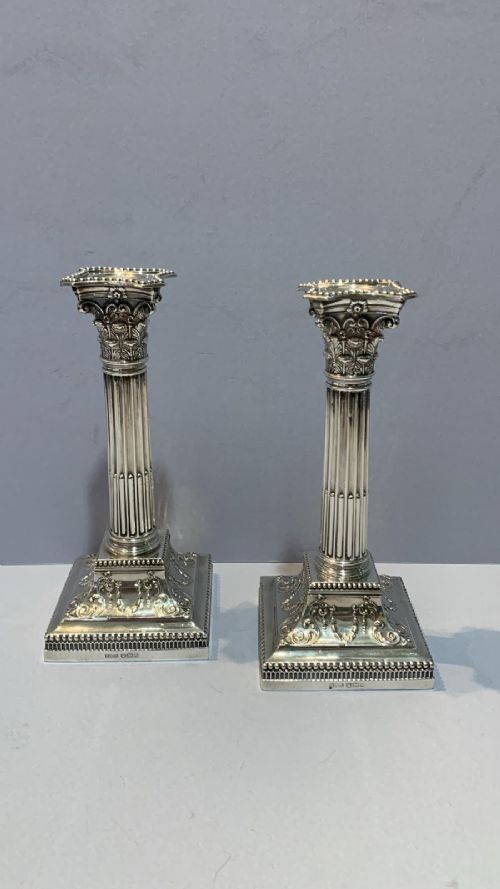
When you search for neoclassical candle stands, you encounter pairs of heavy metal holders, torcheres, and figural candelabra that draw on ancient Greek and Roman motifs. The most common examples on this page are metal pairs from the nineteenth century, finished in bright ormolu, gilt bronze, or silver plate.
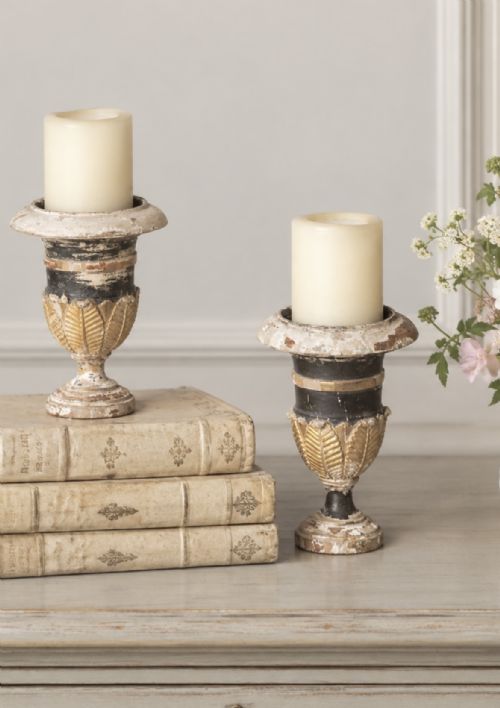
Makers often turned to specific classical forms such as fluted columns, caryatid shafts, and tripod bases during the Regency, Victorian, and Louis XVI periods. Alongside traditional candlesticks, the selection includes related wooden altar-style holders and occasional torcheres designed to elevate a single light source.
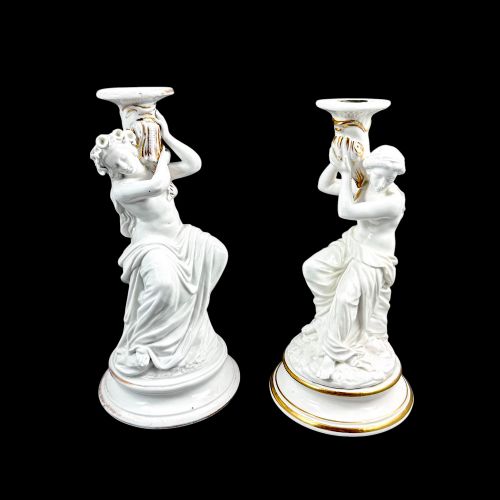
The materials range from cast brass and bronze to carved wood and porcelain, reflecting both English domestic interiors and Grand Tour acquisitions from the continent. These pieces served to illuminate dark rooms while signalling an educated taste for classical antiquity.
Materials and Technique
Foundry work dominates the construction of these items, with molten bronze and brass poured into multi-part moulds before undergoing surface chasing and gilding. Ormolu and gilt bronze finishes required mercury gilding techniques that produced a deep, lasting lustre.
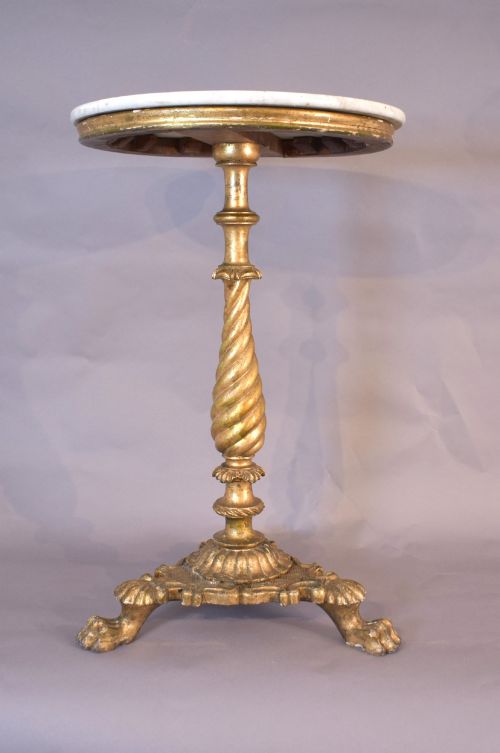
Silver plated items typically rely on a base metal foundation, while wooden variants employ carved gesso and applied paint or leaf to mimic heavier gilt metals. Marble components appear as stable plinths that anchor the substantial metal weight above.
Some nineteenth century Masonic brass candlesticks were built in graduated heights, standing ready to lodge secret handshakes.
Factors of Quality
The weight of the metal and the stability of the multi-part construction dictate the physical substance of the stand. Superior items exhibit careful hand-chasing after casting, which removes mould seams and sharpens decorative details.
Mappin & Webb·Humphrey Hopper·Rabiat·Sutherland & Sons
The Neoclassical Candle Stands Glossary
- Ormolu
- Gilded bronze produced through a mercury amalgamation process. This technique gives the metal a warm, golden sheen that does not tarnish easily.
- Torchere
- A tall stand or candlestick designed to hold a light source high above the floor. These often feature slender columns or tripod supports.
- Caryatid
- A sculpted female figure serving as an architectural support instead of a column. They frequently form the central shaft of classical candlesticks.
- Grand Tour
- A cultural journey undertaken by wealthy young Europeans to visit continental antiquities. Many decorative objects on the market were acquired during these travels.
Neoclassical Candle Stands: Frequently Asked Questions
What is a torchere stand?
A torchere is a tall, elevated stand designed to hold a single candle or lamp above eye level. They provide dramatic height in room corners.
Unlike standard table candlesticks, these floor-standing pieces often feature tripod bases or slender columns suited for perimeter lighting.
Are these candle stands wired for electricity?
Most items listed retain their original configuration as manual candle holders without electrical alterations. Collectors generally prefer to keep them in their original state.
If you intend to convert one for modern lighting, consult a specialist to ensure the wiring does not damage the antique metal or wood structure.
How can I tell the period?
Examine the casting quality, assembly methods, and stylistic cues such as Regency proportions or Louis XVI motifs. Fasteners and tool marks on the underside also offer clues to the manufacturing date.
Compare the surface wear and metal composition with documented examples from similar workshops. Material choices like Old Sheffield plate or specific brass alloys help narrow down the decade.