




Neoclassical Campana Urns
Neoclassical campana urns bring classical proportion and architectural dignity to interior spaces and gardens alike.
Neoclassical Campana Urns
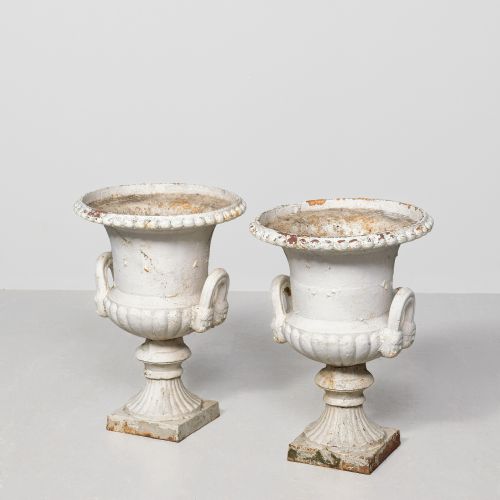
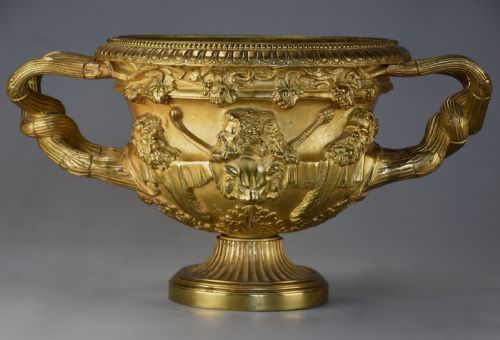
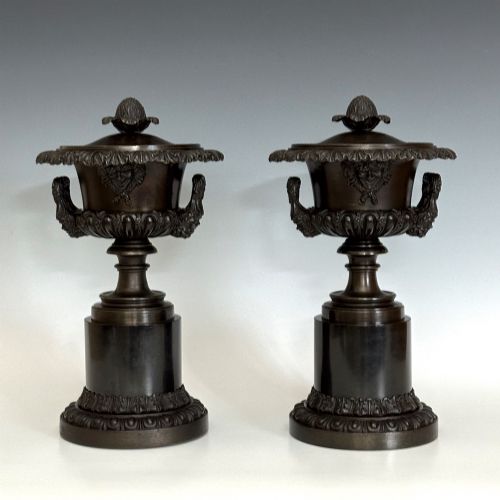
Neoclassical campana urns take their inverted bell shape from ancient pottery and stone vessels, serving primarily as decorative pieces for display on tables, pedestals, and garden terraces. When exploring this selection, buyers frequently encounter pairs cast in metal or carved from stone, spanning the nineteenth century alongside Grand Tour reductions.
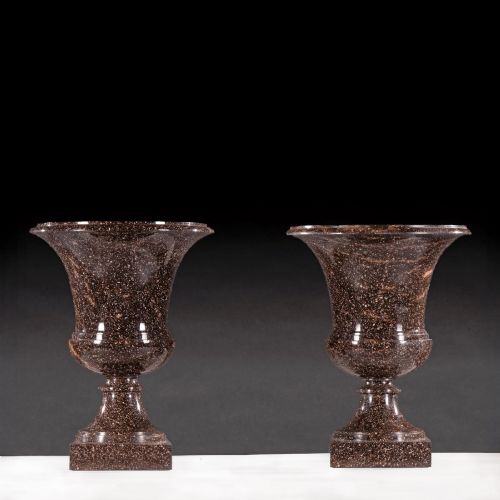
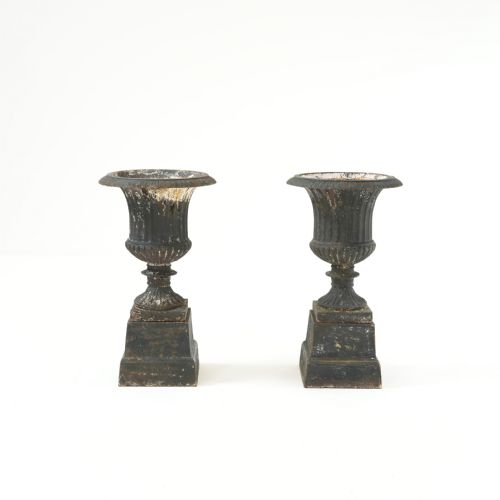
The inventory encompasses substantial cast iron garden urns, delicate porcelain specimens, and polished marble or porphyry examples. French and Italian workshops produced many of these pieces, channelling antique forms through Regency, Victorian, and later nineteenth-century tastes.
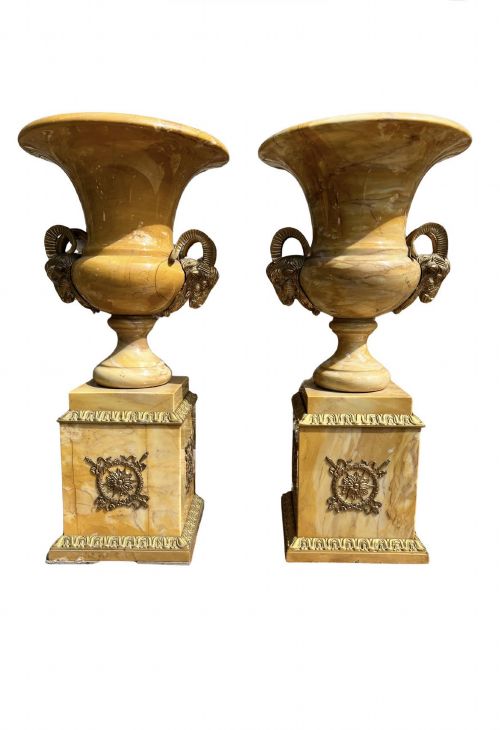
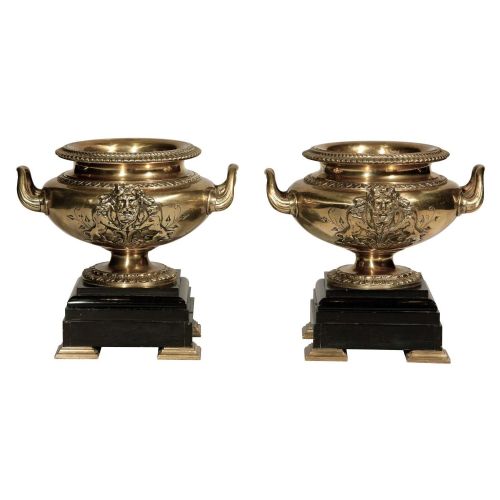
Beyond standard decorative vases, the category includes specialised forms such as wine-coolers and urns mounted on stepped plinth bases. These variations reflect how makers adapted classical vocabulary to suit domestic display and architectural landscaping over successive generations.
Materials and construction
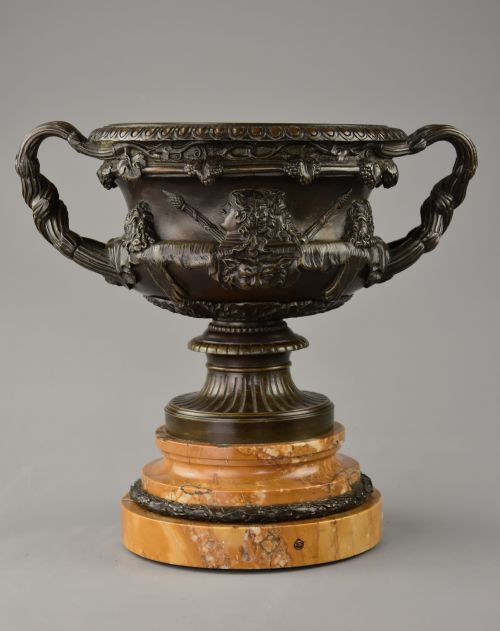
Foundry workers cast metals such as bronze, brass, cast iron, and spelter, frequently combining materials to highlight specific details through contrasting textures. Ormolu and gilt bronze applications added shimmering highlights to darker patinated bronze bodies, elevating the visual weight of the vessel.
Stone carvers shaped solid blocks of marble, limestone, and porphyry into smooth profiles, sometimes utilising specialised varieties like Sienna marble or Ashford marble. Porcelain and jasperware provided alternative ceramic mediums, allowing for intricate white bas-reliefs applied against coloured backgrounds.
Some nineteenth-century French artisans cleverly repurposed classical campana urn forms to function as chilled wine-coolers for dining tables.
Assessing quality
The refinement of the casting and carving defines the upper tier of these pieces, where crisp botanical friezes and sharply articulated handles demonstrate exceptional workshop skill. Weaker examples show softer relief work and less deliberate finishing in secondary areas.
Material selection significantly influences the stature of an urn, with dense natural stones and fire-gilt bronzes commanding greater presence than lighter alloys or simpler surface treatments. The integration of matching pedestals and the preservation of original patination complete the distinction between ordinary and exceptional specimens.
Selim Bright·Wedgwood
The Neoclassical Campana Urns Glossary
- Campana
- A vase or urn shaped like an inverted bell with an everted rim and a flared foot. This classic silhouette originates from ancient pottery and metalwork.
- Grand Tour
- A cultural journey undertaken by nineteenth-century elites who acquired miniature bronze reductions of famous classical antiquities as souvenirs. These scaled-down replicas capture the essence of museum antiquities.
- Ormolu
- Gilded bronze produced by applying a mercury and gold amalgam to a bronze base and firing it. This technique creates a durable, warm metallic lustre.
- Porphyry
- An extremely hard igneous rock containing large crystals, prized since antiquity for its rich purple or reddish colour and difficult to carve. Craftsmen polished it to a high, lustrous finish.
- Bas-relief
- Sculpture in which the figures project only slightly from a flat background. This low-relief technique frequently appears on jasperware and metal friezes.
Neoclassical Campana Urns: Frequently Asked Questions
Where were campana urns originally placed?
Ancient Romans placed marble and bronze urns within gardens, courtyards, and grand interior spaces as architectural focal points.
Later European makers designed them for similar decorative placement on pedestals, entrance halls, and mantelpieces.
Can cast iron urns stay outside?
Cast iron urns possess the durability required for permanent outdoor garden placement, provided they are maintained against weathering.
Over time, exposure develops a stable protective patina across the metal surface.
What is the difference between campana and Medici shapes?
Campana urns feature a smooth, continuous inverted bell profile rising from a pedestal base to an everted rim.
Medici vases display a more rounded, bowl-like body set on a deeper stem with distinct fluting and horizontal handles.