



Neoclassical Bronze Tazza
These neoclassical bronze tazza pieces bring classical dignity to any room, offering timeless decorative presence through their disciplined proportions and rich metalwork.
Neoclassical Bronze Tazza
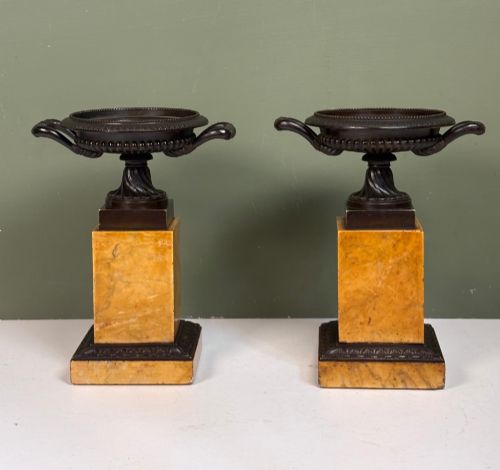
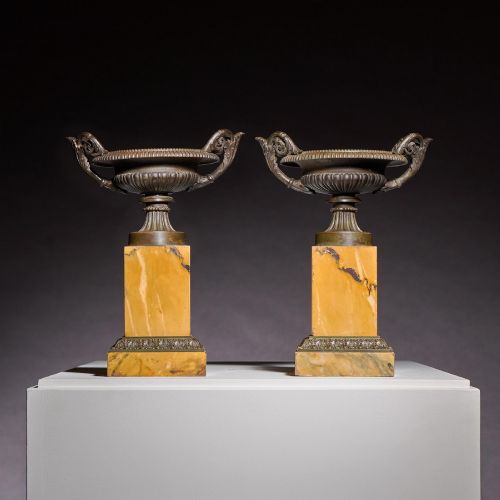
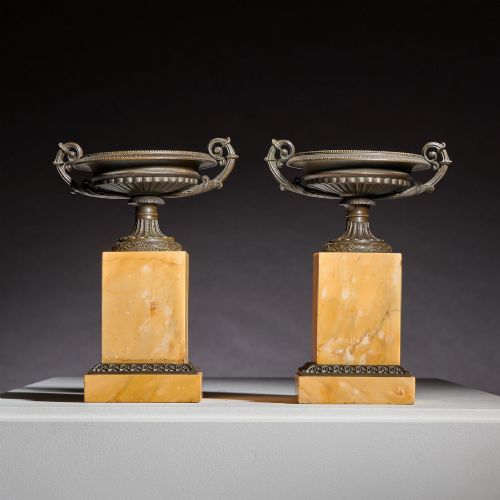
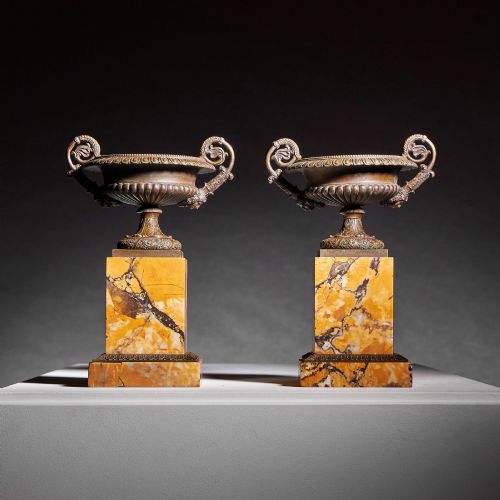
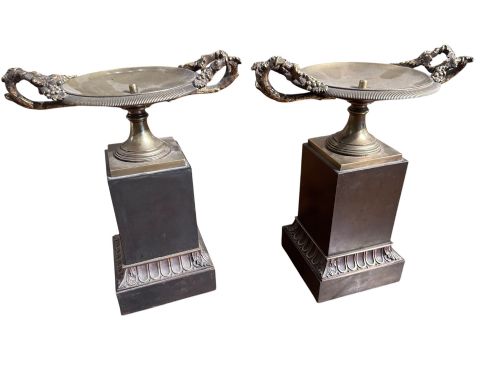
A neoclassical bronze tazza is a low-footed ornamental dish or footed vessel rooted in classical antiquity, typically designed for display rather than dining. You will frequently encounter pairs on this page, often dating from the nineteenth century and associated with the Grand Tour or French Empire taste.
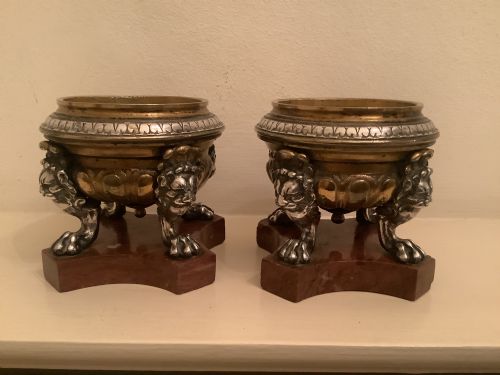
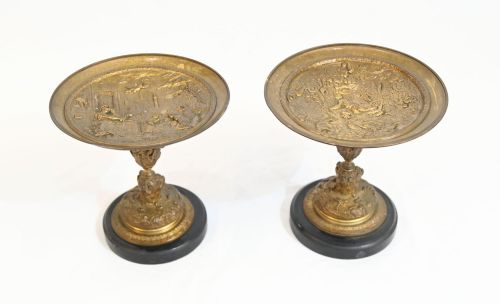
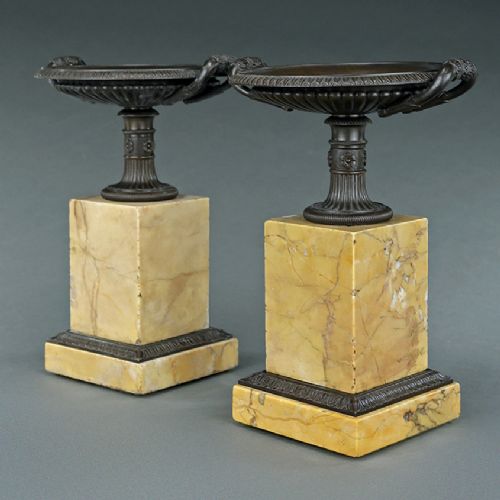
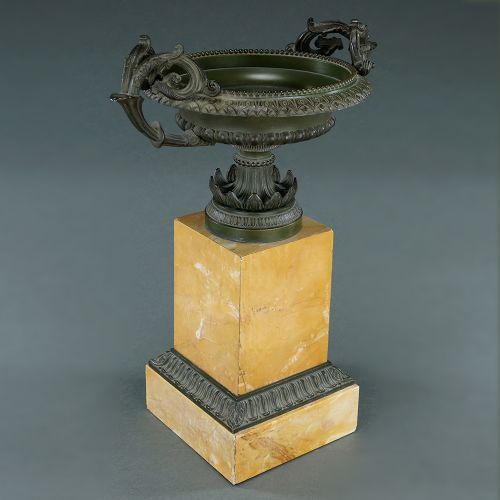
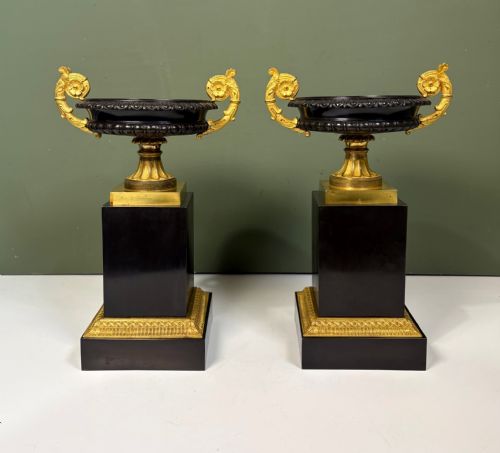
The form bridges decorative bowls and centrepieces, frequently combining patinated or gilt bronze with contrasting plinths of Siena marble, black marble, or rouge griotte. Many examples reflect direct inspiration from classical antiquities encountered by travellers in Italy during the nineteenth century.
Makers utilised these pieces as ornamental urns, comports, and library vessels, pairing classical motifs with practical display formats. The selection here spans Regency and Victorian interpretations of French Empire style, showing the enduring appeal of classical shapes.
What varies in quality
Quality rests in the crispness of the bronze casting and the depth of the chasing, which determines how sharply defined the classical ornament appears. Superior examples exhibit finely articulated details on handles and figures, alongside carefully polished marble bases showing rich natural grain.
Materials recorded across the inventory include patinated bronze, ormolu, Siena marble, rouge griotte, cut glass, and mother-of-pearl.
The Neoclassical Bronze Tazza Glossary
- Tazza
- A shallow bowl or cup mounted on a stem and foot, originating from ancient drinking vessels and later revived as a decorative display piece. In nineteenth-century examples, the form often serves as a centrepiece or ornamental comport.
- Ormolu
- Finely ground high-carat gold mercury-gilded onto a bronze object, creating a rich golden surface finish. This technique was widely employed in French Empire and Regency metalwork to highlight decorative mounts.
- Grand Tour
- A cultural journey of Europe undertaken by wealthy young men in the eighteenth and nineteenth centuries to study classical art and architecture. Souvenirs from these travels frequently included bronze classical tazzas and miniature architectural marbles.
- Siena marble
- A distinctive yellow Italian marble featuring deep purple or brown veining, frequently utilised for the bases of nineteenth-century decorative bronzes. Its warm tones provided a striking contrast against dark patinated bronze.
- Patinated bronze
- Metal treated with chemical solutions to produce a controlled surface colour, usually ranging from deep brown to near black. This finish protects the bronze while defining the sculptural contours of the vessel.
Neoclassical Bronze Tazza: Frequently Asked Questions
What is a neoclassical bronze tazza used for?
These vessels were primarily created as decorative objects for display on mantelpieces, libraries, and central tables during the nineteenth century. They served as ornamental centrepieces and expressive statements of classical taste rather than functional tableware.
Today, they function as sculptural accents within interior spaces, adding architectural presence and historical texture to a room. Pairs are frequently placed symmetrically on sideboards or mantel shelves to anchor a display.
How do I distinguish Grand Tour pieces?
Grand Tour pieces typically date from the nineteenth century and are explicitly modelled after classical antiquities seen in Italy. They often combine patinated bronze bowls with coloured marble bases such as Siena or rouge griotte.
Many of these souvenir objects reflect the specific archaeological discoveries of the period, executed with varying degrees of sculptural ambition. Their creation catered to travellers seeking portable examples of classical antiquity.
What materials are combined with bronze?
Bronze is frequently paired with natural stone plinths, most notably Siena marble, black marble, and rouge griotte. These stone bases provide stability and introduce contrasting colours and natural grain patterns to the composition.
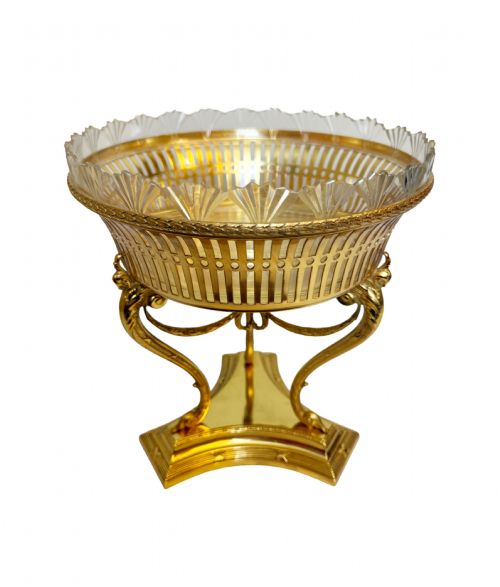
Other variations incorporate cut glass inserts or mother-of-pearl dishes within the bronze framework, expanding the textural vocabulary of the piece. Gilt bronze and ormolu are also commonly utilised alongside dark patinated surfaces.
How do French Empire and Regency styles differ?
French Empire pieces often display rigorous classical symmetry, disciplined ornamentation, and lavish use of gilt bronze and ormolu. They reflect the official aesthetic of Napoleonic France, drawing directly from Roman imperial vocabulary.
Regency examples share this classical foundation but often interpret it through a distinctly British lens, sometimes integrating lighter proportions or diverse decorative influences. Both styles, however, treat the tazza as a disciplined vehicle for classical revival.