
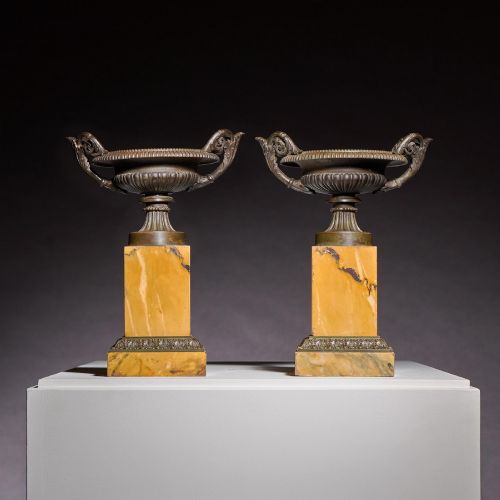
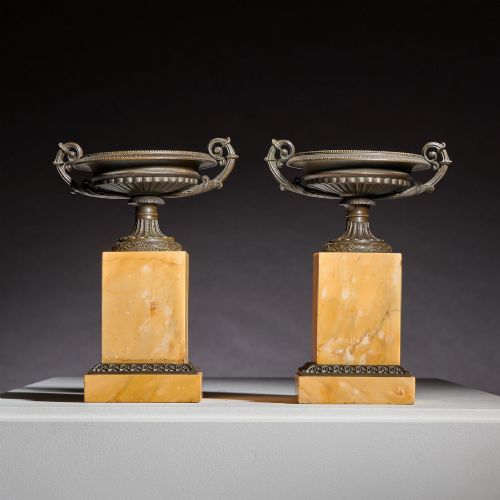
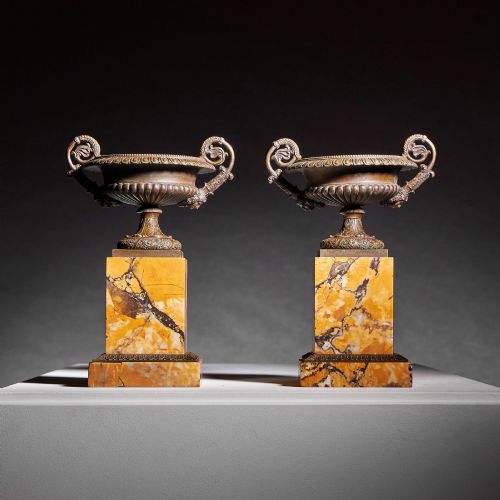
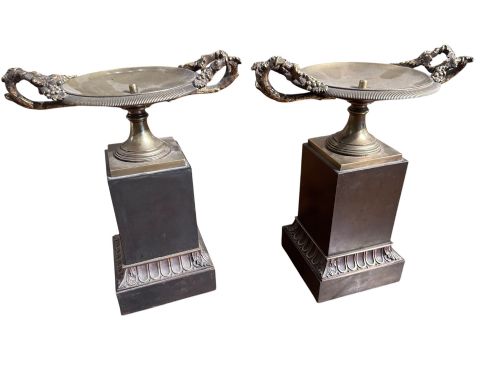


Marble Pedestal Tazza Pair
These marble pedestal tazza pair examples bring classical gravitas to a room, offering elevated display surfaces shaped by nineteenth-century tastes.
Marble Pedestal Tazza Pair
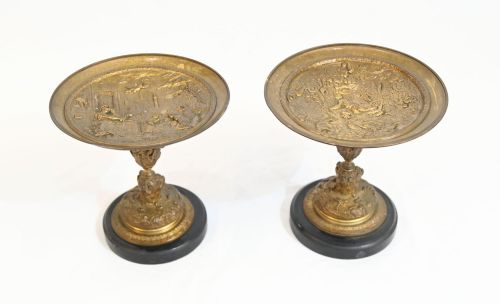
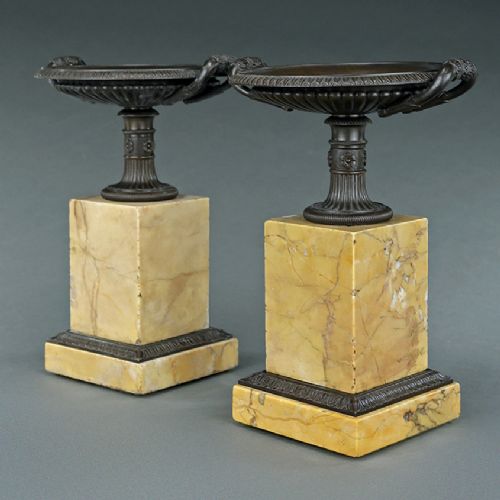
A marble pedestal tazza pair consists of classical decorative vessels raised on stems and solid bases, designed to sit symmetrically as ornamental objects. When searching for a marble pedestal tazza pair, buyers encounter pieces primarily originating from the nineteenth century, including the Regency and French Empire periods. These decorative objects draw heavily on classical antiquity, often produced as Grand Tour souvenirs in Italy or as high-style decorative bronzes in France.
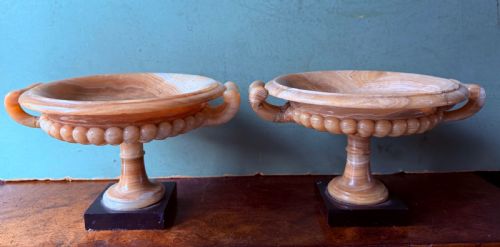
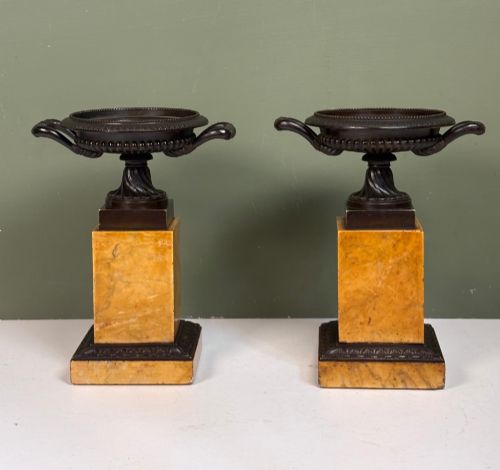
The forms listed here function strictly as ornamental vessels and decorative bowls rather than utilitarian tableware. Many examples combine shallow stone bowls with classical column pedestals and stepped square bases. The pairing of two matching items dictates their traditional use on mantelpieces, side tables, or pedestals where symmetry enhances formal interiors.
How they were made
Maker workshops constructed these pieces using a combination of turned natural stones and cast metalwork. The heavy bases and shallow bowls utilise contrasting materials such as black marble, Siena marble, and alabastro egiziano, shaped by hand-turning and carving.
Metal components incorporate bronze, patinated bronze, gilt bronze, and ormolu. Artisans cast these metallic mounts to form decorative handles, classical collars, and structural supports, joining stone and metal securely together.
Listings feature nineteenth-century works spanning Regency, French Empire, and Italian Grand Tour styles.
What varies in quality
The distinction between ordinary and superior examples lies in the selection of the stone and the crispness of the metal casting. Highly figured marbles with rich veining and complex coloration elevate a piece far above simpler monochrome stone bodies.
Finishing work on the bronze and ormolu mounts determines the overall refinement of the object. Sharply chased surface details, secure joints between stone and metal, and balanced proportions separate ambitious cabinet pieces from standard production items.
The Marble Pedestal Tazza Pair Glossary
- Tazza
- A shallow bowl or vase mounted on a stem and foot, used historically for display or drinking. In nineteenth-century decorative arts, these objects serve purely as ornamental centerpieces.
- Grand Tour
- A cultural journey undertaken by wealthy young Europeans to study classical antiquities. Souvenirs purchased during these travels frequently included miniature bronzes and marble architectural models.
- Ormolu
- Gilt bronze created by applying a mercury and gold amalgam to a bronze base and heating it. This technique imparts a rich, durable golden surface to decorative mounts.
- Siena Marble
- A distinctive yellow Italian marble marked with dark grey or purple veining. It was highly prized by nineteenth-century makers for classical revival ornaments.
Marble Pedestal Tazza Pair: Frequently Asked Questions
What is a marble tazza used for?
These decorative vessels function as ornamental display pieces on mantelpieces, sideboards, or console tables. They were designed to provide classical architectural symmetry within high-status nineteenth-century interiors.
Because of their shallow bowls and elevated stems, they are unsuited for heavy functional use. Instead, collectors place them as sculptural focal points in a room.
How do I identify French Empire pieces?
French Empire examples typically combine cast bronze mounts with dark marble or gilt bronze details. The decorative vocabulary draws directly from Napoleonic and classical Roman motifs.
These pieces often display a heavier emphasis on patinated and gilt metalwork alongside structured stone bases.
What is a Grand Tour souvenir?
Grand Tour souvenirs were portable works of art and classical antiquities purchased by travellers touring Italy during the nineteenth century. These items included miniature bronzes and carved stone vessels modelled after ancient excavations.
Many bear specific souvenir associations, utilising local Italian marbles such as alabastro egiziano to evoke classical antiquity.
How do I care for antique marble?
Antique marble requires gentle dusting with a soft, dry cloth to prevent surface scratching. Moisture and harsh chemical cleaners must be avoided, as acidic substances can etch polished stone.
Metal mounts should likewise be cleaned without abrasive polishes to preserve their original patination and gilding.