



Pair Empire Centrepieces
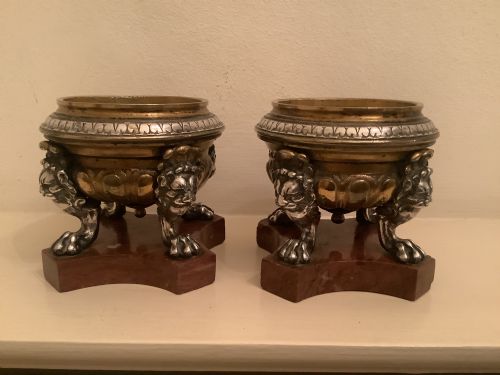
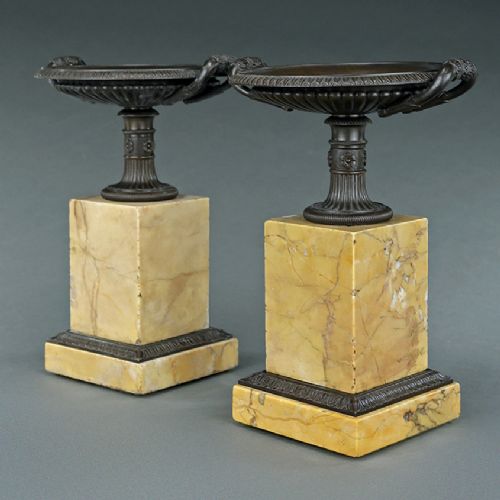
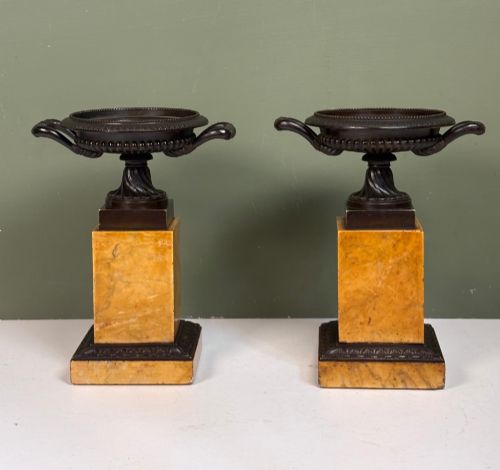
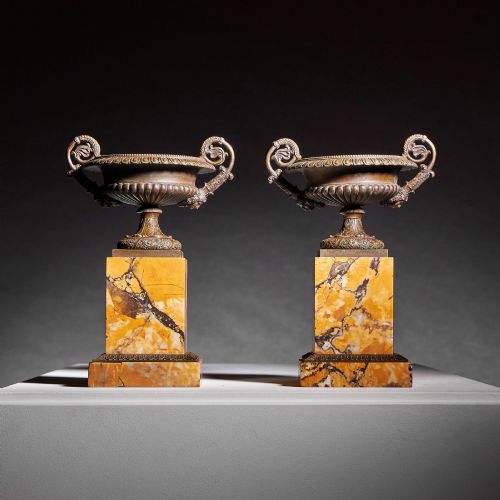
These pair empire centrepieces combine classical form with heavy cast metal, bringing undeniable presence to a dining table or console.
Pair Empire Centrepieces
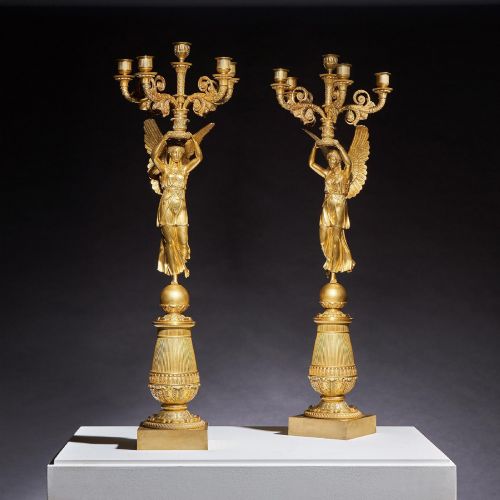
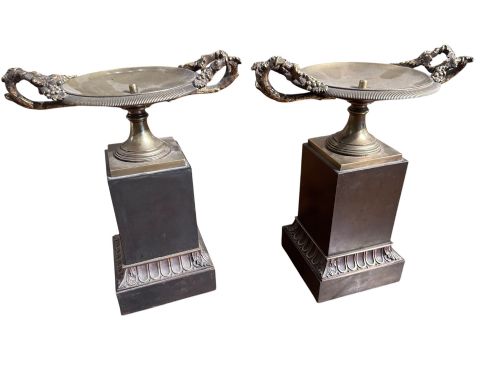
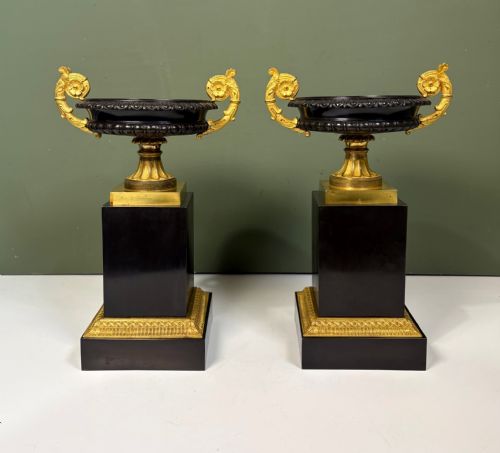
When searching for pair empire centrepieces, buyers encounter matching pairs of decorative objects rooted primarily in nineteenth century French Empire, Regency, and Neoclassical styles. The selection centres heavily on tazzas, tazza vases, and candelabra designed to command attention in a formal interior setting.
Most examples merge patinated or gilt bronze with contrasting sections of white or black marble, creating a distinct visual weight. Forms range from low tazzas and compotes to multi-light candelabra featuring classical figures or cherubs.
Materials and construction
These pieces rely on the interplay of bronze, gilt bronze, and ormolu combined with solid bases of black or white marble. Founders cast the metal components in sections before applying mercury gilding or dark patination to the surfaces.
Assembly often involves threaded rods securing heavy marble plinths to cast metal bowls, stems, or candle arms. Skilled chasing finished the metal surfaces by hand, sharpening the details on acanthus leaves, classical drapery, and figural mounts.
Listings for pair empire centrepieces span the nineteenth century, Regency period, and the year 1880, utilising bronze, marble, and brass.
Judging quality in the metalwork
The crispness of the chasing separates standard foundry work from exceptional production. Superior pieces retain sharp leaf work and facial details that do not appear soft or smoothed over by excessive polishing.
The weight and selection of the marble base also indicate tier, alongside the depth and durability of the original ormolu gilding. Heavy gauge bronze casting and sturdy structural joins distinguish the finest workshops from everyday output.
Pierre Philippe Thomire
The Pair Empire Centrepieces Glossary
- Tazza
- A shallow ornamental cup or vase set on a pedestal foot. These items frequently served as decorative centrepieces on dining tables during the nineteenth century.
- Ormolu
- Finely chopped high-karat gold mercury-gilded onto a bronze base. This technique creates a rich, warm yellow surface finish characteristic of French Empire metalwork.
- Patinated bronze
- Bronze treated with chemical solutions to darken the surface to a deep brown or black tone. It provides a stark visual contrast against bright gilt bronze mounts.
- Candelabra
- Branched candlestick holders designed to support multiple candles simultaneously. Nineteenth century versions often incorporate figural stems such as cherubs or classical deities.
Pair Empire Centrepieces: Frequently Asked Questions
What are pair empire centrepieces used for?
These decorative objects serve as symmetrical focal points on dining tables, sideboards, or mantelpieces. In nineteenth century interiors, they anchored formal room schemes.
Today, they function as standalone decorative art or hold fruit and floral arrangements on large surfaces.
How do I identify French Empire style?
French Empire pieces draw heavily on classical Roman, Greek, and Egyptian motifs. Look for symmetry, military trophies, laurel wreaths, and mythological figures.
The materials typically feature heavy gilt bronze paired with dark patinated bronze and polished marble.
What is the difference between ormolu and brass?
Ormolu consists of a mercury-gilded surface applied over a cast bronze base, yielding a deep, rich golden hue. Brass is an alloy of copper and zinc with a yellower, uniform metallic composition all the way through.
Ormolu belongs to high-end decorative objects, whereas brass often appears in more utilitarian domestic items.
How do I care for bronze and marble?
Dust bronze and ormolu gently with a soft dry cloth and avoid abrasive polishes that strip historical gilding. Marble requires protection from acidic liquids and moisture to prevent staining the stone.
Keep these heavy items on stable, level surfaces to support their substantial weight.