


Neoclassical Bronze Clock
A neoclassical bronze clock brings sculptural weight and classical proportion to a mantelpiece, combining patinated metal with ormolu mounts and marble bases.
Neoclassical Bronze Clock
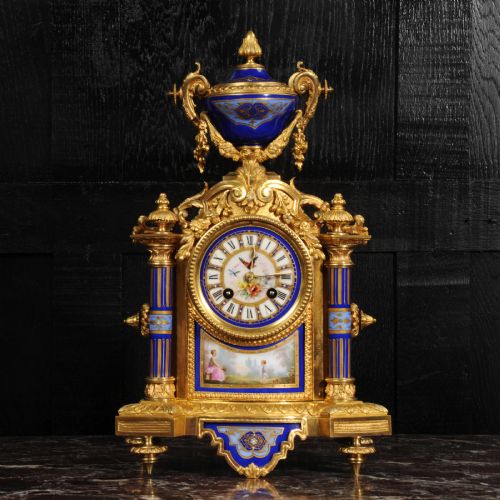
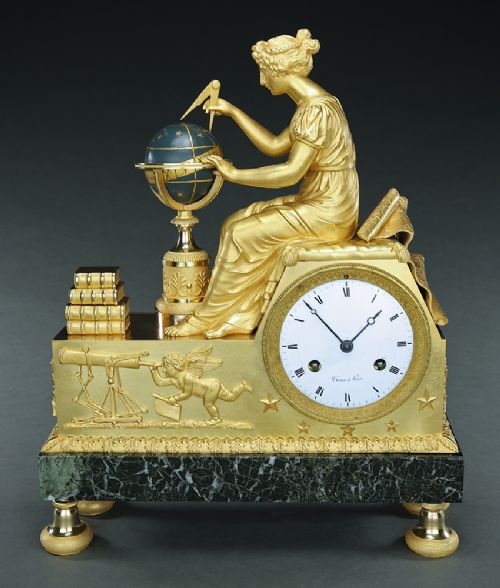
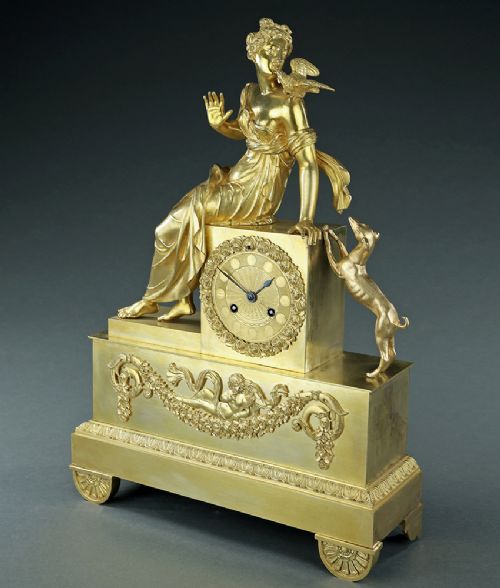
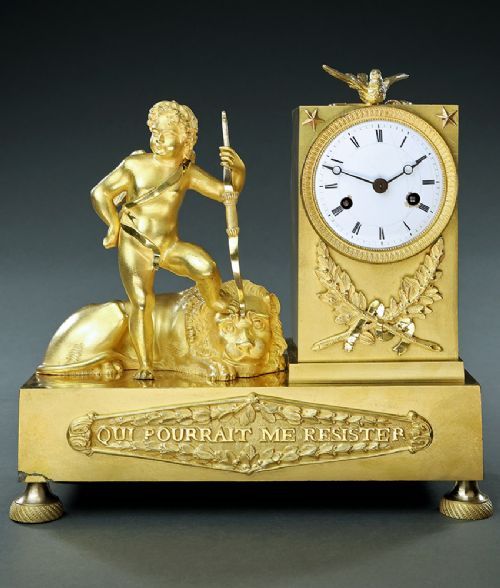
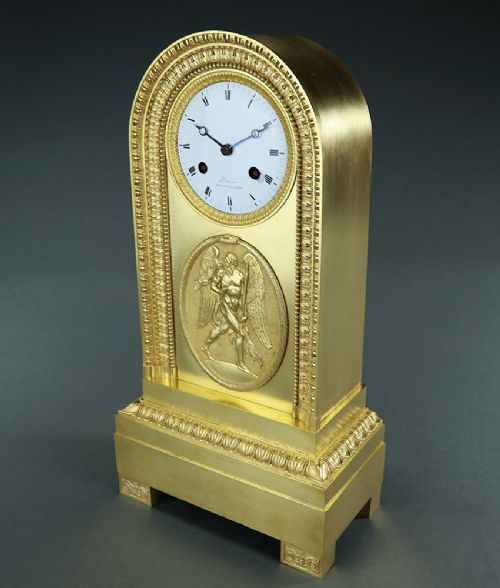
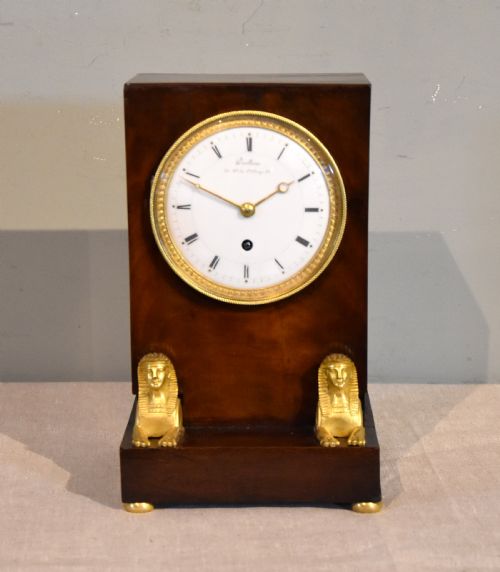
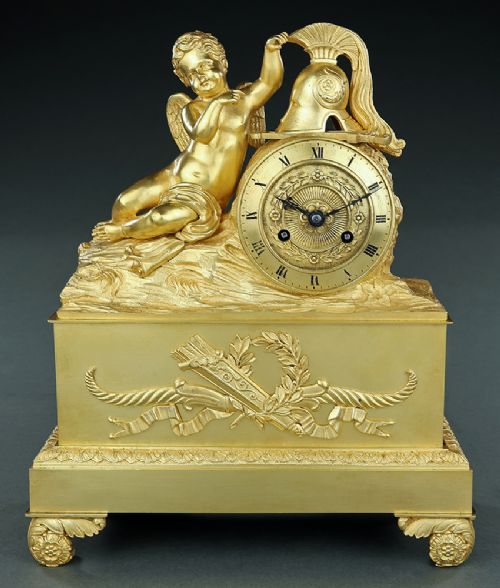
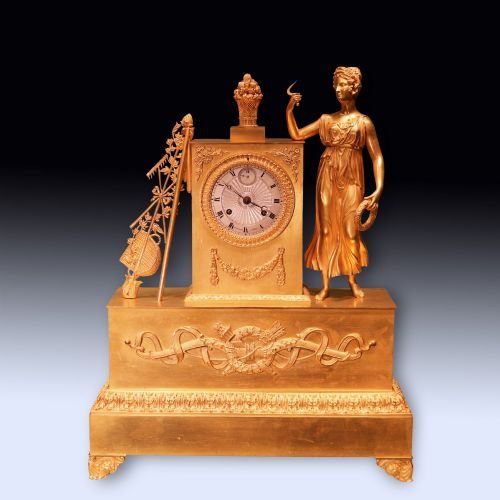
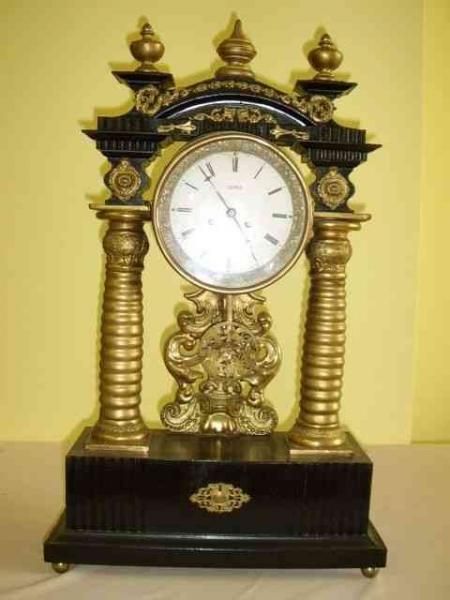
A neoclassical bronze clock draws on classical motifs, architectural porticos, and allegorical figures rooted in eighteenth and nineteenth-century French design. The pieces most frequently met on this page span the 18th century, the Regency era, and the 19th century, often carrying Louis XVI or French Empire styling.
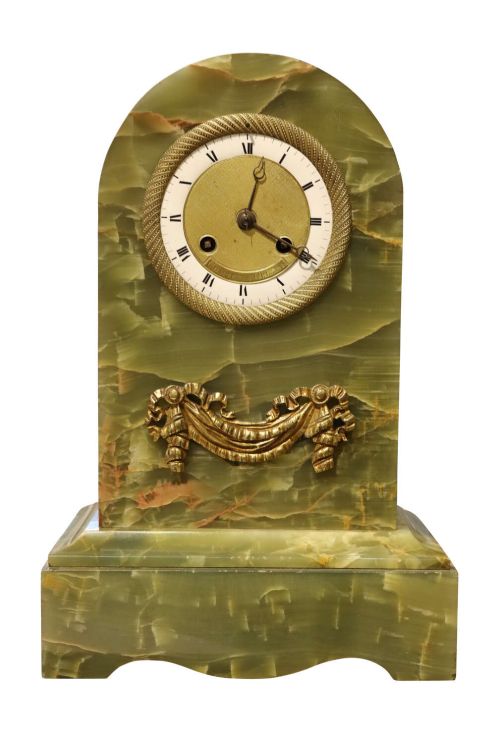
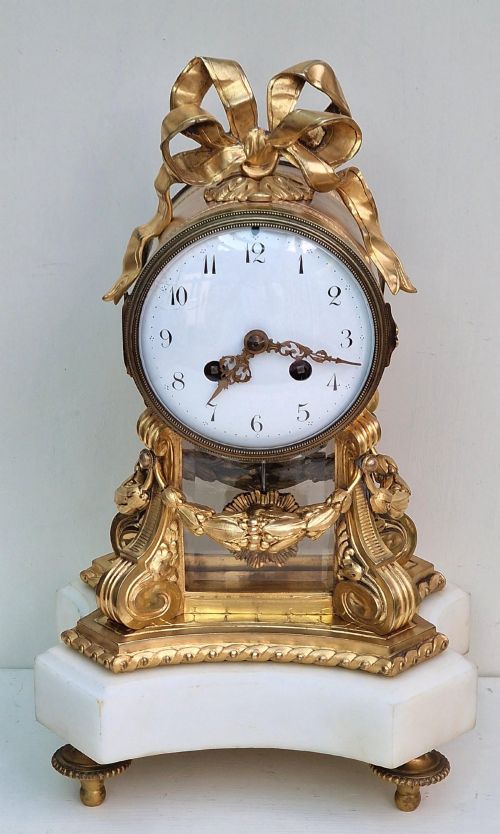
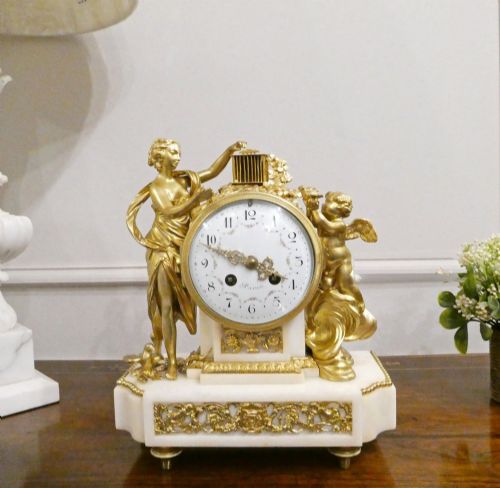
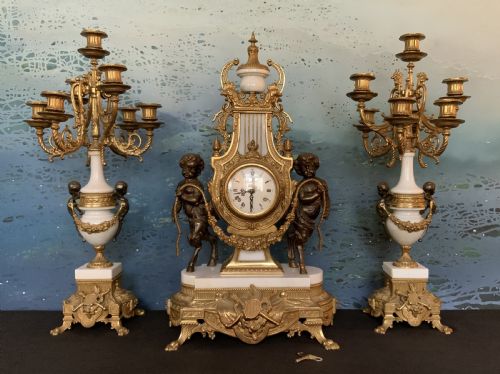
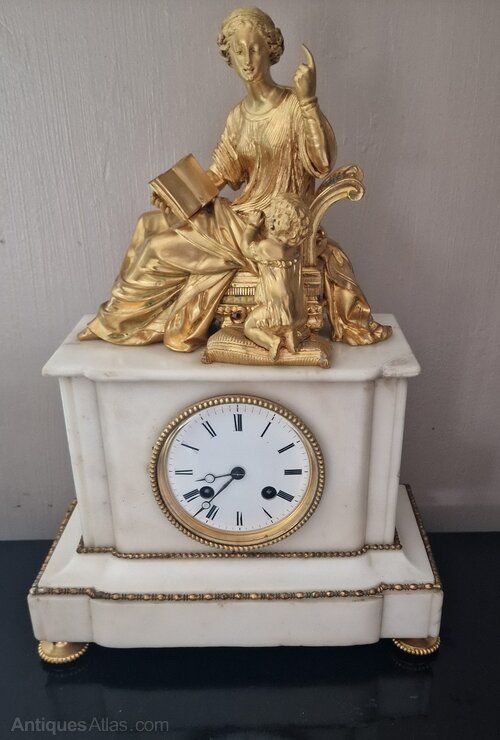
The physical format ranges from tabletop mantel clocks and clock garnitures with matching candelabra to wall-mounted cartel clocks. Many examples pair patinated bronze or brass with white marble, green onyx, or sienna marble bases, occasionally incorporating enamel dials and glass panels.
Makers and workshops across Paris produced these timepieces in various scales, from intimate shelf pieces to substantial portico clocks. The decorative vocabulary includes themes of love, triumph, and astronomy rendered in cast metal.
Materials and Construction
Makers utilised cast bronze, brass, and gilt ormolu alongside natural stones like white marble, rouge marble, and slate. Metal components were cast, chased, and gilded, then mounted onto heavy stone plinths to provide structural stability.
Movements varied from standard 8-day mechanisms to single chain fusee configurations. Dials were frequently fashioned from enamel with painted numerals, protected behind glass bezels and housed within architectural or figural bronze cases.
Object forms span mantel clocks, wall-mounted cartel clocks, and multi-piece garniture sets featuring matching candelabra.
Distinctions in Quality and Execution
The refinement of the casting and chasing separates superior examples from simpler production. Crisp detail in the bronze figures, clean lines in the marble bases, and the precision of the dial painting indicate higher workshop standards.
The integration of the movement with the case, alongside the presence of signed dial plates or maker inscriptions, distinguishes masterwork clocks from standard commercial items of the period.
Japy Freres·Charles a Orleans·Canaillor of Paris·Le Roy Paris·Berger Paris·Louis Goret
The Neoclassical Bronze Clock Glossary
- Ormolu
- Gilt bronze produced by applying a finely ground high-carat gold-mercury amalgam to a bronze object before firing. This technique creates a durable, luminous golden finish characteristic of many French mantel clocks.
- Garniture
- A set consisting of a central clock flanked by matching decorative objects such as candelabra or urns. These sets were designed to create a balanced decorative scheme on a mantelpiece.
- Portico clock
- A mantel clock structured around architectural columns supporting an entablature that houses the dial. This form reflects classical temple architecture popular during the Empire and Directoire periods.
- Cartel clock
- A wall clock housed in an ornate, scrollwork or architecturally styled frame made of gilt bronze. These pieces were mounted directly to wood panelling or plaster walls.
- Fusee
- A conical pulley used in clock movements to maintain even tension on the gear train as the mainspring unwinds. It ensures consistent timekeeping throughout the power reserve.
Neoclassical Bronze Clock: Frequently Asked Questions
How do I wind a vintage mantel clock?
Most mechanical clocks utilise a key inserted into winding holes on the dial face to tension the mainspring.
Care must be taken not to over-wind the mechanism, stopping as soon as resistance is felt.
What is a clock garniture set?
A garniture set pairs a central mantel clock with matching side ornaments, typically candelabra or decorative urns.
These pieces were manufactured as a unified decorative ensemble for display on a fireplace mantel.
How do I tell Empire style from Louis XVI?
Louis XVI style pieces favour restrained classical symmetry, delicate floral garlands, and slender fluted columns.
Empire style clocks display bolder military motifs, heavy patinated bronze figures, and more imposing architectural proportions.
Where should I place a heavy marble clock?
Heavy marble and bronze clocks require a sturdy, level surface capable of supporting considerable weight.
Placement away from direct sunlight and drafts protects both the delicate enamel dials and the internal mechanical components.