
Neoclassical Brass Sconces
Neoclassical brass sconces bring structural symmetry and classical ornamentation to a room, offering warm illumination through cast metal and gilt finishes.
Neoclassical Brass Sconces
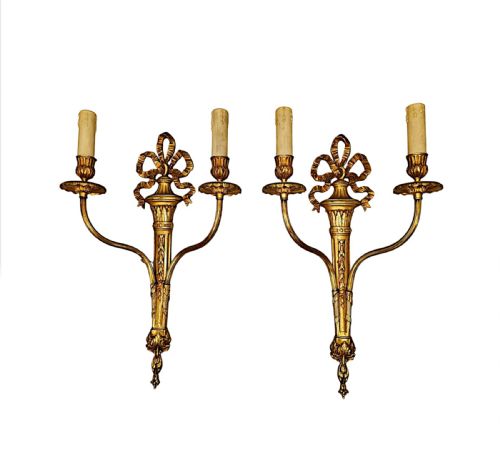
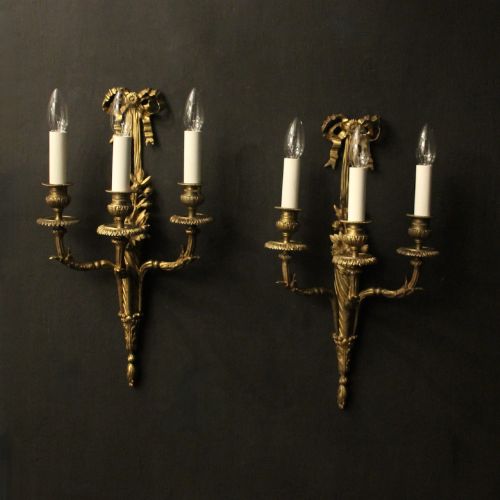
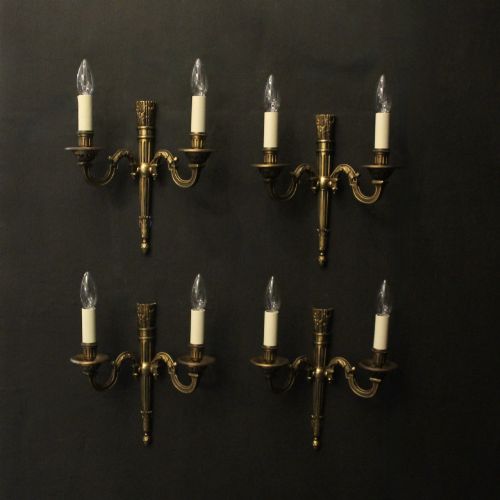
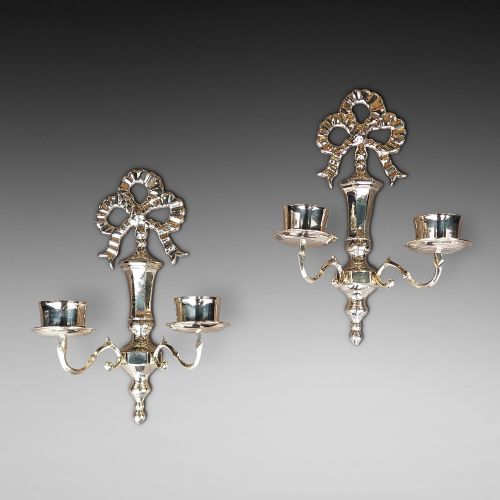
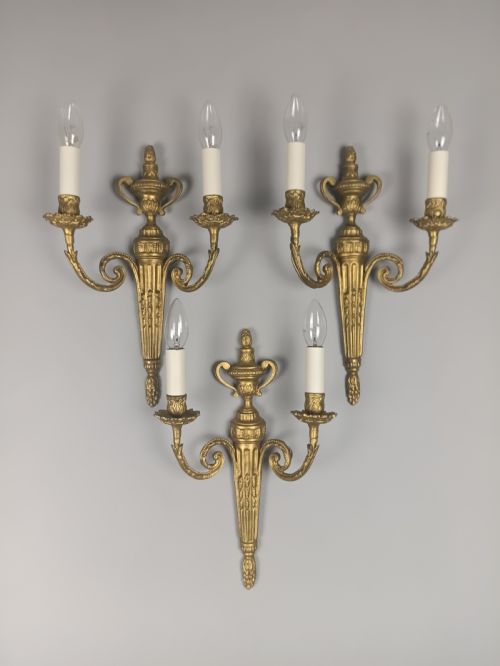
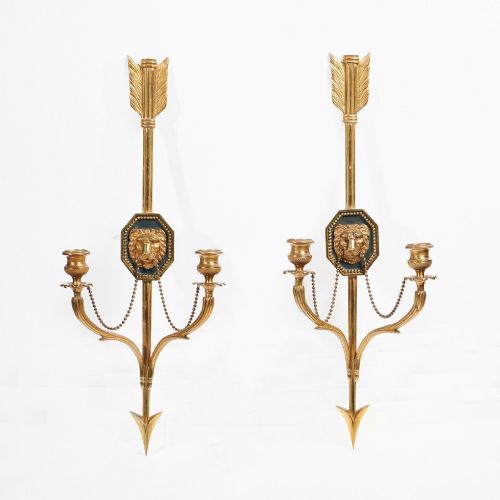
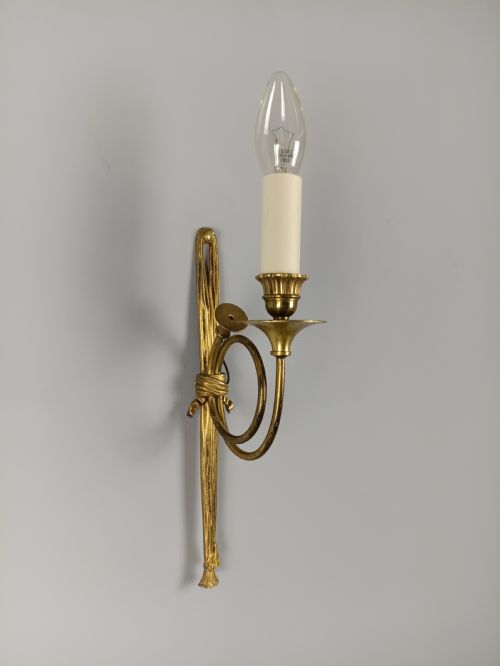
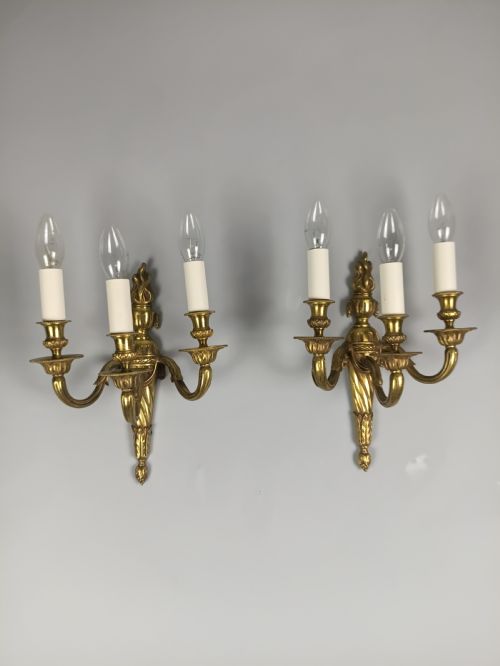
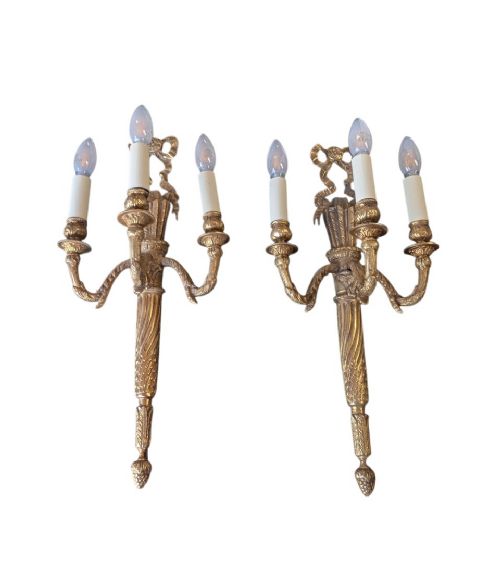
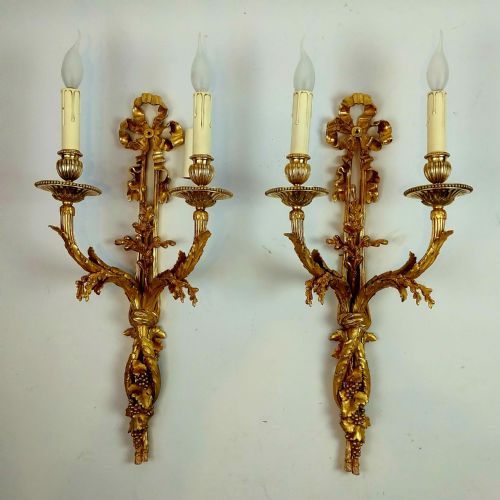
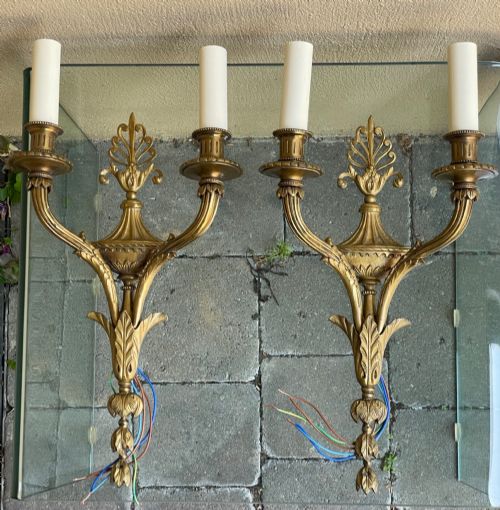
When you search for neoclassical brass sconces, you encounter wall-mounted light fittings rooted in classical antiquity, often taking the form of twin or triple arm fixtures. These pieces draw heavily on French Empire, Louis XVI, and Adam Revival idioms, bringing symmetry and formal restraint to interiors.
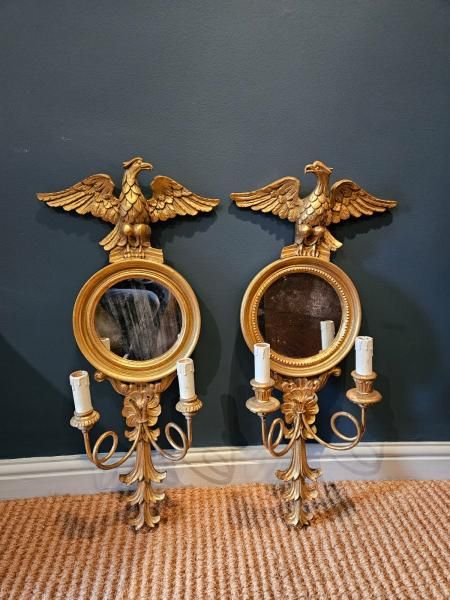
The versions most commonly met on this page span the nineteenth and early twentieth centuries, originating predominantly from French workshops as well as English makers. They frequently incorporate cast metal frames designed to hold candles or electric bulbs, paired with glass or mirror backs.
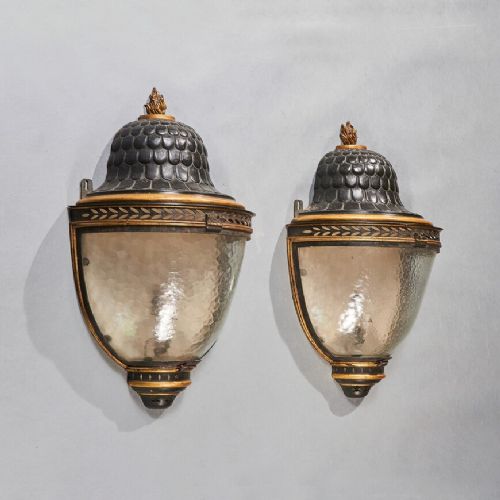
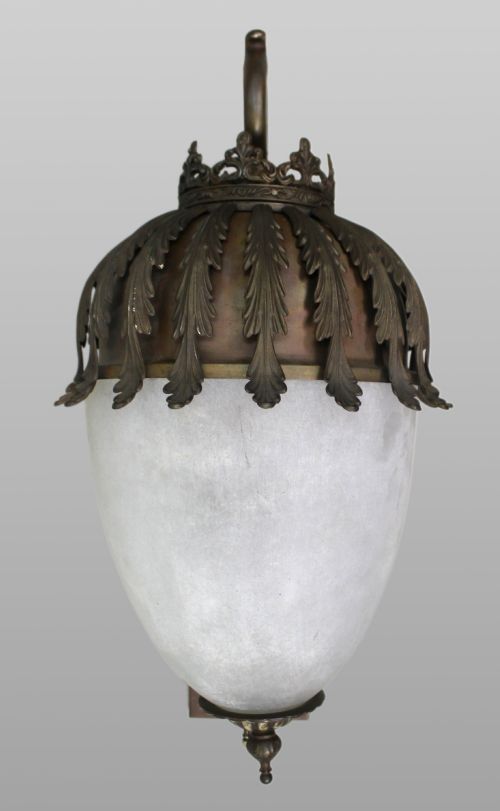
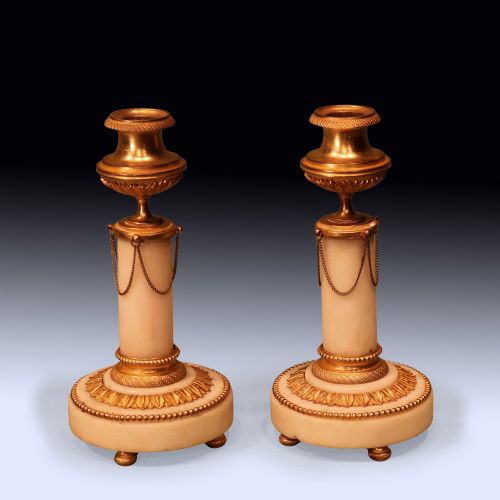
Beyond standard wall lights, the category extends to related forms such as wall lanterns, dressing mirrors, and candlesticks sharing the same classical vocabulary. These objects range from single-arm brackets to sets of four or six matching fixtures intended for larger reception rooms.
How they were made
Constructed primarily from brass, bronze, and metal substrates, these fixtures rely on metal-casting techniques to achieve sharp architectural details such as urns, swags, and acanthus leaves. Many surfaces receive a gilt bronze or ormolu finish, applying a layer of gold to the base metal to create a rich, uniform sheen.
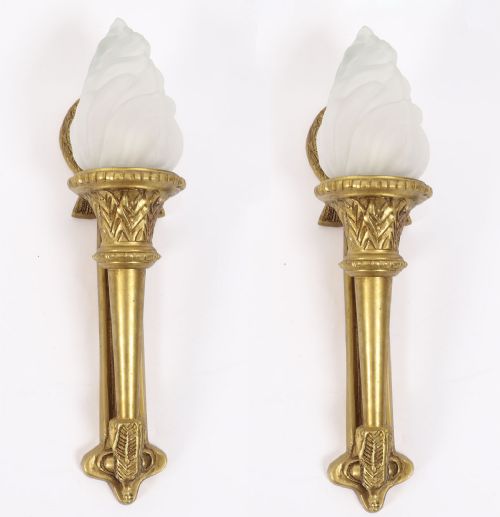
Selected examples incorporate contrasting elements like frosted glass, white marble, and parcel gilt to enhance the visual depth of the design. Workshops utilised hand-chasing after casting to refine the crispness of motifs such as ram's head masks and flaming torches.
Listings feature brass and ormolu pieces spanning the Georgian, Victorian, Regency, and early twentieth-century periods.
What varies in quality
Materials also dictate the tier of the piece, with genuine ormolu and fire-gilt surfaces holding their lustre differently compared to simpler applied lacquers or painted finishes. The integration of high-grade components, such as heavy cast brass frames paired with undamaged glass or mirrored backplates, separates ordinary production from masterwork output.
Maison Baguès
The Neoclassical Brass Sconces Glossary
- Ormolu
- A gilded bronze technique utilising a finely ground mercury and gold amalgam applied to a bronze object, creating a durable golden surface. This process was widely employed in high-status French lighting fixtures during the eighteenth and nineteenth centuries.
- Applique
- A French term for a wall-mounted light fitting or sconce designed to hold candles or lamps. These fixtures project from the wall and often feature reflecting backplates to maximise illumination.
- Louis XVI Style
- A neoclassical design movement characterised by straight lines, symmetry, and classical motifs derived from Greek and Roman architecture. It stands in contrast to the more asymmetrical curves of the preceding Louis XV style.
- Tole Peinte
- Painted sheet metal, frequently used in decorative lanterns and shades to introduce vibrant colour and contrasting parcel gilt highlights. This technique allowed makers to achieve rich decorative effects on functional metal bodies.
- Adam Revival
- An architectural and decorative style inspired by the neoclassical designs of the eighteenth-century Adam brothers. It incorporates delicate classical ornamentation, urns, and husks rendered in gilt bronze and brass.
Neoclassical Brass Sconces: Frequently Asked Questions
How do I clean neoclassical brass sconces?
Dust the metal gently with a soft, dry cloth to remove everyday surface particles without disturbing the underlying finish. Avoid abrasive commercial cleaners or harsh chemical polishes that can strip away original gilding or patina.
For intricate ormolu surfaces, consult a professional conservator if deeper cleaning becomes necessary. Preserving the integrity of the metal skin maintains the historical character of the fixture.
Were these sconces electrified later?
Many surviving examples originating from the nineteenth century were initially designed for candles and later converted to accept modern electrical wiring. This adaptation was standard practice as domestic lighting technology evolved through the Victorian and Edwardian eras.
When inspecting conversion work, look for discreet wiring channels that respect the original metalwork. Professional rewiring ensures the fixture meets modern safety standards while retaining its historical housing.
How do I distinguish French Empire from Louis XVI styles?
French Empire pieces typically display a heavier, more militaristic classical vocabulary influenced by Napoleonic tastes, featuring bold motifs like sphinxes, swans, and dark patinated bronze contrasts. They project a sense of imperial grandeur and solid mass.
Louis XVI designs remain lighter and more restrained, favouring slender fluted columns, ribbon ties, and delicate floral swags. These pieces reflect an earlier eighteenth-century return to classical proportion and architectural grace.
Can I hang these sconces in a bathroom?
Placing antique brass sconces in high-moisture environments requires careful consideration of the metal finish and electrical components. Unsealed ormolu and exposed wiring can suffer corrosion when subjected to persistent steam and water contact.
If utilised in such spaces, ensure the installation uses appropriate damp-rated electrical fittings and is placed away from direct water splashes. Routine monitoring helps protect the antique metal from premature degradation.