
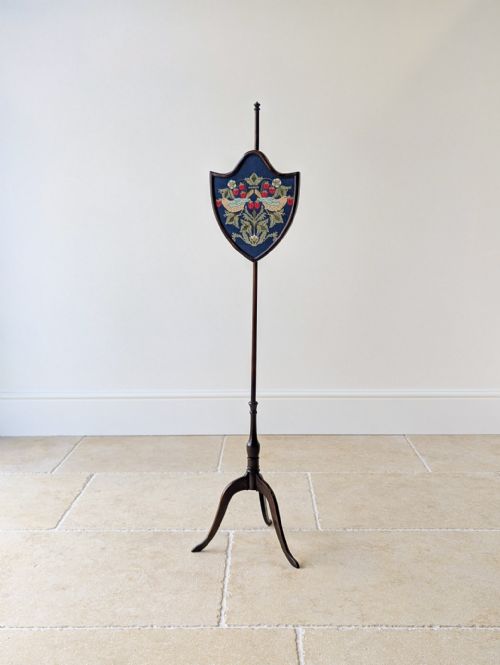


Needlework Fireplace Screen
These needlework fireplace screen examples are practical room dividers and hearth ornaments, offering period warmth and hand-stitched character.
Needlework Fireplace Screen
A needlework fireplace screen acts as a decorative shield against excessive hearth heat while adding colour and texture to a room. Buyers searching this phrase encounter tripod pole screens alongside floor-standing cheval and frame formats.
The materials span mahogany, rosewood, oak, satinwood, and goncalo alves, framing panels worked in wool, silk, tapestry, and embroidery. Examples reach from the Georgian and Regency eras through the Victorian period.
Tripod pole screens feature an adjustable vertical shaft holding a sliding panel, while cheval and fixed frames provide broader displays. Most pieces on this page originate from the nineteenth century, complemented by eighteenth-century Georgian designs.
Materials and construction methods
Cabinetmakers shaped dense hardwoods such as mahogany and rosewood into turned columns, carved tripod bases, and bobbin-turned frames. Joinery techniques included mortise and tenon joints alongside detailed hand-carving.
Panels combined textile foundations with hand-stitched needlework, wool embroidery, and silk thread work. Glass occasionally protected delicate needlepoint panels within the wooden framework.
Early stitchers frequently included hidden domestic pets and slightly startled sheep within their pastoral needlework panels.
Assessing quality in construction and needlework
Quality rests upon the crispness of timber carving, the stability of tripod bases, and the intricacy of the stitchwork. Finer pieces demonstrate precise turning on poles and substantial timber scantlings.
The artistic execution of the tapestry or embroidery distinguishes standard domestic output from superior workshops. Original panel mountings and smooth pole adjustment mechanisms further indicate elevated manufacture.
The Needlework Fireplace Screen Glossary
- Pole screen
- A freestanding vertical screen with an adjustable panel sliding on a central turned shaft. This form allowed occupants to shield their faces from the direct heat of an open fire.
- Cheval screen
- A floor-standing frame supported by two lateral feet or pillars allowing the screen panel to pivot. These units provide a wider viewing surface than traditional pole screens.
- Goncalo Alves
- A dense, highly figured tropical hardwood utilised for furniture and decorative frames during the Regency period. Its distinct grain patterns create a striking visual presence.
- Needlework
- Hand-stitched textile work encompassing wool tapestry, embroidery, and needlepoint. These panels formed the decorative and functional centrepieces of hearth screens.
Needlework Fireplace Screen: Frequently Asked Questions
How do I use a pole screen today?
These screens function effectively as decorative room dividers or subtle focal points beside seating areas. Their adjustable panels allow you to control height and position within a modern interior layout.
Position them away from direct, intense heat sources to preserve the historic timber and textiles. They offer an authentic period accent for drawing rooms and studies.
How do I date an antique firescreen?
Dating relies upon timber selection, turning styles, and the specific characteristics of the needlework panel. Georgian and Regency pieces typically exhibit lighter mahogany or rosewood forms with restrained carving.
Victorian examples often display heavier timbers, satinwood, or bobbin turning alongside distinct floral or figural tapestry motifs.
Are the needlework panels original to the frames?
Many screens retain their period needlework panels, executed in wool, silk, or petit point. Some pieces combine eighteenth-century frames with nineteenth-century needlework insertions.
Close inspection of the rebate and mounting points reveals whether the textile has been secured during a later period.