


Needlepoint Fauteuil Armchairs
Needlepoint fauteuil armchairs combine upholstered comfort with classical French woodwork to bring warmth and texture into any drawing room.
Needlepoint Fauteuil Armchairs
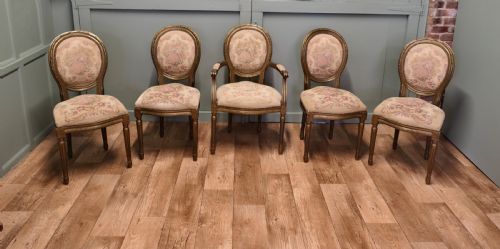
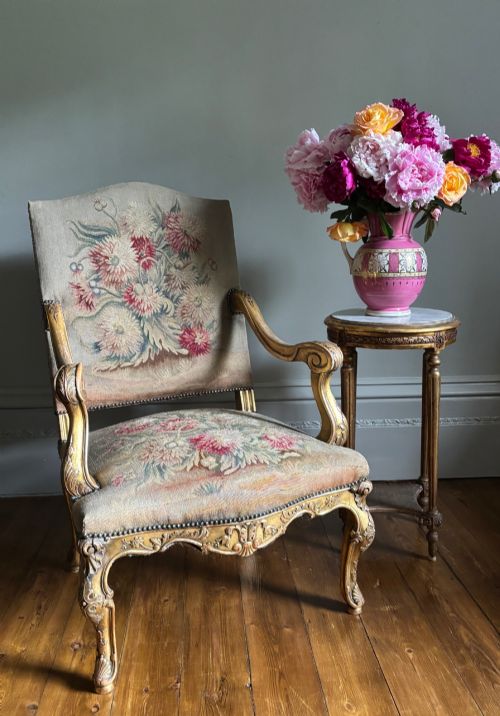
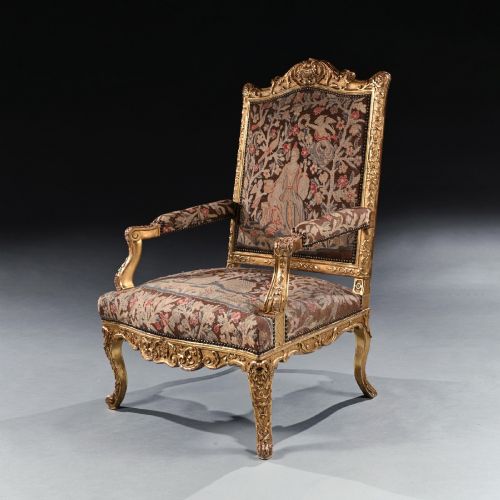
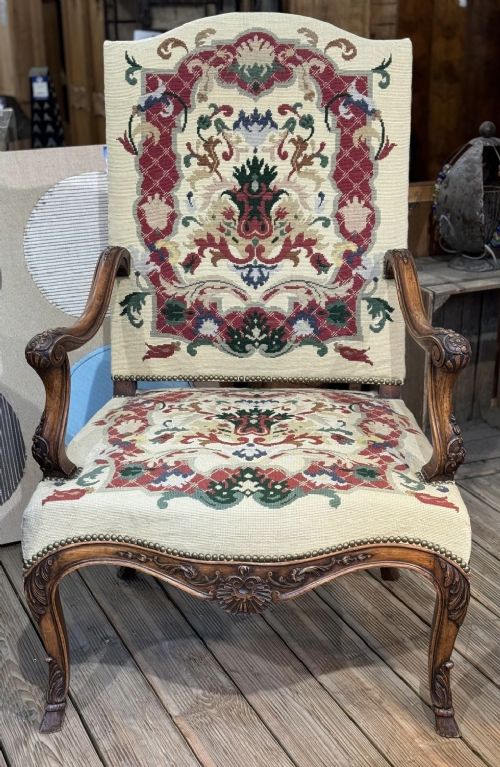
These needlepoint fauteuil armchairs encompass open arm seating spanning the eighteenth and nineteenth centuries, with revival pieces drawing heavily on Louis XV and Louis XVI aesthetics. You will most frequently encounter nineteenth-century walnut and giltwood examples featuring distinct tapestry upholstery.
Makers often fashioned these seats as part of larger salon suites or pairs, designed for formal reception rooms rather than casual lounging. The forms range from French Regence style frames to English country house interpretations and Victorian iterations.
The defining characteristic across the selection is the marriage of carved wooden frames with hand-worked needlework panels. These pieces reflect centuries of European decorative traditions, adapting classical forms for domestic comfort.
Materials and construction
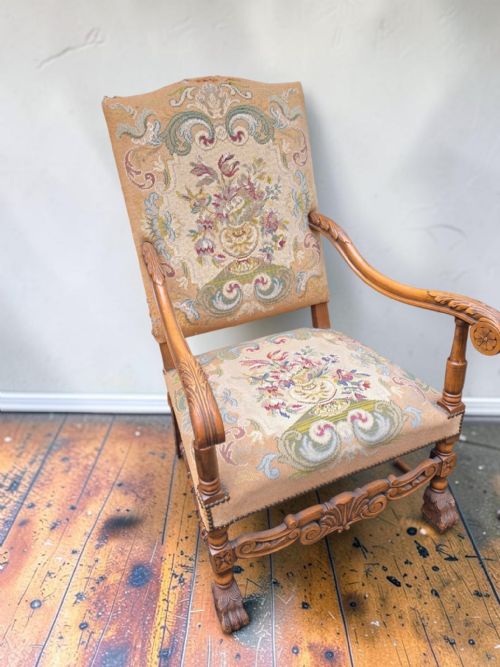
Cabinetmakers shaped the foundational frames from hardwoods including walnut, rosewood, and beech, frequently applying gilt or paint to the carved timber. Gilding and polychrome finishes accent the intricate floral and scrollwork carvings executed by hand.
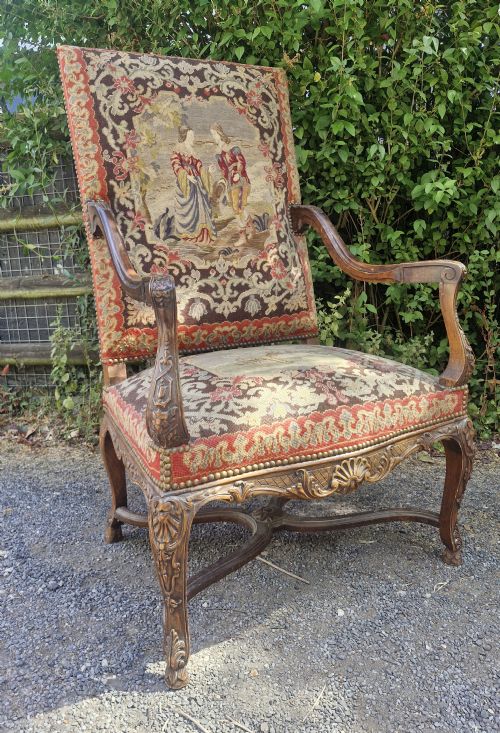
Upholsterers integrated wool tapestry and petit point needlework directly into the structural panels of the arms and backrests. Brass tacks frequently secure the textile edges along the wooden rails, completing the traditional construction.
Several armchairs retain needlework panels so finely stitched they demand a closer look to confirm they are not painted.
Judging the execution
The distinction between ordinary and exceptional seating lies in the depth and crispness of the wood carving. Skilled artisans achieved fluid lines in giltwood and walnut frames where lesser examples appear rigid or heavy.
The fineness of the needlework itself dictates the tier of the piece, particularly where tight petit point panels replace coarser wool embroidery. Original period tapestry work integrated harmoniously with the frame elevates the stature of an armchair significantly above later replacements.
Holland and Sons
The Needlepoint Fauteuil Armchairs Glossary
- Fauteuil
- An open-armed upholstered armchair originating in France, characterised by exposed wooden framing around the back and arms. This form gained prominence during the seventeenth and eighteenth centuries.
- Petit point
- A very fine needlepoint stitch worked on single-thread canvas, allowing for intricate pictorial detail. It frequently appears on the high-wear sections of antique armchairs.
- Giltwood
- Timber treated with a thin layer of gold leaf over a prepared base. This luminous finish was favoured for formal salon seating throughout the eighteenth and nineteenth centuries.
Needlepoint Fauteuil Armchairs: Frequently Asked Questions
Can these armchairs be used daily?
These antique chairs accommodate regular sitting provided the underlying frame joints remain stable and secure.
Needlepoint upholstery requires gentle care and protection from direct sunlight to preserve the wool fibres over time.
What is the difference between tapestry and needlepoint?
Needlepoint is stitched by hand onto a stiff open-weave canvas ground, whereas traditional tapestry is woven on a loom.
Many period armchairs incorporate needlework panels specifically designed and sized for the seat and backrest.
How do I distinguish eighteenth and nineteenth-century pieces?
Eighteenth-century originals display hand-carved joinery techniques and period-specific proportions distinct from later revivals.
Nineteenth-century makers often replicated these earlier styles during historicist movements, employing machine-assisted preparation alongside traditional hand finishing.