




Navy Wool Persia Rug
A navy wool persia rug brings centuries of tribal and village craftsmanship into a room through deep indigo tones and resilient piled wool.
Navy Wool Persia Rug
When searching for a navy wool persia rug, buyers encounter hand-knotted carpets and smaller utility textiles originating from nomadic confederations, mountain villages, and urban workshops across Persia. The selection spans the late nineteenth century into the early decades of the twentieth century, encompassing diverse regional identities from Heriz to Shiraz.
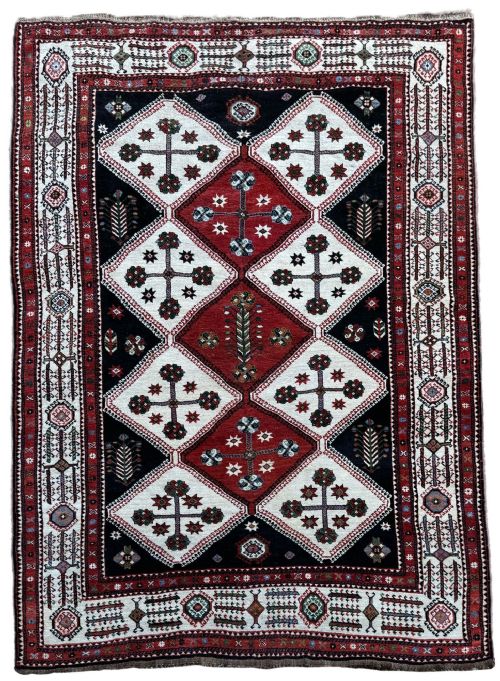
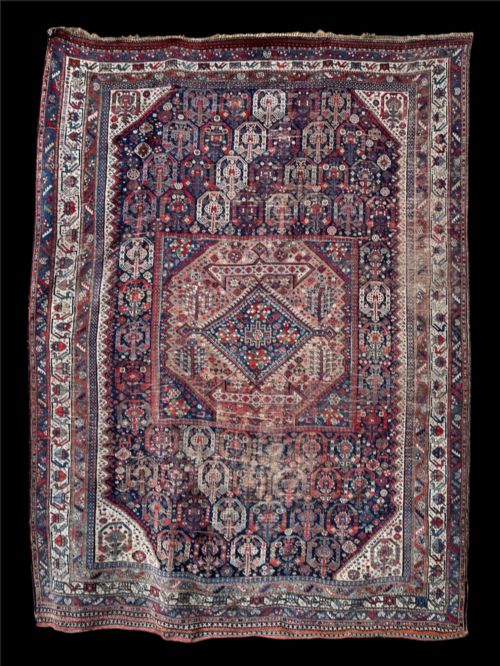
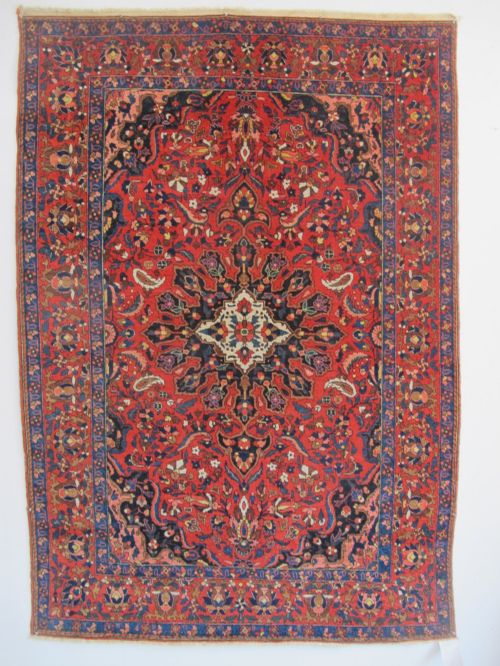
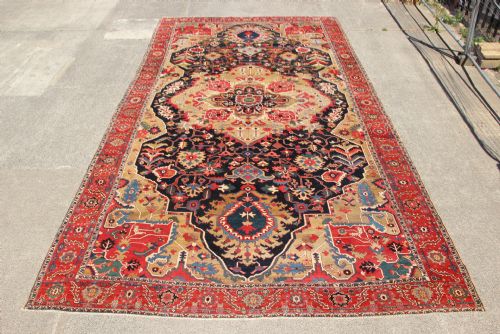
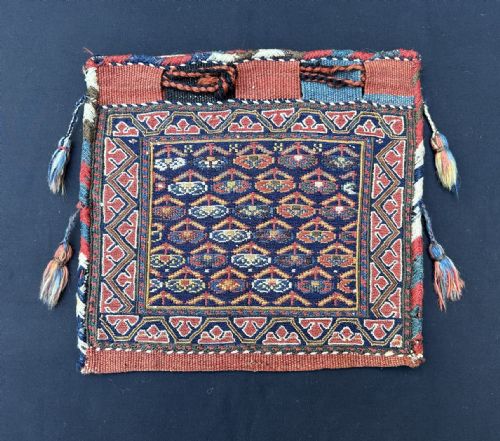
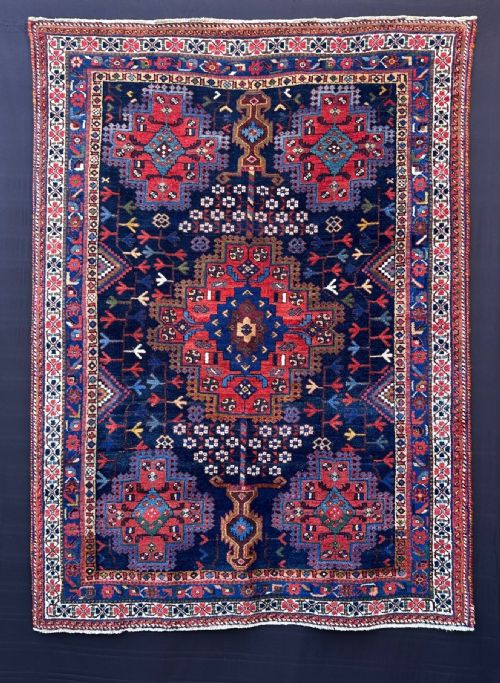
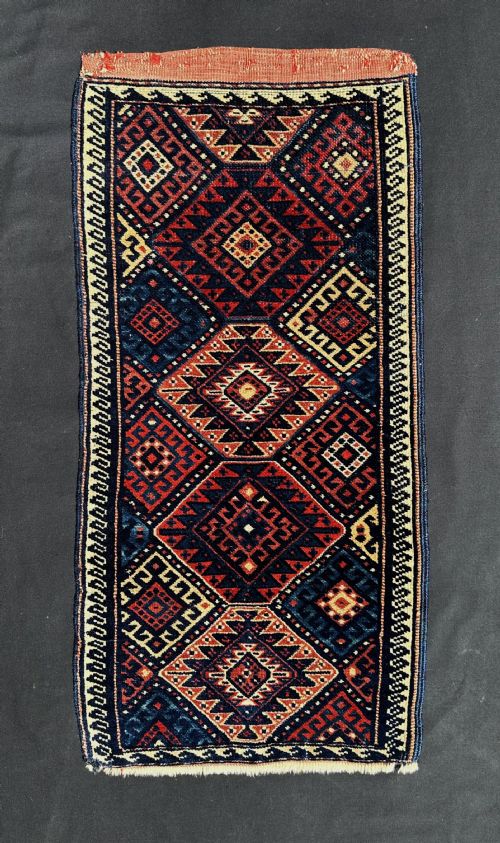
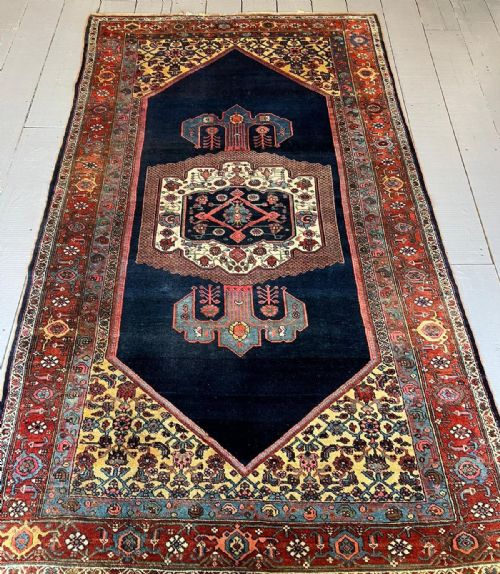
Most examples belong to tribal or village traditions rather than court manufactories, showing geometric medallions, repeating boteh motifs, and stylized botanical fields woven on vertical or horizontal looms. Formats range from large salon carpets and long runner rugs down to smaller scatter rugs, pillow bags, and sofreh dining cloths.
The dominant palette centres on deep indigo and navy grounds contrasted with madder reds, ivories, and soft golds, anchored by natural wool piles that have mellowed over generations of use.
How they were made
Makers utilised hand-spun wool for the pile, yielding a dense, resilient surface that accepts natural dyes with rich tonal variation across the field. Foundation warps and wefts are predominantly cotton or wool, beaten down firmly with heavy combs to lock the knots securely in place.
Colour comes from natural dye sources, including madder root for reds and indigo plants for deep blues, producing abrash where dye batches shift subtly within a single colour field. Weavers worked from memory or small pattern samples rather than printed charts, adapting tribal motifs to fit the specific dimensions of each loom.
Nomadic weavers sometimes incorporated tiny intentional irregularities into their geometric patterns to ward off the evil eye.
What varies in quality
Quality rests upon knot density, the purity of the wool, and the consistency of the natural dye palette. Finer village and town pieces exhibit tighter knotting and sharper drawing of geometric or floral lines, whereas coarser tribal rugs display a heavier, more rustic charm with broader motifs.
The handle of the textile indicates the care taken during production; superior pieces possess a supple, heavy drape derived from well-beaten foundations and high-grade wool, avoiding stiff or brittle constructions.
The Navy Wool Persia Rug Glossary
- Abrash
- A natural variation in rug colour caused by shifts in dye batches or different yarn lots during weaving. This tonal striping is a hallmark of traditional dyeing methods.
- Warp
- The vertical foundation threads stretched lengthwise on the loom before knotting begins. Weft threads are passed across these warps to bind the structure.
- Boteh
- An ancient almond-shaped motif resembling a paisley or bent cypress tree, frequently embroidered or woven into tribal and village textiles.
- Sofreh
- A flat-woven or piled cloth traditionally used for serving meals or handling bread dough within nomadic households.
- Soumak
- A flat-weave technique where coloured weft threads are wrapped around warp threads in a herringbone pattern, creating a durable structure without a cut pile.
Navy Wool Persia Rug: Frequently Asked Questions
How do I clean an antique rug?
Gentle surface brushing and professional specialist washing preserve the natural wool fibres and historic dyes without causing shrinkage or bleeding.
Avoid harsh chemical treatments and domestic carpet cleaners, as these strip essential lanolin from the wool and damage the foundation.
Where were these rugs made?
Production spans various regions, including West Persia, South Persia, and Khorassan, reflecting the specific territories of tribal confederations like the Khamseh, Afshar, and Qashqa'i.
Village workshops in districts such as Heriz, Bakhtiari, and Hamadan contributed distinct geometric and floral designs to the wider market.
Are these rugs suitable for high-traffic areas?
Hand-spun wool combined with sturdy cotton foundations provides exceptional durability, allowing these textiles to withstand everyday domestic use in hallways and living rooms.
Placing a suitable underlay beneath the rug prevents slipping and reduces friction against hard flooring.
How can I tell different tribal designs apart?
Distinctive border arrangements, structural materials, and colour combinations help identify specific tribal origins, such as the bold medallions of Heriz or the repeating geometric patterns of Baluch pieces.
Knotting styles and selvedge finishes also offer clear clues to the regional workshop or nomadic group responsible for the piece.