



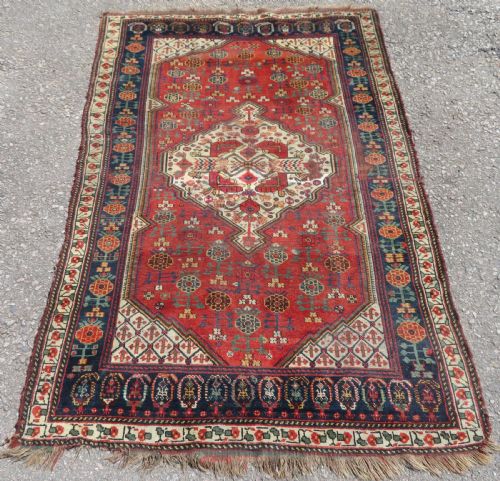


Navy Wool Khamseh Carpet
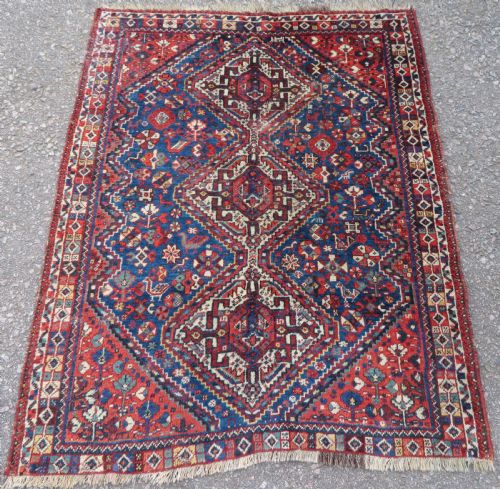
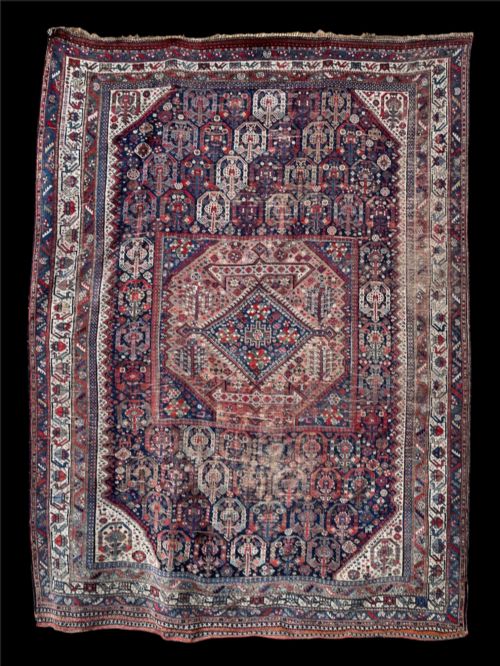
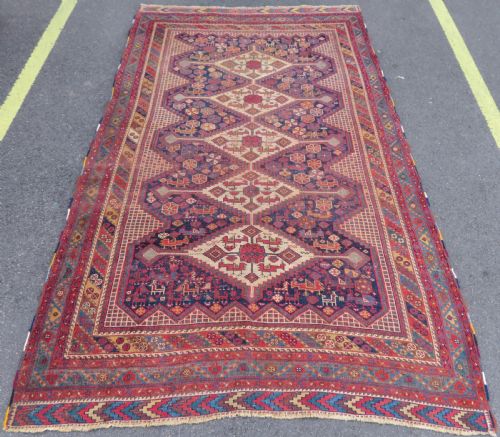
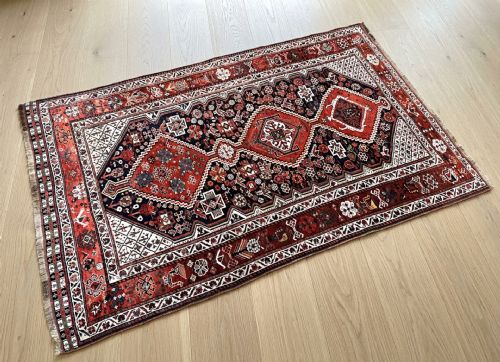
A navy wool khamseh carpet brings authentic South Persian tribal artistry into a room through rich indigo fields and dense geometric motifs.
Navy Wool Khamseh Carpet
When searching for a navy wool khamseh carpet, buyers encounter genuine tribal floor coverings woven by confederations of tribes in South-West Persia, particularly originating from the Fars province. These textiles span periods from the late nineteenth century into the early twentieth century, encompassing smaller area rugs as well as larger carpet sizes.
The version most commonly met on this page is a hand-woven tribal rug displaying characteristic dark ground colours and field designs influenced by the Arab, Baharlu, Arab-Jabbareh, and Arab Ghani tribes. Examples frequently incorporate distinct pictorial elements such as repeating chicken motifs, peacock figures, and stylized tree of life structures.
Makers within these confederacies produced varied formats, ranging from compact nomadic rugs measuring under two metres to extensive main carpets exceeding three metres in length. Stylistic markers often overlap with neighbouring groups like the Qashqai and Luri, yet maintain distinct South Persian nomadic traditions.
Construction and materials
The foundation of these textiles relies upon sturdy cotton warps and wefts that support thick hand-spun wool piles. Artisans utilised durable natural materials harvested locally, ensuring the heavy pile could withstand daily nomadic migration and camp usage.
Weaving techniques involve precise hand-knotting executed on vertical or ground looms by tribal makers. The handling of hand-spun wool allows for deep dye absorption, creating the saturated navy grounds characteristic of the group.
Navy Wool Khamseh Carpet Retail Price Guide 2026
Typical asking prices for navy wool khamseh carpet among the pieces listed under this phrase on Sellingantiques today, from the lower quarter to the upper quarter. They describe what is for sale here now, not the wider market.
Materials recorded across the inventory consist strictly of wool, cotton, and hand-spun wool.
Assessing quality in tribal weaving
Quality rests upon the fineness of the knotting and the crispness of the tribal motifs rendered across the field. Tightly packed piles secure the longevity of the structure and define the geometry of borders and central medallions.
The depth and variation of natural dyes dictate visual success, where subtle tonal shifts within the navy wool indicate careful preparation of the fleece. Greater artistic expression in uncommon pictorial designs, such as complex bird or chicken carpets, elevates the standing of an individual piece.
The Navy Wool Khamseh Carpet Glossary
- Khamseh
- A confederation of five distinct tribes in South-West Persia known for producing distinctive hand-woven rugs. These nomadic groups shared pastures and design influences.
- Baharlu
- One of the constituent tribes of the Khamseh confederacy. Their weaving often displays specific geometric arrangements and colour preferences.
- Kelleh
- A long, rectangular format of carpet traditionally suited for narrow rooms or hallways. These runners provide substantial length while maintaining narrower proportions.
- Morghi
- A Persian term denoting bird motifs, frequently referred to by collectors as chicken carpets. These playful patterns populate the field with repeating avian figures.
- Fars
- A historical province in South-West Persia housing nomadic and village weavers. This region serves as the geographic origin for these tribal textiles.
Navy Wool Khamseh Carpet: Frequently Asked Questions
Where were these carpets made?
These textiles originate from the Fars province in South-West Persia, produced by confederated nomadic tribes.
Weavers worked within regional camps, drawing inspiration from local fauna, tribal history, and neighbouring nomadic groups.
How do I identify tribal motifs?
Look for repeating geometric patterns, stylized trees, and characteristic pictorial elements such as small birds and chickens.
These symbols reflect the daily environment and cultural heritage of the weavers who knotted them by hand.
What size do these rugs come in?
Sizes range from compact area rugs suitable for smaller spaces to large main carpets exceeding three metres in length.
Format dimensions vary depending on whether the textile was designed for nomadic transport or fixed domestic placement.
How do I care for antique wool?
Protect the hand-spun pile by using a breathable underlay and limiting exposure to direct, harsh sunlight.
Gentle vacuuming without a rotating brush roll helps preserve the integrity of the cotton foundation and wool fibres.
What periods do these pieces span?
The available selection primarily dates from the late nineteenth century through to the early twentieth century.
Examples from this era showcase traditional natural dyeing techniques and hand-spun materials prior to extensive industrialisation.