


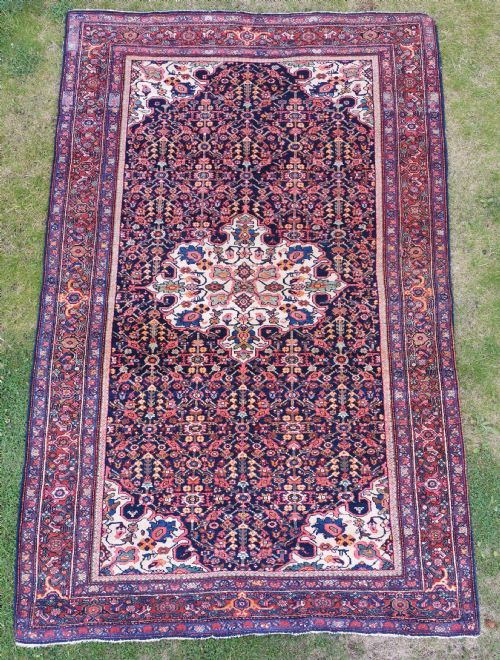
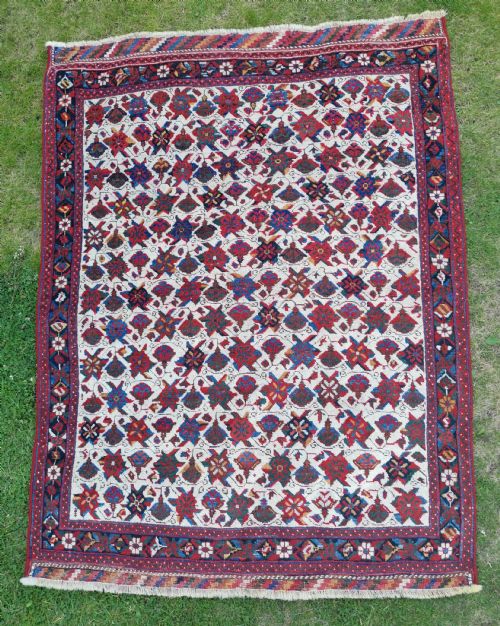
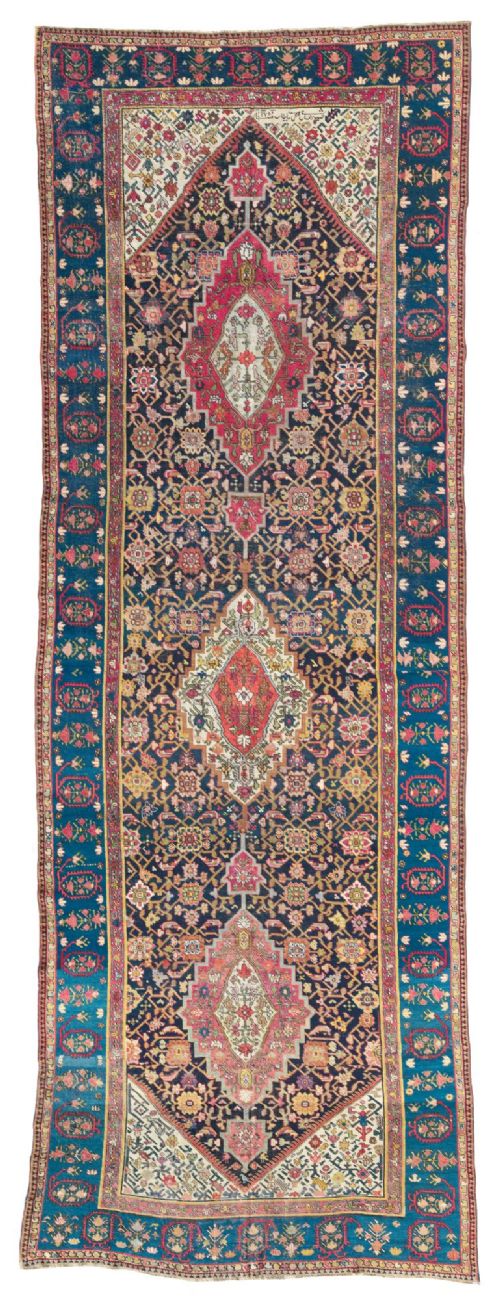
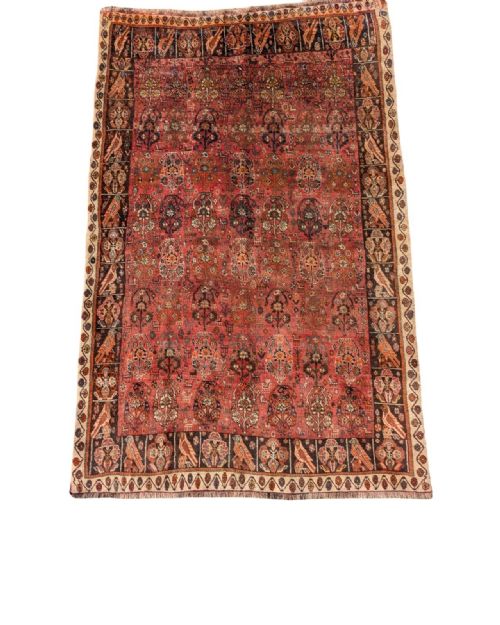
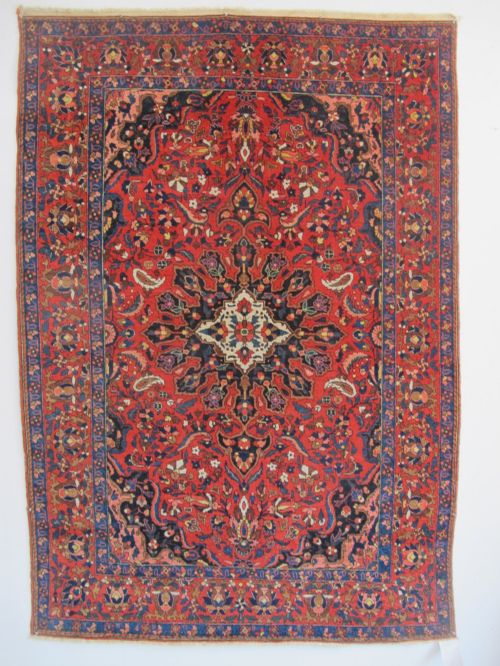
Navy Wool Floor Carpet
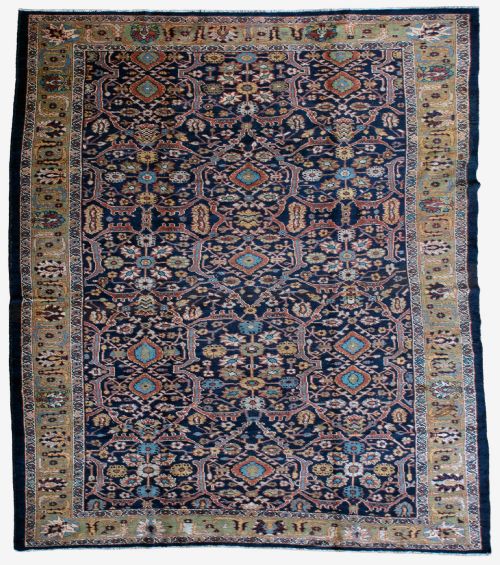
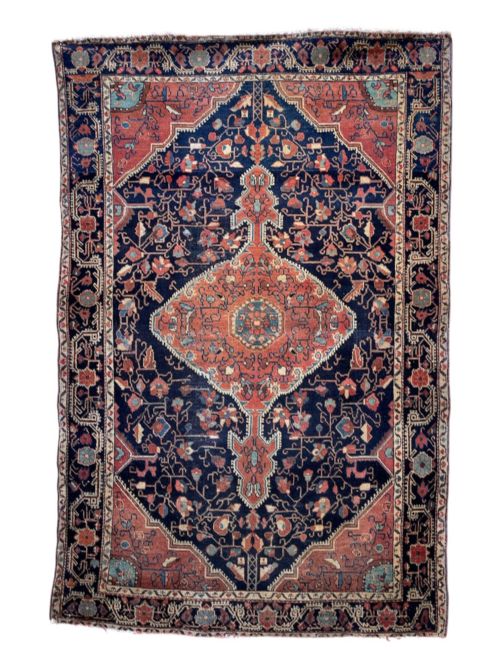
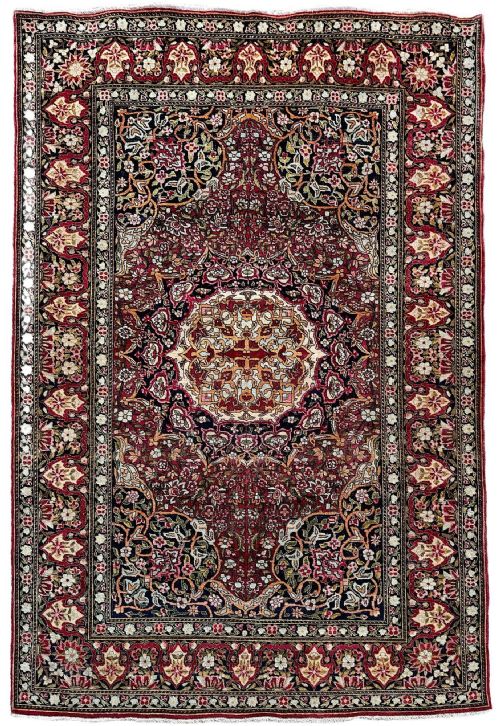
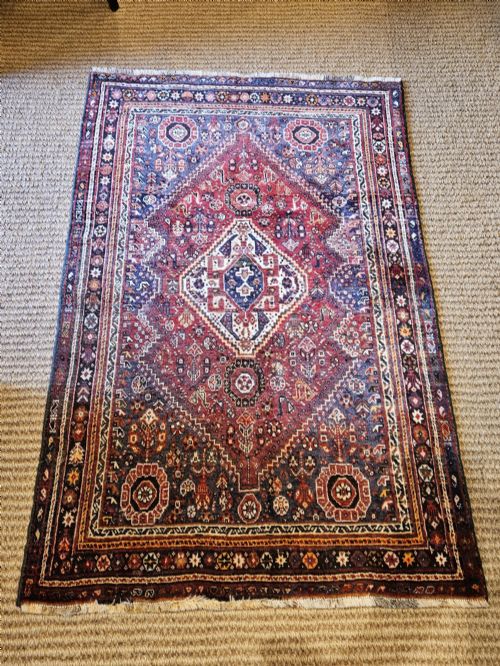
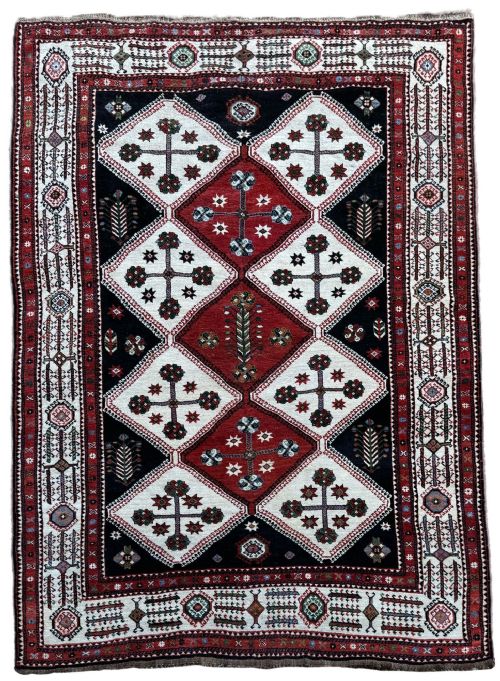
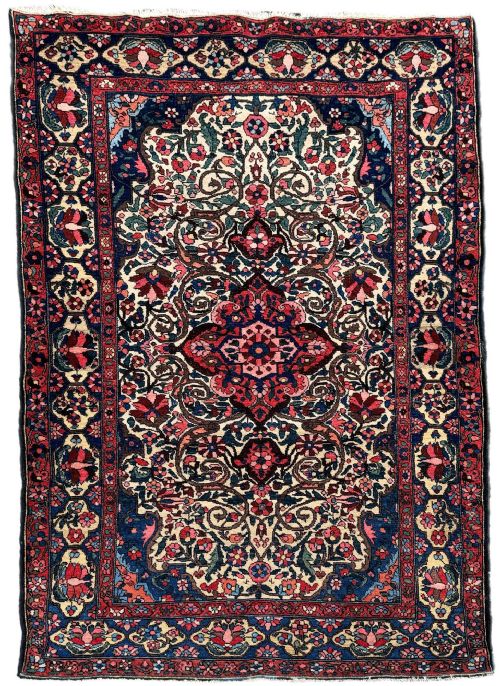
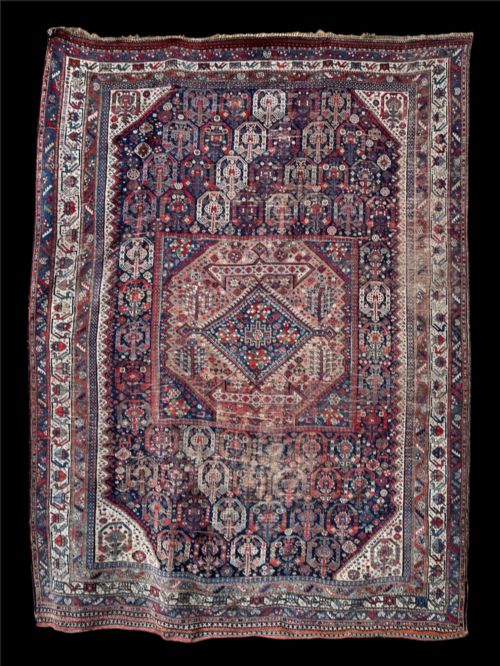
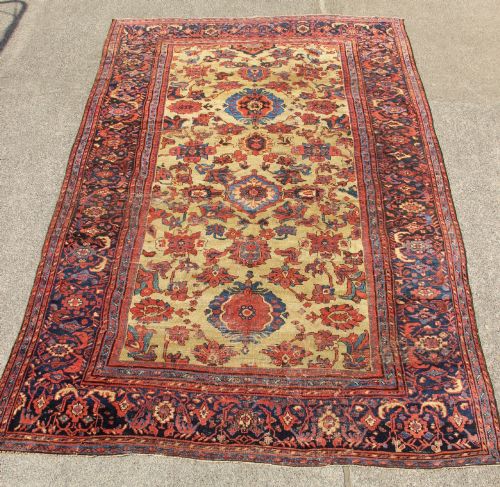
A navy wool floor carpet anchors a room with deep indigo tones and traditional hand-knotted patterns from Persian and Caucasian workshops.
Navy Wool Floor Carpet
A navy wool floor carpet brings together room-size carpets, area rugs, and hallway runners produced across Persia and the Caucasus during the nineteenth and early twentieth centuries. When searching for this specific description, buyers encounter dense tribal weaves and formal village designs rendered in dark blue dye grounds.
The selections span from eighteen-fifty up to nineteen-forty, reflecting traditional workshops and nomadic weaving confederacies. Larger formats like Heriz and Mahal carpets sit alongside smaller Afshar, Qashqai, and Karabagh tribal rugs.
Materials and construction methods
These floor coverings utilise natural wool, hand-spun wool, cotton foundations, and occasional silk accents tied by hand into dense pile structures. Weavers knotted individual tufts onto warp and weft foundations to create durable surfaces designed for heavy domestic use.
Dye traditions relied on natural organic sources to achieve saturated navy grounds, contrasting with softer abrasheh colour shifts across the field. The resulting textiles combine resilience with intricate geometric and floral compositions.
Nomadic weavers often incorporated small accidental asymmetry in tribal borders to ward off the evil eye.
Distinctions in execution
Quality rests in the precision of the knotting density, the crispness of the drawing in medallion or all-over formats, and the integrity of the foundation. Finer examples display meticulous control over complex floral curves or geometric tribal motifs.
The depth and consistency of the natural indigo dye baths also separate standard utility weaves from master workshop productions. Uniformity in wool preparation contributes to a more resilient pile that retains definition over generations.
The Navy Wool Floor Carpet Glossary
- Pile
- The vertical tufts of wool that form the usable surface of the rug. It is created by knotting yarn around the warp threads and shearing the ends.
- Warp
- The stationary longitudinal threads stretched on the loom before weaving begins. The fringe of a finished rug is typically formed by the exposed ends of these threads.
- Weft
- The horizontal threads passed alternately over and under the warp threads to bind the knots in place. It secures the structural integrity of the woven field.
- Kelleh
- A long, narrow format carpet traditionally used in Persian domestic interiors. These pieces typically measure substantially longer than they are wide.
- Medallion
- A symmetrical central ornament placed in the middle of the carpet field. This design element often dominates the visual composition of Persian village and workshop rugs.
Navy Wool Floor Carpet: Frequently Asked Questions
How do I clean a wool floor carpet?
Regular gentle vacuuming without a rotating brush roll prevents dust accumulation within the wool pile. Professional specialist cleaning remains necessary for deeper maintenance to protect natural dyes.
Water exposure and standard household detergents cause chemical damage to antique wool fibres and traditional dyes. Keeping the rug in a dry environment prevents foundation rot.
Where were these carpets made?
Production centres span traditional Persian towns such as Heriz, Sarouk, Tabriz, and Isfahan, alongside Caucasian regions like Karabagh and Shirvan. Tribal groups including the Afshar, Qashqai, and Bakhtiar also produced distinctive rugs.
Village workshops focused on geometric or stylized floral motifs, while major urban centres produced finely detailed court carpets.
How do I date an antique carpet?
Dating relies on structural analysis, wool characteristics, dye palettes, and stylistic conventions associated with specific periods between eighteen-fifty and nineteen-forty. Natural colour variations and hand-spun wool textures often indicate earlier nineteenth-century production.
Standardised chemical dyes and machine-assisted elements point toward later twentieth-century manufacturing dates.
Are these rugs suitable for high-traffic areas?
Hand-knotted wool carpets offer natural resilience and durability due to the dense packing of pile knots over cotton or wool foundations. Hallway runners and room-size formats withstand regular foot traffic when paired with a quality underlay.
Placing a cushioned pad underneath prevents slipping and reduces friction between the foundation and the floorboards.